2027 Is an Online Finance Doctorate Worth It? ROI, Salary Growth, and Career Impact

Co-Founder and Chief Data Scientist
An online finance doctorate is a major investment, and the payoff depends heavily on your career goal. The U.S. Bureau of Labor Statistics reported a May 2024 median salary of $161,700 for financial managers, making advanced finance leadership financially attractive for some professionals.
This guide is for finance, accounting, banking, analytics, and business professionals weighing whether doctoral study can improve income, credibility, teaching options, or executive mobility. You will learn how to estimate ROI, compare alternatives, avoid costly mistakes, and decide whether the degree fits your next career move.
Key Things You Should Know
- An online finance doctorate is most likely to pay off for professionals targeting executive finance leadership, consulting, research-driven roles, or college teaching, not for early-career workers who mainly need entry-level finance credentials.
- Using BLS May 2024 wage data, financial managers had a median salary of $161,700, while financial analysts had a median salary of $101,910; the degree's ROI depends on whether it moves you into a higher-paying role rather than simply adding letters after your name.
- The strongest ROI usually comes from controlling total cost, staying employed while enrolled, using employer tuition support, and choosing a program whose accreditation, dissertation format, faculty expertise, and alumni outcomes match your target career.
What Is the ROI of an Online Finance Doctorate?
The ROI of an online finance doctorate is the financial and professional return you receive compared with what you spend in tuition, fees, time, interest, and effort. In practical terms, ROI is strongest when the degree helps you qualify for a role, promotion, consulting niche, or teaching opportunity that you could not realistically reach with your current credentials.
For most working professionals, the most useful ROI formula is simple: compare the total cost of the doctorate with the additional annual income you reasonably expect after graduation. If a program costs $60,000 and your annual compensation increases by $15,000, the tuition-only payback period is about four years. That estimate becomes less favorable if you borrow heavily, take longer to finish, or reduce work hours while enrolled.
A finance doctorate ROI is not the same for every student because the degree has different market value in different settings. A Doctor of Business Administration with a finance concentration may support executive, consulting, or applied leadership goals, while a PhD in Finance is usually more research-intensive and may be better aligned with academic research or tenure-track ambitions.
Use ROI as a decision tool, not a promise. A doctorate may increase credibility, but employers still evaluate experience, leadership record, technical finance skills, industry knowledge, communication ability, and measurable business results.
The table below summarizes the major ROI variables and how each one can improve or weaken the financial case for enrollment:
| ROI factor | Why it matters | When it improves ROI | When it weakens ROI |
| Total program cost | Tuition, fees, residency travel, books, technology, and loan interest determine how much you must recover through higher earnings. | The program is affordable, employer-funded, or completed without major borrowing. | The student focuses only on per-credit tuition and ignores fees or interest. |
| Career target | The degree has more value in roles that reward research, leadership, strategy, or faculty expertise. | The student is pursuing CFO-track roles, consulting, financial strategy, or postsecondary teaching. | The student wants a role where a master's degree, license, or certification is enough. |
| Current experience | Doctoral credentials often amplify existing professional achievements rather than replace them. | The student already has midcareer or senior-level finance experience. | The student lacks core finance experience and expects the doctorate alone to open senior roles. |
| Time to completion | Longer timelines increase opportunity cost and delay financial benefits. | The student can finish steadily while employed. | The dissertation, or capstone phase, stretches several years beyond the plan. |
| Employer recognition | Some organizations value doctoral credentials for leadership, teaching, research, or consulting credibility. | The employer clearly rewards the credential through promotion pathways or tuition assistance. | The employer does not consider doctoral education in compensation or advancement decisions. |
How Much Can Salaries Increase After an Online Finance Doctorate?
Salary growth after an online finance doctorate varies widely because finance pay is driven by role, sector, location, performance, and prior experience. The degree itself does not create a uniform salary bump; it is most valuable when it supports a transition into higher-responsibility work such as financial strategy, risk leadership, corporate finance management, consulting, or postsecondary teaching.
BLS May 2024 data helps frame the salary ceiling and opportunity gap. Financial analysts had a median salary of $101,910, while financial managers had a median salary of $161,700. For a professional who can use doctoral study to move from analysis into management or strategic leadership, the potential financial upside may be meaningful. For someone already in a senior finance role, the increase may come less from a new title and more from consulting fees, board opportunities, teaching income, or credibility in executive decision-making.
The table below compares common finance-related roles using national wage data and explains how doctoral education may affect advancement rather than assuming every graduate receives the same raise.
| Career area | Relevant BLS May 2024 median salary | How a finance doctorate may affect salary growth | Important limitation |
| Financial management | $161,700 | May support movement into senior finance leadership, treasury, risk, FP&A, or CFO-track responsibilities. | Employers usually prioritize leadership results and industry experience in addition to education. |
| Financial analysis | $101,910 | May help experienced analysts move toward research leadership, portfolio strategy, or managerial roles. | A CFA, MBA, or specialized master's may be more cost-effective for some analyst tracks. |
| Personal financial advising | $102,140 | May strengthen credibility for niche consulting, wealth strategy, or academic-adjacent work. | Client acquisition, licensing, and certifications often matter more than doctoral education. |
| Management analysis and consulting | $101,190 | May enhance authority in finance transformation, risk modeling, corporate governance, or advisory work. | Consulting income depends heavily on client base, specialization, and track record. |
A realistic way to think about salary growth is to separate direct and indirect benefits. Direct benefits include a promotion, raise, or new role that requires or strongly prefers doctoral training. Indirect benefits include stronger executive credibility, the ability to teach part time, more confidence in research-driven decision-making, or a sharper consulting niche.
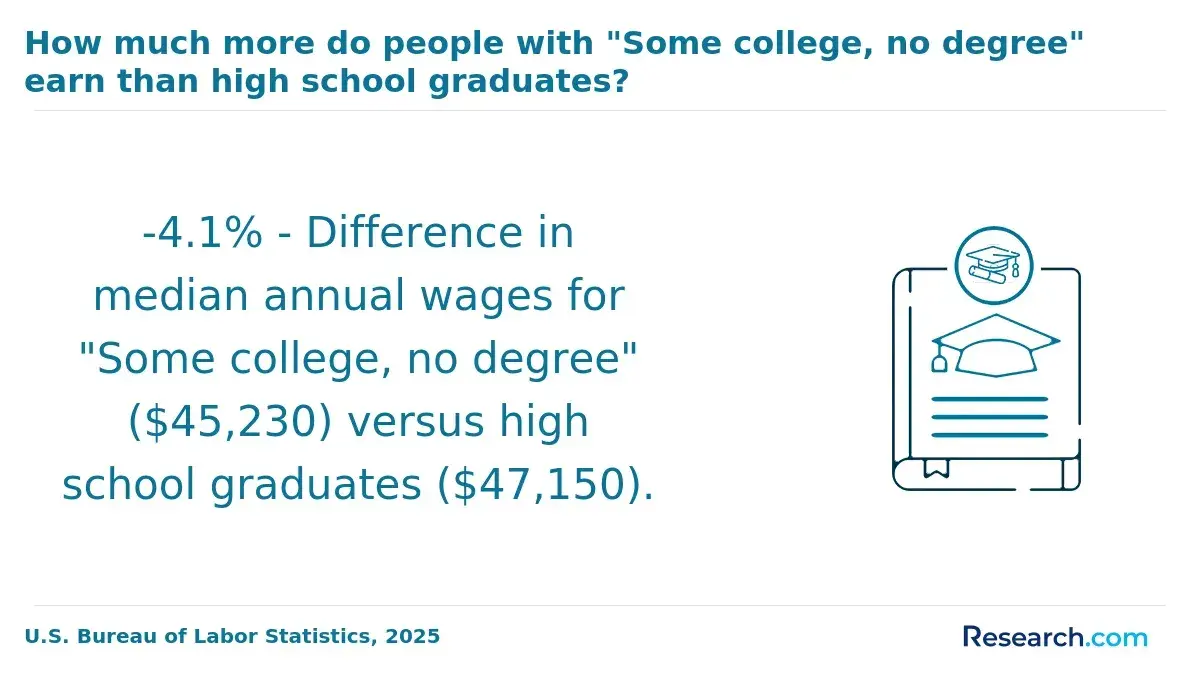
A common mistake is comparing a doctorate holder's salary with a bachelor's graduate's salary without accounting for experience. Many doctorate students are already midcareer professionals, so their higher pay may reflect years of leadership, not the degree alone.
Which Career Paths Offer the Strongest Financial Return With an Online Finance Doctorate?
The strongest financial return usually appears in career paths where doctoral-level finance knowledge changes how employers, clients, or academic institutions evaluate your authority. These paths tend to involve strategy, research, executive decision-making, teaching, or specialized advisory work.
BLS employment projections released in 2024 show financial manager employment is projected to grow much faster than average over the 2023 to 2033 period. For doctoral students, this matters because growth in senior finance leadership can expand opportunities for professionals who combine advanced finance knowledge with data analysis, risk management, and communication skills.
The table below ranks common career directions by likely doctoral ROI potential, assuming the student already has relevant finance or business experience:
| Career path | ROI potential | Why the doctorate can help | Best fit |
| Corporate finance executive or CFO-track leadership | High | Advanced research, capital strategy, risk analysis, and governance knowledge can support senior decision-making. | Experienced finance managers, controllers, treasurers, or FP&A leaders. |
| Finance professor or business faculty role | High for academic goals | Doctoral credentials are commonly expected for full-time faculty and research-oriented teaching roles. | Professionals who want teaching, curriculum leadership, or applied research. |
| Finance and risk consulting | Moderate to high | The credential can reinforce expertise in valuation, risk, governance, fintech, or financial strategy. | Professionals with a clear consulting niche and client-facing experience. |
| Senior financial analyst to analytics leader | Moderate | Doctoral training can improve modeling, research design, and evidence-based decision-making. | Analysts moving into leadership or specialized research roles. |
| Entry-level finance roles | Low | Most entry-level roles do not require doctoral education. | Students may be better served by a bachelor's degree, master's degree, internship, or certification. |
Career paths with weaker ROI are usually those where the doctorate does not change hiring criteria. For example, many investment, accounting, and financial planning roles depend more heavily on licenses, client relationships, portfolio performance, CPA credentials, CFA credentials, or regulatory knowledge than on doctoral education.
AI and automation also affect the ROI discussion. Routine financial reporting and basic modeling are increasingly supported by analytics platforms, automation tools, and generative AI. A doctorate can be more valuable when it develops higher-level judgment, research interpretation, governance, ethics, and strategic decision-making rather than only technical calculation skills.
How Does an Online Finance Doctorate Affect Career Advancement?
An online finance doctorate can affect career advancement by signaling advanced expertise, research ability, persistence, and leadership readiness. It may help professionals compete for senior roles, teach at colleges or universities, publish or present research, lead finance transformation projects, or advise organizations on complex financial decisions.
The degree is most useful when it complements a strong professional record. Employers rarely promote someone only because of a doctorate; they look for evidence that the person can lead teams, explain financial trade-offs, manage risk, influence executives, and apply research to business problems.
Before enrolling, professionals should understand the advancement mechanisms the degree may realistically support. The list below highlights the most common ways a finance doctorate can improve career mobility:
- Executive credibility: The credential can strengthen your profile for roles involving financial strategy, capital allocation, governance, or enterprise risk.
- Teaching eligibility: A doctorate may open doors to adjunct, full-time, or leadership roles in business education, depending on the institution's requirements.
- Consulting authority: Doctoral research can help experienced professionals build a specialized advisory practice in areas such as valuation, risk, fintech, or corporate finance.
- Research and publication opportunities: Dissertation or applied research work can become conference presentations, white papers, industry reports, or academic publications.
- Internal advancement: Some employers view doctoral study as evidence of long-term commitment, analytical depth, and readiness for high-stakes decision-making.
However, career advancement is not automatic. A red flag is enrolling without confirming whether your target employers value the credential. If job postings, promotion policies, or conversations with hiring managers show that a master's degree or certification is enough, a doctorate may deliver more personal than financial value.
How Much Does an Online Finance Doctorate Cost Compared With Its Potential Benefits?
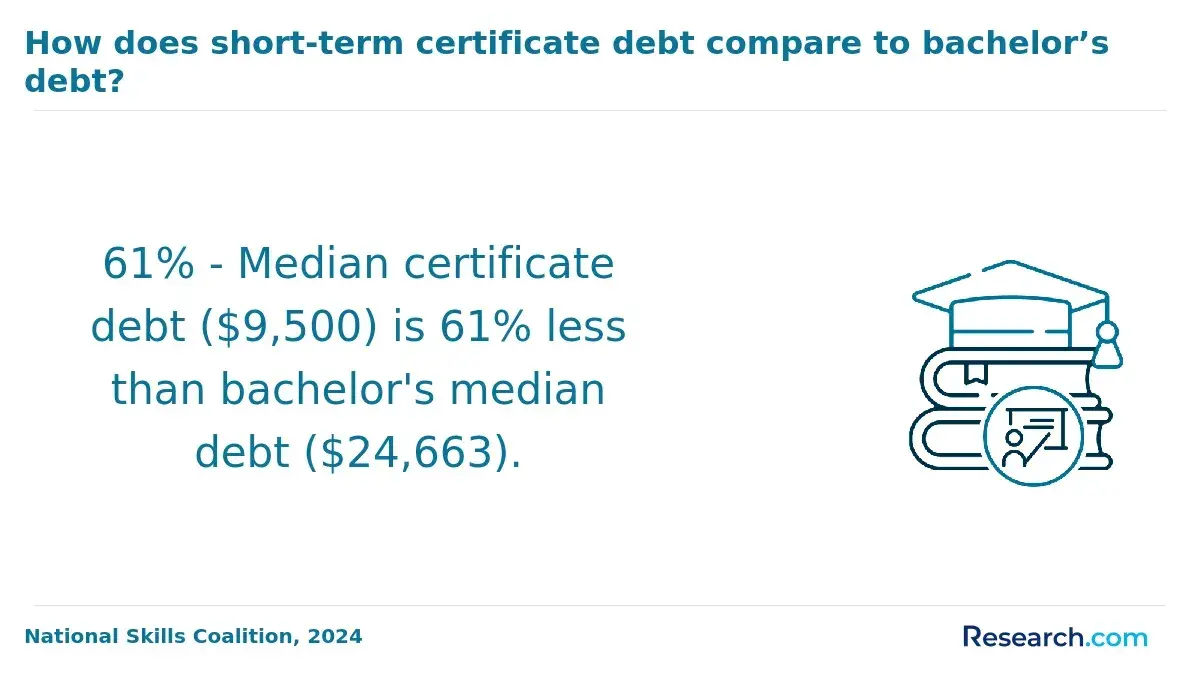
The cost of an online finance doctorate can vary substantially by school, credit load, transfer policy, residency requirements, and dissertation length. NCES data released in 2024 reported average graduate tuition and required fees of $12,596 at public institutions and $29,931 at private nonprofit institutions for the 2022-23 academic year. Those figures are not doctorate-specific, but they show why school choice and funding strategy can materially change ROI.
Published tuition is only one part of the investment. Online students may also pay technology fees, doctoral residency fees, dissertation continuation fees, books, software costs, graduation fees, and travel expenses for required intensives. Loan interest can also raise the final cost well above the billed tuition amount.
The table below shows how different cost categories affect the real price of an online finance doctorate and why the cheapest tuition rate is not always the lowest total cost:
| Cost category | What to include | Why it matters for ROI |
| Tuition | Per-credit cost multiplied by required credits. | This is usually the largest direct cost and the easiest figure to compare across programs. |
| Mandatory fees | Technology, student services, library, graduation, and administrative fees. | Fees can significantly change the total cost even when tuition looks affordable. |
| Residency or travel | Campus visits, hotel, airfare, meals, and time away from work. | Hybrid requirements can reduce the convenience advantage of online study. |
| Dissertation or capstone costs | Continuation credits, research tools, editing, transcription, or data access. | Extended dissertation timelines can add unexpected expenses. |
| Financing costs | Loan origination fees and interest. | Borrowed funds increase the break-even salary increase needed after graduation. |
Students comparing finance pathways should also consider whether a lower-cost master's option could achieve the same goal. For some professionals, researching the cheapest online master's in finance may reveal a less expensive route to promotion, especially when the target role does not require doctoral credentials.
The potential benefits are broader than salary, but they should still be evaluated financially. Employer tuition assistance, military education benefits, scholarships, assistantships, tax considerations, and pay-as-you-go enrollment can all improve ROI by reducing debt exposure.
How Does the Time Required for an Online Finance Doctorate Affect Its ROI?
Time is one of the biggest hidden ROI factors in doctoral education. Many online finance doctorates are designed for working adults, but the total timeline can still be demanding because coursework, comprehensive exams, research methods, dissertation proposal approval, data collection, writing, and defense all take sustained effort.
The longer a doctorate takes, the later the financial return begins. A student who finishes efficiently while employed may preserve income and recover costs faster. A student who reduces work hours, changes jobs, or takes extended breaks may face a higher opportunity cost even if tuition remains unchanged.
The table below explains how timeline variables can affect financial return and career momentum:
| Timeline factor | Effect on ROI | What to examine before enrolling |
| Program length | Shorter structured timelines can reduce delayed earnings benefits. | Ask how long students typically take from enrollment to defense, not just the advertised minimum. |
| Course load flexibility | Flexible pacing helps working professionals avoid income loss. | Check whether part-time enrollment changes tuition, aid eligibility, or completion deadlines. |
| Dissertation support | Strong advising can reduce costly delays. | Review faculty availability, research alignment, dissertation milestones, and completion support. |
| Residency requirements | Required visits can add travel cost and time away from work. | Confirm how often residencies occur and whether they are mandatory. |
| Work-school balance | Excessive workload may affect performance, income, or persistence. | Estimate weekly study time and discuss expectations with family and employer. |
A practical break-even calculation should include both direct costs and time costs. If you expect the degree to increase annual income by a certain amount, divide your total cost by that expected increase. Then adjust the estimate upward if you will borrow, reduce work hours, or delay graduation.
One common mistake is choosing a program because it advertises a fast timeline without checking dissertation completion patterns. In doctoral education, the final research phase often determines the true completion date.
Does an Online Finance Doctorate Have the Same Career Value as a Campus-Based Degree?
An online finance doctorate can have similar career value to a campus-based degree when the institution is properly accredited, the curriculum is rigorous, faculty support is strong, and the program's outcomes align with the student's goal. Employers are increasingly familiar with online graduate education, especially for working professionals, but program quality still matters more than delivery format alone.
The key distinction is not simply online versus campus. It is whether the program builds the skills, network, research credibility, and institutional recognition needed for your target role. A well-designed online DBA in finance may be a strong fit for an executive who needs applied leadership research, while a campus PhD may be better for a student pursuing full-time academic research with intensive faculty collaboration.
The table below compares online and campus-based finance doctorates from an ROI perspective:
| Comparison point | Online finance doctorate | Campus-based finance doctorate | ROI implication |
| Work continuity | Often allows students to remain employed. | May require relocation or reduced work hours. | Staying employed can protect ROI by reducing lost income. |
| Networking | Networking may occur through virtual cohorts, residencies, and faculty meetings. | Networking may be more frequent through campus events and research groups. | Students should evaluate how each format supports their target career network. |
| Research access | Access depends on remote library tools, faculty availability, and research infrastructure. | May provide more in-person research seminars and collaboration. | Academic research goals may require closer faculty alignment. |
| Cost structure | May reduce relocation and commuting costs but can still include fees and residencies. | May include assistantship opportunities but can require relocation. | The better ROI option depends on net cost, not format alone. |
| Employer perception | Generally strongest when the school is accredited and reputable. | Often familiar to employers if the institution has strong name recognition. | Accreditation and outcomes are more important than whether classes are online. |
Students should be cautious of programs that emphasize convenience but provide little information about faculty qualifications, doctoral completion support, dissertation expectations, accreditation, or alumni outcomes. Online delivery can be valuable, but it should not replace evidence of academic quality.
How Does an Online Finance Doctorate Compare With Other Career Advancement Options?
An online finance doctorate is only one way to advance in finance. Depending on your goal, a master's degree, MBA, certification, specialized analytics training, or work-based leadership development may produce a faster or less expensive return.
For professionals still building foundational business or finance credentials, an online business degree may be a more appropriate starting point than a doctorate. The doctorate becomes more compelling when you already have graduate-level preparation or substantial experience and need a terminal credential for teaching, research, consulting, or executive authority.
The table below compares common advancement options and the situations where each may make more financial sense than a doctorate:
| Option | Typical career purpose | When it may outperform a doctorate on ROI | When a doctorate may be stronger |
| Master's in finance | Specialized technical finance preparation. | The target role values valuation, investment, corporate finance, or financial modeling skills but does not require doctoral research. | The goal involves teaching, applied research, or senior expert positioning. |
| MBA with finance focus | Broad management and leadership preparation. | The student wants management mobility across functions rather than deep finance research. | The student wants a terminal credential or research-based authority. |
| CFA credential | Investment analysis and portfolio management credibility. | The target career is asset management, equity research, or investment analysis. | The target involves academic teaching, consulting thought leadership, or research design. |
| CPA credential | Accounting, audit, tax, and controllership credibility. | The student's finance path is accounting-heavy or requires licensure. | The student wants finance research, executive governance, or higher education roles. |
| Doctorate in finance | Advanced research, strategy, teaching, and expert leadership. | It may not outperform lower-cost options if the employer does not value doctoral credentials. | The target role clearly rewards doctoral-level expertise or requires a terminal degree. |
Common mistakes include pursuing a doctorate for a promotion that only requires a master's degree, choosing prestige over fit, or assuming a doctoral program will compensate for missing industry experience. In many finance careers, the smartest path is sequential: build experience, earn targeted credentials, then consider doctoral study when the career payoff is clear.
Which Professionals Are Most Likely to Benefit From an Online Finance Doctorate?
The professionals most likely to benefit are those who can connect the degree directly to a career outcome. That usually means experienced finance leaders, consultants, analysts, accounting professionals, business faculty, or executives who need advanced research and strategic finance credibility.
Professionals from accounting backgrounds may also benefit if they are moving toward financial leadership, governance, controllership, or teaching. Those who are earlier in the education pathway may first need an online accounting degree or related credential before doctoral study becomes realistic or useful.
The following groups are often better positioned to capture value from an online finance doctorate because they can apply doctoral learning directly to existing responsibilities:
- Midcareer finance managers: Professionals already leading budgets, capital planning, treasury, risk, or forecasting may use the degree to strengthen executive readiness.
- Senior analysts and analytics leaders: Experienced analysts may benefit if they want to lead research-heavy finance teams or move into strategic decision support.
- Consultants and advisors: A doctorate can support expert positioning when paired with a defined client niche and a strong track record.
- College instructors or aspiring faculty: Professionals who want to teach finance, business, or accounting may need a doctorate for long-term academic mobility.
- Executives in regulated or complex industries: Leaders in banking, insurance, healthcare finance, fintech, or corporate governance may benefit from deeper research and risk expertise.
Professionals least likely to benefit are those seeking a first finance job, those unsure about their target career, or those whose desired roles emphasize licensing, sales performance, or technical certifications over doctoral education. If the goal is to enter finance quickly, a doctorate is usually too long and expensive as a first step.
How Can Students Determine Whether an Online Finance Doctorate Is Worth It?
The best way to determine whether an online finance doctorate is worth it is to build a personal ROI case before applying. That means connecting the degree to a specific career outcome, estimating total cost, comparing alternatives, and verifying that employers or institutions in your target market value the credential.
If speed is a major factor, students may also compare doctoral study with an accelerated finance degree or other shorter option. A faster credential can make sense when the goal is skill-building or promotion eligibility rather than doctoral-level research, teaching, or expert authority.
Use the following steps to test the value of a program before committing:
- Define the target outcome: Identify the exact role, promotion, consulting niche, or teaching position you want the doctorate to support.
- Review job evidence: Read postings, faculty requirements, promotion policies, and employer preferences to see whether doctoral education is required, preferred, or rarely mentioned.
- Calculate total cost: Include tuition, fees, residencies, books, dissertation expenses, interest, and any income reduction while enrolled.
- Estimate realistic income change: Compare your current compensation with salary ranges for the specific roles you are targeting, adjusting for experience, location, and industry.
- Compare alternatives: Evaluate whether a master's degree, MBA, CFA, CPA, analytics certificate, or leadership program could achieve the same result at lower cost.
- Check accreditation and quality: Confirm institutional accreditation, business-school accreditation if relevant, faculty expertise, research fit, dissertation support, and student services.
- Ask for outcomes data: Request information on completion rates, time to degree, alumni roles, faculty placement support, and dissertation milestones.
- Model the break-even point: Divide total cost by the annual income increase you reasonably expect, then adjust for debt interest and delayed completion.
Several red flags should make students slow down. Be cautious if a program cannot explain dissertation expectations, has unclear accreditation, advertises unrealistic completion promises, provides little faculty access, or pushes enrollment before you understand total cost.
A finance doctorate is worth it when the degree helps you reach a specific, financially meaningful career outcome that cheaper or faster options cannot achieve. It is less likely to be worth it when the goal is vague, the program requires heavy debt, or the target career does not reward doctoral education.
Other Things You Should Know About Finance
Yes. A DBA in finance is usually applied and designed for experienced professionals who want to solve business problems, lead organizations, consult, or teach practice-oriented courses. A PhD in finance is usually more research-intensive and better aligned with academic research, publishing, and tenure-track faculty goals.
Some do, but many online doctoral programs have test-optional or waiver policies for applicants with graduate degrees, strong GPAs, or substantial professional experience. Requirements vary by school, so applicants should verify current admissions rules before preparing for an exam.
Many online programs are built for working adults, but full-time work still requires careful planning. Students should expect demanding reading, research, writing, and dissertation work, especially during proposal development and final defense preparation.
Important skills include quantitative reasoning, financial analysis, research design, academic writing, data interpretation, strategic thinking, ethics, and clear communication. Students who are comfortable with both numbers and long-form research are usually better prepared for doctoral work.
References
- Does College Pay Off? A Comprehensive Return On Investment Analysis - FREOPP https://freopp.org/whitepapers/does-college-pay-off-a-comprehensive-return-on-investment-analysis/
- Career opportunities in finance and economics https://www.eaebarcelona.com/en/blog/finance-career-opportunities
- Are Employers Choosing PhDs Over MBAs? https://shooliniuniversity.com/blog/are-employers-choosing-phds-over-mbas/
- Graduate degrees pay—but it’s complicated | Brookings https://www.brookings.edu/articles/graduate-degrees-pay-but-its-complicated/
- How Long Until Your Degree Pays Off? A Timeline by Program https://blog.methodistcollege.edu/degree-pays-off-timeline
- Does an Advanced Degree Pay Off? https://measuringu.com/does-an-advanced-degree-pay-off/
- What it is and how to calculate ROI or Return on Investment - Esade https://www.esade.edu/beyond/en/what-is-roi-and-how-to-calculate-return-on-investment/
- Everything You Wanted To Know About The Finances Of Getting A PhD (But Were Afraid To Ask) https://thefinancialdiet.com/everything-you-wanted-to-know-about-the-finances-of-getting-a-phd-but-were-afraid-to-ask/