
2027 How to Document Self-Taught Programming in a Data Science Master's Application

Co-Founder and Chief Data Scientist
Self-taught programming can strengthen a data science master's application, but listing Python or linking to GitHub rarely establishes graduate-level readiness on its own. If you learned to code outside a computer science degree, you need to show what you built, how you tested it, and which academic prerequisites you have met separately.
This guide helps you assemble that evidence and decide whether to apply now, complete additional preparation, or target a different program.
Key Things You Should Know
- Document self-taught coding with a concise project description, your specific contributions, reproducible code, and results - not a skills list alone.
- A portfolio can demonstrate ability, but it does not automatically satisfy a program's required, graded coursework in programming, mathematics, or statistics.
- Compare each program's published prerequisites with your transcript and project evidence before deciding whether to apply or take another course.
How Can Self-Taught Programming Strengthen a Data Science Master's Application?
Self-study is most persuasive when it explains an apparent gap in your transcript. If your degree was in another field, a well-documented project can show that you have since learned to write code, work with data, and make defensible analytical decisions. It can also show initiative and a useful connection between your previous field and the work you hope to do in graduate school.
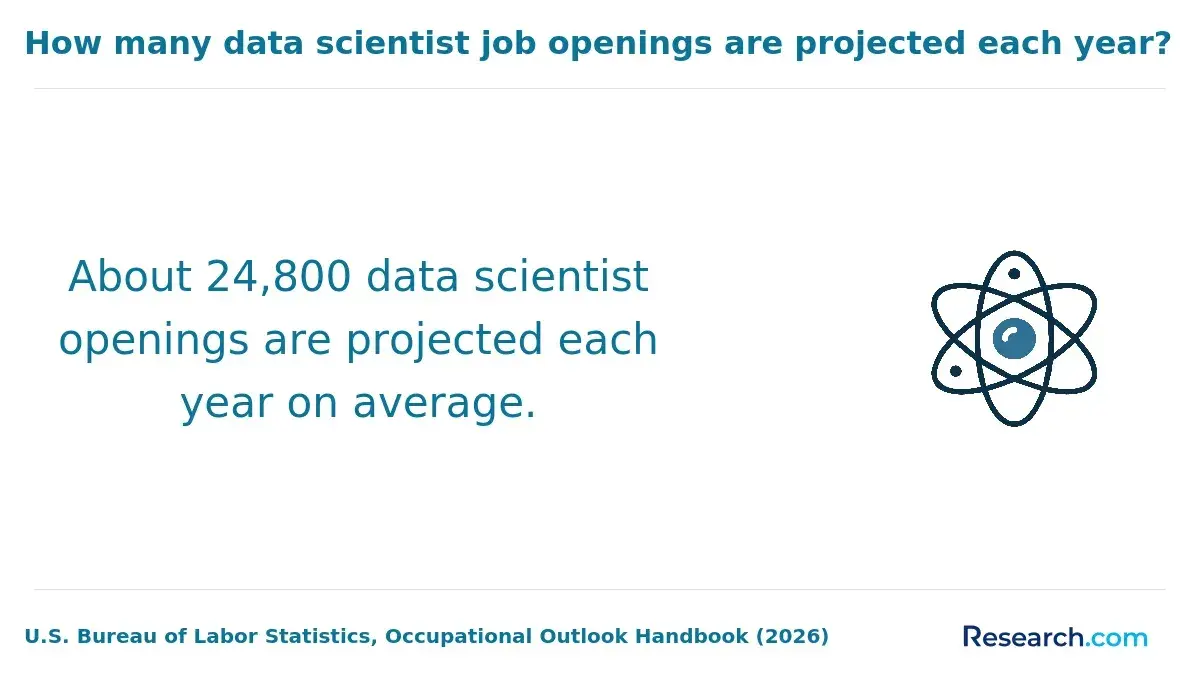
Keep the claim proportionate to the evidence. Completing tutorials shows practice; independently defining a problem, cleaning imperfect data, evaluating a method, and explaining limitations shows more. The U.S. Bureau of Labor Statistics projects 35% employment growth for data scientists from 2025 to 2035. That outlook may help explain your career interest, but it says nothing about whether a particular admissions committee will accept self-study in place of a prerequisite.
What Programming Skills Do Data Science Master's Programs Expect?
Expectations vary. One program may teach introductory programming, while another may expect applicants to arrive able to use a language such as Python or R. Published prerequisites may also specify statistics, calculus, linear algebra, or prior computing coursework. Read the admissions page and course descriptions together: a program that begins with advanced modeling offers less room to learn basic coding after enrollment.
For an application, useful programming evidence usually goes beyond syntax. Show that you can load and validate data, write understandable functions, use appropriate libraries, inspect errors, and reproduce an analysis. SQL, version control, and testing may be useful additional evidence, but do not assume every program requires them. If your interests center on advanced machine learning rather than a broad data science curriculum, compare its prerequisites with those of online graduate ML programs with lower total tuition; a different degree label does not necessarily mean easier entry requirements.
How Should You Document Self-Taught Programming Experience?
Give reviewers a short path from your claim to verifiable work. Use the application's permitted fields and file formats; a portfolio link is supplemental unless the program explicitly requests one. The following sequence keeps your résumé, statement, and project materials consistent.
- Inventory your preparation: Record languages, libraries, substantial projects, courses, dates, and whether any learning was assessed for academic credit.
- Select your strongest examples: Favor a small number of completed projects that show different relevant abilities over a long list of exercises.
- Write evidence-based résumé entries: Identify the problem, your contribution, tools used, and a defensible result or deliverable; avoid unsupported proficiency labels.
- Prepare a brief project summary: State the data source, analytical question, methods, evaluation, limitations, and where reviewers can inspect the work.
- Match evidence to each program: Identify which published expectations your transcript meets and which abilities your independent work demonstrates; ask admissions about any formal prerequisite you cannot verify.
Do not describe a noncredit course as a completed college prerequisite. Label it accurately, and distinguish a finished project from one still in progress.
Which Projects Best Demonstrate Data Science Programming Ability?
Choose projects that make your decisions visible, not merely projects with sophisticated model names. A strong example starts with a specific question and suitable data, then shows cleaning, an appropriate baseline, evaluation, and a candid account of what the results cannot establish. A simpler, carefully evaluated analysis can be more informative than a complex model presented without a comparison.
For example, a forecasting project can reveal how you handled time-based validation; a classification project can show how you selected metrics and checked for data leakage. A domain project can also connect prior education or work to your graduate goals. If that domain is healthcare, consider the data-access and privacy constraints before choosing a topic; master's pathways connecting AI and healthcare offer a more focused program-selection question than a general data science search.
A common mistake is presenting a polished result without saying what you personally did. For team work, identify your contribution and credit collaborators. For any project, explain failed approaches or limitations where they matter; selective reporting makes technical judgment harder to assess.
How Can GitHub Prove Your Technical and Analytical Skills?
GitHub can make a claim inspectable, but a repository is not proof by itself. A reviewer should be able to understand the question, find the main code, identify data dependencies, and see how a result was produced. A short README, organized files, stated software requirements, and instructions for reproducing a safe example make that inspection easier.
Prioritize readability and substance over a large commit count. Explain whether you wrote the analysis independently, adapted a tutorial, or worked with collaborators. Remove credentials, personal data, and material you lack permission to publish. If the underlying data cannot be shared, describe the restriction and, where feasible, demonstrate the workflow with permitted sample or synthetic data. Check every link from a signed-out browser before submitting; committees may not request access to a private repository.
What Evidence Can Replace Formal Computer Science Coursework?
Whether anything can replace coursework depends on the wording of the prerequisite. A requirement for a specified graded course may require college credit, an approved equivalent, or an individual exception. Projects, work experience, and noncredit study can show preparedness without automatically fulfilling that requirement.
The distinction matters when you decide whether to apply now or enroll in another course. These evidence types establish different things; none should be represented as interchangeable without confirmation from the program.
| Evidence | What it can establish | Important limit |
| Graded college coursework | Documented study and assessed performance in a defined subject | Content and credit level still must match the program's rule |
| Independent projects | Applied coding, analytical choices, and completed work | Usually does not establish formal course equivalence |
| Professional programming work | Experience building or maintaining work used in practice | May not demonstrate required mathematics or statistics |
| Noncredit courses or certificates | Structured preparation and, sometimes, assessed exercises | May not carry transferable academic credit |
If a program requires credit you lack, ask what institutions, course levels, and grading formats it accepts before paying for additional study. Budget for that preparation as well as the degree; ways to pay for a data science master's program are a separate consideration from whether prerequisite courses qualify for aid.
How Should You Explain Self-Taught Programming in Your Statement?
Use your statement to connect your learning to a clear academic purpose, not to repeat a list of tools. Briefly explain why you began programming, name one substantial problem you worked on, describe a decision you made in the analysis, and show how that experience led to a specific graduate-level learning goal.
For example, rather than writing "I taught myself Python and machine learning," describe how you prepared a dataset, chose an evaluation approach, and discovered a limitation you want to understand more deeply. Then connect that gap to identifiable features of the program's curriculum. If you lack a published prerequisite, do not obscure it with enthusiastic language: explain completed preparation accurately and seek clarification about eligibility before assuming your project compensates for it.
Do Data Science Master's Programs Accept Applicants Without Computer Science Degrees?
Some do, but the bachelor's degree title is only one part of eligibility. Programs differ in whether they specify acceptable majors, required courses, minimum grades, or pathways for applicants from other fields. A non-CS applicant with quantitative coursework and strong programming evidence may be better prepared for a particular curriculum than a CS graduate who lacks its statistics prerequisites.
Choose programs by their stated entry requirements and what they teach, not by assuming that an interdisciplinary description means every prerequisite is flexible. If your actual goal is a specialized AI curriculum, compare that fit and the full cost of online AI degrees with lower tuition rather than treating an AI degree as an automatic substitute for data science preparation. In either case, request a program-specific answer when the published policy does not address your background.
How Do Admissions Committees Evaluate Programming Proficiency?
There is no single evaluation method across programs. A committee may rely primarily on transcripts and required application materials; a program might also consider a résumé, statement, recommendations, interview, or portfolio if its process allows them. Check what the program actually reviews before spending time on materials it does not accept.
Reviewers can compare several signals: whether relevant courses were graded, whether your projects demonstrate independent decisions, whether recommendations substantiate technical work, and whether your stated goals match the curriculum. These signals answer different questions. An impressive repository cannot verify your calculus grade, while a strong transcript may not show how you handle messy data. The safest application makes both your academic record and your applied work easy to understand without claiming either proves more than it does.
How Can You Choose a Data Science Master's Program for Self-Taught Programmers?
Start with eligibility, then assess learning fit. A program with a flexible entry route is not necessarily the best choice if its first courses assume skills you have not practiced. Conversely, repeating introductory coding may offer limited value if your projects already demonstrate that ability and your main gap is statistical theory.
Use these questions to make a short list and identify what you must confirm directly with each school.
- Prerequisites: Which requirements call for graded credit, and does the program permit alternatives or conditional preparation?
- Starting level: What programming, mathematics, and statistics do the first required courses assume?
- Application evidence: Will reviewers consider project links, work samples, or relevant professional experience?
- Curriculum fit: Will the required courses address your demonstrated gaps rather than duplicate your strongest skills?
- Practical fit: Can you meet the program's schedule and total cost, including any prerequisite courses you must complete first?
Apply now when you meet formal requirements and can substantiate the remaining skills with finished work. Take a graded course first when a required prerequisite is missing or your project evidence does not show the foundational knowledge needed for the opening courses. For scheduling comparisons, online data science degrees at master's level for professionals provide a relevant starting point, but verify current admissions rules and course expectations directly with each program.
Other Things You Should Know About Data Science
Yes, if you can discuss it without violating an agreement or revealing confidential information. Describe your responsibilities, methods, and permitted outcomes; do not upload proprietary code or data without authorization.
Follow the application's academic-integrity instructions. Be able to explain and defend every part of submitted work, and disclose assistance when required. Avoid presenting generated code you do not understand as evidence of independent proficiency.
List them as in progress, not completed. Ask the program whether it will consider an application before the final grade is available and when it must receive an updated transcript.
Policies vary. Check whether the application system permits updates or whether admissions will accept a replacement link. Keep the submitted version accessible so reviewers are not directed to missing work.
References
- Applicant Review Process - CSU Graduate School https://graduateschool.colostate.edu/comprehensive-review-best-practices-for-the-applicant-review-process/
- Master's in Data Science | Harvard SEAS https://seas.harvard.edu/masters-data-science
- Admissions Committees Best Practices | wisc.edu https://kb.wisc.edu/grad/131751
- Prerequisites | Master's in Data Science https://datascience.nd.edu/masters/prerequisites/
- Can You Teach Yourself to Be a Data Scientist? | UNSW Online https://studyonline.unsw.edu.au/blog/can-you-teach-yourself-data-science
- Personal Statements & Statements of Purpose | Career Services https://careerservices.cns.utexas.edu/resources/graduate-school-preparation/personal-statements-statements-purpose
- Credit for Prior Learning - The City University of New York https://www.cuny.edu/academics/academic-policy/credit-prior-learning/
- Alumni Perspective: Do I Need a Master's Degree for Data Science? - School of Data Science https://datascience.virginia.edu/news/alumni-perspective-do-i-need-masters-degree-data-science
- Your Guide to Pursuing a Master's Degree in Applied Data Science and AI | du.edu https://ritchieschool.du.edu/news/your-guide-pursuing-masters-degree-applied-data-science-and-ai
- Writing Your Academic Statement of Purpose - Graduate School https://gradschool.cornell.edu/inclusion/recruitment/prospective-students/writing-your-statement-of-purpose/


