
2027 Data Lineage in an Online Data Science Master's: Courses, Projects, and Program Selection

Co-Founder and Chief Data Scientist
Data lineage can be the difference between a model you can reproduce and one whose inputs nobody can trace. If you are considering an online data science master's, the challenge is finding a program that teaches this skill through real data pipelines - not merely mentions governance in a course description.
This guide explains what to look for in coursework and projects, how online delivery affects hands-on learning, and which questions to ask before enrolling.
Key Things You Should Know
- Look for courses that connect data engineering, databases, reproducibility, and governance; a course title alone does not establish data lineage depth.
- A strong lineage project traces a dataset from source through transformations to a model or report, with enough documentation to reproduce and audit the result.
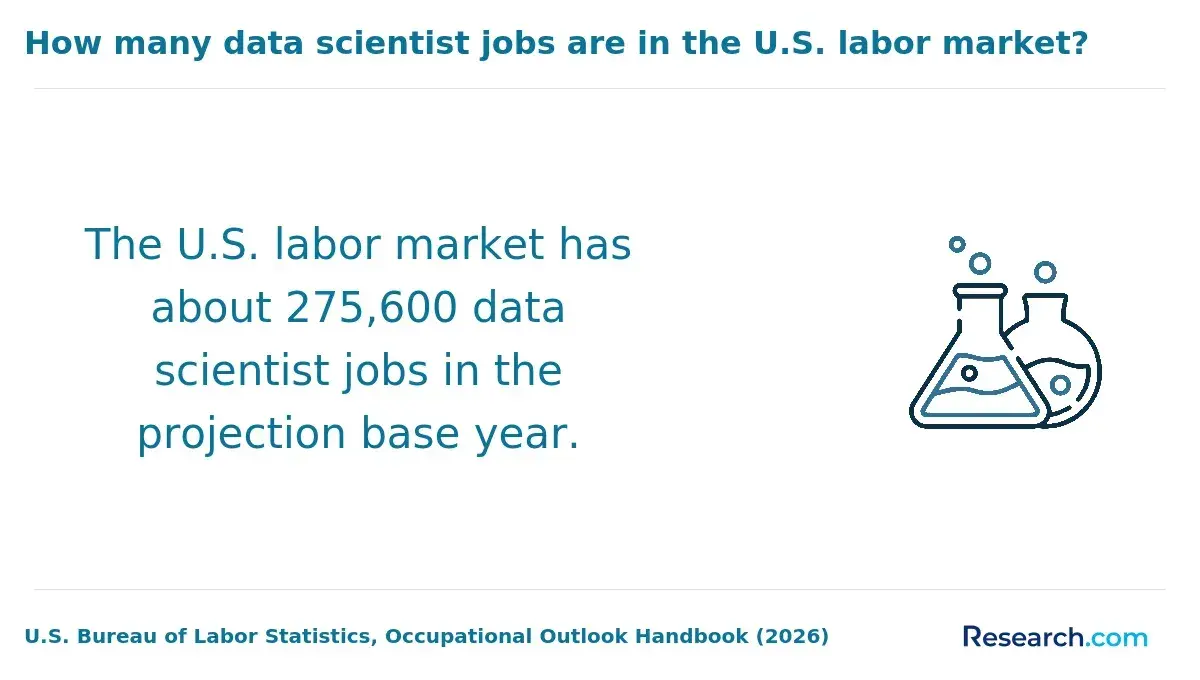
- The U.S. Bureau of Labor Statistics projects 35% growth in data scientist employment from 2025 to 2035, but that occupation-wide forecast does not predict an individual graduate's job prospects.
What Is Data Lineage in an Online Data Science Master's?
Data lineage is the record of where data came from, how it changed, and where it was used. In a data science workflow, that can mean tracing raw records through cleaning, joins, feature creation, model training, and a final dashboard or prediction. Good lineage also identifies versions, owners, timestamps, and dependencies so another person can investigate an error or reproduce a result.
For a prospective student, the distinction is between learning about lineage and building it. A passing lecture may introduce the term; a substantive assignment requires students to record transformations and explain which downstream outputs would change if a source were corrected. Graduate-level work may add automated metadata capture, tests, access controls, or analysis of a broken pipeline.
Lineage matters in research and in organizations that must explain analytical results. It does not, by itself, establish that data is accurate or that a model is fair; it makes the path to those results inspectable.
What Courses Do Online Data Science Master's Programs Typically Include?
Online data science master's curricula commonly draw on statistics, programming, machine learning, databases, and applied projects, but requirements differ by school. Lineage is most likely to become a practical skill when coursework connects those areas rather than treating each dataset as a finished file.
The table shows where lineage-related work may appear. These are course categories to investigate, not promises about any particular program's syllabus.
| Course area | Potential lineage work | What to verify |
| Databases and data engineering | Source-to-target mappings, pipelines, schema changes | Whether students build and document transformations |
| Machine learning | Training-data and feature provenance | Whether assignments track dataset and model versions |
| Data governance or ethics | Ownership, access, retention, and auditability | Whether concepts are applied to actual workflows |
| Capstone or practicum | End-to-end documentation for a deliverable | Whether lineage is assessed in the rubric |
Ask for a recent syllabus and project rubric. A dedicated data engineering or governance course may offer more depth than a single unit, but substantial project requirements can be just as revealing. If your goal is primarily reporting and business analysis rather than building model pipelines, compare data analytics master's program options as well.
How Do Online Data Science Master's Programs Compare With Campus Programs?
Delivery format does not determine whether a program teaches lineage well. Students in either format need access to realistic data workflows, usable computing environments, feedback on technical work, and collaborators who can inspect one another's results.
The practical differences below matter when deciding whether you can complete a demanding pipeline project alongside other commitments. Individual programs may combine features of both formats.
| Consideration | Online program | Campus program |
| Project collaboration | May depend on remote tools and scheduled meetings | May offer more in-person working time |
| Computing access | Requires clear remote access and technical support | May include on-site labs and support |
| Schedule | May offer asynchronous work, though deadlines still apply | Typically requires attendance at set locations and times |
Ask whether group projects require live meetings, whether cloud or other computing resources are included, and how instructors review pipeline documentation. Students balancing employment may also want to compare data science master's choices for full-time employees. Choose online study for its scheduling fit only if its project support is also strong enough for your goals.
What Projects Demonstrate Data Lineage Skills in Data Science Programs?
The strongest portfolio project makes a specific analytical result traceable, not just visually polished. For example, a student might combine public datasets, document each transformation, train a model, and show which source fields contributed to its features and final predictions.
When examining capstone expectations - or planning your own project - look for evidence across the full workflow:
- Source record: Identify datasets, collection dates or versions, permitted uses, and known limitations.
- Transformation record: Keep executable cleaning and join steps, tests, and an explanation of excluded records.
- Output record: Connect transformed data to features, model versions, evaluation results, and any published report.
- Change analysis: Demonstrate what must be rerun if an input or transformation changes.
A useful capstone does not require proprietary data or a particular commercial tool. Reproducible code, a dependency diagram, and clear documentation can demonstrate the underlying skill. Treat a program's offer of a capstone as a starting point; confirm that students can choose a pipeline-focused topic and receive feedback on its technical implementation.
What Are the Admission Requirements for an Online Data Science Master's?
Requirements vary by institution. Programs may evaluate an applicant's bachelor's degree, quantitative preparation, programming experience, transcripts, recommendations, or statement of purpose. Do not assume professional experience substitutes for a stated prerequisite - or that a degree in a different field automatically rules you out.
For lineage-focused study, readiness in Python or another programming language, SQL, basic statistics, and working with imperfect datasets is especially useful. If you need preparation, ask admissions which courses formally satisfy prerequisites and which resources merely help you get ready. Some AI master's programs with bridge courses illustrate an alternative for applicants seeking structured technical foundations, but verify the content and admissions rules of any program you consider.
How Long Does an Online Data Science Master's Take and Cost?
There is no reliable single duration or price for this degree category. Credit requirements, enrollment pace, residency charges, fees, and required technology vary by program; an advertised tuition figure may not represent the amount you will pay. A lower-cost option can also be a poor fit if it offers too little access to the courses or project supervision you need.
Request a written estimate based on your residency and intended pace. Check tuition and mandatory fees, software or computing charges, any travel requirements, the maximum time allowed to finish, and how tuition could change before completion. If you will keep working, compare the feasible course load rather than the fastest advertised timeline. Employer assistance, scholarships, and borrowing terms can alter the comparison; review ways to pay for a data science master's program before treating the sticker price as your final cost.
How Can You Verify Accreditation for an Online Data Science Master's?
Check that the degree-granting institution holds recognized institutional accreditation, rather than relying on a marketing statement that an individual online course is "accredited." Confirm the institution's current status through its accreditor's directory or the U.S. Department of Education's accreditation database. Also check that the institution, program name, and credential match what appears in the catalog.
Accreditation is a baseline legitimacy check, not proof of data lineage depth. If you live outside the institution's state, confirm it can enroll students where you reside and ask whether any in-person requirements apply. Then return to the evidence that matters for this topic: syllabi, project rubrics, and faculty feedback on reproducible workflows.
What Careers and Salaries Can Data Science Master's Graduates Expect?
Lineage skills can support data scientist, data engineer, machine learning, analytics engineering, and data governance work, although job titles and requirements differ by employer. The most relevant role depends on whether you prefer modeling, building dependable pipelines, or managing how data is documented and used. Explore data career pathways supported by online data science study with that distinction in mind.
For salary context, the U.S. Bureau of Labor Statistics reports a $120,230 median annual wage for data scientists in May 2025. That is an occupation-wide figure, not a starting salary or an outcome attributable to a master's degree. Compare prospective programs against the skills in your target job postings, and weigh any published graduate salary report by its response rate, graduates' prior experience, location, and time period.
What Is the Job Outlook for Data Science Master's Graduates?
The U.S. Bureau of Labor Statistics projects about 24,800 data scientist openings annually, on average, from 2025 to 2035. Openings include replacement needs as well as growth; they are not reserved for master's graduates. The forecast makes it reasonable to investigate the field, but it cannot establish demand for a specific program's graduates or for lineage specialists in a particular location.
As data workflows incorporate more automation, the practical question is whether you can inspect and explain what automated processes did. A program that requires documented, testable pipelines offers stronger evidence of that ability than one that assesses only a final model score.
How Do You Choose a Reputable Online Data Science Master's Program?
Choose a program by examining what students actually build and how their work is assessed. A ranking or a course labeled "data governance" cannot establish that graduates practice lineage.
Use the following checks to narrow your shortlist, then ask each program for specific examples:
- Find the required courses covering databases, data engineering, machine learning, and governance; determine whether lineage is a passing mention, a unit, a full course, or an assessed project skill.
- Request a recent capstone rubric or sample project description and look for source tracking, transformation documentation, reproducibility, and change analysis.
- Confirm remote computing access, instructor feedback, collaboration expectations, and scheduling requirements you can meet.
- Verify institutional accreditation and enrollment eligibility, then compare written total-cost estimates at the same study pace.
- Check whether the resulting portfolio work matches the responsibilities in roles you would realistically pursue.
A warning sign is a program that promises "real-world" projects but cannot explain what students submit or how reproducibility is graded. Choose deeper pipeline and governance work if you want to build or audit data systems; prioritize other strengths if your goals center on statistical research or a different specialty.
Other Things You Should Know About Data Science
Version control records changes to code or files. Data lineage connects sources, transformations, and outputs. A reproducible project often needs both.
No. Clear source records, executable transformations, dependency documentation, and tests can show that you understand lineage. Tool requirements depend on the course or employer.
Not without appropriate permission. Use public or suitably authorized data for a public portfolio, and follow applicable privacy, contractual, and institutional rules.
There is no universal certification requirement. Check postings for your target roles; demonstrated pipeline and documentation skills may be more relevant than a certificate alone.
References
- Optimizing collaborative learning in online courses - PMC - NIH https://pmc.ncbi.nlm.nih.gov/articles/PMC7891413/
- 9 Strategies to Promote Collaborative Online Learning | University of South Florida https://www.usf.edu/innovative-education/news/2021/9-strategies-to-promote-collaborative-online-learning.aspx
- Online Master's in Data Science | Saint Mary's University of Minnesota https://www.smumn.edu/degree/masters/data-science/
- Online Program - UChicago Data Science Institute https://datascience.uchicago.edu/education/masters-programs/online-program/
- Master's in Data Science | utexas.edu https://cdso.utexas.edu/msds
- Curriculum | Master's in Data Science - University of Notre Dame https://datascience.nd.edu/masters/curriculum/
- Master of Science (M.S.) in Applied Data Science - UGA Online https://online.uga.edu/degrees-certificates/master-of-science-in-applied-data-science/
- M.S. in Data Science, Online | virginia.edu https://datascience.virginia.edu/degrees/msds-online
- Develop a Capstone | Assessment and Curriculum Support Center https://manoa.hawaii.edu/assessment/resources/capstone-experiences/
- MS in Data Science Curriculum & Course Descriptions | Eastern University https://www.eastern.edu/academics/colleges-seminary/college-health-and-sciences/departments/department-mathematical-5


