2027 Cheapest Accredited Online Public Relations Master's Programs With No Out-of-State Tuition Surcharge

Co-Founder and Chief Data Scientist
An online public relations master's can expand strategic communication skills without requiring relocation, but a low advertised rate does not always produce the lowest bill. The U.S. Bureau of Labor Statistics reports a $69,780 median annual wage for public relations specialists in May 2024, making cost-conscious graduate study a meaningful career decision.
This guide helps working communicators compare residency-neutral tuition, institutional accreditation, fees, transfer policies, program formats, and career fit so they can identify an affordable program that supports their goals.
Key Things You Should Know
- A true no-out-of-state-surcharge program charges online students one published tuition rate regardless of where they live. It does not necessarily have the lowest total cost.
- Most online public relations and strategic communication master's degrees require about 30 to 36 credits, so compare required credits multiplied by tuition, then add mandatory fees, books, and any travel costs.
- For career context, public relations specialists had a $69,780 median annual wage in May 2024, but a degree's value depends on role progression, employer support, debt, portfolio development, and the program's quality.
What Does No Out-Of-State Tuition Surcharge Mean for an Online Public Relations Master's Program?
A no-out-of-state tuition surcharge means an institution applies the same tuition rate to eligible online students whether they reside in the university's state or elsewhere. It is often described as a flat online rate, distance-learning rate, nationwide rate, or online tuition rate. It does not mean tuition is free, discounted for every student, or identical to the school's on-campus in-state rate.
For an online public relations master's program, this pricing model is especially useful for working professionals who cannot move simply to qualify for resident tuition. It can make budgeting easier because a move, lease, or residency waiting period should not be necessary to access the listed online rate.
The distinctions below prevent a common comparison error: treating every residency-related policy as if it produced the same price.
| Tuition model | How it works | Best fit | Main caution |
| Flat online tuition | One rate applies to qualifying online students regardless of residence. | Out-of-state students seeking predictable pricing. | Course, technology, and graduation fees may still vary or apply separately. |
| Traditional resident and nonresident rates | Tuition is determined by legal residency rules. | Students who already qualify for in-state tuition. | Moving to a state may not establish residency for tuition purposes. |
| Limited nonresident waiver | A school reduces the nonresident rate for defined groups or terms. | Students who meet the stated eligibility conditions. | The waiver can be temporary, competitive, or unavailable for a specific program. |
| Private-university tuition | Many private nonprofit institutions charge one tuition rate to all students. | Students comparing net price and scholarships. | A single rate can still be higher than a public online rate. |
A residency-neutral rate is most valuable when it is clearly stated for the exact degree and when its total program cost beats alternatives after fees and aid. A resident student may still find a traditional public university less expensive, while a student receiving substantial employer funding may prioritize curriculum or networking over a small tuition difference.
How Can Students Verify Accreditation for an Affordable Online Public Relations Master's Program?
Accreditation is a quality and eligibility check, not a ranking of public relations curricula. For most students, the essential credential is institutional accreditation from an accreditor recognized by the U.S. Department of Education or the Council for Higher Education Accreditation. Institutional accreditation can affect federal aid eligibility, employer confidence, credit transfer, and admission to later doctoral study.
Public relations does not have one universal programmatic accreditor required for professional practice. Journalism and communication schools may hold specialized recognition or accreditation, such as accreditation associated with journalism and mass communication education, but its presence is not a universal requirement for a credible PR master's degree.
Evaluate the actual curriculum, faculty, capstone expectations, and career support alongside institutional accreditation. They help distinguish a fully accredited university from a program that merely uses accreditation language in marketing.
Use these verification steps before submitting an application:
- Find the university's institutional accreditor on its official accreditation or consumer-information page.
- Confirm the accreditor's recognition through the U.S. Department of Education or Council for Higher Education Accreditation database.
- Confirm that the online public relations, strategic communication, communication, or integrated communications master's degree is offered by that institution and is eligible for the stated online tuition.
- Ask admissions whether the transcript and diploma identify online delivery differently and whether the program has any required campus attendance.
- For a specialized credential claim, ask which body recognizes the school or program and what that recognition means in practice.
A master's may be titled an MA, MS, Master of Communication, or Master of Professional Studies. An MA may include more theory or research, while an MS or professional degree may emphasize analytics, campaigns, digital strategy, and management; titles alone do not determine rigor.
Students considering a more research-oriented path can also compare how an online masters degree in history may use thesis-based study differently from the capstone-focused structure common in professional communication programs.
How Much Does the Cheapest Online Public Relations Master's Program Cost in Total?
The cheapest online public relations master's program is the one with the lowest verified net total cost for your situation, not simply the lowest per-credit number. A program requiring fewer credits can cost less even with a higher per-credit rate.
Conversely, a low tuition rate can lose its advantage if the program adds substantial mandatory fees, campus visits, or courses not covered by the standard rate.
Most master's programs in public relations, strategic communication, or closely related communication fields require approximately 30 to 36 credits. Request a written estimate based on the current catalog year, your planned enrollment pattern, and the exact program track.
This calculation framework shows the charges that should be included before labeling a program the cheapest.
| Cost component | How to calculate it | Why it matters |
| Base tuition | Required program credits × published online per-credit rate, or published program price. | This is the starting point, not the final total. |
| Mandatory institutional fees | Per-term or per-credit fees × expected terms or credits. | Online, technology, student-service, and distance-learning fees can change the comparison. |
| Program-specific charges | Add course materials, software, assessment, practicum, and graduation charges where required. | Communication courses may require production tools or specialized platforms. |
| Travel and residency costs | Add transportation, lodging, meals, and time away from work for required visits. | A "mostly online" program can be materially more expensive than a fully online program. |
| Gift aid and employer support | Subtract confirmed grants, scholarships, and reimbursable benefits. | This produces a more useful estimated net price than tuition alone. |
Ask each institution for the total number of credits required after transcript review, whether tuition is locked for continuing students, and which fees are unavoidable. Do not subtract loans from the price calculation: loans finance an expense but do not reduce it. Also avoid assuming a school-wide online tuition page applies to every graduate program; professional programs can use separate rates.
Students generally do not need to establish residency when a program explicitly uses a residency-neutral online tuition rate. The key word is explicitly: the school should state that the applicable online graduate rate is the same for students regardless of location, or its tuition calculator should show the same rate after residence is selected.
Residency can still matter for programs with traditional public-university pricing, state grants, institutional scholarships, veteran benefits, or specialized waivers. Legal residency for tuition is determined by institutional and state rules; it is not automatically established by renting an apartment, obtaining a driver's license, or taking online classes from that state.
Before relying on a no-surcharge claim, ask the bursar or program representative these focused questions:
- Does the published online graduate tuition rate apply to this exact public relations or strategic communication master's degree?
- Will my residence outside the state change tuition, fees, eligibility, or required documentation at any point in the program?
- Are there separate rates for part-time, full-time, asynchronous, synchronous, or cohort enrollment?
- Is the stated rate guaranteed for continuing students, and if not, when can it change?
- Are students in my state authorized to enroll in the program, including any internship or practicum component?
A student who already receives a favorable resident rate should compare it against flat online alternatives rather than assume the nationwide rate is better. A nonresident who would otherwise pay a public university's higher rate will usually benefit more from a clearly documented flat-rate option.
Public institutions can offer strong value when their online graduate rate is low and residency-neutral, but public status alone does not make a program cheaper for nonresidents.
Private nonprofit universities often charge every student the same base tuition and may offer institutional scholarships that change the final comparison. For-profit institutions may also use one nationwide rate, but students should apply the same accreditation, outcome, fee, and borrowing scrutiny to every institution.
The comparison below focuses on decision factors rather than assumptions about institutional type.
| Institution type | Potential cost advantage | Potential limitation | When it may make sense |
| Public university with flat online tuition | May provide a competitive published rate for all online students. | Some programs retain separate fees or limited course availability. | Best for nonresidents seeking a predictable, lower base price. |
| Public university with residency-based tuition | In-state students may access a lower resident rate. | Nonresident tuition can substantially raise the total. | Best for confirmed residents or students with a valid waiver. |
| Private nonprofit university | One rate, flexible scheduling, and scholarships may improve net cost. | Base tuition can be higher before aid. | Best when grant aid, curriculum, network, or schedule supports the premium. |
| For-profit university | May offer frequent starts and uniform online pricing. | Students should closely review accreditation, fees, borrowing, and outcomes. | Consider only after a like-for-like total-cost and quality comparison. |
Professionals moving toward brand leadership or communications management may also compare an online MBA with a PR master's. An MBA can be a better match for broad finance, operations, and management goals, while a public relations master's is usually more focused on messaging, media relations, reputation, research, and campaign strategy.
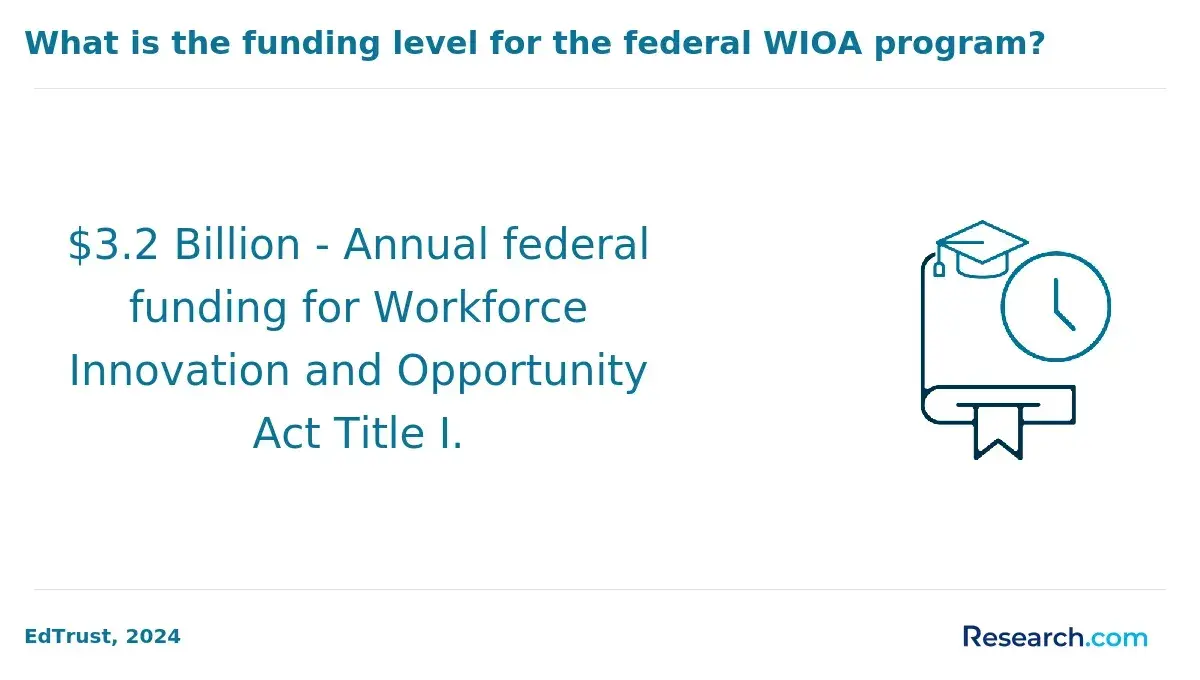
Financial aid can reduce the net cost of an affordable online public relations master's program, but eligibility and amounts vary by institution, enrollment level, citizenship status, academic record, and available funding.
Graduate students commonly begin by filing the FAFSA to determine eligibility for federal student aid; direct unsubsidized and graduate PLUS loans may be available to eligible borrowers, but both must be repaid with interest.
Prioritize funding that lowers the price rather than simply spreads it over time. The following sequence helps students compare offers on a consistent basis:
- Submit the FAFSA by the school's priority deadline and complete any institutional aid application.
- Ask the department about communication-school scholarships, graduate assistantships, alumni awards, and awards open to fully online students.
- Ask your employer whether tuition assistance covers online graduate study, required fees, books, and courses taken outside a traditional term.
- Compare aid letters by separating grants and scholarships from loans, then calculate the remaining tuition and mandatory-fee balance.
- Confirm reimbursement rules before enrolling, including grade requirements, annual caps, employment-service commitments, and preapproval procedures.
Employer assistance can make a higher-priced accredited program more affordable than a lower-priced alternative if the employer pays a meaningful portion of eligible costs. However, do not count expected reimbursement until it is approved in writing. Students should also compare the repayment obligation created by any borrowing against the likely career use of the degree.
Program format affects both direct charges and opportunity costs. A fully online asynchronous program can reduce commuting and scheduling pressure, while a synchronous cohort can provide structured interaction but require attendance at fixed times. Hybrid programs may offer valuable networking or production experiences, yet required travel can eliminate an apparent tuition advantage.
Completion time also changes cost. Accelerated programs can reduce the number of terms in which certain fees are charged and get students to a career transition sooner, but they demand substantial weekly capacity.
Traditional part-time programs may be better for professionals whose employer reimbursement is capped annually or whose work schedule makes accelerated coursework risky.
Use this format comparison to match affordability to realistic capacity.
| Format | Typical cost effect | Best fit | Question to ask |
| Fully online, asynchronous | Usually minimizes travel and allows flexible pacing. | Working professionals with variable schedules. | Are group projects, exams, or live presentations scheduled at specific times? |
| Fully online, synchronous | Travel may be low, but fixed meeting times can affect work flexibility. | Students who want regular live discussion. | What time zone are required sessions held in? |
| Hybrid or low-residency | Travel, lodging, and missed work can increase total cost. | Students who value in-person networking or workshops. | How many visits are required, and are they mandatory for every cohort? |
| Accelerated | Can reduce time-related expenses but may concentrate tuition payments. | Students with strong time availability and predictable income. | What is the weekly workload, and can students reduce course load without a penalty? |
Acceleration is not automatically cheaper if it causes withdrawal, repeat-course charges, or unmanageable borrowing. Students evaluating speed across graduate options can see similar scheduling trade-offs in the best online schools for construction management, where program pacing and required applied experiences also affect total value.
Transfer credit can reduce the cost of an online public relations master's degree only when a school accepts applicable graduate-level coursework and applies it to required degree credits.
Many programs limit the number of transferable credits, require a minimum grade, impose a recency rule, or exclude internships, capstones, and core strategic communication courses. Some professional master's programs do not accept transfer credit at all.
Do not estimate savings until the program completes a formal or preliminary transcript evaluation. A transferred course may satisfy an elective rather than reduce the total credits required, and a school can change its decision after reviewing syllabi.
Gather the following materials before requesting a transfer review. They allow the evaluator to compare content rather than relying only on course titles:
- Official transcripts showing course level, credits, grades, and the awarding institution.
- Course descriptions and syllabi that document learning outcomes, assignments, readings, and assessment methods.
- Evidence of institutional accreditation for prior graduate coursework when requested.
- A written confirmation of how many credits will apply and which degree requirements they replace.
- The policy explaining minimum credits that must be completed at the new institution.
Transfer-friendly policies can be especially useful for students with prior graduate communication coursework, but they are not a substitute for a coherent curriculum. Compare policy details with other graduate fields.
For example, the cheapest business administration degree online may use different transfer and prerequisite rules than a specialized public relations master's program.
A cheap accredited online public relations master's degree can be worth the cost when it fills a specific skill or credential gap tied to your intended role. Public relations specialists develop media materials, monitor public opinion, support campaigns, coordinate communication with stakeholders, and help protect organizational reputation.
More senior work may involve crisis communication, executive messaging, issues management, research interpretation, client leadership, budget oversight, and team management.
The U.S. Bureau of Labor Statistics projects 5% employment growth for public relations specialists from 2023 to 2033. That national outlook indicates continued demand, but it does not predict an individual graduate's hiring result, geographic opportunity, or salary. Use it as context while evaluating your local market, experience, portfolio, and employer expectations.
A lower-cost program is often a strong investment for a communications professional who needs advanced strategy, analytics, leadership, or digital reputation skills and can limit borrowing. A more expensive program may be defensible when it offers a substantially better curriculum fit, faculty access, employer-recognized network, practicum, or career support that is relevant to a defined target role.
Before enrolling, assess return on investment with these career-focused checks:
- Identify the role you want next, such as public relations specialist, communications manager, media relations manager, corporate communications strategist, or nonprofit communications director.
- Compare the program's required courses with the skills requested in current job postings, including writing, research, social listening, measurement, crisis planning, and presentation.
- Determine whether you will produce portfolio-ready work through a capstone, client project, internship, or campaign simulation.
- Calculate the amount you would need to borrow and decide whether the expected career benefit justifies that repayment obligation.
- Ask whether your current employer values the credential, offers promotion pathways, or provides tuition support.
Public relations is not a licensure-based profession in the way many clinical fields are, so a master's is generally not legally required to enter the field. Experience, writing ability, strategic judgment, relationships, and a demonstrable portfolio remain important.
Students attracted to legal research and advocacy communications rather than organizational reputation work may find a paralegal degree worth comparing as a different, more law-focused education path.
How Should Students Compare the Cheapest Accredited Online Public Relations Master's Programs?
Compare the cheapest accredited online public relations master's programs using a single worksheet and the same assumptions for every school. The goal is not to find the smallest advertised number; it is to identify the program with the strongest combination of verified total cost, accreditation, usable curriculum, flexibility, and career relevance.
The comparison categories below make it easier to eliminate programs that look inexpensive but do not meet your requirements.
| Comparison category | What to record | Decision signal |
| Accreditation | Institutional accreditor and any relevant school-level recognition. | Verify before paying an application fee or accepting aid. |
| Tuition policy | Published online rate, residency language, and tuition-lock policy. | Prefer a written confirmation that your location does not trigger a surcharge. |
| Total required credits | Catalog credits, prerequisites, and transfer credits accepted. | Use required credits, not a broad program range, in cost calculations. |
| Mandatory costs | Term fees, technology fees, software, books, travel, and graduation charges. | Include all unavoidable expenses before comparing totals. |
| Format and timeline | Asynchronous or live classes, start dates, course load, and required visits. | Choose a pace that is sustainable alongside work and family obligations. |
| Curriculum and outcomes | Courses, concentration options, capstone, portfolio work, and career services. | Select the program that supports your specific next role, not only the lowest price. |
Red flags include vague statements about "affordable" tuition, an online-rate page that does not name the graduate program, unclear accreditation information, unexplained fees, and pressure to enroll before receiving a written estimate.
Also be cautious about assuming all communication degrees are interchangeable: a general communication master's, strategic communication master's, and public relations master's can have different elective options, research expectations, and professional outcomes.
A practical final step is to request written answers from each finalist, calculate a net total after confirmed grants and employer aid, and rank the programs by both cost and career fit. The best choice is usually the least expensive accredited option that you can complete successfully and that builds the capabilities your target employers actually value.
Other Things You Should Know About Public Relations Programs
Many online programs are designed for working adults and offer part-time or asynchronous study. Review the expected weekly workload, live-session requirements, group projects, and capstone schedule before committing. Taking fewer courses may improve sustainability but can increase the time to completion.
Requirements vary. Many programs accept applicants from communication, journalism, business, liberal arts, and other fields. Applicants without prior communication coursework may need prerequisites or may be expected to show relevant professional experience, writing ability, and a clear statement of purpose.
Not always. Professional programs commonly use a capstone, campaign plan, applied research project, or portfolio instead. Research-oriented MA or MS programs may offer or require a thesis. Choose a thesis option if you want substantial research training or may pursue doctoral study; choose an applied capstone if portfolio development is the priority.
Choose public relations for media relations, reputation, stakeholder communication, and crisis work. Strategic communication is often broader and may combine public relations, digital communication, and organizational messaging. Integrated marketing communications usually adds advertising, branding, customer communication, and marketing coordination. Compare required courses rather than relying on the degree title alone.
- Average Cost of a Master's Degree: 2025 Analysis https://educationdata.org/average-cost-of-a-masters-degree
- The 10 Most Affordable Online Master's in Public Relations - Best Marketing Degrees https://www.bestmarketingdegrees.org/the-most-affordable-online-masters-in-public-relations/
- Scholarships for Online Grad School | OEDb.org https://www.oedb.org/graduate-scholarship/
- Scholarships & Grants 2026 https://www.prsafoundation.org/scholarships-awards/
- 2025 Most Affordable Online Master's Degrees in Public Relations https://www.onlineu.com/most-affordable-colleges/public-relations-masters-degrees
- Public Relations Master of Arts Degree https://www.fullsail.edu/degrees/public-relations-master
- Online Master's in Public Relations Programs in 2025 https://www.mastersincommunications.org/online-public-relations/