2027 BS in Business Administration Decision Guide: A Public Online University or an Employer Partner School
Audited and Verified:
Our Editorial and Data Verification Process
Research.com uses government datasets, official education statistics and primary institutional information to support its career and degree guides. Our review process checks factual accuracy, occupational definitions, source dates and the requirements associated with the credentials discussed.
How This Article Was Fact-Checked
Our editorial team verifies salary estimates, employment projections, education requirements and program information against original data providers and official organizations. Salary figures are checked against the relevant occupational definitions and reporting periods. Information about licensure, accreditation and required in-person training is reviewed separately.
Fact-checked and verified on:

Co-Founder and Chief Data Scientist
An employer education benefit can make a partner school look like the obvious choice for a BS in business administration. But the school your employer promotes may not be the one that applies the most transfer credits, fits your schedule, or costs you least if you change jobs.
This guide is for working adults comparing an employer-linked option with a public online university. It shows how to assess both degree pathways using the same evidence: an official credit evaluation, current program requirements, a workable course schedule, and the written terms of any employer benefit.
Key Things You Should Know
- An employer partner school is not automatically cheaper: compare your cost after benefits, fees, applicable transfer credits, and any reimbursement you must wait to receive.
- For a bachelor's degree commonly requiring about 120 semester credits, the decisive number is how many required credits remain after each school evaluates your record—not how many credits it accepts.
- Choose the public online university if it offers a more reliable completion path; choose the partner school if its verified benefits and academic fit outweigh restrictions tied to your employer.
What is a BS in Business Administration, and who is it designed for?
A BS in Business Administration is an undergraduate degree covering how organizations manage money, people, customers, information, and operations. It can serve first-time students, employees seeking a bachelor's credential for advancement, and returning students who need to finish a degree. The exact curriculum matters more than the initials: a BS, BBA, or leadership degree may emphasize different quantitative courses, electives, and applied work.
For an employee already supervising projects or coordinating operations, the strongest program is one that fills identifiable skill gaps rather than merely repeating familiar management concepts. If leadership is the main goal and a broad business core is unnecessary, compare the required courses and transfer treatment with undergraduate leadership programs with shorter timelines. A shorter advertised timeline is not proof that your own degree will finish sooner.
Is a public online university or employer partner school better for a business degree?
Neither category wins by default. A public online university is a public institution delivering the degree online. An employer partner school is an institution included in an employer's education-benefit arrangement; it may itself be public, private nonprofit, or for-profit. The school—not the employer—sets academic requirements and awards the degree.
The comparison below identifies what each arrangement may offer and what you need to confirm before treating it as an advantage:
| Decision factor | Public online university | Employer partner school |
| Price | Published tuition may be predictable, but residency rules and fees matter. | Employer payment or a negotiated rate may reduce cost, subject to benefit terms. |
| Credit application | The school decides which prior courses satisfy degree requirements. | The school also decides; a partnership does not guarantee more usable credits. |
| Scheduling | Online courses may still have fixed deadlines or live meetings. | Workforce-focused scheduling may help, but course-level obligations still govern. |
| Job change | Enrollment is generally independent of a particular employer. | The degree can usually continue, but employer funding may not. |
Choose based on the path to graduation, not the partnership label. Ask both schools for a degree audit and course schedule, then ask your benefits office for the written policy. If staying employed while studying is the binding constraint, use guidance on how to balance employment and business administration college study to examine actual weekly obligations.
How do you compare accreditation, quality, and employer recognition?
First, verify the degree-awarding institution's current institutional accreditation through the institution and accreditor. Then check whether any claimed AACSB, ACBSP, or IACBE accreditation covers the relevant business school or program. Institutional accreditation and business accreditation answer different questions; neither alone establishes that graduates secure particular jobs.
For academic quality, compare the current catalog and ask who teaches required courses, when they are offered, how students reach advisers, and what happens if they pause enrollment. Request outcomes specifically for online or adult students if available, along with the cohort and measurement period. Employer recognition is best tested against actual job postings and your employer's promotion policy - not a school's list of corporate partners.
Cost-focused comparisons can start with low-tuition business administration schools accepting FAFSA, but verify accreditation, aid eligibility, and program details directly before relying on a listing.
Most programs combine general education with accounting, economics, finance, marketing, management, operations, business law, and quantitative coursework. Requirements vary: one school may require statistics and a strategy capstone, while another offers more electives or an approved workplace project. Compare required courses—not just concentration names—to see whether the degree develops skills relevant to your next role.
If you want to move into human resources, check for employment law, HR operations, and workforce analytics rather than assuming a general management course provides that preparation. You can compare HR curricula and career directions against the business core. Ask whether a concentration is formally recorded, adds credits, or delays a required course; an elective alone does not create a separate credential.
Schools commonly request evidence of secondary education or prior college study, official transcripts, and an application. Some admit students to the university first and assess entry to the business major separately. GPA thresholds, mathematics preparation, deadlines, and policies for older coursework differ, so obtain the requirements for your intended enrollment term.
For a returning student, admission is only the first check. Ask each school to classify prior credits as general education, business core, concentration, or electives and identify any residency requirement. If your goal is specifically HR, transfer-friendly human resources bachelor's degrees may be worth comparing—but only an official evaluation can establish which option uses more of your coursework.
A bachelor's program commonly totals about 120 semester credits, but your remaining credits and course sequence determine your completion time. A transfer estimate that counts a course as an elective may leave a required accounting or statistics course unfinished. Ask each school for a term-by-term plan showing prerequisites, course availability, and the credits you must earn there.
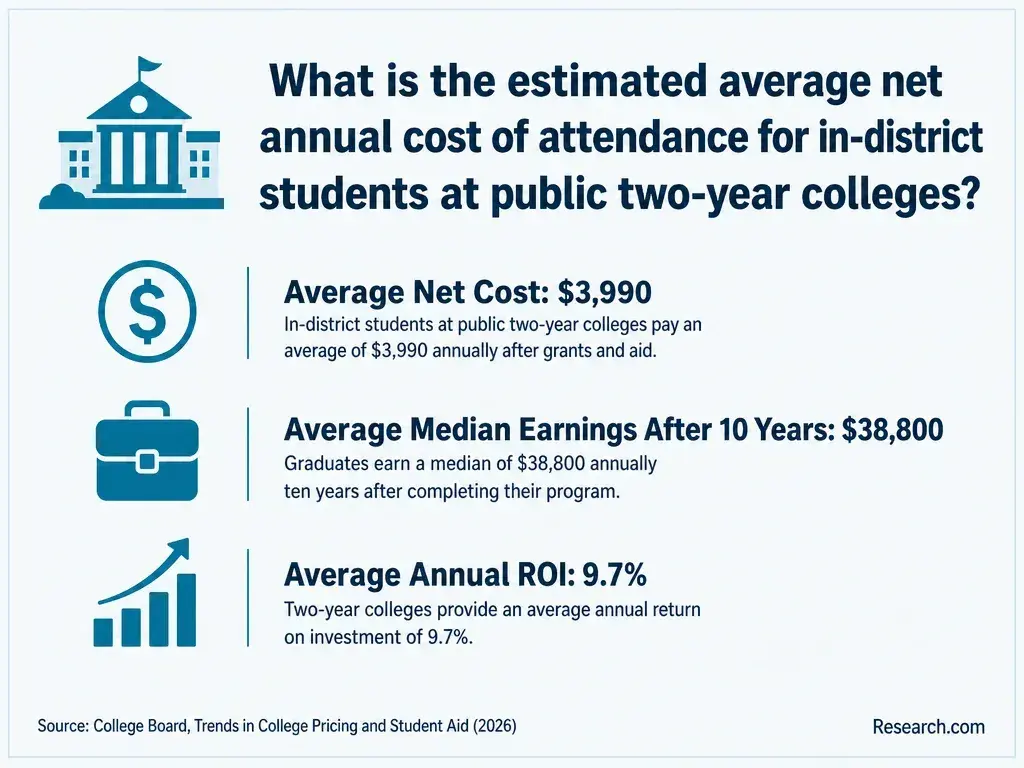
Compare the total cost to finish, not advertised tuition alone: remaining tuition, mandatory fees, books or software, potential travel, and borrowing costs. Then subtract only aid and employer payments for which you are actually eligible. A partner school may require you to pay first and seek reimbursement after a passing grade; a public university may cost less upfront even without a special employer rate. Use low-cost online business degree programs to identify candidates, then request individualized estimates from both schools.
Online study removes a commute, not necessarily fixed class times. Both formats can include team projects, presentations, exams, and deadlines. Campus courses may offer easier access to in-person events and recruiting, while online courses can make continued employment more feasible. Ask for sample syllabi and confirm live meetings, proctoring, group work expectations, accessibility support, and any campus visits.
An accelerated calendar can reduce elapsed time without reducing coursework. If speed matters, compare an accelerated business college program guide with your available weekly study hours and the school's actual course rotation. The fastest format on paper may be the least sustainable alongside full-time work.
The degree can support applications for business operations, sales support, HR, marketing, procurement, and project coordination roles. Your entry point depends on relevant experience and evidence of specific skills. An employee who already manages schedules and vendors may have a more direct route into operations than someone seeking a first job in financial analysis.
For project-focused work, document responsibilities such as tracking budgets, communicating with stakeholders, and resolving schedule changes; a course title alone is weaker evidence. Compare job postings before choosing between a general business study and a specialized pathway, including project management bachelor's residency and transfer requirements if you have prior credits. Manager positions typically call for demonstrated responsibility beyond completing a degree.
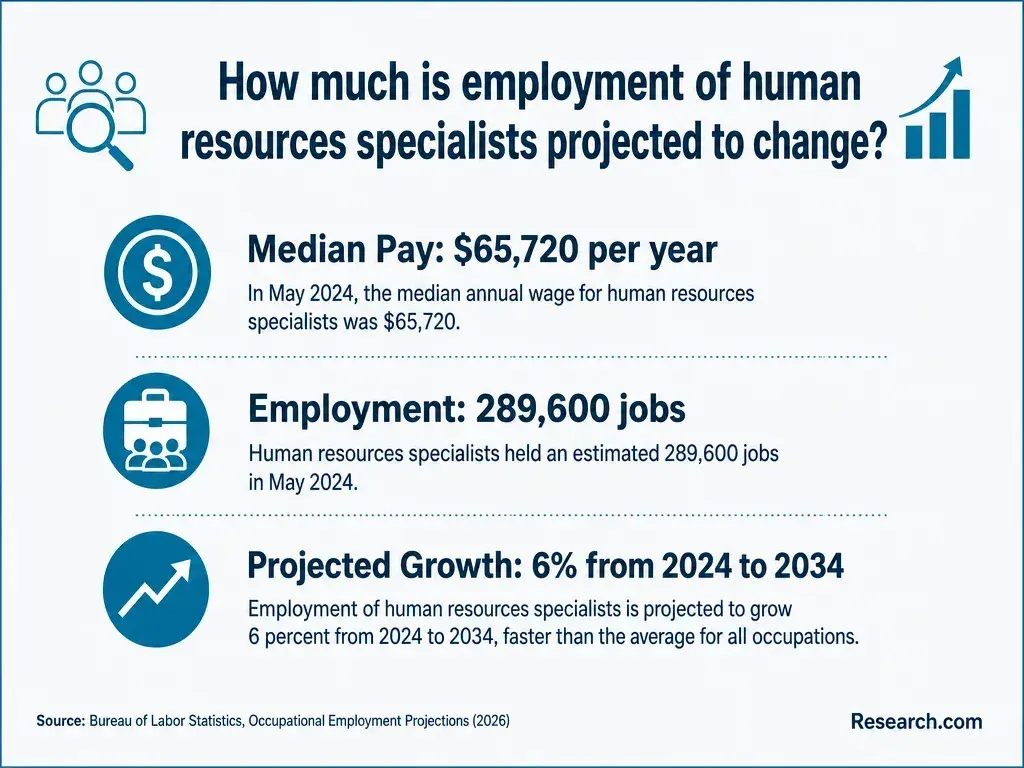
There is no single salary for this degree because pay attaches to an occupation, location, employer, and experience level. The U.S. Bureau of Labor Statistics reports a $75,940 median annual wage for human resources specialists in May 2025. That is an occupation-wide midpoint, not an expected starting salary for a new business administration graduate; some HR positions also favor specialized preparation or relevant experience.
When comparing schools financially, use salary information for the specific jobs you could realistically pursue and do not assume a degree will trigger a raise. If completion speed affects when you can apply for degree-required openings, examine undergraduate programs with faster pacing alongside their workload and total cost. A faster schedule has value only if you can complete it.
Do business administration graduates need licenses or professional certifications?
A general BS in Business Administration does not itself confer a professional license, and many business coordination roles do not require one. Requirements change with the occupation: CPA licensure has state-specific rules, financial services activities may require licenses, and voluntary HR or project management certifications have their own eligibility standards. Confirm the rules with the relevant regulator or credentialing organization before selecting courses around a credential.
If your goal is project work, compare the cost and depth of a degree with targeted training, experience, and any certification you actually qualify to pursue. Economical project management degree programs are an alternative to investigate, not a substitute for checking a certification's separate requirements.
Other Things You Should Know About Business Administration
The degree-awarding school issues the credential. Confirm the exact institution and degree title with the school; a partnership does not make your employer the awarding institution.
Do not assume either complete privacy or automatic employer access. Read the benefit agreement and the school's consent forms to learn what information is shared to administer payment.
Only with appropriate employer permission and within the school's rules. If approval is unavailable, ask your instructor about public, simulated, or properly anonymized data.
Ask the benefits office whether current students retain funding, for how long, and under what conditions. Get the answer in writing before depending on future payments.
- Frequently asked questions about educational assistance programs | Internal Revenue Service https://www.irs.gov/newsroom/frequently-asked-questions-about-educational-assistance-programs
- Rule 1301:11-7-03 | Distance education. https://codes.ohio.gov/ohio-administrative-code/rule-1301:11-7-03
- Military Training Evaluation Program (MTEP) | dantes.mil https://www.dantes.mil/credit4training/
- Cost of Attendance (Budget) | 2025-2026 Federal Student Aid Handbook https://fsapartners.ed.gov/knowledge-center/fsa-handbook/2025-2026/vol3/ch2-cost-attendance-budget
- Business Bachelor's Degree Programs Online | WGU https://www.wgu.edu/online-business-degrees/bachelors-programs.html
- View and Understand the Class Schedule | buffalo.edu https://www.buffalo.edu/registrar/classes-and-grades/class-schedules/view-and-understand-the-class-schedule.html
- Transfer Credit for Military Experience | Official Catalog | Charter Oak State College https://www.charteroak.edu/catalog/current/academic_policies_regulations/transfer_credit_military_exp.php
- What's the Difference Between Asynchronous and Synchronous Learning? | Ohio State Online https://online.osu.edu/content-hub/blogs/whats-the-difference-between-asynchronous-and-synchronous-learning/
- Online Bachelor's in Business Degree Program | Capella University https://www.capella.edu/online-business-degrees/bs-business-program/
- Understanding Transfer Credit Guidelines and Limitations | American Public University https://www.apu.apus.edu/transfer-credit/graduate/transfer-credit-guidelines/