
2027 BS in Business Administration and Supply Chain Management and Logistics: Comparing a Minor with a Concentration
Audited and Verified:
Our Editorial and Data Verification Process
Research.com uses government datasets, official education statistics and primary institutional information to support its career and degree guides. Our review process checks factual accuracy, occupational definitions, source dates and the requirements associated with the credentials discussed.
How This Article Was Fact-Checked
Our editorial team verifies salary estimates, employment projections, education requirements and program information against original data providers and official organizations. Salary figures are checked against the relevant occupational definitions and reporting periods. Information about licensure, accreditation and required in-person training is reviewed separately.
Fact-checked and verified on:

Co-Founder and Chief Data Scientist
Choosing between a supply chain minor and a concentration can change which courses you take, how soon you finish, and how clearly your transcript signals your interests to employers. For students pursuing a BS in Business Administration, the better option depends less on the label than on the skills and experience each pathway lets you build.
This comparison explains the academic differences, connects them to realistic supply chain roles, and shows what to verify before committing credits or tuition.
Key Things You Should Know
- Choose a concentration when supply chain is your primary career direction and its required courses provide meaningful depth; choose a minor when you want a complementary skill set alongside another focus.
- Neither label guarantees a job. U.S. employment of logisticians is projected to grow 18% from 2025 to 2035, but relevant experience and analytical skills still matter.
- Compare the official degree audit, required courses, remaining credits, scheduling, and total cost before assuming a concentration is deeper or a minor is faster.
What Is a Supply Chain Management and Logistics Minor Versus a Concentration?
A minor is a defined secondary course of study alongside a major. A concentration is a formally designated focus within a major, such as a supply chain concentration within a BS in Business Administration. Schools determine both structures, including whether the designation appears on the transcript or diploma.
The comparison below describes common differences, not universal rules. The catalog and degree audit, not the label alone, establish what a particular student must complete.
| Decision factor | Supply chain minor | Business administration concentration |
| Academic role | Secondary field attached to a major | Focused pathway within the business major |
| Course fit | May require courses outside the major's planned electives | May use electives already reserved within the major |
| Potential advantage | Combines supply chain study with another primary field | Can provide a more coherent sequence of supply chain courses |
| Key limitation | May offer less room for advanced work | May restrict electives available for other interests |
A minor can make sense if your primary interest lies elsewhere but operations knowledge would help—for example, in a business that coordinates hiring and distribution. If workforce planning is your main goal, compare education options for future HR professionals rather than treating a supply chain minor as a substitute for HR preparation.
Is a Minor or Concentration Better for Supply Chain Careers?
For a student targeting procurement, inventory planning, transportation, or logistics analysis, a concentration is usually the stronger choice if it includes substantial coursework in those functions and an opportunity to apply it.
It keeps the business core while making supply chain the main academic focus. A minor is often better when supply chain supports a different goal, such as finance, information systems, or a sector-specific role.
Do not choose by credential name alone. Compare the number and level of relevant courses, prerequisites, access to internships or projects, and whether employers recruiting through the school hire for your target function.
An approved project that demonstrates spreadsheet analysis or process improvement may add more value than an extra introductory elective. Neither pathway replaces experience or qualifies a new graduate to manage a distribution operation immediately.
If your target is primarily scheduling and coordinating projects across functions rather than managing purchasing or product flow, affordable online project management degrees offer a different comparison point. Match the curriculum to job tasks before paying for a specialization.
What Does a BS in Business Administration With Supply Chain Focus Include?
A BS in Business Administration generally combines accounting, finance, economics, management, marketing, statistics, and business communication with upper-level electives.
A supply chain focus adds study of how organizations source materials, coordinate suppliers, manage inventory, and deliver goods or services. The exact balance varies by institution; a specialized supply chain bachelor's may devote more credits to the function than a general business degree with a concentration.
That distinction matters if you are using business administration to pursue a supervisory role. Broad management coursework can help you understand budgets and organizations, but it does not replace logistics-specific training or responsibility on the job.
If supply chain work is not your goal, explore shorter organizational leadership bachelor's programs as a separate option, checking whether their curriculum and completion rules fit your intended role.
Common subjects include operations management, procurement, inventory control, transportation, forecasting, and supply chain analytics. Course titles are less revealing than assignments: a forecasting course might require students to interpret uncertain demand data, while an operations course might ask them to map a process and explain its bottlenecks.
Check prerequisites before selecting a path. Statistics or introductory operations may need to come before advanced analytics, and a required course offered infrequently could delay graduation. Ask whether you can work with spreadsheets or approved software, receive feedback on a substantive project, and show a nonconfidential work sample to employers.
If you will study while employed, compare the actual course schedule with guidance on business administration study alongside full-time employment; group assignments and fixed deadlines can limit flexibility even in online classes.
An online concentration or minor can provide valuable preparation when it is part of a credible degree and gives students access to rigorous assignments, faculty feedback, appropriate software, and career support.
Delivery mode alone does not establish academic quality or employer recognition. Campus study may make it easier to access local employers or hands-on facilities; online study may better accommodate work or distance.
Before enrolling, check for required live meetings, proctored exams, campus visits, internship rules, and the availability of upper-level supply chain courses online. Confirm that the online option leads to the same officially designated degree pathway you intend to complete.
A list of leading US colleges for online business study can help you build a shortlist, but verify the supply chain option and its delivery requirements directly with each school.
Applicants generally need to satisfy the university's undergraduate admission rules; entry to the business major or a concentration may involve additional requirements.
Depending on the school, these can include prior college coursework, a minimum academic standing, or completion of accounting, economics, mathematics, or statistics courses. A minor may have its own declaration rules or prerequisite sequence.
Transfer students should ask for an official evaluation showing where accepted credits apply: general education, business core, supply chain requirements, or unrestricted electives.
A course accepted for credit does not necessarily satisfy the concentration. Before comparing accredited affordable business administration colleges with aid options, confirm admission eligibility, the applicable catalog, and which remaining courses each school will require.
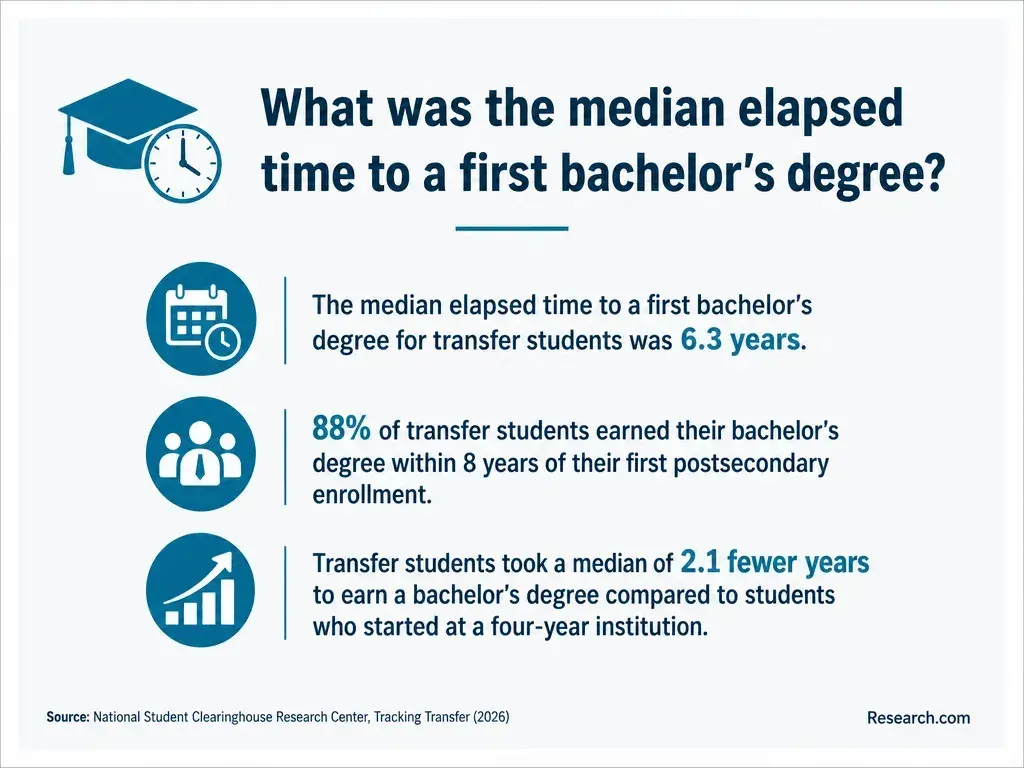
The full bachelor's degree commonly takes about four years of full-time study from the start, but an individual completion plan depends on prior credits, enrollment pace, prerequisites, and course availability. A concentration may fit inside business electives; a minor may add courses or the reverse may be true at a different school. Neither is automatically the quicker choice.
For a fair comparison, obtain a degree audit and price the remaining required courses, not just the advertised tuition rate. Include mandatory fees, books or software, potential travel, and any extra terms caused by sequencing. Then compare aid eligibility and the income or work hours you might forgo.
Resources that evaluate price duration and outcomes of business administration degrees can help frame the comparison, but only the school can confirm your applicable credits and charges.
Potential starting points include logistics coordinator, purchasing assistant, inventory analyst, transportation coordinator, and operations analyst.
Titles vary by employer: a logistics coordinator may track shipments and resolve delivery exceptions, while a purchasing assistant may maintain orders and communicate with suppliers. Analyst roles often call for stronger spreadsheet, data interpretation, and reporting skills.
The U.S. Bureau of Labor Statistics projects 18% employment growth for logisticians from 2025 to 2035. That occupation-level outlook signals demand for the function, not a guarantee that every graduate or minor holder will enter a logistician role. Internships, relevant work, and specific tools can help demonstrate readiness.
If project coordination better matches your interests, compare its duties and educational route separately; funding sources for a bachelor's in project management may matter when weighing that alternative against supply chain study.
The BLS reports a May 2025 median annual wage of $82,320 for logisticians. This is the median across employed workers in that occupation, not an expected starting salary for business administration graduates or evidence that a concentration pays more than a minor. Pay depends on duties, experience, industry, and location.
Use postings for the entry-level roles and locations you would actually consider when judging the financial return on additional coursework. A faster path to graduation can reduce time away from full-time work, but only if required classes are available when you need them.
Compare the published schedules of supply chain bachelor's programs with compressed schedules against your own degree audit before counting on an earlier start to full-time earnings.
Which Certifications and Accreditations Matter in Supply Chain Education?
Start with the institution's recognized accreditation and confirm that the degree is offered by that institution. Business-school accreditors such as AACSB, ACBSP, and IACBE have different scopes; verify whether a school's claim covers the specific business program rather than assuming an institution-wide or supply-chain-specific endorsement.
Professional certifications are separate from a minor, concentration, or degree. Organizations such as ASCM and ISM offer supply chain and purchasing credentials with their own eligibility, exams, and continuing requirements.
They may be useful after you identify the function you want to enter, but they are not a universal entry requirement. Likewise, a supply chain course does not itself award certification.
Even when reviewing accelerated online degree programs, check accreditation scope and the official credential alongside speed. Ask the school what appears on your transcript and ask the certifying organization whether your education or experience satisfies its current rules.
Other Things You Should Know About Business Administration Programs
Sometimes. Schools set their own limits on overlapping coursework, so ask an adviser to show how each course would apply in your official degree audit.
Only if the school has an applicable prior-learning or substitution policy and approves your evidence. Employment alone does not automatically award credit.
Often, but the change may add prerequisites or alter your graduation plan. Request an updated audit before changing your declared pathway.
Not necessarily. Many roles can be pursued with a bachelor's degree and relevant skills or experience. Consider graduate study only after checking the requirements for the specific work you want to do.
- Majors vs. Minors vs. Concentrations: How to Build Your Ideal Degree | St. John's University https://www.stjohns.edu/news-media/johnnies-blog/majors-minors-concentrations
- Major vs. Minor vs. Concentration: What's the Difference? | snhu.edu https://www.snhu.edu/about-us/newsroom/education/major-vs-minor-vs-concentration
- Supply Chain Management B.B.A. | Texas A&M University-Commerce Catalogs https://coursecatalog.tamuc.edu/undergrad/colleges-and-departments/college-of-business/mmms/supply-chain-management/
- Operations and Supply Chain, B.S.B.A. | University of South Carolina https://academicbulletins.sc.edu/undergraduate/business/operations-supply-chain-bsba/
- Supply Chain Management | College of Business | Texas A&M University-Victoria https://www.tamuv.edu/business/undergraduate-degrees/supply-chain-management/
- Concentration Supply Chain Management | Centenary University https://www.centenaryuniversity.edu/degrees-and-programs/bs-business-administration-supply-chain-management/
- Bachelor's Degree in Supply Chain Management | The University of Memphis https://www.memphis.edu/uofmglobal/degrees/undergraduate/supplychain.php
- Supply Chain Management Concentration - Academic Catalog https://catalog.ocean.edu/areas-study/business/supply-chain/
- What Is a Bachelor's Degree in Supply Chain, Transportation and Logistics Management? | Bellevue University https://www.bellevue.edu/articles/what-is-a-bachelors-degree-in-supply-chain-transportation-and-logistics-management/
- Supply Chain Management Series | Supply Chain and Logistics Institute https://www.scl.gatech.edu/education/professional-education/supply-chain-management-series


