2027 BS in Business Administration and Project Management: Comparing a Minor with a Concentration
Audited and Verified:
Our Editorial and Data Verification Process
Research.com uses government datasets, official education statistics and primary institutional information to support its career and degree guides. Our review process checks factual accuracy, occupational definitions, source dates and the requirements associated with the credentials discussed.
How This Article Was Fact-Checked
Our editorial team verifies salary estimates, employment projections, education requirements and program information against original data providers and official organizations. Salary figures are checked against the relevant occupational definitions and reporting periods. Information about licensure, accreditation and required in-person training is reviewed separately.
Fact-checked and verified on:

Co-Founder and Chief Data Scientist
If you want to coordinate projects after earning a BS in Business Administration, the choice between a project management minor and concentration affects more than the wording on your transcript. It can change which courses you take, whether prior credits count, and how much room remains for other interests. This comparison is for students choosing or finishing a business degree. It explains how each option is structured, what employers may value, and which program details to check before committing.
Key Things You Should Know
- A project management concentration is usually built into the business major; a minor is a separate academic program. Neither term guarantees greater project-management depth without a course-by-course comparison.
- For project management specialists, the U.S. Bureau of Labor Statistics reports a $102,320 median annual wage in May 2025 and 7% projected employment growth from 2025 to 2035. That occupation-wide wage is not a starting salary for business graduates.
- Choose the option that provides relevant courses and supervised project evidence without avoidable extra credits; confirm its transcript designation, degree-audit requirements, and course availability with the school.
What Is the Difference Between a Business Administration Project Management Minor and Concentration?
A concentration is an official focus within the business administration major. A minor is a separate, smaller academic program taken alongside the major. Both can include project management courses, but schools set their own credit, overlap, and transcript rules. Neither is a separately awarded bachelor's degree or a professional certification.
The comparison below describes common structures, not universal requirements. Use the catalog for your enrollment term to determine what the school actually awards.
| Decision point | Project management concentration | Project management minor |
| Relationship to the BS | Part of the business major | Separate program added to the major |
| Course overlap | May use business electives already required for the degree | May have limits on courses shared with the major |
| Academic record | Designation varies by institution | Designation varies by institution |
| Best reason to consider it | Build a coherent project-focused path through the major | Add project coursework while keeping another major focus |
A label alone does not establish which path is stronger. Compare required courses and applied assignments among value-focused online business college choices, then ask whether the focus is formally recorded on the transcript.
Which Is Better for Project Management Careers: A Minor or Concentration?
For a student aiming at project coordinator or project-support work, the better choice is the one that produces stronger task-relevant skills and evidence without delaying graduation unnecessarily. A concentration often makes sense when project management is the main business interest and its courses fit existing major requirements. A minor can be better when another concentration serves the target industry - for example, information systems or marketing - and project coursework complements it.
Review actual job postings for the work you want. Look for scheduling, budgeting, stakeholder communication, risk tracking, and industry knowledge; then map those tasks to courses and a project, internship, or relevant job. An employer may value a documented schedule and risk register more than an academic label alone. If a minor adds required credits while a concentration does not, weigh that expense against the additional learning. This is also the right context for comparing business administration degree cost versus career outlook.
The recommendation can reverse if the concentration has limited course availability, the minor offers a stronger applied project, or transfer credits satisfy one option but not the other. Ask an adviser for a degree audit showing both paths before declaring either.
What Courses Are Included in a Project Management Minor or Concentration?
Expect the business core to provide foundations such as accounting, finance, operations, statistics, and communication. Project-focused coursework may cover scope and scheduling, budgets, risk, procurement, teams, and project controls. What matters is the incremental learning beyond that shared core: an introductory course repeated under another title offers less value than a course requiring students to build and revise a feasible project plan.
Inspect syllabi for hands-on work: a work breakdown structure, schedule, budget assumptions, stakeholder plan, and risk register. Check whether a capstone uses a simulation or an approved workplace project; these are different experiences. Workplace materials require employer permission, and confidential information should not be placed in a public portfolio.
If the intended work is primarily purchasing, inventory, or distribution rather than coordinating projects across functions, compare the electives with supply chain coursework. Accelerated degree planning for supply chain undergraduates may illustrate a different route, but speed should not determine the specialization without checking its courses and the jobs sought.
The timeline depends on the remaining BS requirements, not simply whether the focus is called a minor or concentration. A concentration might use available major electives, while a minor might add courses because the school restricts double-counting. Either can extend completion if a prerequisite or required class is offered infrequently.
For an accurate comparison, have an adviser map accepted credits to the business core, each project management requirement, electives, and residency rules. Then check the next course offerings and the sequence needed to finish. Working students should also account for team meetings and capstone deadlines when considering accelerated degree options for working adults; a shorter calendar does not mean less coursework.
Admission to the university, entry into the business major, and declaration of a minor or concentration may be separate decisions. Schools may require prior college coursework or particular business prerequisites before students take upper-level project courses. A concentration may be declared through the major, whereas a minor may require a separate application or adviser approval; neither process is universal.
Transfer students should submit official transcripts and request a degree audit rather than assuming accepted courses fulfill project requirements. This matters especially when prior coursework is in another business area: guidance on using existing credits in a human resources degree, for example, cannot establish that those credits will meet a project management minor. The receiving institution decides equivalencies and substitutions.
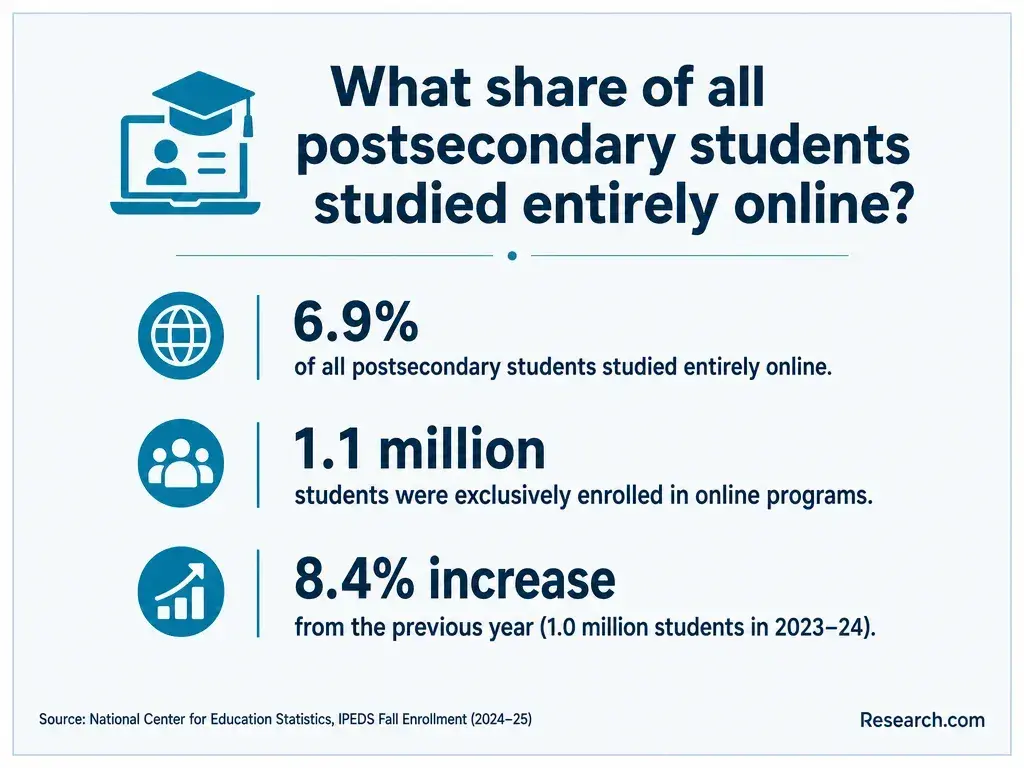
Either format can support useful preparation if students receive feedback on realistic project deliverables and practice coordinating with others. Online delivery alone does not show whether an option is equally suitable for a particular student. Compare the same learning outcomes, assignments, faculty access, and opportunities to present or revise a project plan.
Before enrolling, ask about live sessions, group-work scheduling, exam arrangements, software, and any campus or internship obligation. Those details are particularly important for employed students considering online business administration degrees for employed adults. An asynchronous lecture may still be paired with fixed team meetings or deadlines.
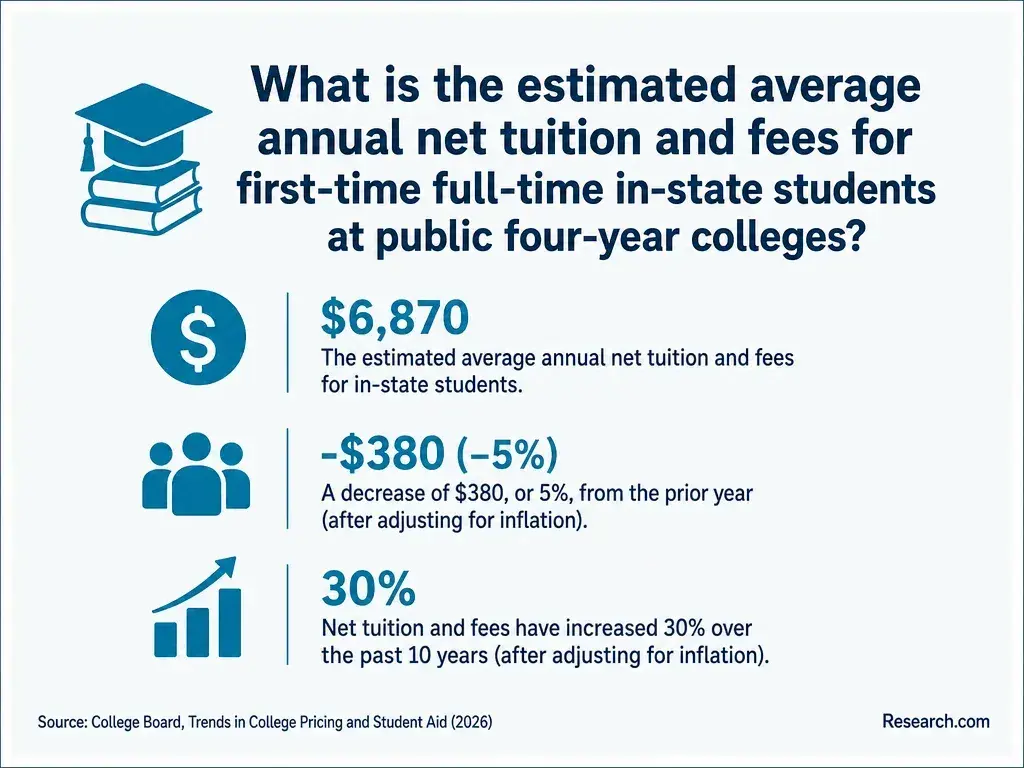
There is no reliable universal price for a minor or concentration. Both sit within a bachelor's program, so the meaningful comparison is the total cost to complete each path: remaining tuition-bearing credits, mandatory fees, materials, software, and any additional terms of enrollment. A minor that fits within open electives may cost no more in tuition than another elective choice; one that adds courses may cost substantially more.
Request written degree audits and itemized estimates for both options using the same enrollment pace. Ask the financial-aid office how a change in credits or completion date affects eligibility, and check FAFSA eligibility at online business administration schools rather than assuming every course or school qualifies. Include foregone work hours or delayed graduation in the decision, but do not assume either pathway produces a salary increase.
First, verify the institution's accreditation with its recognized accreditor and confirm that the degree is offered under the institution's accredited scope. Business-school or programmatic accreditation from AACSB, ACBSP, or IACBE is a separate consideration: check which school, programs, and locations the accreditor covers. Do not assume that accreditation of a business school separately accredits its project management minor.
Accreditation can help establish oversight, but it does not verify that the courses suit your target job or that graduates obtain it. When reviewing online business programs in US college rankings, use the ranking as a starting point, then check accreditation scope, the current catalog, project coursework, and the official degree audit yourself.
Graduates may pursue project coordinator, operations coordinator, or project-support positions that involve tracking tasks, preparing status reports, updating schedules, and communicating with stakeholders. Industry knowledge matters: coordinating a marketing campaign differs from supporting a construction or technology project. A minor or concentration does not by itself qualify a new graduate to manage a major budget or lead complex projects.
The Bureau of Labor Statistics reports a $102,320 median annual wage in May 2025 for project management specialists and projects 7% employment growth from 2025 to 2035. These figures describe the occupation across experience levels, not earnings promised to BS graduates or project coordinators. Use local postings to identify realistic entry requirements and compare business administration degree cost versus career outlook only if that resource has not already informed the academic choice.
Which Project Management Certifications Can Business Graduates Earn?
A project management minor or concentration is an academic designation, not a certification. Graduates can investigate the Project Management Institute's Certified Associate in Project Management (CAPM) as an earlier-career option and Project Management Professional (PMP) for a later stage. Each has its own eligibility, education, examination, and, where applicable, experience rules; verify the current requirements directly with the certifying organization before paying for preparation.
Choose certification based on the target role and qualifying experience, not the assumption that business courses automatically satisfy every requirement. If considering additional formal study instead, compare the credential's purpose with tuition budgeting for an accredited project management degree. A focused credential, supervised work, or employer training may be more direct than another degree.
Other Things You Should Know About Business Administration
Possibly. Schools set limits on double-counting, so ask an adviser to show the approved course application in your degree audit.
Check the school's declaration deadline before planning upper-level courses. Early review can reveal prerequisites or scheduling conflicts while you still have room to adjust.
Usually you can describe your own work, but check course and employer rules first. Remove confidential data and make clear whether the plan was hypothetical or implemented.
List it as in progress only if you have formally declared it and expect to complete its requirements. Do not present planned electives as an awarded credential.
- Post-Secondary Employment Outcomes Tool Shows What You Might Earn Depending on the College You Attend | Census.gov https://www.census.gov/library/stories/2022/06/job-and-earnings-prospects-by-college-and-degree.html
- Semester Course Load and Student Performance - PMC - NIH https://pmc.ncbi.nlm.nih.gov/articles/PMC7568764/
- What is a Major, Minor, or Concentration? | SUL ROSS https://www.sulross.edu/about/what-is-a-major-minor-or-concentration/
- Academic Regulations | University of Connecticut Academic Catalog https://catalog.uconn.edu/undergraduate/academic-regulations/
- Major vs. Minor vs. Concentration: What's the Difference? | snhu.edu https://www.snhu.edu/about-us/newsroom/education/major-vs-minor-vs-concentration
- Minors in Business | Undergraduate Programs | School of Business | University of Connecticut https://undergrad.business.uconn.edu/minors/
- CAPM vs. PMP Certification | Purdue Project Management https://www.purdue.edu/projectmanagementcertification/news/capm-vs-pmp-certification/
- Project Management | Waldorf University https://waldorf.edu/degree-programs/bachelors/bs-business-administration/project-management/
- What a College Minor Is and Why It Matters | usnews.com https://www.usnews.com/education/best-colleges/what-is-a-college-minor
- 10 Must-Have Project Management Skills to Succeed | Atlassian https://www.atlassian.com/agile/project-management/skills