2027 BS in Business Administration: A Capstone Based on Public Business Data
Audited and Verified:
Our Editorial and Data Verification Process
Research.com uses government datasets, official education statistics and primary institutional information to support its career and degree guides. Our review process checks factual accuracy, occupational definitions, source dates and the requirements associated with the credentials discussed.
How This Article Was Fact-Checked
Our editorial team verifies salary estimates, employment projections, education requirements and program information against original data providers and official organizations. Salary figures are checked against the relevant occupational definitions and reporting periods. Information about licensure, accreditation and required in-person training is reviewed separately.
Fact-checked and verified on:

Co-Founder and Chief Data Scientist
A business capstone can demonstrate more than your ability to summarize a company. Using public data, you can investigate a realistic decision without needing access to confidential sales or customer records. For BS in Business Administration students choosing a project, the challenge is to keep that decision narrow enough for the available evidence.
This guide shows how to scope a public-data capstone, select useful measures, document uncertainty, and assess whether a program gives you the support to finish it well.
Key Things You Should Know
- Start with one decision for a named audience, such as which county a hypothetical business should investigate further; public data can support screening, not prove demand or profit.
- Use comparable geographies, industries, units, and time periods. Census County Business Patterns establishment counts, for example, measure existing employer businesses - not potential customers.
- Judge a program by its capstone rules, faculty feedback, data access, and total completion cost. The project is evidence of student work, not a guarantee of employment or managerial readiness.
What Is a BS in Business Administration and What Can You Do With It?
A BS in Business Administration is an undergraduate degree covering business functions such as accounting, marketing, operations, management, and quantitative decision-making. Its exact requirements differ by institution. A capstone brings several of those subjects together in an assessed project; it is not a separate credential or necessarily an employer-sponsored assignment.
For a public-data capstone, a student might advise a hypothetical small-business owner on which local market deserves further research. The output could be a short decision memo and a reproducible spreadsheet comparing public indicators. That is different from claiming to have launched a business or validated its revenue forecast.
If your goal is specifically to coordinate projects rather than evaluate broad business decisions, compare the curriculum with affordable online project management degrees. The better fit depends on the work you want to demonstrate and the credits each program would require.
Is a BS in Business Administration Degree Worth It?
It may be worth pursuing if you need a bachelor's degree for roles you want and can use the coursework to build credible evidence of analytical, financial, and communication skills. A well-documented capstone helps an interviewer see how you framed a decision, checked data, and explained limits. It cannot replace relevant work experience or establish that your recommendation produced a business result.
Compare the value of the remaining degree, not just its advertised tuition: count required credits, fees, time away from work, and the support available for your project. If you already hold a bachelor's degree and mainly need a data-analysis work sample, a targeted course and independent public-data project may be more direct. For a broader cost comparison, consult a business administration degree tuition savings guide, then request a school-specific degree audit.
What Are the Admission Requirements for a BS in Business Administration?
Admission usually depends on the institution's undergraduate rules, while entry to the business major may have separate requirements. Applicants should check transcript, transfer, mathematics, and prerequisite policies with the school; prior coursework being accepted does not mean it satisfies the business core.
For this capstone, preparation in spreadsheets, introductory statistics, and business communication is particularly useful, whether those skills come from required courses or earlier study. Ask an adviser when you can enroll in the capstone and whether required analytics courses must be completed first. Students assessing academic eligibility for business administration degree study should confirm the rules for their intended enrollment term.
Accounting and finance courses help students distinguish revenue, costs, and cash flow; marketing addresses customers and competition; operations examines capacity and processes. Statistics and information-systems coursework support data cleaning and interpretation. Programs vary in how deeply they teach each subject, so inspect the actual course sequence before choosing a capstone topic.
A manageable public-data project needs a decision that the evidence can inform without pretending to settle it. The following structure can be adapted to a hypothetical county-level market screen:
- Decision and audience: Identify which counties a prospective small-business owner should investigate further.
- Data and units: Record the publication year, geography, and industry definition for Census County Business Patterns establishment counts and any other public measure used.
- Analysis: Compare like-for-like measures, explain missing or suppressed values, and show the calculations in a reproducible workbook.
- Recommendation: Identify promising areas for further research and state which questions - such as customer demand, rent, and operating costs - remain unanswered.
- Deliverable: Submit a decision memo, labeled exhibits, source citations, assumptions, and a limitations section for faculty review.
Establishment counts indicate existing employer businesses, not sales, profitability, or the number of willing customers. If the decision is instead about distribution networks or procurement, compare how a supply-chain curriculum develops those skills; a resource to compare supply chain degrees by cost and length can help frame that alternative.
Completion time depends on the credits that apply to the degree, prerequisite sequencing, course availability, and whether you study full-time or part-time. A public-data capstone also needs time for topic approval, cleaning data, faculty feedback, and revision - not just the final presentation.
Before choosing an accelerated schedule, ask when the capstone is offered and whether its proposal and final submission must occur in separate terms. Compare American fast-paced business bachelor's degrees against those requirements rather than assuming a shorter advertised calendar leaves enough time for a sound project.
The relevant price is the cost to complete your degree: remaining tuition and fees, required software or books, and any travel or lost work time. Public data may be free to access, but that does not make the degree or the project cost-free. Ask whether the required tools are available through the institution and whether a delayed capstone would add another term of charges.
Get a written estimate after transfer-credit evaluation and ask the financial-aid office how your enrollment pattern affects eligibility. If you are also considering a project-management bachelor's, investigate funding sources for a bachelor's in project management separately; aid and remaining degree requirements can differ between programs.
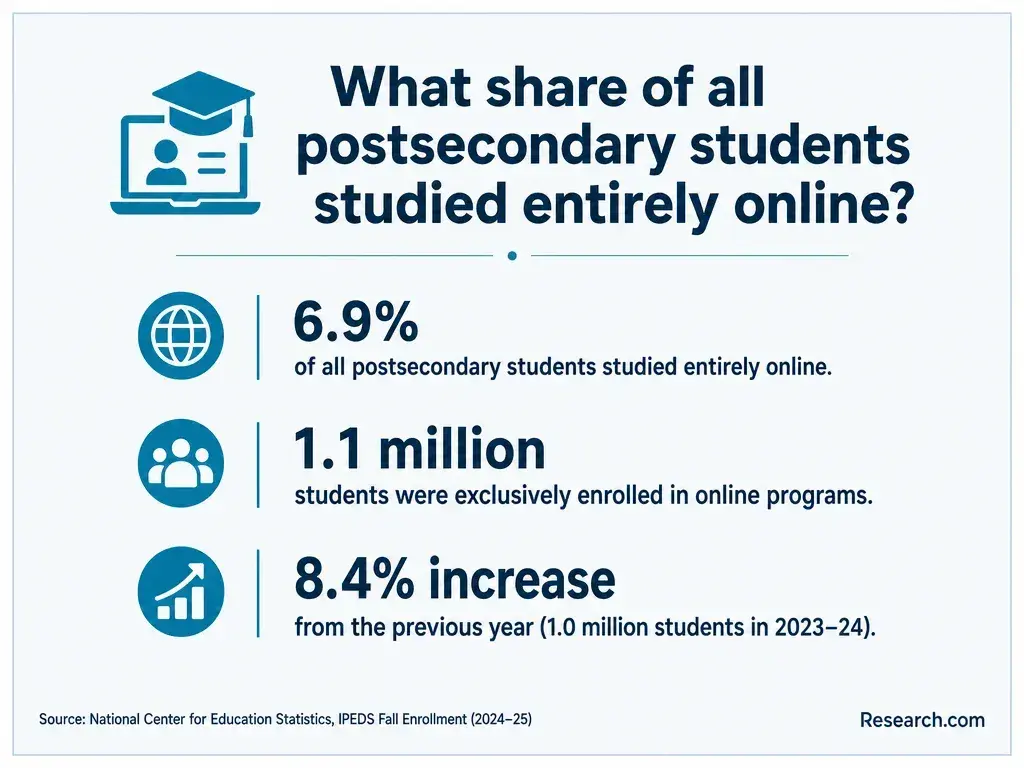
Either format can support a public-data capstone. Online access may make it easier to work around a job, while campus study may offer scheduled meetings and in-person feedback. The deciding factor is whether you can meet the program's actual deadlines and obtain useful guidance on your analysis.
Ask about live presentations, group assignments, software access, faculty meeting hours, and any required campus visits. For students planning business administration study alongside full-time employment, an online label alone does not establish that the capstone is asynchronous.
A public-data capstone can provide a relevant work sample for applications to marketing coordinator, operations coordinator, or analyst-support roles. Match the sample to the job: a market screen demonstrates source evaluation and recommendation writing, whereas a process-focused project may better fit operations work. Explain your own contribution and what a decision-maker would still need to verify.
Roles differ in their experience and technical requirements; a degree or capstone does not confer a management title. If project coordination is your target and you have substantial prior coursework, consider whether transfer-friendly project management bachelor's degrees would apply more of it toward a relevant qualification. Only a receiving school can determine how those credits count.
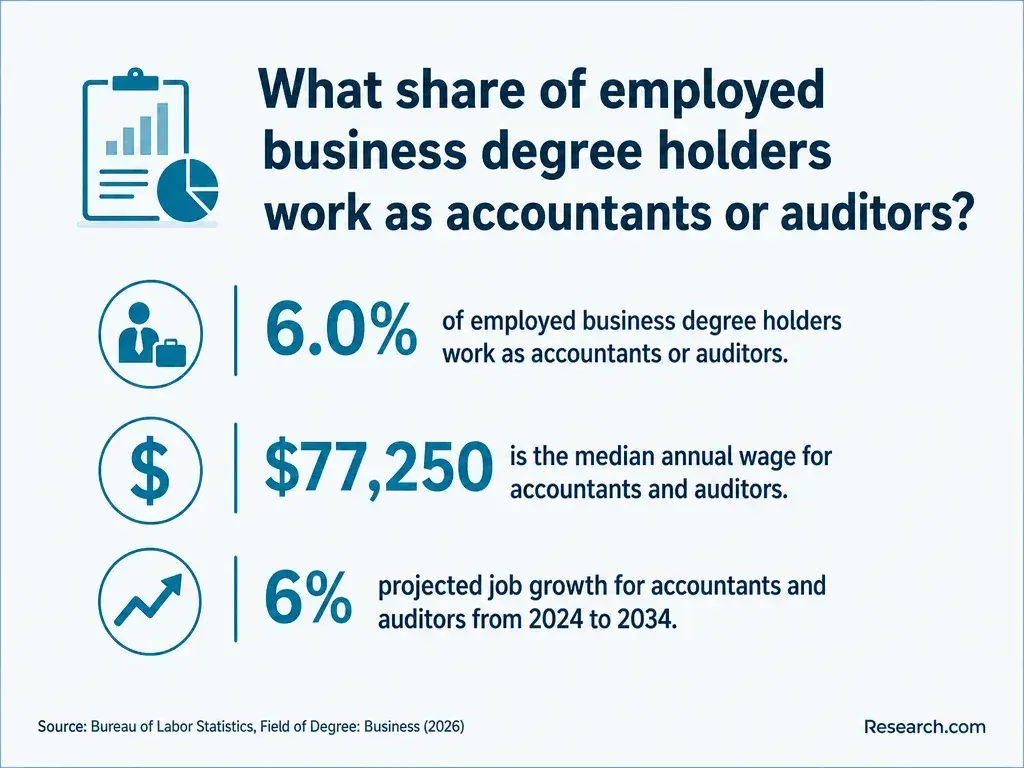
There is no single salary for this degree. As one occupation-specific reference, the U.S. Bureau of Labor Statistics reports a May 2025 median annual wage of $78,760 for market research analysts. That is the median across workers in the occupation, not a starting salary for business administration graduates or a return attributable to a capstone.
Use pay information for roles that match your skills, location, and experience rather than projecting an occupation-wide median onto your first job. When weighing cost against possible opportunities, shorter business administration study options and career prospects can be a starting point, but local job postings and your remaining degree cost are more useful for a personal decision.
How Do You Choose an Accredited BS in Business Administration Program?
First verify the institution's accreditation and the exact degree it awards. If it advertises AACSB, ACBSP, or IACBE accreditation, check whether that recognition covers the business program you intend to enter; institutional and business-program accreditation have different scopes. Neither guarantees capstone quality or employment.
Then request the current catalog and a capstone syllabus or rubric. Look for a feasible approval process, access to faculty feedback, clear rules for public datasets and AI-assisted work, and permission to retain a redacted portfolio version. Compare course calendars as well: online bachelor's programs with short sessions may require rapid topic selection and revision. Choose the program whose requirements let you produce a defensible analysis, not merely a polished-looking dashboard.
Other Things You Should Know About Business Administration
Yes, if their geography, industry definitions, units, and reporting periods are compatible. Document mismatches rather than treating joined figures as directly comparable.
Mark it as unavailable. Do not enter zero or infer a precise figure without a defensible method and your instructor's approval.
Follow the course policy, verify every calculation and citation yourself, and disclose tool use if required. Do not present generated figures as observed data.
Check the school's rules and the rights attached to your materials. Public-source analysis is generally easier to share than employer records, but remove any restricted content and label the work as an academic project.
- Plan your business - Small Business Administration https://www.sba.gov/counseling/plan-your-business/
- Business Analytics Meets Societal Impact | AACSB https://www.aacsb.edu/insights/articles/2024/12/business-analytics-meets-societal-impact
- Data Sources for MIDS Capstone Projects: Home | Library Guides at UC Berkeley https://guides.lib.berkeley.edu/mids-capstone
- Overview of the Research Process for Capstone Projects | unh.edu https://libraryguides.unh.edu/c.php
- Full article: Impact of missing information on day-to-day research based on secondary data | tandfonline.com https://www.tandfonline.com/doi/full/10.1080/13645579.2022.2103983
- Business Administration Student Learning Outcomes | Misericordia University https://www.misericordia.edu/business-administration/student-learning-outcomes
- How Are Statistics Used to Make Business Decisions? | Lamar https://degree.lamar.edu/online-programs/undergraduate/bba/mis/how-are-statistics-used-to-make-business-decisions/
- Laws, Policies, and Guidelines - Data Ethics - Libraries | Research at Boston University https://library.bu.edu/data-ethics/law