2027 Best Online Data Analytics Doctorate Programs for Senior-Level Roles: Careers, Salaries, and Advancement Paths

Co-Founder and Chief Data Scientist
Choosing an online data analytics doctorate is really a leadership decision: will the degree help you move from technical execution into strategy, governance, research, or executive influence? The timing matters because the U. S. Bureau of Labor Statistics projects data scientist employment to grow 36% from 2023 to 2033, far faster than average.
This guide is for experienced analytics, technology, business, and research professionals comparing doctoral options. You will learn which degree formats fit senior-level roles, how salaries vary, and how to judge whether the investment supports your next career move.
Key Things You Should Know
- Best fit: Applied doctorates such as a DBA, DPS, D.Sc., or Ed.D. with analytics concentration usually fit executive, consulting, and organizational leadership goals better than a traditional PhD, while a PhD is stronger for university faculty and research scientist pathways.
- Market signal: BLS projections published in 2024 show data scientist employment growing 36% from 2023 to 2033, but senior leadership roles still depend heavily on experience, business impact, and management credibility.
- ROI reality: Federal graduate Direct Unsubsidized Loans carry an 8.08% fixed interest rate for 2024-25 borrowers, so students should compare tuition, employer funding, time to completion, and realistic promotion pathways before enrolling.
Which Online Data Analytics Doctorate Programs Best Prepare Graduates for Senior-Level Leadership Roles?
The strongest online data analytics doctorate programs for senior-level leadership are not always the ones with the most technical course catalog. The best fit is usually the program that connects advanced analytics with enterprise decision-making, ethics, governance, change management, and evidence-based leadership.
For most experienced professionals, the first decision is degree type. A PhD typically emphasizes original theory, quantitative research, and scholarly publication. A professional doctorate, such as a DBA, Doctor of Professional Studies, Doctor of Science, or Ed.D. with analytics, is usually more applied and better aligned with leadership problems inside organizations.
The table below compares common online doctorate pathways by the leadership outcomes they tend to support. Use it to narrow your search before comparing individual schools.
| Online doctorate pathway | Best fit for | Typical research focus | Senior-level roles it may support |
| PhD in Data Science, Analytics, Information Systems, or Computer Science | Professionals aiming for scholarly research, university teaching, or research-intensive industry roles | Original theoretical or methodological research | Research scientist, professor, principal data scientist, director of advanced analytics research |
| DBA in Business Analytics or Data Analytics | Managers, consultants, and business leaders who want analytics-driven executive influence | Applied research on business performance, strategy, operations, and decision-making | Chief analytics officer, analytics director, strategy executive, senior consultant |
| Doctor of Professional Studies in Analytics or Technology Leadership | Working professionals solving complex organizational and technology problems | Practice-based research tied to workplace improvement | Data governance leader, transformation executive, analytics program director |
| Doctor of Science in Analytics, Information Technology, or Systems | Technical leaders who want deeper analytical, computational, or systems expertise | Applied technical research, models, systems, and organizational implementation | Chief data officer, principal architect, AI and analytics innovation leader |
| Ed.D. with Learning Analytics, Assessment, or Higher Education Data Concentration | Education, workforce development, and institutional research leaders | Applied research on learning outcomes, assessment, and organizational improvement | Institutional research executive, assessment director, education analytics leader |
A strong program should show clear evidence that it serves experienced professionals, not only full-time academics. Look for faculty with industry research, doctoral advising capacity, applied capstone options, leadership coursework, and alumni who have advanced into roles similar to the one you want.
Applicants who are not ready for doctoral-level research may benefit from strengthening their foundation first through a data analytics master's degree. A master's program can help confirm whether advanced analytics leadership is the right long-term path before committing to a doctorate.
Which Senior-Level Careers Can You Pursue With an Online Data Analytics Doctorate?
An online data analytics doctorate can support several senior-level pathways, but the degree rarely works alone. Employers usually look for a combination of doctoral-level problem solving, years of analytics experience, leadership results, stakeholder management, and the ability to translate data into measurable business value.
The most common senior-level careers fall into three broad categories: executive leadership, technical leadership, and research or academic leadership. Each path uses analytics differently, so students should choose coursework and research topics that match their target role.
The table below shows how doctoral preparation can connect to senior roles. It is not a guarantee of eligibility; hiring requirements vary by employer, industry, and the scale of the role.
| Senior-level role | What the role typically does | How a doctorate can help | Best-fit doctorate type |
| Chief Data Officer | Leads enterprise data strategy, governance, data quality, privacy coordination, and analytics maturity | Builds credibility in data governance, organizational change, and evidence-based strategy | DBA, DPS, D.Sc., or PhD depending on industry |
| Chief Analytics Officer | Oversees analytics teams, predictive modeling strategy, performance measurement, and executive decision support | Strengthens ability to evaluate models, manage analytic risk, and link analytics to financial outcomes | DBA, D.Sc., or PhD |
| Director or Vice President of Data Science | Manages data science teams, model deployment priorities, talent development, and business partnerships | Signals advanced methodological skill and leadership readiness for complex analytics portfolios | PhD, D.Sc., DBA |
| Principal Data Scientist | Leads high-complexity modeling projects, mentors senior analysts, and influences technical standards | Supports advanced research design, model evaluation, and original problem solving | PhD or D.Sc. |
| Analytics Strategy Consultant | Advises organizations on analytics maturity, operating models, AI readiness, and performance improvement | Adds authority when leading executive workshops, audits, and applied research projects | DBA or DPS |
| Postsecondary Faculty or Research Scholar | Teaches, publishes, supervises research, and contributes to academic programs | Meets common doctoral credential expectations for full-time faculty and research roles | PhD, sometimes DBA or Ed.D. depending on institution |
Professionals targeting senior analytics roles should also understand the difference between degree preparation and occupational entry. For example, a data scientist degree can support earlier technical roles, while doctoral study is typically more useful when the goal is to lead analytics strategy, supervise research, or influence enterprise-level decisions.
How Much Can You Earn in Senior-Level Roles With an Online Data Analytics Doctorate?
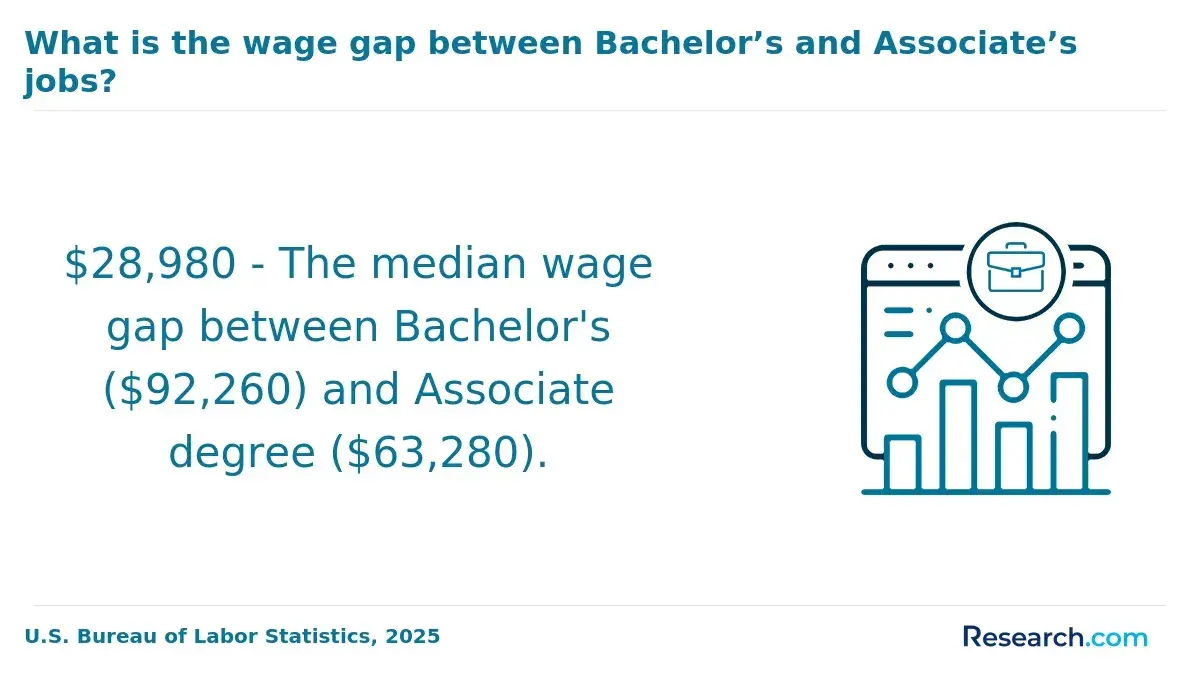
Salary outcomes vary widely because senior data analytics roles sit across technology, finance, healthcare, retail, government, consulting, and higher education. A doctorate may strengthen a candidate's profile, but compensation usually depends more on scope of responsibility, budget ownership, team size, location, and industry than on the credential alone.
BLS May 2024 wage data provides a useful baseline for occupations connected to senior analytics pathways. These figures describe occupational medians, not salaries specifically earned by doctorate holders.
| Occupation related to senior analytics careers | Median annual wage from BLS May 2024 data | How to interpret the figure |
| Computer and information systems managers | $171,200 | Relevant for analytics directors, data platform leaders, and technology executives who manage teams and systems |
| Computer and information research scientists | $140,910 | Relevant for research-intensive AI, machine learning, and advanced analytics roles |
| Data scientists | $112,590 | Useful baseline for advanced technical analytics roles, though executive roles may use broader management pay structures |
| Operations research analysts | $91,290 | Relevant for decision science, optimization, logistics, and operations analytics leadership pathways |
| Postsecondary mathematical science teachers | $78,380 | Relevant for academic paths, where salary may vary by rank, institution type, tenure status, and discipline |
The key takeaway is that a doctorate may be financially stronger when it helps a professional compete for management, executive, principal, or research leadership roles rather than only adding another credential to an individual contributor profile. Candidates should compare likely earnings against tuition, interest, opportunity cost, and the time it takes to complete the degree.
Which Skills Help Online Data Analytics Doctorate Graduates Qualify for Executive Positions?
Executive analytics roles require more than advanced modeling. Senior leaders must decide which data problems matter, secure resources, guide teams, communicate risk, and turn analytic findings into action across departments.
The most valuable skills combine technical judgment with leadership maturity. Students should look for doctorate programs that intentionally develop these competencies through coursework, residencies, research seminars, consulting-style projects, or dissertation and capstone work.
- Strategic analytics leadership: The ability to connect data initiatives to revenue growth, cost control, risk reduction, customer experience, or public-service outcomes.
- Research design and evidence evaluation: The ability to judge whether a model, experiment, or study is rigorous enough to support high-stakes decisions.
- Data governance and ethics: The ability to lead policies for privacy, bias mitigation, accountability, data quality, and responsible AI use.
- Executive communication: The ability to explain uncertainty, trade-offs, model limitations, and business implications to nontechnical decision-makers.
- Change management: The ability to move teams from dashboards and pilots toward adoption, process redesign, and measurable organizational change.
- Talent and portfolio leadership: The ability to manage analysts, data engineers, machine learning specialists, vendors, and cross-functional stakeholders.
AI has made these leadership skills more important, not less. As organizations adopt generative AI, automated decision systems, and predictive tools, executives need leaders who can ask whether a model is reliable, compliant, explainable, and aligned with organizational goals.
Which Online Data Analytics Doctorate Specializations Lead to the Best Leadership Opportunities?
The best specialization depends on the leadership arena you want to enter. A healthcare analytics specialization may be powerful for hospital systems, while a machine learning specialization may be better for technology, fintech, or product organizations.
Instead of choosing a concentration only because it sounds advanced, compare it with the decisions you want to own after graduation. The table below maps common specializations to leadership opportunities.
| Specialization | Strongest leadership fit | Why employers may value it |
| Business Analytics | Chief analytics officer, analytics strategy director, executive consultant | Connects analytics with finance, operations, marketing, and enterprise performance |
| Artificial Intelligence and Machine Learning | AI strategy leader, principal data scientist, innovation director | Supports leadership over predictive systems, automation, model risk, and AI product strategy |
| Data Governance and Privacy | Chief data officer, data governance executive, risk analytics leader | Aligns with growing expectations around data quality, compliance, accountability, and responsible data use |
| Healthcare Analytics | Clinical analytics director, population health analytics leader, health system strategy executive | Applies analytics to outcomes, costs, operations, quality, and patient-risk measurement |
| Operations Research and Decision Science | Optimization leader, supply chain analytics executive, operations strategy director | Supports complex decisions in logistics, resource allocation, pricing, and service design |
| Learning Analytics or Educational Data | Institutional research leader, assessment executive, workforce analytics leader | Uses data to improve learning, retention, assessment, and education strategy |
Students interested in AI leadership should understand the distinction between analytics, machine learning, and broader AI strategy. Exploring an artificial intelligence major can help clarify how AI-focused study differs from analytics-focused doctoral work.
How Does an Online Data Analytics Doctorate Support Career Advancement Into Executive Leadership?
An online data analytics doctorate can support executive advancement by helping experienced professionals move from "technical expert" to "organizational decision leader." The most valuable programs give students a structured way to study real business or institutional problems, test solutions, and communicate findings to senior stakeholders.
The career value usually comes from how the doctorate is used during the program, not only after graduation. Students who align projects with workplace priorities can build evidence of leadership before the degree is complete.
- Choose a research problem tied to executive priorities: Select a dissertation or capstone topic related to revenue, risk, operations, customer behavior, workforce planning, public outcomes, or data governance.
- Use doctoral projects to build leadership artifacts: Create publishable research, executive briefs, model governance frameworks, strategy roadmaps, or measurable improvement plans.
- Expand beyond the analytics team: Work with finance, legal, compliance, product, operations, HR, or clinical leaders so your analytics work is visible outside a technical silo.
- Document measurable business impact: Track outcomes such as cycle-time reduction, improved forecast accuracy, reduced risk exposure, stronger data quality, or better decision adoption.
- Build an executive narrative: Be able to explain why the doctorate makes you more effective at leading people, investments, policy, and organizational change.
A common mistake is assuming that the credential itself will trigger a promotion. In practice, the doctorate is most powerful when it becomes part of a broader advancement plan that includes leadership experience, sponsor relationships, portfolio visibility, and clear alignment with business strategy.
How Do Employers Evaluate Online Data Analytics Doctorate Degrees for Senior-Level Positions?
Employers generally evaluate online doctorates through the same practical lens they apply to other advanced credentials: institutional legitimacy, relevance, rigor, and evidence of impact. For senior-level positions, the degree is usually one part of a larger leadership profile.
Accreditation should be nonnegotiable. In the United States, students should prioritize institutions accredited by agencies recognized by the U.S. Department of Education or the Council for Higher Education Accreditation. Programmatic accreditation may also matter in business, education, public health, or computing-adjacent fields, depending on the role and employer.
Hiring committees and executive recruiters often look for several signals when evaluating doctoral candidates. These factors can help you anticipate how the degree may be perceived.
- Institutional accreditation: The school should be properly accredited, and the doctorate should appear on official transcripts without ambiguity.
- Program rigor: Employers may look for advanced statistics, research methods, analytics strategy, governance, and a substantial dissertation or applied doctoral project.
- Relevance to the role: A dissertation on hospital readmission analytics is more persuasive for healthcare leadership than for retail pricing strategy.
- Evidence of leadership impact: Senior roles require proof that the candidate can influence people, budgets, policy, and organizational outcomes.
- Faculty and network credibility: Faculty expertise, executive mentors, alumni access, and industry partnerships can matter when candidates are competing for leadership roles.
- Online format quality: Synchronous seminars, residencies, research supervision, peer interaction, and applied projects can make an online program feel more substantive to employers.
Red flags include unclear accreditation, vague dissertation requirements, limited faculty access, unusually short completion promises, weak research support, and programs that market executive outcomes without showing how students build leadership evidence.
Which Professionals Benefit Most From an Online Data Analytics Doctorate?
The professionals who benefit most are usually already close to senior-level work. They have enough experience to connect doctoral research to real organizational problems and enough career momentum to convert the credential into leadership opportunity.
An online format can be especially useful for working professionals because it allows them to keep building management experience while completing doctoral coursework. However, flexibility does not mean light workload; doctoral study often requires sustained reading, research, writing, statistics, and faculty feedback over multiple years.
The following profiles tend to be the strongest fit for an online data analytics doctorate.
- Analytics managers seeking executive scope: Professionals who already supervise teams and want to move into director, vice president, chief data officer, or chief analytics officer roles.
- Senior data scientists pursuing principal or research leadership: Technical experts who want to lead advanced modeling strategy, research portfolios, or AI governance.
- Business leaders using analytics for transformation: Managers in finance, operations, marketing, healthcare, logistics, or public administration who want stronger evidence-based decision authority.
- Consultants building executive credibility: Advisors who want doctoral-level research skills to support analytics strategy, AI readiness, governance, or organizational change work.
- Educators and institutional researchers: Professionals aiming for higher education leadership, applied research, assessment, or faculty roles.
Some professionals should pause before enrolling. If you are early in your analytics career, unsure about your target role, or mainly trying to qualify for entry-level data work, a master's degree, graduate certificate, portfolio, or targeted technical experience may deliver a faster and less expensive return.
What Is the Return on Investment of an Online Data Analytics Doctorate for Senior-Level Careers?
The ROI of an online data analytics doctorate depends on whether the degree changes your career ceiling, not simply whether it increases your knowledge. The investment is easier to justify when it helps you compete for leadership roles that were previously out of reach, strengthens consulting credibility, supports faculty ambitions, or enables a move into research-intensive work.
Financing matters. For 2024-25 borrowers, Federal Student Aid lists the fixed interest rate for graduate Direct Unsubsidized Loans at 8.08%, which means borrowing heavily can materially reduce the long-term value of the degree. Employer tuition assistance, scholarships, assistantships, pay-as-you-go enrollment, and shorter completion timelines can improve ROI.
Before enrolling, students should estimate ROI using a realistic framework rather than optimistic salary assumptions. The steps below help make the decision more concrete.
- Define the target role: Identify whether you are pursuing executive leadership, principal technical leadership, consulting authority, or academic research.
- Estimate total cost: Include tuition, fees, residencies, books, software, travel, interest, and any income reduction if you cut work hours.
- Compare funding options: Ask your employer about tuition assistance, professional development funds, promotion pathways, and whether the doctorate affects compensation bands.
- Assess opportunity cost: Consider what else you could do with the same time, such as executive certifications, cloud credentials, management experience, or a job change.
- Evaluate career probability: Be honest about whether you already have the leadership experience, network, and industry credibility needed for your target role.
- Set measurable milestones: Track promotions, leadership responsibilities, publications, consulting engagements, board presentations, or strategic project ownership during the program.
The strongest ROI often comes when the doctorate overlaps with current work. If your dissertation or capstone solves a problem your employer already cares about, the program can create immediate leadership visibility rather than delaying career benefits until graduation.
How Should Students Choose the Best Online Data Analytics Doctorate Program for Executive Career Goals?
Students should choose an online data analytics doctorate by working backward from the role they want. A future chief data officer, principal machine learning scientist, analytics consultant, and professor may all study data analytics, but they need different research methods, mentors, networks, and proof of expertise.
A practical program comparison should go beyond rankings. Reputation can matter, but it should not outweigh accreditation, curriculum fit, research supervision, career alignment, and the support available to working adults.
Use the following questions when speaking with admissions counselors, program directors, faculty, or alumni.
- Degree fit: Is the program designed for scholarly research, applied executive practice, technical innovation, or educational leadership?
- Research model: Does the program require a dissertation, applied dissertation, capstone, portfolio, or practice-based research project?
- Faculty alignment: Are there faculty members who can advise research in your target area, such as AI governance, healthcare analytics, decision science, or data strategy?
- Leadership preparation: Does the curriculum include strategy, ethics, organizational change, governance, executive communication, and research translation?
- Online support: How often do students meet with faculty, peers, research mentors, and dissertation committees?
- Residency expectations: Are campus visits required, and can you realistically manage the time and travel?
- Completion evidence: What support exists for dissertation progress, research methods, statistics, writing, and proposal development?
- Employer recognition: Do alumni work in roles similar to your target position, and can the school share examples without overpromising outcomes?
- Cost control: What is the full program cost, and how do tuition locks, transfer credits, employer reimbursement, and course pacing affect the total?
Students considering AI-focused leadership may also compare analytics doctorates with an online PhD in artificial intelligence USA. That comparison is especially useful if your goal is to lead machine learning research, AI product development, or advanced automation strategy rather than broader data analytics governance or business intelligence leadership.
The best choice is the program that fits your career evidence gap. If you lack research credibility, prioritize methodological rigor. If you lack executive readiness, prioritize applied leadership and strategy. If you lack industry visibility, prioritize faculty networks, residencies, publications, and projects that produce credible leadership artifacts.
Other Things You Should Know About Data Analytics
Many online doctoral programs no longer require the GRE, especially professional doctorates for experienced applicants. However, requirements vary by school, and some programs may still request test scores, writing samples, interviews, or evidence of quantitative preparation.
Yes, many online programs are designed for working professionals, but the workload can still be demanding. Students should plan for weekly research, reading, writing, statistics, meetings, and dissertation progress, especially after coursework ends.
Some programs are fully online, while others require short residencies, intensives, or research workshops. Residencies can add travel costs, but they may also improve faculty access, peer networking, and dissertation momentum.
Certifications are not always required, but they can complement a doctorate when a role demands specific tools or platforms. Cloud, data governance, project management, cybersecurity, or AI certifications may be useful if they align with your target leadership responsibilities.
References
- Doctorate of Business Administration in Data Science and AI https://www.rennes-sb.com/formations/dba-dsai/
- Data Analytics Careers: Advancing From Analyst to Executive https://online.longwood.edu/business/mba/data-analytics/analyst-career-progression-to-executive/
- What is a Good Master’s in Data Science Salary? | Elmhurst University Blog https://www.elmhurst.edu/blog/masters-in-data-science-salary/
- Explore Cutting-Edge Online Data Science PhD Programs https://www.phds.me/online-programs/data-science/
- Data Science Skills to Complement your PhD Studies https://codelabsacademy.com/en/blog/data-science-skills-to-complement-your-phd-studies/
- Should I Pursue a PhD in Data Science at AIM? | Asian Institute of Management https://aim.edu/should-i-pursue-phd-data-science/
- PhD Analytics vs Data Science: Career & Scope Guide https://shooliniuniversity.com/blog/phd-data-analytics-vs-phd-data-science-differences-careers-how-to-choose/
- Master's in data analytics jobs | edX | edX https://www.edx.org/resources/what-can-you-do-with-a-masters-in-data-analytics
- 10 Best Data Analytics Programs 2026: Beginner to Advanced https://skillifysolutions.com/blogs/data-analytics/best-data-analytics-programs/
- Data Analyst Salaries https://www.mastersindatascience.org/careers/data-analyst/salary/