
Most Affordable Welding Schools & Training - Budget-Friendly Welding Trade Programs in Wheeling for 2026

Co-Founder and Chief Data Scientist
Looking to start a rewarding career as a welder in Wheeling? Choosing the right trade school can make all the difference in your success. This article introduces a welder trade school programs ranking created by the Research.com team of data scientists to help you find the best and most affordable options for 2026.
By exploring these programs, you’ll gain valuable insights that make your decision easier and more confident. Earning a diploma or certification in welding opens doors to stable jobs and exciting opportunities. Let’s guide you toward a bright future in this skilled trade.
Key benefits of finishing welder trade school in Wheeling
- Graduates of welder trade schools in Wheeling can expect an average starting salary around $21.22 per hour, with opportunities to earn up to $61,125 annually in advanced roles, making this a rewarding career choice.
- A typical welder graduate from a popular Wheeling trade school can pursue diverse career paths, including fabricator, experimental welder, or even welding engineer with further education, offering room for growth and specialization.
- Completing a welder trade school online offers flexibility and convenience, allowing students to balance work and study while gaining hands-on skills, as experienced by many successful online graduates in Wheeling.
- Most Affordable Welding Schools & Training - Budget-Friendly Welding Trade Programs in Wheeling for 2026
- What can I expect from welder trade schools in Wheeling?
- Where can I work after finishing welder trade schools in Wheeling?
What can I expect from welder trade schools in Wheeling?
Expect a welder trade school program in Wheeling to combine hands-on training with essential classroom instruction. Graduates from popular schools like West Virginia Northern Community College often describe gaining confidence through repeated practice in Shielded Metal Arc Welding (SMAW), TIG, and MIG welding, all taught to American Welding Society standards. You'll spend significant time in labs, welding plate and pipe in various positions, which mirrors real-world job demands.
Safety and blueprint reading are emphasized early, helping students feel prepared and secure as they handle modern welding equipment. Many graduates appreciate that programs also guide them through industry certifications, such as NCCER and West Virginia Welding Certification, boosting employability immediately after completion.
Class sizes tend to be small, creating a supportive environment where instructors offer frequent, personalized feedback-something students often highlight as a key to their success. Wheeling's programs also prioritize accessibility and inclusivity, ensuring you'll find resources tailored to your needs regardless of background or experience.
Where can I work after finishing welder trade schools in Wheeling?
After finishing a welder trade school program in Wheeling, graduates find numerous local job opportunities waiting. Popular trade schools in the area prepare students for roles in manufacturing, industrial fabrication, and maintenance sectors-fields that consistently hire skilled welders. For instance, many graduates begin as MIG welders at companies like Lennox International, earning around $19.50 per hour while applying safety knowledge and reading fabrication drawings learned at school.
Wheeling's steady demand means new welders often land jobs quickly, even with limited experience. Graduates share how trade school training helped them secure positions at firms such as American Consolidated Natural Resources, Inc., where pay ranges from $21 to $27.50 per hour. This reflects the value that local employers place on certification and hands-on skills.
Beyond entry-level roles, trade school grads explore specialized paths like pipe welding, repair, and construction work. The practical training from Wheeling's well-regarded programs equips students to confidently step into these jobs and feel optimistic about their career growth in a stable industrial community.
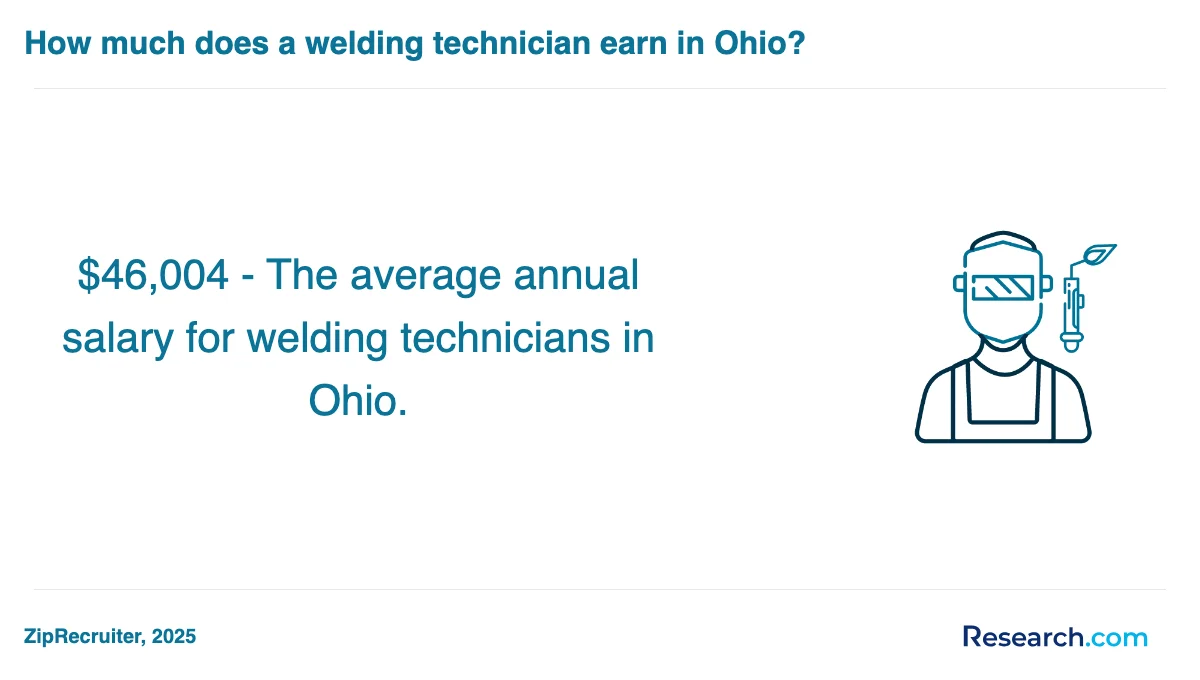
After finishing a welder trade school program in Wheeling, graduates typically start earning between $18 and $26 per hour, depending on their experience and specific job roles. Many recent grads from popular Wheeling trade schools share that entry-level positions often pay around $21.54 per hour, which aligns well with the state average. This means working full-time can bring in about $46,000 annually, a solid starting point for a hands-on career.
For those who keep building skills and certifications, wages can grow quickly. Some welders in Wheeling reach nearly $29 per hour, especially in specialized roles like experimental welding. Graduates often describe the satisfaction of seeing their paychecks rise as their expertise grows, which motivates them to pursue additional training.
While Wheeling's welding salaries rank lower nationally, local graduates appreciate the lower cost of living, making their earnings stretch further. Practical experience gained at well-known trade schools helps many welders confidently step into the workforce right after graduation, ready to earn and build a stable career.
- Welder trade school programs in Wheeling offer training in SMAW, MIG, TIG, and FCAW welding processes for entry-level jobs and certification exams.
- Program lengths range from short-term certificate courses lasting weeks to 1,080-hour comprehensive programs taking up to two years.
- Admission requirements include completion of high school or GED, with some high school programs requiring applications after 10th grade and coursework in blueprint reading and math.
- The SMAW I course costs $1,049 including certification fees, while longer programs vary, with financial aid and payment plans often available.
- Graduates can earn West Virginia State Certifications and NCCER credentials, with starting wages between $18 and $22 per hour and experienced welders earning $45,000 to $60,000 annually.
- The welding job market in Wheeling is steady, with demand in manufacturing, construction, and energy sectors supported by local industrial projects.
Completing a welder trade school program in Wheeling typically takes between six months and one year, depending on the depth of training and the specific school chosen. Many popular trade schools in Wheeling offer accelerated courses that allow students to finish quickly while still gaining hands-on experience essential for welding careers.
Graduates often share that the compact timeline feels intense but rewarding. For example, students at well-known Wheeling trade schools find that balancing classroom instruction with practical workshops helps them stay engaged and confident. One graduate mentioned how finishing in under a year allowed them to enter the workforce sooner than expected, which felt like a huge win financially and professionally.
Wheeling's trade schools emphasize real-world training, so students don't just learn theory-they practice welding in environments mimicking actual job sites. This approach makes the completion time feel productive and worth the effort, especially when students see their skills improve week by week.
The main difference between online and on-campus welder trade school programs in Wheeling lies in how training is delivered and practiced. Graduates from on-campus programs often describe their experience as immersive and hands-on, spending most of their time in workshops with real welding equipment under direct instructor supervision. For example, those who attended well-known Wheeling trade schools highlight the confidence they gained from daily, practical tasks that mirror actual job conditions.
In contrast, online programs offer flexibility, allowing students to complete theory lessons and assignments remotely, which suits those juggling work or family. However, welding's practical nature means these students still attend occasional in-person labs to meet certification requirements. Graduates appreciate this blend but sometimes mention missing the instant feedback and camaraderie found in campus workshops.
Both options in Wheeling ensure students meet hands-on training standards set by industry bodies. Choosing between them depends on your schedule, learning style, and desire for direct mentorship versus flexible study.
The average cost of welder trade school programs in Wheeling varies depending on residency status and enrollment level. For instance, West Virginia Northern Community College (WVNCC), a popular choice among local students, charges in-state residents between $188 and $260 per credit hour. Out-of-state students pay roughly double that rate, ranging from $376 to $401 per credit hour. High school students enrolled in dual-credit welding classes benefit from reduced tuition, paying about $50 per credit hour.
Graduates of the welding programs at WVNCC often recall managing their budgets carefully, as a typical full-time semester consisting of 12 credit hours means paying between $2,256 and $3,120 for in-state students. Out-of-state students face higher tuition fees, with semester costs climbing to between $4,512 and $4,812. High school students, by contrast, see substantially lower fees, approximately $600 per semester. These figures show the typical tuition fees for welding programs in Wheeling, WV, allowing students to plan accordingly and evaluate their options realistically.
Additional expenses, such as books, supplies, and materials required for welding courses, usually range from $500 to $1,500 per program. Many graduates appreciate the financial aid opportunities available, including federal grants and employer-sponsored training programs, which ease the overall cost burden. Prospective students looking to understand what is a vocation or trade school can find valuable context and more precise financial planning resources by exploring what is a vocation or trade school. This practical insight helps align expectations with real-world costs at trade schools in Wheeling, making the path to a welding career more attainable.

Welder trade school students in Wheeling often start by completing the Free Application for Federal Student Aid (FAFSA), which unlocks access to federal grants, loans, and some state aid. Many graduates from local programs, like those at West Virginia Northern Community College, recall how completing FAFSA was the crucial first step to securing funds that made their training affordable.
The HEAPS Workforce Grant stands out as a valuable resource for West Virginia residents pursuing welding. It offers up to $2,000 annually, helping cover tuition and fees. Students who qualified found relief in knowing this grant eased financial pressure, allowing them to focus on mastering their skills rather than worrying about cost.
Scholarships are another important option. Institutions and private organizations offer awards that do not require repayment, which many Wheeling welders appreciated as a stress-free way to fund their education. Some scholarships target recent high school grads or those with strong academic records, providing additional opportunities.
Payment plans at schools like WVNCC also help by breaking down tuition into manageable installments, offering greater flexibility for those balancing work and study. Graduates often mention this made the financial commitment feel less daunting during their course.
To enroll in a welder trade school program in Wheeling, applicants typically need a high school diploma or GED. This foundational requirement ensures students have the basic math and reading skills essential for understanding welding techniques and safety protocols. Graduates from local trade schools often mention how this preparation made tackling blueprints and measurements more manageable.
Other prerequisites usually include:
- Being at least 18 years old, as many Wheeling schools require students to be adults for safety reasons.
- Passing a basic skills assessment, which tests math and comprehension skills relevant to welding.
- Providing proof of physical fitness since welding demands good hand-eye coordination and stamina.
- Sometimes submitting a background check, especially if the program partners with industrial employers.
Several students share that meeting these entry requirements felt empowering-it clarified expectations and helped them prepare mentally and physically for the hands-on training ahead. Trade schools in Wheeling often offer orientation sessions that simulate real welding environments, easing new students' transition and boosting their confidence from day one.

Welder trade school programs in Wheeling typically include a mix of technical and hands-on courses designed to prepare students for real-world welding jobs. Graduates from schools like West Virginia Northern Community College often highlight how courses such as MIG (Gas Metal Arc Welding) taught them essential safety practices, equipment handling, and welding in all four positions. For instance, the MIG I class involves practicing open Single-V-Groove welds on plates, culminating in a certification test that boosts confidence and job readiness.
Programs also cover specialized welding techniques including:
- Shielded Metal Arc Welding (SMAW)
- TIG (Tungsten Inert Gas) welding
- Pipe welding methods
The Welding Technology Associate degree at WVNCC trains students to meet American Welding Society standards, ensuring they graduate with industry-recognized skills. Some students pursuing careers in energy sectors choose the Oil & Gas Pipe Welding Certificate for focused, high-demand pipe welding training to ASME and APT standards.
Blueprint reading, welding metallurgy, and workplace safety are also integral parts of the curriculum, helping students seamlessly transition to diverse work environments. Many students appreciate the balance of theory and practical training, often welding plates and pipes in multiple positions, which makes them ready to hit the ground running.
Welding technology specializations in Wheeling WV typically cover key processes like Shielded Metal Arc Welding (SMAW), Gas Metal Arc Welding (GMAW or MIG), and Tungsten Inert Gas (TIG) welding. Graduates from popular trade schools in Wheeling often mention how SMAW training prepares them for versatile roles in construction and repair, while MIG welding courses focus on efficient metal fabrication skills sought by local manufacturers.
Students also appreciate the precision-oriented TIG welding specialization, which opens doors to aerospace and artistic metalwork fields requiring careful technique. Many Wheeling welding trade school certificate programs include hands-on fabrication and blueprint reading classes, bridging the gap between technical skills and practical job requirements.
Additional training in pipe welding equips students for critical energy and infrastructure jobs, a growing sector in the region. These programs align with American Welding Society standards, making certification straightforward and boosting employability.
Graduates often share how the blend of technical expertise and real-world application enhances their confidence entering the workforce. For anyone considering a future in this career path, exploring high demand trades emphasizes the value and stability this specialization offers.
Start by focusing on accredited institutions in Wheeling that have a solid reputation among local employers. Graduates from the best welder trade schools in Wheeling often mention how hands-on training with modern equipment gave them the confidence to excel in real job settings. Smaller class sizes in these programs mean more individual attention, a factor many students appreciate during practical welding sessions.
Cost is always a concern; affordable welder trade schools in Wheeling that offer flexible financial aid or scholarships allow students to focus on learning rather than stressing about expenses. One graduate highlighted the benefit of extensive job placement services at their trade school, which helped them land a welding position soon after completing their certification.
Ensure the curriculum includes preparation for certifications recognized by the American Welding Society, since these qualifications open doors to better job prospects. For those weighing options, looking into cheapest online maintenance technician training can supplement your welding skills without straining your budget.
Graduates of welder trade school programs in Wheeling find a variety of solid career paths in local industries that value welding skills. Common roles include Welder, Fabricator/Welder, Millwright, and MIG Welder, all of which are in demand in manufacturing, construction, and energy sectors. Many graduates from popular trade schools report starting in entry-level welding jobs that accept individuals with just their trade school credentials. From there, they often move into specialized positions such as BOP Tester, quality inspector, or supervisor as experience grows.
Hands-on work such as fabricating metal parts or repairing heavy-duty trucks with materials like 10-to-20-gauge galvanized steel is typical. Employers like Lennox International emphasize certification benefits, which often translate to higher wages-around $19.50 per hour for MIG welders locally. Wheeling graduates also appreciate the region's steady demand, with over 100 welding jobs open, making welding a dependable career choice in the welder job market in Wheeling West Virginia.
Further career advancement might include roles in pipefitting, boiler making, or robotics-assisted welding, especially for those open to gaining additional credentials. For students wondering about options beyond traditional welding, exploring what is the easiest trade to learn that pays most can offer helpful direction.
The welder job opportunities in Wheeling WV are currently strong, with over 80 welding-related positions listed across major job platforms. Graduates from popular local trade schools often find entry-level roles quickly, particularly with employers like Tri-State Machine or ShalePro Energy Services, where benefits and career growth are common. Many graduates share stories of moving from certification completion to steady employment within months, attributing success to hands-on training and local industry connections.
Welding salary trends Wheeling West Virginia show that new welders start near $19.50 hourly, with average annual salaries around $34,893. Top earners approach $40,000, reflecting how the local industrial base values skilled tradespeople. This salary level supports a practical career path for those looking for financial stability after trade school.
Trade school programs here focus on more than basic skills-they emphasize blueprint reading and fabrication techniques essential in Wheeling's construction and energy sectors. For a clear perspective on becoming a welder and the career steps involved, check out becoming a welder. Graduates consistently note that formal training and certifications open doors rapidly in this region's sustained demand for welders.
Most Affordable Welding Schools & Training - Budget-Friendly Welding Trade Programs in Wheeling for 2026
# 1 position
West Virginia Northern Community College - Welding Technology/Welder.
associateWest Virginia Northern Community College offers a Welding Technology/Welder program with a hybrid format that includes some distance education options. The curriculum covers arc welding, resistance welding, brazing, soldering, cutting, high-energy beam welding, and solid state welding. Students learn about welding metallurgy, safety, structural design, and relevant codes and standards. The program is accredited by the Higher Learning Commission, and annual in-state tuition costs $4,544.
# 2 position
West Virginia Northern Community College - Welding Technology/Welder.
certificate or diplomaWest Virginia Northern Community College offers a Welding Technology/Welder program with a hybrid format, including some distance education options. The program prepares students to apply technical skills in various welding methods such as arc welding, resistance welding, brazing, and soldering. It covers welding metallurgy, safety, structural design, and industry standards. Annual in-state tuition is $4,544. The program is accredited by the Higher Learning Commission.
Frequently Asked Questions about welder
After completing a welder trade school in Wheeling, preparing for the job market involves several key steps. First, graduates should obtain relevant welding certifications, such as those offered by the American Welding Society (AWS), which are highly valued by employers nationwide. In Wheeling, industries like manufacturing and construction frequently seek certified welders, increasing job prospects for credentialed applicants.
Networking is also crucial. Attending local job fairs and connecting with employers through trade school career services can lead to job opportunities. According to the Bureau of Labor Statistics, the demand for welders in West Virginia, including Wheeling, is expected to grow by 6% through 2030, emphasizing the need for active job searching.
Additionally, developing a strong resume that highlights hands-on experience gained during training and any apprenticeships can help candidates stand out. Staying updated on new welding technologies and safety standards further enhances employability in this competitive field.
Employers in Wheeling seek welder trade school graduates with strong technical skills, including proficiency in various welding techniques such as MIG, TIG, and stick welding. According to the U.S. Bureau of Labor Statistics, attention to detail and the ability to read blueprints accurately are critical for welding jobs nationwide, and this holds true locally. Practical experience with welding equipment and safety procedures is highly valued, given the physical and hazardous nature of the work.
Communication skills and teamwork are also important, as welders often collaborate on construction or manufacturing projects. The West Virginia Department of Commerce highlights that certified welders tend to have better job prospects, emphasizing the importance of industry-recognized certifications like those from the American Welding Society.
Finding internships relevant to welder trade school programs in Wheeling involves a combination of local research and outreach. Start by contacting trade schools directly, as many maintain partnerships with nearby manufacturing companies and construction firms offering hands-on internships.
The Wheeling area, part of Ohio County, has a growing demand for skilled welders, supported by industries such as metal fabrication and energy production. According to the U.S. Bureau of Labor Statistics, welding jobs in West Virginia are projected to grow roughly 5% through 2030, increasing internship opportunities.
Additionally, check local workforce development boards and trade unions, which often list apprenticeship and internship openings for welders. Online job portals focusing on technical trades may also provide updated listings specifically for Wheeling.
Obtaining a welder trade school diploma in Wheeling significantly enhances career mobility and advancement opportunities. According to the U.S. Bureau of Labor Statistics, welders with formal training have a higher likelihood of securing specialized positions in industries such as manufacturing and construction. In Wheeling, local employers often prefer candidates with accredited diplomas, viewing them as proof of hands-on skills and safety knowledge.
Trade school graduates typically earn 15% to 25% more than those without formal credentials, improving social mobility. Additionally, diplomas enable access to certifications like the AWS (American Welding Society), which are valued by regional employers and can lead to supervisory roles or specialized welding fields.
Overall, a welder trade school diploma in Wheeling acts as a gateway to better job stability, promotions, and higher earnings within the local labor market.
Students enrolled in welder trade schools in Wheeling have several part-time job opportunities that can enhance their education and provide practical experience. Local manufacturing plants and metal fabrication shops often seek part-time assistants or helpers, allowing students to apply welding techniques learned in school. According to the U.S. Bureau of Labor Statistics, the Wheeling metro area has a steady demand for welders, with an expected growth rate of about 6% over the next decade.
Additionally, construction companies in Wheeling frequently hire part-time laborers for projects involving steel framework and pipe welding. These roles offer hands-on exposure to real-world welding tasks.
Retail stores specializing in welding supplies may also offer part-time positions, helping students understand the tools and materials key to the trade. This combination of academic learning and part-time work can improve skill development and employability in a competitive job market.
To find the most affordable welder degree program near Wheeling, WV, you can begin by researching local community colleges and technical schools, as they often offer cost-effective programs. Utilize search terms like "welder degree programs near me" to discover educational institutions and compare tuition costs, program length, and available financial aid. Platforms like Research.com can help identify and compare different programs and universities available near Wheeling, WV, allowing you to make an informed decision based on affordability and proximity.
- Most Affordable Welding Schools & Training - Budget-Friendly Welding Trade Programs in Marietta for 2026
- Most Affordable Welding Schools & Training - Budget-Friendly Welding Trade Programs in Johnstown for 2026
- Most Affordable Welding Schools & Training - Budget-Friendly Welding Trade Programs in Columbus for 2026
- How Long are Welding School Programs? - Elite Welding Academy https://eliteweldingacademy.com/2025/06/17/how-long-are-welding-school-programs/
- Welder - Skilled Trades Ontario https://www.skilledtradesontario.ca/trade-information/welder/
- How Long Does It Take to Become a Welder | Fortis https://www.fortis.edu/blog/skilled-trades/how-long-does-it-take-to-become-a-welder.html
- How Long Does Welding School Take? A Guide to Welding Program Durations – Missouri Welding Institute https://missouriweldinginstitute.com/how-long-does-welding-school-take-a-guide-to-welding-program-durations/
- How to Become a Welder | UEI College https://www.uei.edu/guides/vocational-education/how-to-become-welder/
- How Long Does It Take To Become A Professional Welder? | Welding Graduation https://eticampus.edu/welding-program/welding-graduation/how-long-does-it-take-to-become-a-professional-welder/
- How long does it take to complete the welder training program? https://www.earlbeck.com/welding-program-length.html
- A Guide to Skilled Trades Apprenticeships and Internships | BestColleges https://www.bestcolleges.com/trades/guide-to-skilled-trades-apprenticeships-internships/
- How to Select an Accredited Welding Training Program - New Castle School of Trades https://www.ncstrades.edu/blog/what-to-look-for-in-a-trade-school-welding-program/
- Internship Training Guide - Welding Engineering Technology - School of Design and Manufacturing - College of Engineering Technology https://www.ferris.edu/CET/design-mfg/welding/internship/Training-Guide.htm


