Best Welding Training Programs & Trade Schools - Top Welding Schools in Marietta for 2026

Co-Founder and Chief Data Scientist
If you’re considering a career in welding, choosing the right trade school in Marietta is a crucial first step. This article introduces the best welder trade schools in the area for 2026, based on a ranking developed by the Research.com team of data scientists. Their data-driven approach helps you make an informed choice about which programs truly stand out.
By reading this guide, you’ll discover schools that offer valuable training and certifications, opening doors to rewarding job opportunities. A welder diploma or certification can be the key to a stable and fulfilling career, and this article is here to support your journey.
Key benefits of finishing welder trade school in Marietta
- Graduates from welder trade schools in Marietta can expect an average hourly wage around $17.88 to $28.24, with skilled welders and fabricators earning even more through overtime opportunities.
- Career paths include roles like welder, fabricator/welder, and specialized welding positions, offering diverse job options and room for growth based on local market demand.
- Completing a welder trade school online provides flexibility and convenience, allowing students to balance work and study while gaining hands-on skills recognized by employers in Marietta.
- Best Welding Training Programs & Trade Schools - Top Welding Schools in Marietta for 2026
- What can I expect from welder trade schools in Marietta?
- Where can I work after finishing welder trade schools in Marietta?
What can I expect from welder trade schools in Marietta?
Students enrolling in welder trade school programs in Marietta can expect a hands-on learning experience that builds both practical skills and technical knowledge. At popular schools like Georgia Trade School, graduates often highlight the value of spending most of their time in workshop settings, using up-to-date welding equipment and mastering processes such as shielded metal arc, TIG, and MIG welding. This direct practice under experienced instructors helps build confidence and job readiness.
Programs typically mix classroom instruction on metals, electrodes, and blueprint reading with real-world welding exercises, making the learning process engaging and relevant. Flexible scheduling options, including full-time and part-time classes, allow students to balance school with other responsibilities.
Graduates frequently share how shorter courses of 6 to 12 weeks rapidly prepare them for entry-level roles, while longer diploma programs provide deeper knowledge and industry credentials. Many appreciate the strong employer connections in Marietta, which often lead to job placements in industries like manufacturing and construction shortly after graduation.
Where can I work after finishing welder trade schools in Marietta?
After completing a welder trade school program in Marietta, graduates quickly find a variety of job opportunities across local industries. Many start as welders or fabricators at metal fabrication shops, construction companies, or manufacturers specializing in trailers and equipment. For example, several graduates from popular Marietta trade schools have shared how their hands-on training helped them land roles as MIG and TIG welders in restaurant equipment manufacturing or structural steel fabrication.
Employers in Marietta highly value the certificates and diplomas earned at these schools, often offering full-time positions with benefits like health insurance and paid time off. Entry-level welders typically earn $18 to $20 per hour, with annual salaries ranging from $29,000 to $54,000 as skills and experience grow.
Graduates often describe the satisfaction of working on real-world projects shortly after training, such as repairing heavy-duty trailers or building custom metal parts. The steady demand for skilled welders in Marietta means many find rewarding careers quickly, with opportunities to advance into specialized roles or supervisory positions over time.
After finishing a welder trade school program in Marietta, many graduates find themselves earning around $17.88 per hour starting out. This aligns with what recent grads from popular local schools report when entering entry-level welding jobs. For instance, those who take advantage of additional certifications often see a noticeable jump in pay, with certified welders earning an average of $26.08 per hour. This boost reflects the value employers place on proven skills.
Specializing in areas like TIG welding can further increase earnings. Graduates focusing on TIG welding typically earn about $21.86 per hour, with top welders reaching nearly $29 per hour. Many from well-known Marietta trade schools share how mastering TIG techniques opened doors to higher-paying roles in industries like automotive and aerospace manufacturing.
Annual salaries for specialty welders vary widely, from roughly $37,334 to $57,064, depending on experience and certifications. Graduates often express excitement about these opportunities, especially when they see that their hard work and training can translate into steady, rewarding careers locally.
- Programs in Marietta include certificates, diplomas, and associate degrees with hands-on training in various welding techniques.
- Admission requires a high school diploma or GED, and some schools may have placement tests; financial aid like the HOPE Career Grant is available.
- Course lengths range from 6-12 weeks for certificates to 1-2 years for diplomas or degrees, with tuition from $4,000 to $15,000 depending on the program.
- About 70% of graduates find jobs within 40 days, with starting wages around $14.66 per hour and potential to earn $20-$25 per hour with experience.
- Sixty-six percent of graduates remain employed in welding six months after completing their programs.
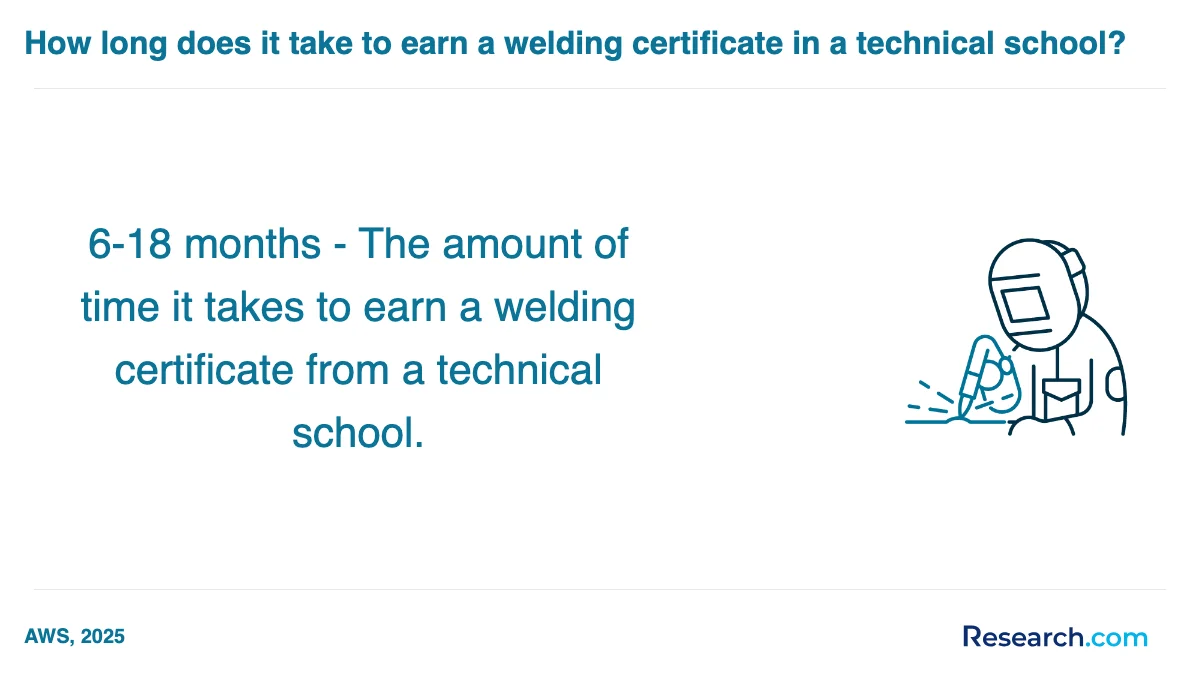
The typical completion time for a welder trade school program in Marietta ranges from about six months to one year. Many local trade schools offer intensive courses designed to get students into the workforce quickly while still providing solid hands-on training. Graduates often share how completing their program in under a year allowed them to start earning sooner and build confidence welding in real job settings.
For instance, students from popular Marietta trade schools describe a schedule packed with practical welding labs and safety instruction, making the experience feel both challenging and rewarding. The shorter timeline doesn't mean rushing through skills; instead, it's a focused approach that fits well for those balancing work or family commitments.
Choosing a program with a clear timeline helps future welders plan their next steps, whether seeking entry-level positions or apprenticeships. Many appreciate how Marietta's welder schools combine efficient pacing with strong support, making the learning environment encouraging and motivating.
Online and on-campus welder trade school programs in Marietta differ mainly in how training is delivered. On-campus programs provide hands-on learning in fully equipped labs, where students spend most of their time welding under expert supervision. Graduates from popular Marietta trade schools often highlight how this immersive environment built their confidence quickly, with real-time feedback sharpening their skills in processes like gas metal arc welding. For example, one graduate shared how spending 80% of the week practicing welding felt invaluable for mastering techniques essential to getting hired.
In contrast, online programs focus on theory-blueprint reading, safety, and planning-which students can complete flexibly around work or family. However, graduates note the challenge of lacking direct access to welding equipment, often needing to find local workshops or apprenticeships for hands-on practice. Some hybrid options offer limited in-person labs, but fully online courses cannot match the depth of skill-building offered by Marietta's on-campus schools.
This difference often guides students seeking immediate job readiness toward on-campus training, while online options suit those needing flexibility but willing to supplement practical experience elsewhere.
The average cost of welding programs in Marietta varies significantly depending on the school you choose and your residency status. For example, graduates from Chattahoochee Technical College, a popular local school, report paying around $2,400 for in-state tuition and approximately $4,800 if they are out-of-state students. This difference makes it crucial to factor residency when estimating tuition fees for welder trade schools in Marietta.
Other students who attended Georgia Trade School near Marietta noticed the tuition was higher, about $10,750 for their Structural Plate and Pipe Welding program. This program offers more extensive training with 500 hours of instruction and various schedules, including full-time and part-time options. Graduates often mention that the school's 10% discount on upfront payments and available payment plans helped manage costs and reduce financial stress.
It's important to remember that tuition fees don't cover all expenses. Additional costs can include books, supplies, and equipment, which can add to the overall investment. Many who pursued welding programs in Marietta found exploring financial aid such as federal grants, state scholarships, and even institutional scholarships beneficial. For those wanting to explore flexible credentials, an online diploma certificate may complement traditional schooling or offer alternatives.
When calculating the total investment, consider these varying tuition fees alongside extra costs to get a clear picture of the true average cost of welding programs in Marietta.

Students pursuing welder trade school programs in Marietta can access a variety of financial aid options that make training more affordable. Many graduates from schools like Lincoln Tech recall how federal aid, including Pell Grants and student loans, significantly eased their tuition costs. These grants are need-based and don't require repayment, which can relieve stress during training. Completing the FAFSA is the crucial first step, and local schools often provide guidance through this process.
Georgia residents can also benefit from the HOPE Career Grant, which some graduates describe as a game-changer since it covers full tuition for welding programs through the Technical College System of Georgia. While it requires maintaining a 2.0 GPA, it helps reduce the financial burden significantly, though students might still need to budget for fees and equipment.
Institutional scholarships from schools like Fortis and Lincoln Tech add another layer of support. Graduates often share how advisors helped them find these merit- or need-based awards, making it easier to focus on learning. Some welding programs in Marietta also connect students to employer partnerships and apprenticeships, offering paid training that combines earning with skill-building, which many find motivating and practical.
To enroll in a welder trade school program in Marietta, students typically need to meet a few straightforward prerequisites that set them up for success. Most schools expect applicants to have a high school diploma or a GED, which ensures a basic understanding of math and reading-skills essential for interpreting welding blueprints and safety guidelines.
Graduates from popular Marietta trade schools often share that having some hands-on experience, even if informal, can boost confidence during the program. For example, working part-time in a metal shop or helping on small projects at home can make the technical lessons easier to grasp.
Other common prerequisites include:
- Passing a basic skills assessment test to evaluate math and mechanical reasoning.
- Being physically capable of handling welding equipment and standing for long periods.
- Providing proof of age-usually 18 years or older-to comply with safety regulations.
Many students find that meeting these requirements feels empowering, as it reflects their readiness to commit to the hands-on nature of welding. Trade schools in Marietta often provide orientation sessions, helping new enrollees transition smoothly into the program and feel supported from day one.

Welder trade school programs in Marietta typically include hands-on courses designed to build practical skills and industry knowledge quickly. Graduates from schools like Georgia Trade School and Chattahoochee Technical College often recall starting with Introduction to Welding Technology, which covers essential welding processes, equipment use, and safety protocols vital for any welding job.
Students then move on to specialized courses such as:
- Oxyfuel and Plasma Cutting - learning to operate cutting torches and plasma cutters, crucial for shaping metal in construction and manufacturing settings
- Flat Shielded Metal Arc Welding (SMAW) - focusing on "stick welding," widely used in structural steel and fabrication work
- Additional welding methods like MIG and TIG welding, depending on the school's offerings
Many students appreciate the balance of theory and practice, preparing them confidently for real-world welding challenges. Accelerated programs, such as those at Goodwill of North Georgia, boost motivation by offering certification-ready training in just weeks, helping students quickly enter the workforce with competitive skills and a positive outlook on their career prospects.
Welder trade school programs in Marietta typically offer a range of specializations designed to prepare students for various in-demand welding careers. Graduates from popular trade schools in Marietta often highlight hands-on experience with core techniques such as arc welding, MIG (Metal Inert Gas) welding, and TIG (Tungsten Inert Gas) welding, all essential in sectors like manufacturing and construction. Many programs also include training in oxyacetylene welding and oxyfuel gas cutting, perfect for automotive and industrial metalwork tasks.
Students focusing on welding program specializations in Marietta GA benefit from practical applications like plasma arc cutting and gouging, skills that employers highly value. Programs such as diplomas offered at Chattahoochee Technical College allow students to excel as combination welders, repair welders, or production line specialists, making their skills versatile in local industries.
For those seeking a quick entry into the field, embedded technical certificates focus on job-ready skills. To explore more options, prospective students can consider cheapest online welding courses that complement traditional training.
When choosing the best welding programs in Marietta, prioritize schools that emphasize hands-on training with modern equipment, as many successful graduates recall how working directly on industry-standard machines boosted their confidence and skill. Consider programs with smaller class sizes to ensure personalized instruction, a factor frequently praised by graduates from top-rated welder training schools in Marietta. Real-world experience shared by instructors who have worked in the field makes a notable difference, offering insights that deepen understanding beyond textbooks.
Look closely at schools offering preparation for recognized certifications like those from the American Welding Society, since graduates often highlight how certification helped them secure jobs quickly. Don't overlook the importance of job placement services; schools with strong local industry connections in Marietta often provide direct pathways to employment. Financial considerations also matter-some students benefit greatly from scholarships or flexible payment plans, and you can explore options like cheap online maintenance technician trade school programs to manage costs effectively.
Welder trade school graduates in Marietta find a variety of career paths that align with their hands-on skills and certifications. Many alumni from local programs at Lanier Technical College and North Georgia Technical College quickly step into roles such as structural steel welders, heavy-duty trailer technicians, and MIG/TIG welders. These positions often involve working in manufacturing, construction, or metal fabrication environments where technical training is highly valued.
Graduates often mention feeling confident moving into jobs that require reading blueprints and applying specialized welding techniques, especially in trailer manufacturing or metal door fabrication. Career advancement opportunities also exist, such as becoming welding supervisors or quality assurance inspectors, which appeal to those looking to expand their skill sets.
For students weighing educational options, understanding what is the difference between trade school and vocational programs can help guide their choices and ensure strong employment outcomes. The welding career opportunities in Marietta GA grow steadily, with many graduates finding full-time or flexible work and earning competitive wages.
- Entry-level roles: welder, fabricator/welder, MIG/TIG welder
- Sectors: manufacturing, construction, metal fabrication
- Advanced positions: welding supervisor, quality assurance inspector
Job opportunities for welder trade school graduates in Marietta remain robust, especially in manufacturing, aerospace, and construction sectors. Local employers like Lockheed Martin consistently seek skilled welders, making welding career opportunities Marietta Georgia graduates highly viable. Many graduates share positive experiences securing jobs quickly, often within weeks of completing their programs at popular Marietta trade schools.
Practical training provided by these schools is vital and aligns with employer expectations. Graduates report starting wages between $17 and $31 per hour, with an average annual salary near $45,375, reflecting strong earning potential from day one.
Key reasons for this favorable job market include:
- High placement rates, with about 70% of graduates employed in industry roles within 40 days
- Retention rates around 66% six months after job placement
- Opportunities for wage growth through further certifications like MIG or TIG welding
Students pursuing welding in Marietta can expect steady demand and clear pathways to full-time employment. Many graduates describe their success as a powerful motivator to advance their skills.
For those exploring career options, understanding how the local trade schools emphasize hands-on experience and certifications is crucial. This approach matches Marietta employers' needs, creating a stable job market for new welders. Learn more about the top skilled trades in demand by visiting top skilled trades in demand.
Best Welding Training Programs & Trade Schools - Top Welding Schools in Marietta for 2026
# 1 position
Washington State Community College - Welding Technology/Welder.
associateWashington State Community College offers a Welding Technology/Welder program with a hybrid format, allowing some distance education. The program prepares students to apply technical skills in welding and cutting metal surfaces, covering arc welding, resistance welding, brazing, soldering, and related processes. Instruction includes welding metallurgy, structural design, safety, and industry codes. Annual in-state tuition is $4,128. The program is accredited by the Higher Learning Commission.
# 2 position
Washington State Community College - Welding Technology/Welder.
certificate or diplomaThe Welding Technology/Welder program at Washington State Community College offers a hybrid learning format with some distance-education options. The curriculum covers arc welding, resistance welding, brazing, soldering, cutting, welding metallurgy, structural design, and safety standards. Annual in-state tuition is $4,128. The program is accredited by the Higher Learning Commission and prepares students to apply technical skills for joining or cutting metal surfaces using various welding processes.
# 3 position
Washington County Career Center-Adult Technical Training - Welding Technology/Welder.
certificate or diplomaThe Welding Technology/Welder program at Washington County Career Center-Adult Technical Training offers a hybrid format with some distance education options. It prepares students with technical skills in arc welding, resistance welding, brazing, soldering, cutting, and related processes. The curriculum includes welding metallurgy, safety, structural design, and applicable codes. The program is accredited by the Accrediting Commission of Career Schools and Colleges.
Frequently Asked Questions about welder
After completing a welder trade school in Marietta, preparing for the job market involves several key steps. First, obtaining welding certifications such as those from the American Welding Society (AWS) can significantly increase employability. These credentials are widely recognized by employers in Georgia's manufacturing and construction sectors.
Networking is also crucial. Joining local trade associations or attending industry job fairs in Marietta helps connect graduates with potential employers. According to the U.S. Bureau of Labor Statistics, welding jobs in Georgia are projected to grow by 8% through 2030, indicating steady demand.
Additionally, building a strong resume that highlights hands-on training and any specialized welding techniques learned during school can improve job prospects. Practical experience, internships, or apprenticeships gained during schooling provide valuable workplace skills that employers seek.
Employers in Marietta highly value welder trade school graduates who demonstrate strong technical skills, such as proficiency in various welding techniques including MIG, TIG, and Stick welding. According to data from the U.S. Bureau of Labor Statistics, welders with certifications in multiple welding processes have better job prospects and earn higher wages. Practical experience in reading blueprints and welding symbols is also crucial, as it ensures accuracy and efficiency on the job.
In addition, safety awareness is a top priority. Employers expect graduates to follow OSHA safety standards rigorously to minimize workplace accidents. Soft skills like reliability, teamwork, and time management are equally important for welders working in construction or manufacturing environments common in Marietta's industrial sectors.
Finding internships in Marietta relevant to welder trade school programs involves several practical steps. Start by contacting local welding schools, as many maintain partnerships with nearby businesses seeking interns. The Cobb County School District and Marietta College Career Services often provide listings of available internships.
Additionally, check with manufacturing companies and construction firms in Marietta, since these industries frequently offer hands-on welding internships. Websites like Georgia Department of Labor and WorkSource Georgia can be useful resources for current opportunities.
Networking through local trade unions and attending job fairs focused on skilled trades can also increase chances of securing an internship. According to the U.S. Bureau of Labor Statistics, internships significantly boost employment prospects in welding careers.
Obtaining a welder trade school diploma in Marietta significantly enhances career mobility and advancement opportunities. The diploma certifies practical skills and industry knowledge, making graduates more competitive in the local job market. According to the U.S. Bureau of Labor Statistics, welders with formal training report higher employment rates and a median annual wage about 15% above those without credentials.
In Marietta, the demand for skilled welders is strong due to growth in manufacturing and construction sectors. Employers often prefer candidates with accredited diplomas, as these programs cover safety, advanced techniques, and certification preparation, essential for career progression.
Trade school graduates can access higher-paying roles and supervisory positions more readily than those without formal education. Additionally, many programs offer job placement assistance, which helps graduates transition smoothly into the workforce. Overall, a diploma fosters upward mobility by validating skills and improving job prospects in Marietta's competitive welding industry.
Students enrolled in welder trade schools in Marietta can benefit from several part-time job opportunities that complement their education. Positions such as welding apprentices, metal fabricators, or production workers in local manufacturing companies provide valuable hands-on experience. According to the U.S. Bureau of Labor Statistics, the Atlanta metropolitan area, which includes Marietta, has a growing demand for skilled welders, with an expected 7% job growth through 2031.
Part-time roles in maintenance or construction sites also allow students to apply welding techniques in real-world settings. These jobs typically offer flexible hours, enabling students to balance work and study effectively. Engaging in such roles enhances practical skills and improves employability upon graduation.
To choose the best Welder degree program near you in Marietta, OH, consider researching local community colleges and technical schools that offer comprehensive welding certification and degree options. Analyze the curriculum, faculty qualifications, and facilities provided by universities or training programs, checking for any hands-on experience opportunities that align with industry standards. Consulting resources like Research.com can help identify programs near Marietta, OH, that have strong reputations and success rates in welding education.
- Finding the Perfect Welding Job After Technical School https://www.high.net/careers/blog/finding-perfect-welding-job-after-technical-school/
- How to find a Welding Job after Graduating Welding School? - YouTube https://www.youtube.com/watch
- What Comes After Welding School? Job Outcomes and More https://ftccollege.edu/trade-blog/what-comes-after-welding-school-job-outcomes-and-more/
- Explore Hands-On Welding Training and Career Growth https://swantonweld.com/discover-hands-on-welding-training-and-advancement-opportunities/
- Welding & Trade School in the U.S. | Tulsa Welding School https://www.tws.edu/
- Combination Welding Technology Program & Trade School | Apex https://apexschool.com/programs/combination-welding-technology/
- Welding Trade Schools: Ignite Your Future With Hands-On Training https://www.trade-schools.net/trades/welding
- Best Welding Schools - Elite Welding Academy https://eliteweldingacademy.com/
- Welding training - Warsaw, Kraków, Wrocław, Łódź, Poznań https://kurso.eu/en/training-and-courses/welding-courses/welding/
- Welder https://www.sait.ca/apprenticeships-and-trades/programs/welder