# 1 position


Audited and Verified:
Our Editorial and Data Verification Process
Research.com uses government datasets, official education statistics and primary institutional information to support its career and degree guides. Our review process checks factual accuracy, occupational definitions, source dates and the requirements associated with the credentials discussed.
How This Article Was Fact-Checked
Our editorial team verifies salary estimates, employment projections, education requirements and program information against original data providers and official organizations. Salary figures are checked against the relevant occupational definitions and reporting periods. Information about licensure, accreditation and required in-person training is reviewed separately.
Fact-checked and verified on:

Co-Founder and Chief Data Scientist

Reviewed by Karolina Broda
Fact-Checker and Data Verification
Choosing an affordable physical therapist assistant (PTA) program near Poteau means checking more than tuition: the training must also support hands-on competence and Oklahoma licensure. The U.S. Bureau of Labor Statistics reports a $68,380 national median annual wage for PTAs in May 2025. This guide explains costs, credentials, clinical training, and career prospects for prospective students and career changers. It also features a Most Affordable Physical Therapist Assistant Trade Schools in Poteau for 2027 ranking, created by the Research.com team of data scientists to help you identify programs worth considering.
A PTA works under a physical therapist's direction, helping patients perform prescribed exercises and treatments, documenting responses, and reporting changes. The job requires safe patient handling, communication, and substantial in-person practice; it is not interchangeable with an aide role or independent physical therapy practice (U.S. Bureau of Labor Statistics).
For occupational entry, look for an associate-degree PTA program accredited by CAPTE, with classroom instruction, skills labs, and supervised clinical education. A certificate in a related support role may get someone into a rehabilitation workplace sooner, but it does not replace PTA education or establish PTA licensure eligibility (CAPTE; Federation of State Boards of Physical Therapy). If you are comparing useful college majors with trade-focused training, decide first whether your intended job is licensed PTA; that answer determines which credential matters.
Poteau students should verify where each program holds labs and arranges clinical placements. A campus that is affordable on paper may require regular travel outside town, and a clinical placement may operate on a full-time daytime schedule even when coursework is flexible.
PTAs work in outpatient therapy practices, hospitals, nursing and rehabilitation facilities, and home health, depending on available positions and employer requirements (U.S. Bureau of Labor Statistics). Those settings differ in pace and duties: outpatient work often follows scheduled visits, while home health adds travel and independent time management within a physical therapist's plan of care.
A Poteau applicant should search beyond the city for both clinical placements and eventual jobs. Rural proximity can widen the realistic employment area, but it also makes commuting costs and schedules part of the training decision. Ask programs which types of sites their recent students used; a placement is experience, not a promise of employment.
The U.S. median annual wage for physical therapist assistants was $68,380 in May 2025 (U.S. Bureau of Labor Statistics, Occupational Outlook Handbook). That is the midpoint for employed PTAs nationally, not a verified Poteau wage or a typical offer to a newly licensed graduate. Setting, hours, experience, and the geographic area in which you seek work can change an offer.
For a usable local estimate, compare current PTA postings within your actual commuting range and ask employers about scheduled hours and benefits as well as base pay. Do not use the national median as guaranteed income when calculating loan payments. Questions such as what major make the most money are less useful here than comparing realistic PTA offers against the full cost and time required to qualify.
PTA associate-degree programs typically take about two years of full-time study, including general education, technical instruction, labs, and clinical education (U.S. Bureau of Labor Statistics; CAPTE). Actual time depends on course sequencing, prerequisites, admission cycles, and whether part-time enrollment is permitted. Ask for the program's term-by-term plan rather than assuming an advertised duration includes prerequisites.
There is no single clock-hour figure that a Poteau student should assume applies to every PTA program. CAPTE-accredited programs must provide appropriate clinical education, but programs set their published schedules and placement arrangements (CAPTE). Ask how many weeks and hours of supervised clinical work you will complete, when placements occur, and whether those hours conflict with your job. If you are considering what is the shortest career to study that pays well, note that a faster support-role credential is not a shortcut to PTA licensure.
Online delivery may make lectures, reading, or some assessments easier to fit around work. It cannot eliminate in-person skills practice and supervised clinical training needed to demonstrate patient-care competence. Before enrolling in a hybrid program, obtain its exact campus-attendance schedule and clinical-placement policy; do not assume a school will secure a site near Poteau (CAPTE).
The format trade-off is especially important when travel is substantial:
| Format | Potential advantage | Constraint to verify |
| On-campus | Scheduled access to labs and instructors | Commute frequency and clinical-site travel |
| Hybrid | Some coursework completed remotely | Required lab visits, placement location, and schedule |
| Entirely online | Remote coursework | Cannot be treated as a substitute for required in-person PTA clinical training |
Listings of accredited trade schools online can help you explore delivery formats, but confirm the specific PTA program's CAPTE status and Oklahoma eligibility separately. Institutional accreditation and programmatic accreditation answer different questions.
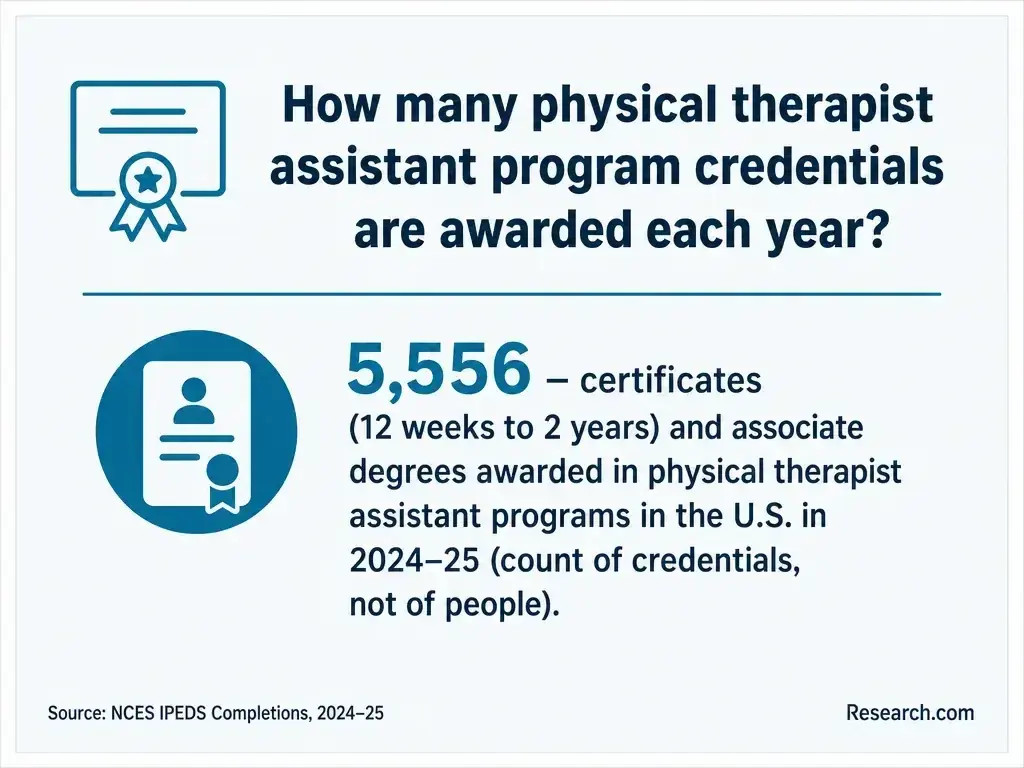
A reliable Poteau-wide average PTA program price is not established here. Instead of applying a national tuition figure to a local decision, request the current published cost of attendance and a PTA-specific expense sheet from each program you can realistically attend. Resident tuition rules, aid eligibility, clinical travel, and completion time can make two similar tuition quotes produce very different bills.
Build a job-ready budget that includes tuition and mandatory fees; books and software; uniforms and clinical supplies; required health screening or background checks; travel to campus and clinical sites; and examination and Oklahoma license application costs. Add wages you may forgo during clinical terms. Federal grants, eligible loans, scholarships, and workforce assistance may reduce out-of-pocket cost, but eligibility depends on the student and program (Federal Student Aid; Oklahoma State Board of Medical Licensure and Supervision).
Compare net cost to completion, not just first-year tuition. If you expect to borrow, also consider completion probability, likely starting pay rather than the national median, repayment time, and whether reduced work hours make the program affordable. A lower-priced program that extends your commute or delays completion may not deliver the better return.
The standard qualifying educational credential is an associate degree in physical therapist assisting from a CAPTE-accredited PTA program (CAPTE; Federation of State Boards of Physical Therapy). It is an academic award, not an Oklahoma occupational license. A program's state authorization or institutional accreditation also does not, by itself, establish CAPTE accreditation or permission to practice.
A rehabilitation aide certificate or employer training may prepare someone for support work under workplace supervision, but not for the licensed PTA role. Choose that route if your immediate goal is to explore the field or enter a support position - not if you need a substitute for the qualifying PTA credential.
Requirements vary by program. PTA applicants commonly need to meet general admission standards and any program-specific prerequisites; clinical participation may also involve health documentation, immunizations, screening, or background checks set by the program and placement site. Ask for the current admissions checklist and selection criteria before spending money on prerequisite courses (CAPTE; individual program requirements).
If you are considering Carl Albert State College as a nearby provider, verify directly whether it offers a currently admitting, CAPTE-accredited PTA program and where its required labs and clinical placements occur. Do not infer that a college's general health-training offerings include a licensure-qualifying PTA pathway. Ask whether prior coursework transfers, whether accepted credits shorten the PTA sequence, and whether a clinical-site requirement could restrict your placement.
PTA training connects anatomy, movement, therapeutic exercise, patient safety, documentation, and communication to treatment performed under a physical therapist's direction. Students practice techniques in supervised labs before applying them with patients during clinical education (CAPTE; U.S. Bureau of Labor Statistics). A program should make clear how it assesses both technical performance and professional behavior.
For a working Poteau student, the critical question is not simply which topics appear in the catalog. Ask how often you must attend labs, what skills must be passed before clinical placement, and how placement travel and hours are assigned. Those details determine whether the program is feasible alongside employment or caregiving.
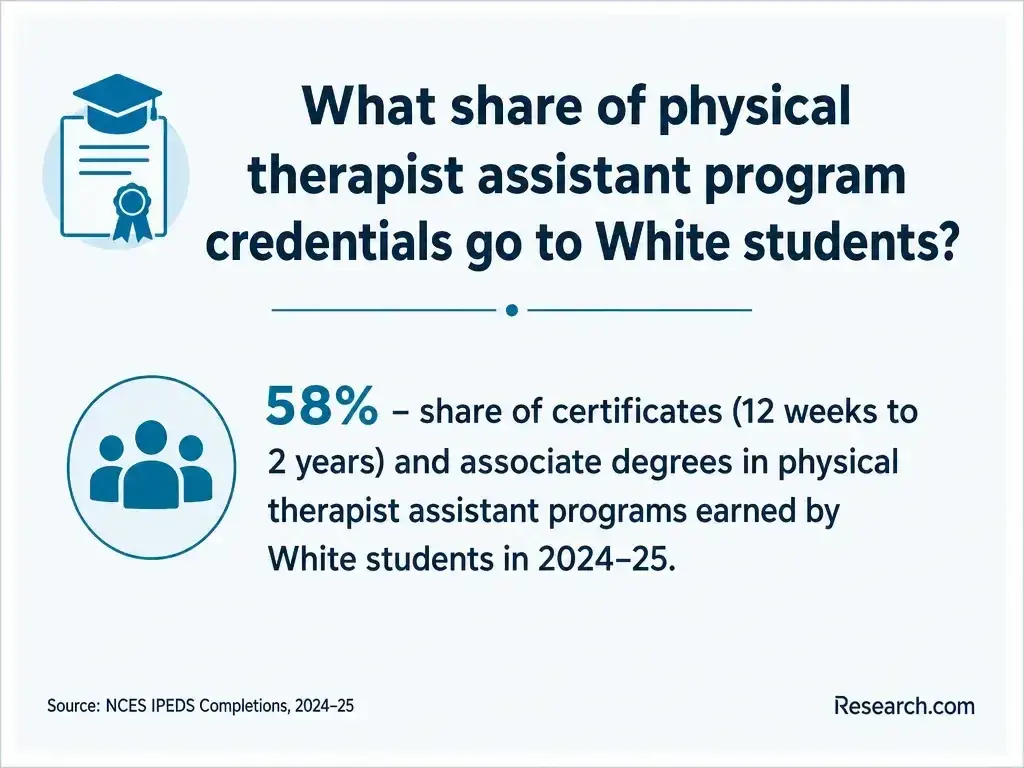
Yes. To practice as a PTA in Poteau, you need an Oklahoma PTA license. Oklahoma's State Board of Medical Licensure and Supervision sets the state's application requirements; the National Physical Therapy Examination for PTAs is administered through the Federation of State Boards of Physical Therapy. Verify current education, examination, application, and any additional state requirements with the board before enrolling, particularly if a program is outside Oklahoma (Oklahoma State Board of Medical Licensure and Supervision; Federation of State Boards of Physical Therapy).
CAPTE accreditation concerns the PTA program; institutional accreditation concerns the school; licensure is the state's permission for an individual to practice. None substitutes for the others. A certificate, apprenticeship, or employer-sponsored aide training does not independently establish eligibility for Oklahoma PTA licensure (CAPTE; Oklahoma State Board of Medical Licensure and Supervision).
Start with eligibility, then compare affordability among programs you can actually attend. The ranking is a useful cost screen, but its affordability score does not measure clinical placement quality or include accreditation in the score. A program is worth the investment only if its credential, practical training, schedule, and likely net cost fit your goal of entering the licensed occupation.
Before accepting an offer, put these questions to each program and request written answers:
Two common mistakes are choosing solely by sticker tuition and assuming "online" means no travel. If you are asking what is the easiest degree to get online?, PTA training is a poor fit for an entirely remote plan: its patient-care skills and clinical education require in-person participation. Treat any claim of a wholly online shortcut to PTA practice as a reason to verify accreditation and board eligibility before paying.
After licensure, a PTA may seek work across outpatient, hospital, post-acute, or home-health settings, subject to local openings and employer expectations (U.S. Bureau of Labor Statistics). Experience can support movement between settings or into mentoring and coordination responsibilities. Additional workplace training may deepen skills, but it does not change a PTA into an independently practicing physical therapist.
An aide or rehabilitation support position can be a practical way to test your interest before committing to the associate-degree pathway. It may offer exposure to a therapy workplace, but it does not replace CAPTE-accredited PTA training. For someone deciding among useful college majors and occupational credentials, the decisive question is whether the intended job specifically requires a PTA license.
U.S. employment of physical therapist assistants is projected to grow 23.0% from 2025 to 2035 (U.S. Bureau of Labor Statistics, Employment Projections). This indicates strong national growth for the occupation, not a forecast of openings within Poteau or a guarantee that a particular graduate will find work nearby.
Because a Poteau job search may span several communities, compare vacancies by setting and commuting distance before choosing a clinical-placement strategy. Ask programs where recent students completed clinical work and look at current employer requirements. That gives you a more practical picture of local opportunity than applying a national growth rate to one town.
Investing in training is a significant decision, particularly when a low advertised price may not reflect the full cost of becoming licensed. Research.com evaluates programs against others in the same occupation and location so readers can compare relevant options. Only programs with completions reported to IPEDS are eligible for this ranking; an omitted provider is not necessarily unapproved or low quality.
The most affordable ranking scores costs and debt: tuition, cost of attendance, median student debt, and federal loan default rate. Indicator weights are assigned through an entropy-based method, which gives more weight to measures that vary more across programs. Accreditation, clinical quality, and other quality indicators are not part of the affordability score. Research.com also maintains separate best-program rankings that assess outcomes, earnings, costs, and quality; those are not the scoring method used here.
To support the ranking's quality, credibility, and accuracy, the Research.com team used the following data sources. Some cover institutional costs and outcomes; occupation-specific sources provide context but do not turn the affordability score into a licensure or quality endorsement.
Not every source above accredits or evaluates PTA programs. For PTA-specific accreditation, verify the program with the Commission on Accreditation in Physical Therapy Education (CAPTE). Use the ranking to narrow your cost comparison, then check program eligibility, clinical placements, and your own net price. More detail on Research.com's approach appears on its methodology page.
# 1 position
# 2 position
Generally, no. The standard educational route is a CAPTE-accredited PTA associate-degree program, followed by meeting Oklahoma's examination and licensure requirements. A support-role certificate is not equivalent (CAPTE; Oklahoma State Board of Medical Licensure and Supervision).
No entirely remote format should be assumed to satisfy hands-on and supervised clinical training requirements. A hybrid program may offer online coursework, but verify its in-person labs, clinical sites, CAPTE status, and Oklahoma eligibility (CAPTE).
Not necessarily. Compare tuition, fees, supplies, travel, clinical expenses, aid, and income lost while training. Ask each program for a written estimate through completion.
No. Graduation and licensure are separate. Confirm the current education, examination, and application requirements with the Oklahoma State Board of Medical Licensure and Supervision.
Consider programs within a workable travel range, but first confirm campus-attendance frequency and who arranges clinical placements. Do not assume that hybrid coursework eliminates commuting or that a nearby college offers a PTA program.