2027 Online Social & Behavioral Sciences Degrees With Social Research Concentrations

Co-Founder and Chief Data Scientist
Professionals aiming to pivot into social research face a challenge: balancing career demands with gaining specialized skills amid rigid program structures. Recent data from the National Center for Education Statistics shows online enrollments in social sciences surged nearly 20% in 2024, reflecting growing demand for flexible, accessible education tailored to adult learners and working professionals.
This shift signals a broader transformation in how social research expertise is acquired, emphasizing timing and program adaptability over traditional campus attendance. Navigating these evolving options is critical to align education with workforce expectations and long-term career mobility. This article evaluates online social & behavioral sciences degrees with social research concentrations to guide informed enrollment decisions.
Key Things You Should Know
- Online social & behavioral sciences degrees with social research concentrations demand balancing broad methodological training against specialized software proficiency; programs emphasizing R or Python demonstrate 15% higher graduate placement in data-heavy roles, per 2024 NSF workforce data.
- Employers increasingly require demonstrable project-based research experience; graduates from programs integrating real-world datasets report 20% faster job attainment in public policy and nonprofit sectors, according to 2024 National Association of Colleges and Employers analytics.
- Program length and cost vary widely; median completion time spans 2.5 to 4 years with tuition differences up to 40%, affecting return on investment timelines for working professionals aiming for career shifts, as detailed by the 2024 U.S. Department of Education Postsecondary Dataset.
What are online social and behavioral sciences degrees with social research concentrations?
Online social and behavioral sciences degree programs with social research focus equip students with robust skills in both quantitative and qualitative methodologies essential for today's data-driven social inquiry roles. These programs address a clear workforce demand for professionals adept at survey design, statistical software, ethnographic analysis, and program evaluation across varied sectors such as public policy, healthcare, and nonprofit organizations.
The growth in online offerings-now exceeding 4,600 bachelor's degrees in 44 countries-caters to working professionals seeking flexibility without pausing their careers. However, remote study requires disciplined time management and reliable technical resources, especially to support advanced statistical tools. Securing quality supervised fieldwork experience remains a persistent challenge but is critical to bridging theory with actionable community or organizational insights.
Social research concentrations in online social and behavioral sciences degrees integrate foundational theory with applied research skills, preparing graduates to meet employer expectations for evidence-based analysis and policy influence. For instance, a public health analyst might independently design localized surveys to monitor epidemic trends, while a market researcher rigorously tests consumer behavior hypotheses that drive product development strategies.
Choosing these programs demands critical evaluation of accreditation, curriculum rigor, and access to applied research opportunities, as these factors directly affect employability and career trajectory. Those seeking related advanced degrees may consider the MSW best programs, which offer complementary skills in community engagement and social services.
How do online social and behavioral sciences programs compare to campus-based options?
Choosing between campus-based versus online social research concentrations involves weighing tradeoffs in experiential learning and networking essential for career trajectories in social and behavioral sciences. Campus programs provide structured access to faculty mentorship and in-person collaboration, which can be crucial for roles demanding intensive fieldwork or community engagement.
Conversely, online social and behavioral sciences degree program differences largely center on flexibility that supports working professionals applying concepts in real time, though they require deliberate efforts to secure practical experience, often through internships or virtual practicums. Graduates with a bachelor's degree in social science earn median weekly wages about 14% higher than those with only a high school diploma, reflecting employers' growing preference for analytical skills and hands-on experience.
Prospective students should assess program design against their career goals, prioritizing:
- Curricula incorporating applied project work and local partnerships for public policy analysts shifting careers
- Flexible online options accommodating concurrent employment for human services professionals
For those comparing options, exploring the cheapest online master's degree in psychology listings provides insight into cost-effective pathways within the broader social and behavioral sciences landscape.
What types of social and behavioral sciences degrees offer social research concentrations?
Degrees in social and behavioral sciences with social research tracks offer specialized methodological training essential for roles requiring rigorous data analysis and applied research. Psychology, sociology, anthropology, and criminology programs embed quantitative and qualitative methods to prepare graduates for interpreting complex behavioral or societal trends, which directly inform clinical, organizational, or community-level interventions.
For instance, a social research-focused psychology graduate is positioned to design studies evaluating treatment efficacy in mental health settings, a skillset that counseling fields increasingly demand given an 18% forecasted job growth through 2032. Public health and social work programs incorporating social research emphasize applied data skills used in policy evaluation and program impact measurements, aligning with evidence-based practice requirements.
Employers expect practical research acumen for monitoring outcomes and improving service delivery, so prospective students should prioritize programs offering hands-on experience, software access, and faculty expertise. Without these elements, academic credentials risk limited employability for data-driven roles.
Students evaluating online social and behavioral sciences degrees with research focuses must weigh program rigor against the availability of internships or practicums that bridge theory and applied work. Those pursuing careers in behavioral research or policy analysis must scrutinize curriculum depth and real-world training opportunities to avoid underpreparation.
For professionals exploring a specialization in forensic psychology, there is value in examining options such as an online master's in forensic psychology, which may intersect with research competencies relevant to legal and behavioral analysis contexts.
What courses and research methods are typically included in these online programs?
Effective online social and behavioral sciences research courses prioritize practical methodologies over abstract theory, equipping students with applied skills across quantitative and qualitative domains. Core training includes research design, survey methodology, ethnographic research, and longitudinal studies, with strong emphasis on data analysis tailored for social contexts. Familiarity with software such as SPSS, R, or Python is often required.
Typical research methods in social and behavioral sciences programs integrate ethical considerations, survey sampling, and community-based participatory research, fostering the ability to navigate real-world constraints and stakeholder complexities. For example, healthcare administration professionals leverage these skills to assess patient data trends and evaluate intervention outcomes, responding to robust labor market growth projections.
Criminal justice or social work tracks prioritize qualitative interviewing, adapting research tools to nuanced client situations. Students should anticipate rigorous demands in data management and statistical literacy, which may challenge those balancing full-time work. Practical outcomes often hinge on comprehensive capstone projects requiring original research synthesis. This approach may limit accessibility for learners seeking less intensive pathways or faster credentialing.
Employers increasingly value candidates who can seamlessly bridge analytic rigor with managerial insight, making program design critical for strategic pivots. For those evaluating options, programs offering specialized accreditation-for instance, CAHIIM-accredited health information management degree online-can enhance credibility and align credentials with sector expectations.
What are the typical admission requirements for online social and behavioral sciences degrees?
Admission to online social & behavioral sciences programs hinges on more than just transcripts and test scores; it reflects a balance between academic benchmarks and relevant professional experience. While a minimum GPA around 2.5 to 3.0 is typical, many undergraduate programs increasingly waive standardized tests like the SAT or ACT for applicants demonstrating applicable work history or prior college credits.
Graduate candidates face stricter criteria, including official transcripts, letters of recommendation, a statement of purpose, and occasionally GRE scores, depending on program competitiveness. Applicants with documented professional experience in social research may leverage it for preferential admission or credit transfer, reducing redundancy and accelerating degree completion.
International students must verify English proficiency via TOEFL or IELTS exams, a requirement that influences both eligibility and application timing. Programs expect candidates to possess basic computer literacy and reliable internet access, given how crucial remote research competencies and digital tools are for employment in government, nonprofit, or private sector roles. Admissions evaluations frequently incorporate essays or interviews to assess alignment between candidate goals and labor market demands.
Cost considerations also affect modality choice: in-state tuition for online social & behavioral sciences programs tends to run 15-20% lower than comparable on-campus public options. Prospective students should weigh how admission standards, program rigor, and credential recognition intersect with their targeted career pathways.
How long do these online degrees take to complete, and what do they cost?
Completing an online social & behavioral sciences degree with a social research focus demands careful consideration of time, cost, and workforce readiness. Bachelor's programs generally span four years full-time but can compress to 2.5-3 years with prior credits or accelerated coursework. Part-time learners often face a 5 to 6-year timeline, reflecting the rigor of required research methodology and statistical training found in over 70% of accredited programs, per National Center for Education Statistics data.
Cost is highly variable: in-state public university students typically pay between $5,000 and $15,000 annually, while private institution fees range from $15,000 to $30,000 per year. This results in total degree expenses from approximately $20,000 to $120,000. The financial investment should be weighed against median social research salaries near $60,000 and the requirement for proficiency in advanced statistical software, a common employer demand in government and research sectors.
Students integrating internships or practicums for hands-on research experience may extend their program duration, potentially delaying earnings growth. Working professionals must balance program length with skill acquisition speed to optimize return on investment. To navigate these tradeoffs, evaluating accelerated course availability, financial aid options, and employer tuition assistance becomes essential for aligning education with practical labor market expectations.
How can students verify accreditation and program quality for online social research degrees?
Accreditation remains the most reliable indicator of academic and professional value in online social & behavioral sciences degrees, directly affecting transferability, employer recognition, and eligibility for advanced credentials. Institutional accreditation-verified via U.S. Department of Education or Council for Higher Education Accreditation databases-establishes baseline quality, but specialized endorsements from bodies like the APA or CSWE reveal program relevance to research-heavy career paths.
For example, graduates targeting roles in policy analysis or research support must prioritize programs with demonstrated rigor in quantitative and qualitative methods. Employers tend to favor candidates from programs that openly report graduation rates and post-degree employment data, since these metrics predict practical preparedness.
Students without a social sciences background, representing roughly 60% of online social science bachelor's applicants per Educations.com 2025 survey, need clear curricular support to avoid gaps undermining research competency and workforce readiness.
- Assess accreditation status via official government or CHEA portals before applying
- Request or review published graduation and employment outcomes
- Compare curriculum content for comprehensive research methodology coverage
- Ensure faculty expertise aligns with your intended research focus
Neglecting these factors risks enrolling in programs that fall short of market expectations, limiting career mobility and adaptability in a research-intensive job market. Strategic evaluation helps prevent costly detours especially for mid-career changers targeting high-demand social & behavioral sciences specialties.
What careers can graduates pursue with a social and behavioral sciences research degree?
Graduates with a social and behavioral sciences research degree must align their skill sets with distinct employer demands across sectors such as government, healthcare, nonprofits, and market research. Positions-ranging from policy analysts to program evaluators-hinge on solid quantitative abilities and mastery of research methodologies essential for interpreting behavioral data and crafting evidence-based recommendations.
For instance, a city government policy analyst leverages behavioral insights to adjust funding priorities for community initiatives. Online programs typically cost between $40,000 and $60,000, which is notably more affordable than the $60,000 to $80,000 range for campus-based alternatives, though candidates must weigh this against entry-level salary prospects and access to experiential learning.
Students without existing professional networks should seek programs with robust practicum components or industry partnerships to improve job placement, particularly where technical certifications and ethics in data privacy increasingly influence hiring decisions.
Career paths extend into health behavior analysis, requiring competence in statistical software, survey design, and rapid report generation to influence public health policy. Meanwhile, corporate roles in user experience research or organizational behavior demand a mixed-methods approach to inform strategic decisions in volatile marketplaces.
- Employer preference for practical experience and regulatory knowledge often outweighs purely academic credentials.
- Cost efficiencies of online degrees facilitate accelerated workforce entry but may limit networking advantages.
- Demonstrated proficiency in data privacy compliance is critical given tightening sector regulations.
What salary ranges and job outlook should social research graduates expect?
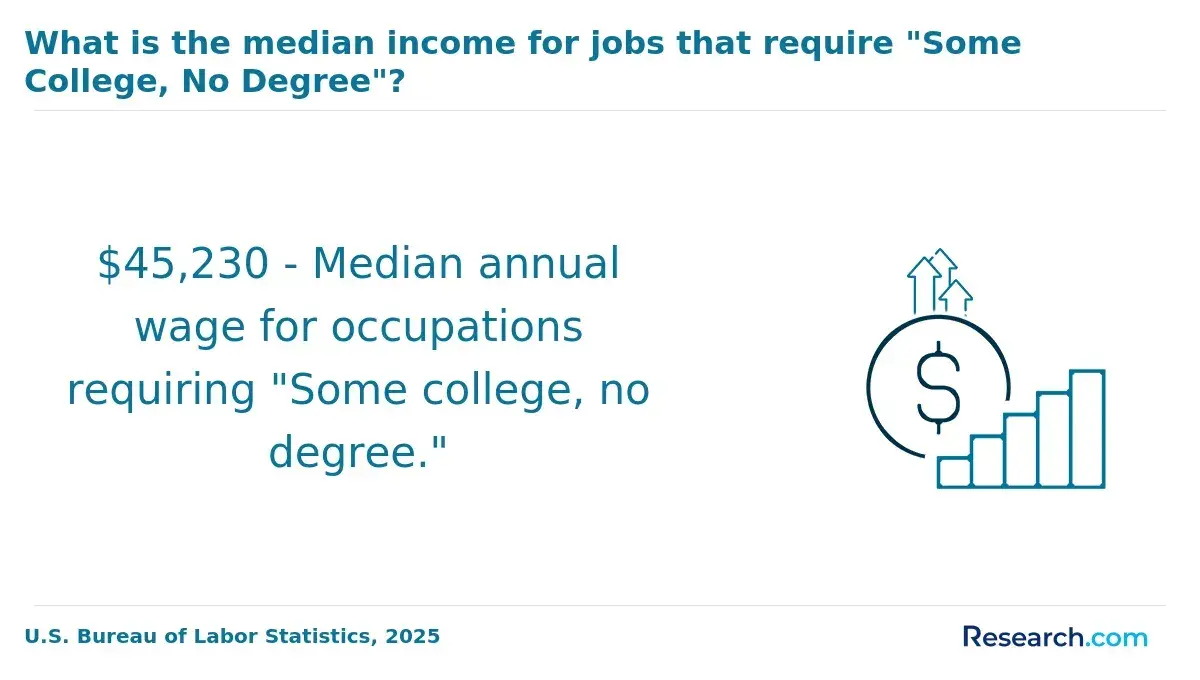
Graduates holding online degrees in social & behavioral sciences enter a job market where starting salaries generally range from $40,000 to $60,000, with median wages around $51,580 in community and social service roles. This wage baseline, about 19% above the overall U.S. median, reveals the sector's moderate but steady demand.
Job growth over the next decade is projected at roughly 6%, emphasizing stable but unspectacular expansion. Candidates aiming for government or large nonprofit employers navigate formal hiring but benefit from ongoing funding stability. Those pursuing private-sector research or consulting often encounter higher initial pay but must quickly develop advanced skills in statistical analysis, survey design, and data interpretation to remain competitive.
Real-world tradeoffs emerge between starting salary and time invested in skill acquisition. For instance, a public health research path may offer lower salaries initially but access to federal grants and long-term funding aligned with public priorities. In contrast, market research positions tend to reward experience with early higher pay but come with increased vulnerability to economic fluctuations and workforce reductions.
Success depends heavily on demonstrated competencies-portfolio projects, internships, and proficiency with analytics tools often eclipse academic credentials alone. Building networks within professional associations complements these practical experiences, creating a more direct pathway to employment in this nuanced field.
How can prospective students choose a reputable online program in social and behavioral sciences?
Evaluating online programs with a social research focus requires prioritizing accreditation by agencies recognized by the U.S. Department of Education to safeguard both educational quality and access to federal aid. With over 40% of social and behavioral sciences programs offering formal social research tracks, scrutinizing curricula is essential to ensure students gain practical skills in data collection, statistical software, and analysis methods aligned with workforce demands.
For instance, public health analytics roles demand proficiency in handling large epidemiological datasets and relevant tools, which some programs fail to adequately address. Faculty expertise directly influences educational relevance; programs staffed by instructors with active research or applied experience tend to deliver material aligned with evolving industry standards.
Employment outcomes also hinge on transparent graduate placement statistics and employer connections, particularly with government, nonprofit, or private research organizations. Prospective students must weigh logistical considerations such as program flexibility, delivery format, and available technical support-critical factors for working professionals. Accessibility to internships or partnerships with research centers can accelerate workforce entry but remains uneven across offerings.
Financial and credit transfer policies further affect return on investment, making thorough due diligence key to matching educational choices with career objectives. This analytical approach helps avoid costly mismatches between academic credentials and labor market expectations.
Other Things You Should Know About Social & Behavioral Sciences
Employers in social research prioritize demonstrable skills over the mode of instruction. Online degrees from institutions with regional accreditation hold the same foundational weight as on-campus programs, but employers may scrutinize applicants' practical research experience more closely. Graduates should emphasize internships, applied projects, or fieldwork completed alongside their degree to offset potential employer skepticism about online credentials.
Online social & behavioral sciences programs with social research concentrations are rigorous, often requiring extensive data analysis, critical reading, and research report writing. Balancing these demands with full-time employment requires disciplined time management and may extend degree completion timelines. Prospective students should prioritize programs with flexible deadlines or asynchronous coursework to maintain steady progress without burnout.
Online programs tend to emphasize quantitative methods and data analysis tools accessible remotely, such as statistical software and survey platforms. There is typically less emphasis on ethnographic fieldwork or in-person data collection skills, which can limit exposure to some qualitative methods. Students seeking comprehensive methodological expertise should assess whether the program offers hybrid components or local field opportunities.
References
- Behavioral and Social Sciences - East-West University https://www.eastwest.edu/catalog/behavioral-and-social-sciences/
- Computational Social and Behavioural Science https://apply.stipendiumhungaricum.hu/courses/course/4435
- Social and Behavioral Sciences (All Areas)--(Area of Concentration) https://www.lawsonstate.edu/learn_at_lawson/programs_and_divisions/college_transfer_programs/social_and_behavioral_sciences.aspx
- Admission requirements and documents - SWPS University https://english.swps.pl/programs/apply/admission-requirements-and-documents
- IAI General Education Social and Behavioral Sciences Course Descriptions https://itransfer.org/courses/gecc/socialbehavioralsciences.php
- Social and Behavioral Sciences https://www.soka.edu/academics/undergraduate-studies/concentrations/social-and-behavioral-sciences
- Research Methodology Course - free online course https://www.surghub.org/course/canecsa-research-methodology-course
- Social and Behavioral Sciences Concentration https://catalog.soka.edu/social-and-behavioral-sciences-concentration
- Social and Behavioral Sciences https://www.tu.berlin/en/news/scientific-disciplines/social-and-behavioral-sciences
- Comprehensive Introduction to Research Methodology and Design https://www.uva.nl/en/programmes/summer-courses/introduction-to-research-methodology-and-design/introduction-to-research-methodology-and-design.html