2027 Online Social & Behavioral Sciences Degrees With Cultural Studies Concentrations

Co-Founder and Chief Data Scientist
Professionals seeking to pivot into cultural studies within social & behavioral sciences often confront a tangled web of rigid on-campus schedules and limited geographic options. This inflexibility can stall career momentum, especially for adult learners balancing employment and family. National Center for Education Statistics data reveal a 58% surge in online enrollment since 2020, signaling a systemic shift toward digital accessibility.
Yet not all programs offer equivalent rigor or relevant cultural concentrations, complicating informed decision-making. Choosing the right online degree demands assessing curriculum depth, accreditation, and alignment with workforce expectations. This article examines current online social & behavioral sciences degrees featuring cultural studies concentrations to help readers navigate these complexities and select pathways that optimize career flexibility and growth.
Key Things You Should Know
- Degree programs with cultural studies concentrations average a 30% higher tuition cost than broader social sciences, raising completion time-cost tradeoffs amid stagnant federal aid adjustments reported by the National Center for Education Statistics in 2024.
- Employers in government and nonprofit sectors prioritize cultural competency demonstrated through project-based online portfolios, reducing the value of generic coursework, as confirmed by 2024 HR surveys from the Society for Human Resource Management.
- Labor market projections from the Bureau of Labor Statistics in 2024 forecast a 12% growth in social and behavioral sciences roles requiring cross-cultural expertise, pressuring candidates to balance advanced skills acquisition with accelerated program pacing.
What are online social and behavioral sciences degrees with cultural studies concentrations?
Social and behavioral sciences degrees with a cultural studies focus require students to navigate a balance between theoretical frameworks and practical skill development. These programs are tailored for working adults and career changers, with asynchronous formats that accommodate busy schedules. However, those opting for strong internship or practicum components may face scheduling challenges, a crucial consideration for students weighing flexibility against hands-on experience.
Recent data reveals that 74% of U.S. undergraduates in fully online social sciences programs were over 25, illustrating the appeal of distance learning social and behavioral sciences programs with cultural studies concentration among professionals managing work and family responsibilities. Graduates are expected to demonstrate critical thinking, cultural competency, and data interpretation skills relevant to nonprofit, government, or corporate diversity roles.
Success depends on proficiency with digital research tools and effective cross-cultural communication in virtual teamwork-skills increasingly valued in remote or hybrid work settings. Employers also prioritize candidates who have engaged in real-world projects that build tangible networks and professional relationships.
Prospective students should critically assess how programs integrate applied learning versus purely conceptual coursework, understanding this tradeoff's impact on employability and workload. For an informed comparison of related online pathways, exploring options like an online psychology degree can provide insights into alternative or complementary fields within social and behavioral sciences education.
How do online cultural studies concentrations compare to campus-based program options?
Online cultural studies concentrations offer distinct operational advantages over traditional campus programs by accommodating professionals who cannot pause their careers or relocate, allowing them to apply theoretical frameworks directly within their workplaces. However, those weighing how online cultural studies concentrations compare to traditional campus programs must consider the tradeoffs in experiential learning.
Campus options provide structured access to face-to-face seminars, institutional resources, and mentorship, fostering nuanced cultural competency through collaborative dialogue-benefits that online formats often struggle to replicate. Employment growth in social and behavioral sciences roles related to cultural studies is projected at 9% through 2032, exceeding the national average, with a median wage around $79,310.
This creates demand for programs that integrate academic rigor with applied skills. Campus-based degrees emphasize immersive ethnographic research and fieldwork, valued by government and nonprofit employers, but require physical presence and more academic focus. Students assessing differences between online and on-campus cultural studies degree options should match delivery modes to their professional priorities: those seeking workforce entry amid ongoing employment often find online degrees more viable, while candidates aiming for research leadership or policy roles often benefit from campus environments offering rich field experiences and networking.
Employers prioritize demonstrated cultural insight and applied experience, meaning students must proactively seek internships or community projects, particularly in online settings. For additional information on related pathways, consider exploring masters of psychology online.
What types of social and behavioral sciences degrees offer cultural studies concentrations online?
Degrees in social and behavioral sciences with cultural studies online frequently integrate comprehensive coursework on identity, race, ethnicity, and globalization into programs such as sociology or anthropology. These concentrations demand consideration of practical constraints like fieldwork or immersive research practicums, which may require physical presence despite the online format. This aspect can limit the intended flexibility of online study, forcing students to weigh the tradeoff between program accessibility and hands-on experience.
Graduates with these online cultural studies concentrations in social and behavioral sciences programs find themselves better positioned for roles involving multicultural community development, policy analysis, or cultural resource management. The workforce advantage is measurable: bachelor's degree holders in social sciences earn a median weekly wage 49% higher than high school graduates ($1,253 vs. $840). This premium often reflects employers' increasing demand for cultural competency in sectors like government, education, and healthcare.
Students must evaluate programs based on the balance of theoretical cultural literacy and applied skills, ensuring alignment with specific job market demands. Prioritizing strong research opportunities and institutional partnerships enhances employability but may come with geographic or time commitments that impact working professionals. Those exploring advanced social science pathways might also consider related fields, such as clinical psychology masters programs, which offer complementary skills in behavioral analysis and intervention strategies.
How can students verify accreditation and quality of online cultural studies programs?
Accreditation verification for online cultural studies degrees hinges largely on regional recognition through agencies like the Higher Learning Commission or the Middle States Commission on Higher Education. These accreditors rigorously assess academic quality by examining curriculum rigor, faculty qualifications, student support systems, and measurable learning outcomes. National accreditors focused on niche fields are less relevant for cultural studies concentrations, so prioritizing regional accreditation tied to social & behavioral sciences programs is essential for quality assurance of online cultural studies programs.
Prospective students must also weigh graduation rates, retention data, and employment outcomes sourced from institutional reports or independent databases such as the U.S. Department of Education's College Scorecard. For example, cultural studies programs connected to strong post-graduation placement in education, nonprofit, or public policy roles often indicate alignment with labor market demands rather than purely theoretical training.
Cost savings via online formats-often 26% lower tuition than on-campus equivalents according to the National Center for Education Statistics-should be balanced against ensuring that affordability does not compromise educational standards or employer acceptance. Employers increasingly value graduates with demonstrated applied learning, such as internships or fieldwork, rather than purely academic credentials.
Considering workforce pathways, candidates benefit from programs incorporating real-world experience. Students evaluating options might also explore degrees like a human resource management masters degree online when intersecting career goals with social & behavioral sciences.
What courses and specializations are typically included in these online cultural studies majors?
Cultural studies degrees frequently confront the challenge of translating qualitative cultural knowledge into quantifiable skills valued by many employers. The interdisciplinary curriculum-covering critical theory, ethnography, and comparative cultural analysis-equips students to interpret complex social practices but often requires additional specialization to meet labor market demands.
Practical options such as digital humanities, cultural policy, and community engagement offer clearer employment pathways, especially in nonprofits, education, and public policy sectors. For instance, specializing in digital media analysis enables graduates to respond to employer needs in content strategy by decoding online cultural narratives, blending cultural literacy with technical acumen.
Critical experiential components like capstone projects or internships bridge academic theory with workplace expectations, addressing an employer preference for candidates who combine analytical skills with hands-on experience. However, those targeting data-driven or strictly technical roles may find the qualitative emphasis a limitation unless supplemented by market-relevant skills.
Growth in bachelor's completions for area, ethnic, cultural, gender, and group studies by 45% over a decade reflects rising demand for expertise in navigating sociocultural complexity. Prospective students should weigh programs' balance between theoretical breadth and applied methods carefully, as this balance impacts career flexibility in Social & Behavioral Sciences fields.
What admission requirements and prerequisites do online social and behavioral sciences programs have?
Admissions for online social and behavioral sciences programs with cultural studies often hinge on more than transcripts and test scores; they prioritise readiness to engage with complex societal issues. Candidates typically need a high school diploma or equivalent with a minimum GPA of 2.5 to 3.0. However, programs frequently expect evidence of foundational coursework in areas like English composition and social sciences to ensure critical reading and writing capability.
Prerequisites commonly include introductory courses in sociology, psychology, or anthropology, which students must complete before progressing to specialized cultural studies content. Graduate applicants face even steeper expectations, requiring a bachelor's degree in a related discipline plus recommendation letters that attest to analytical rigor and intercultural skills.
The labor market increasingly demands graduates versed in research methods and quantitative analysis, as 58% of L&D leaders rank equity and inclusion skills among their top employee development priorities, according to the LinkedIn Workplace Learning Report 2024. This creates a feedback loop where admissions committees weigh professional experience with diversity challenges heavily, rewarding candidates whose backgrounds align with practical workforce needs.
Applicants returning after a hiatus without recent academic work often encounter extended prerequisites, which can delay enrollment and increase costs. Personal statements that clearly articulate the applicant's intention to apply diversity, equity, and inclusion competencies in their career trajectory carry significant weight in admission decisions.
How long do online social and behavioral sciences degrees with cultural studies usually take?
Bachelor's degrees in social & behavioral sciences with cultural studies concentrations typically range from two to six years, reflecting significant variability tied to enrollment status, prior credits, and program design. For full-time students, four years is standard, but working adults often extend timelines due to part-time study, balancing jobs, or family demands. Accelerated tracks can shorten this to two years, though at the cost of heavier course loads and increased stress.
Transfer credits notably influence completion speed. Professionals shifting into roles such as human services supervision may finish in three years by leveraging prior academic work, a factor that accelerates eligibility for positions requiring a bachelor's degree. However, extended durations without clear justification can signal poor time management to employers in cultural consulting or education, potentially reducing competitive hiring advantage.
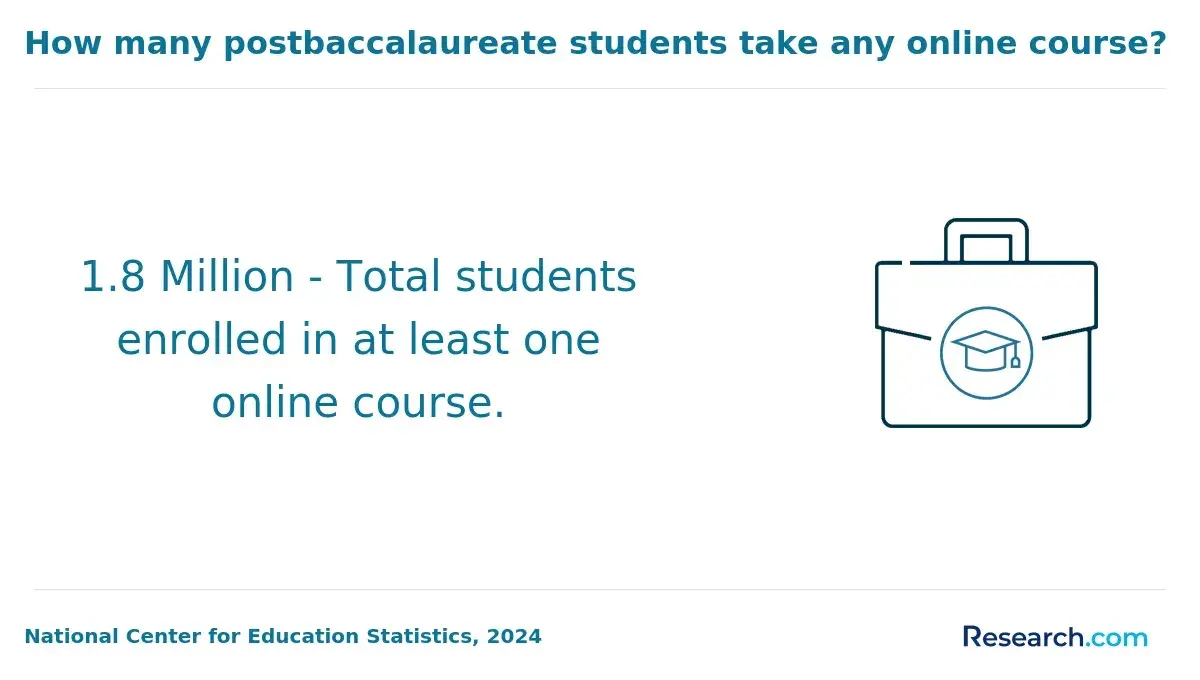
Enrollment data from the 2023 National Center for Education Statistics shows that over half of undergraduates take at least one distance course, with 30% fully online. This landscape favors programs that offer asynchronous delivery and consistent course availability, critical for working learners to avoid enrollment gaps that prolong completion and add costs.
What are the tuition costs, financial aid options, and total ROI for these online degrees?
Tuition costs for online social & behavioral sciences degrees with cultural studies concentrations vary widely, typically ranging from $12,000 to $30,000 for full program completion. Public universities often charge lower in-state rates-around $300 per credit hour-while private schools may exceed $600 per credit. Financial aid options include federal loans, Pell Grants, institution-specific scholarships aimed at underserved students, and employer tuition assistance plans, though eligibility and coverage differ and must be confirmed individually.
The practical value of these degrees depends on career trajectory and sectoral demands. For example, human services roles generally offer stable employment but lower starting salaries, averaging $45,000 annually, while positions in cultural consultancy or public policy often command higher pay-up to $65,000-but require faster adaptation to evolving workplace skills. ROI calculations must incorporate debt burden, repayment terms, and the realistic timeframe for entering the workforce.
Employers surveyed by the National Association of Colleges and Employers emphasize teamwork, critical thinking, and communication as essential skills-core competencies of these interdisciplinary programs. This orientation enhances employability across nonprofit management, public policy, cultural education, and other fields but requires candidates to weigh tuition costs against potential occupational earnings and job stability.
What careers, job roles, and industries can graduates with cultural studies concentrations pursue?
Graduates specializing in cultural studies navigate a job market demanding both nuanced sociocultural insight and practical skill integration. For instance, marketing professionals leverage cultural analysis to craft campaigns that resonate with diverse audiences, directly influencing brand engagement in multicultural contexts. Human resources roles increasingly rely on this expertise to build inclusive workplaces that effectively manage workforce diversity and complex employee relations.
The 21% increase in job postings emphasizing cross-cultural communication skills between 2020 and 2024 reflects tangible employer demand, particularly in international development where culturally informed program design enhances the effectiveness of aid and policy initiatives. However, graduates confront real-world tradeoffs: those lacking complementary abilities in data analysis, language proficiency, or certifications risk reduced competitiveness.
Additionally, government and policy roles frequently entail navigating security clearances or specialized credentials, adding barriers beyond academic preparation. Career stability often correlates with fields that fuse cultural knowledge and strategic business impact, such as corporate social responsibility or diversity consulting.
Conversely, academic positions in cultural studies offer narrower prospects without advanced degrees. Prospective students must weigh immediate labor market realities against long-term goals, assessing whether program outcomes align with employer expectations in sectors where intercultural competency translates into measurable organizational value.
What are the salary expectations and job outlook for cultural studies-focused social science graduates?
Graduates with cultural studies-focused social and behavioral sciences degrees face a nuanced salary landscape shaped by industry, region, and skillset. Entry-level salaries typically range from $40,000 to $55,000, but advancement depends on the sector and technical competencies acquired. For example, a municipal cultural affairs role might start near $42,000, with experience and project management skills enabling progression to $60,000-$75,000 within several years.
This contrasts with research positions usually requiring advanced degrees to surpass $70,000, reflecting the premium placed on grant acquisition and specialized expertise. Importantly, cultural studies graduates often balance passion-driven work against financial growth ceilings.
Their qualitative insight skills favor academic, non-profit, or governmental roles where salary ceilings tend to be lower than in corporate or tech-focused tracks. Employers increasingly expect candidates to pair cultural knowledge with data analytics or policy analysis capabilities to access more competitive wages.
Market projections estimate the global online degree sector reaching $75 billion by 2025, reflecting expanded access but also credential complexity. Candidates must strategically enhance resumes with practical internships or community outreach experience to distinguish themselves amid varied employer recognition.
Other Things You Should Know About Social & Behavioral Sciences
Employer recognition varies by industry and role. Analytical and research skills from these degrees are valued in public policy, education, and nonprofit sectors, but some employers prefer candidates with additional technical expertise or certifications. Graduates should prioritize programs with strong applied learning components and opportunities for internships or projects that demonstrate real-world impact.
Online programs demand strong time management due to asynchronous learning and limited in-person interaction. Coursework often combines theoretical frameworks with research assignments, which can be challenging for students balancing work or family. Prospective students should evaluate their capacity for self-discipline and consider programs that offer structured support like mentoring or cohort-based formats.
Choosing a cultural studies concentration tightens expertise but may limit exposure to broader methodological skills valued in diverse social science roles. Students aiming for interdisciplinary careers or flexibility in the job market should consider balancing cultural studies with courses in data analysis, psychology, or political science. Prioritize programs that offer customizable electives to align with specific career objectives.
References
- Social and Behavioral Health https://www.publichealthdegrees.org/specializations/social-behavioral-science/
- Media, Communications and Cultural Studies | Future careers https://www.gold.ac.uk/skills-careers/media-and-communications/
- Types of Financial Aid for Online Colleges https://www.umassglobal.edu/blog-news/types-financial-aid-online-colleges
- 12.4: What Can You Do with a Global Studies Degree? https://socialsci.libretexts.org/Bookshelves/Geography_(Human)/Introduction_to_Global_Studies_(Bozonelos_et_al.)/12%3A_The_Future_of_Globalization/12.04%3A_What_Can_You_Do_with_a_Global_Studies_Degree
- Online Degree vs. Traditional: Choosing the Right Path https://beal.edu/online-degree-vs-traditional/
- How to Check if an Online Degree Is Real | Find Trusted Courses https://dsuonline.com/resources/blogs/how-to-check-if-an-online-degree-is-real/
- Online Behavioral Science Degree Programs | University of Phoenix https://www.phoenix.edu/online-behavioral-sciences-degrees.html
- Cost of an Online Degree: Calculate the Cost of Your Higher Education https://www.edumed.org/articles/cost-of-an-online-degree/
- Admission requirements and documents - SWPS University https://english.swps.pl/programs/apply/admission-requirements-and-documents
- Careers https://snow.edu/academics/social_science/socialscience/careers.html