2027 Online Social & Behavioral Sciences Degrees With Community Studies Concentrations

Co-Founder and Chief Data Scientist
Professionals navigating career shifts in social & behavioral sciences increasingly encounter a trade-off between program accessibility and specialized relevance. With 63% of adult learners prioritizing flexible online formats according to a 2024 National Center for Education Statistics report, the challenge sharpens around identifying community studies concentrations that align with workforce expectations without sacrificing rigor or timing. Employers now seek candidates who pair theoretical knowledge with practical community engagement skills acquired through adaptable delivery models. Yet, not all online options deliver equal value, often complicating decisions about transferability, credential credibility, and career impact. This article evaluates online social & behavioral sciences degrees featuring community studies concentrations to clarify these critical program variables and support informed enrollment choices.
Key Things You Should Know
- Community studies concentrations in online social & behavioral sciences degrees show a 15% higher median starting salary in 2024 workforce data, yet require 20%-30% longer program completion times due to interdisciplinary coursework complexity.
- Employers in public health and urban planning report that graduates lacking applied community engagement practicum experience face hiring disadvantages despite theoretical knowledge, stressing hands-on components' necessity.
- Rising tuition inflation of 6% annually since 2022 disproportionately affects part-time online students balancing work, limiting access to specialized community studies tracks that often demand additional fees for fieldwork facilitation.
What are online social and behavioral sciences degrees with community studies concentrations?
Choosing online degrees in social and behavioral sciences focusing on community studies requires understanding their distinct operational demands and workforce realities. Graduates typically move into roles such as community outreach coordinators or social work assistants, where practical skills in program evaluation and policy impact are essential. These programs integrate foundational theory with real-world applications, preparing students to navigate diverse populations and social challenges.
Fully online degree structures offer accessibility and flexibility, especially for working professionals targeting community-focused careers. However, remote students often face hurdles securing internships or field placements, crucial for gaining hands-on experience. Proactive collaboration with local agencies is frequently necessary to meet these practical requirements. Employers expect graduates to demonstrate strong communication skills and project management capabilities to effectively implement community assessments and initiatives.
The U.S. Bureau of Labor Statistics projects a 9% growth in community and social service occupations, with a median annual wage of $52,780, reflecting steady demand in sectors like mental health and youth development. Selecting a program accredited for applied research and offering networking opportunities with nonprofits or government bodies can mitigate risks of underpreparedness in these complex social roles.
For those assessing educational paths, comparing these degrees to options like a psychology degree online can clarify alignment with career goals. Key considerations include practical coursework, support services, and future employability in community-centered settings.
How do online community studies programs compare to campus-based options in this field?
Choosing between online and campus-based social and behavioral sciences courses critically depends on how students navigate the tradeoff between flexibility and access to experiential learning. Campus programs facilitate direct coordination with local agencies and internships aligning with a projected 12% job growth in community and social services through 2029, directly impacting employability. Conversely, online community studies degree benefits versus traditional programs hinge on flexible scheduling for working professionals but require students to independently secure field placements, often delaying hands-on experience.
Employers increasingly expect candidates to demonstrate verified practical experience alongside technological fluency, placing campus learners at an advantage via spontaneous networking and proximity to nonprofits. Online students must compensate by proactively establishing community contacts and leveraging digital collaboration, highlighting the need for strong self-direction. For example, a student focused on urban advocacy may benefit from campus ties to city nonprofits, while an online learner must independently build local relationships.
Pragmatically, the decision involves weighing immediate professional commitments against geographic constraints and the capacity to arrange quality experiential learning. The demand for 348,600 additional community and social service workers emphasizes securing practical exposure, regardless of delivery mode. Prospective students can explore accelerated paths by reviewing the fastest psychology degree options available, which intersect with community studies frameworks.
What types of social and behavioral sciences degrees offer community studies concentrations?
Community studies concentrations within social and behavioral sciences degree programs with community studies concentrations play distinct roles depending on the degree chosen, influencing career pathways and licensure possibilities. For instance, sociology degrees with these concentrations hone analytical skills for assessing neighborhood issues and policy effects, frequently funneling graduates into nonprofit or research careers.
Social work degrees emphasize client advocacy and case management, which are essential for healthcare social workers. In the Greater Philadelphia region in 2025, such workers earned a median salary of $73,019, filled 25,636 jobs, and experienced an 18% job growth over ten years (EMSI Data, 2025, Community College of Philadelphia). However, social work degrees are often longer and more costly due to licensure requirements.
Degrees in human services offer broader interdisciplinary training, suitable for community outreach or program coordination roles but usually lack licensure pathways. Community psychology programs prioritize preventive approaches and systemic change, targeting roles in public health agencies or education.
Employers expect practical community experience alongside academic credentials, directing student choices toward internships and service learning. Students pursuing undergraduate and graduate social and behavioral sciences degrees focused on community studies must carefully weigh degree scope, licensure, and labor market data. For a strategic view of program options, consider exploring the best online sociology bachelor degree to align education with employability.
What courses and specializations are typically included in a community studies curriculum?
Community studies degree courses and specializations respond directly to employer demand for graduates skilled in applied sociological methods and community-centric program evaluation. Rather than broad social science curricula, these programs emphasize tangible abilities in qualitative and quantitative analysis, ensuring students can assess and address localized social problems from the outset of their careers. For example, a specialization in urban development addresses zoning laws and local governance, preparing students for roles in municipal agencies or housing advocacy, while nonprofit management focuses on grant writing and volunteer coordination vital for advancing charitable organizations.
Practical fieldwork or practicum placements are integral, providing candidates with real-world experience in policy implementation and stakeholder engagement. This hands-on training differentiates community studies within the social and behavioral sciences community studies, aligning graduates with workforce expectations for immediate impact in positions such as community liaison or program coordinator. However, logistical challenges like securing internships and interdisciplinary collaboration remain common, particularly impacting online learners who must ensure their programs support virtual project management to avoid gaps in employment readiness.
Employment projections, such as the 4.6% growth in community specialist roles with an average salary of $56,730, underscore the pathway's potential. Students weighing curricula should also consider related fields with comparable workforce outcomes, including roles influenced by healthcare data analytics, where insights into health information management salary trends may inform career pivot decisions within Social & Behavioral Sciences.
What admission requirements do schools set for online community studies degree programs?
Admission criteria for online community studies degrees prioritize verifying both academic preparation and relevant community experience, reflecting the field's applied nature. Most programs require a high school diploma or equivalent, though some expect 12 to 24 college credits, especially for transfer students. This expectation recognizes the coursework's social complexity and need for foundational skills.
Applicants often must submit a resume or statement highlighting volunteer work, employment in social services, or community engagement. This practical background is weighted heavily since these programs target real-world societal challenges rather than purely theoretical study. Letters of recommendation-preferably from supervisors or instructors-may be requested to assess interpersonal skills and professional commitment.
Standardized tests like the SAT or ACT are less commonly required, but some selective programs maintain these to ensure readiness. Alternative admissions routes apply for candidates with non-traditional credentials, including prior military service or professional certifications documented through assessments.
Non-native English speakers should anticipate providing TOEFL or IELTS scores where applicable. Given a projected 9% job growth in social and behavioral sciences through 2032 and an average salary near $49,380, applicants must strategically emphasize experience aligned with these workforce realities to offset the challenge of balancing education with work and family.
How long do online social and behavioral sciences programs with community studies usually take?
Completion timelines in online social and behavioral sciences programs with community studies concentrations reflect significant tradeoffs between speed and depth, affecting workforce entry and progression. Associate degrees and certificates typically require around two years full-time, while bachelor's degrees usually span four years. Accelerated formats can reduce this to about three years but often demand intensive course loads and less flexibility.
Part-time study, common among working adults, can substantially extend program duration beyond four years, balancing education with professional and personal obligations. This slower pace may delay qualification for roles with clear labor demand, such as healthcare social workers, where the EMSI 2025 data forecasts an 18% growth in job openings in regions like Greater Philadelphia. Such growth directs students toward programs aligned with community coordination and cultural competence despite the extended timeline.
Field placements and case management practicums are integral components that often lengthen program completion and require adaptable scheduling. Prospective students need to scrutinize how online programs handle these experiential elements, as they directly impact total enrollment time.
Strategies to accelerate completion include seeking programs that grant credit for prior learning or professional experience. For those targeting advanced roles, planning for graduate education beyond the bachelor's degree-normally adding two or more years-is essential. These timelines influence when graduates can realistically meet employer qualifications in social and behavioral sciences fields.
What are the tuition costs, fees, and financial aid options for these online degrees?
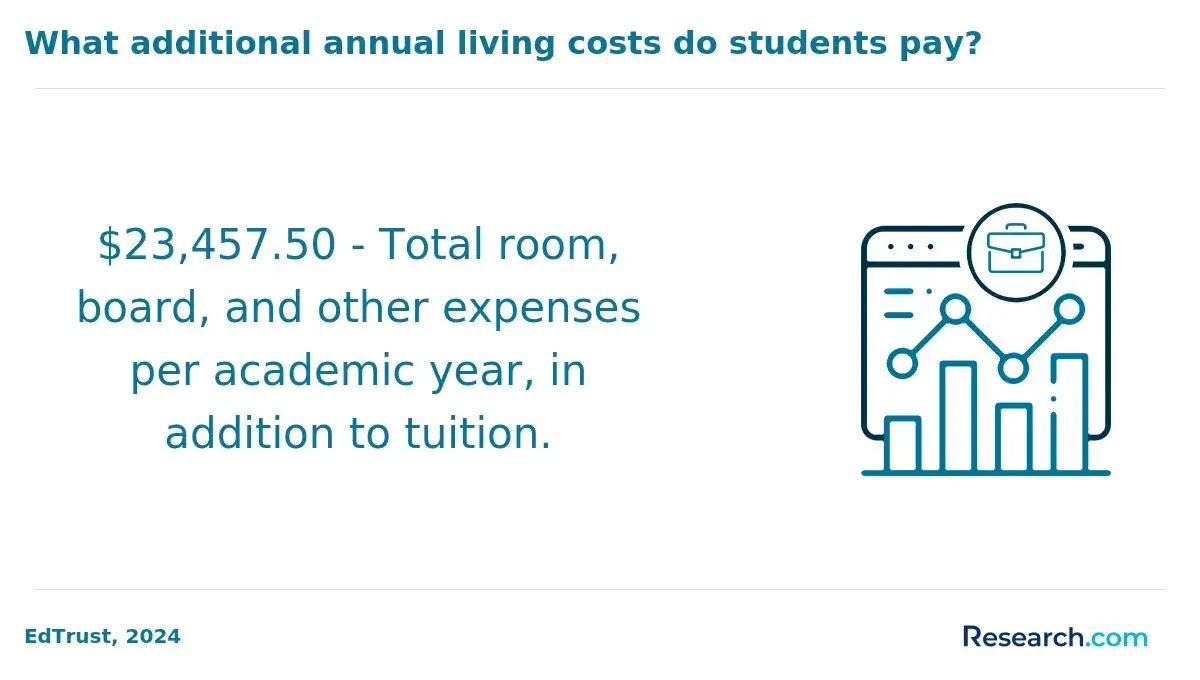
Tuition for online social & behavioral sciences degrees with community studies concentrations varies widely, typically between $300 and $700 per credit hour, resulting in total costs ranging from $15,000 to $40,000 depending on the program's credit requirements and institution type. Public universities tend to offer lower in-state rates, whereas private institutions often charge flat tuition regardless of residency. Additional expenses for technology, course materials, and graduation fees can add $1,000 to $2,500 beyond tuition, a factor often underemphasized in financial planning.
Financial aid-including Pell Grants, work-study, and loans-only partially alleviates these costs, while scholarships focused on social sciences and community engagement require early and proactive application. Employer tuition reimbursement programs present a viable resource for working professionals but usually come with continuing employment obligations.
A practical example is a mid-career professional pivoting to human resources management, a field projecting 5.0% employment growth and averaging $149,280 in salary, according to ASU Online labor market data. For such individuals, accelerating degree completion through competency-based credits can reduce both time and cost investment, directly impacting return on investment.
Prospective students should carefully evaluate programs with clear fee structures and flexible payment options to mitigate hidden costs. Aligning social & behavioral sciences study with organizational roles typically yields higher starting salaries and more stable employment than general social service positions, making financial sacrifices more defensible over time.
What careers can graduates pursue with a social and behavioral sciences degree in community studies?
Graduates with a social and behavioral sciences degree in community studies face a labor market that values applied experience and measurable community impact alongside academic credentials. Common roles such as public relations specialists, community outreach coordinators, and program analysts demand proficiency in stakeholder engagement and data-driven program evaluation. For example, public relations specialists earn an average of $74,750 annually with a 4.8% projected job growth, reflecting steady but competitive demand.
This field requires mastering qualitative research methods and coordinating diverse, community-responsive initiatives, particularly within urban development, health promotion, or social justice sectors. Government and nonprofit employers prioritize candidates who pair certifications or internships with direct, documented impact-a threshold that can challenge those relying solely on academic training. Corporate social responsibility roles often value nuanced communication skills combined with insights into community dynamics but may impose different expectations for measurable outcomes.
Practical constraints also influence educational mode selection. Online programs offer flexibility critical for working professionals balancing employment while acquiring relevant skills, but employers still emphasize hands-on experience. Graduates should anticipate managing multiple projects simultaneously and demonstrating tangible outcomes using data collection and impact assessment tools, which often separates competitive candidates from others in the field.
What salary ranges and job outlook can community studies graduates expect in the U.S.?
Community studies graduates face an earnings landscape shaped by role specificity and geographic factors, with median salaries spanning $40,000 to $65,000 annually. Entry-level positions like community outreach coordinators hover near $38,000, limiting early financial gains in many nonprofits. However, roles in program management or policy advocacy may exceed $70,000, particularly when combined with specialized certifications or graduate education.
The labor market outlook outperforms many sectors, with community and social service roles projected to grow by 12% between 2019 and 2029, reflecting steady demand from public health initiatives and social programs. Still, this growth masks regional disparities: urban centers offer higher wages but intensify competition, while smaller organizations provide fewer advancement opportunities.
- Graduates balancing impact-driven work with modest starting salaries must often accept limited financial mobility in smaller nonprofits.
- Pursuing credentials in grant writing, program evaluation, or data analysis is increasingly necessary to meet employer expectations and secure funding-dependent roles.
- Those targeting government or health agency positions should prepare for credential rigor and bureaucratic salary ceilings.
- Practical advancement frequently requires measured demonstration of community impact amid shifting public and private funding landscapes.
This analysis reflects the pragmatic tradeoffs facing those in social & behavioral sciences careers: stable growth paired with incremental salary progression and organizational complexity, rather than rapid financial rise or entrepreneurial flexibility.
How can students evaluate accreditation and choose a reputable online community studies program?
Choosing an online community studies program requires prioritizing regional accreditation recognized by the U.S. Department of Education or CHEA to ensure credentials are transferable and respected by employers and licensing boards. National accreditation or program-specific accreditation may support niche areas but often lacks broad workforce acceptance, limiting career mobility and licensure eligibility.
For roles such as child, family, and school social work, selecting a program with integrated, state-approved fieldwork aligns education with workforce competency demands, directly affecting employability and salary potential. Labor data from EMSI, 2025, shows these social workers earn an average of $66,385 annually, compared to $46,977 for social and human service assistants - a significant variance that highlights the value of targeted educational pathways.
Prospective students must critically assess programs' transparency on faculty qualifications, delivery methods, and career support services. The absence of these often leads to lower completion and weaker practical skills for online learners. Validating accreditation through official agency sites and cross-referencing with trusted databases helps avoid diploma mills.
- Regional accreditation underpins credential credibility and job readiness.
- Fieldwork integration approved by licensing bodies drives employment outcomes.
- Graduates' earnings vary substantially based on job roles linked to program focus.
- Transparent faculty credentials and support resources correlate with student success.
Students face a tradeoff: higher tuition at regionally accredited public universities with specialized curricula may yield greater long-term earnings and meaningful placements, whereas cheaper, unaccredited programs risk limiting career trajectories. Practical alignment with licensing standards and employer expectations ensures educational investment translates into workforce relevance.
Other Things You Should Know About Social & Behavioral Sciences
Online programs in social & behavioral sciences with community studies concentrations often require managing a mix of coursework and fieldwork. Students must carefully prioritize time since community engagement or internships are essential but can conflict with academic deadlines. Program structures vary widely-those offering flexible scheduling for practicums better accommodate working students seeking career advancement without sacrificing hands-on experience.
Employers increasingly accept online degrees, but they evaluate program credibility and practical training more than delivery mode. Graduates from programs with integrated community projects and applied research are favored, as these demonstrate skills beyond theory. Choosing programs with recognized accreditation and strong ties to local agencies improves job prospects and reduces skepticism about the quality of online education.
Asynchronous courses offer maximum scheduling flexibility, which benefits working professionals but reduce real-time interaction and networking opportunities critical in social & behavioral sciences. Synchronous formats promote active engagement and collaboration but require rigid attendance, which can increase stress for those balancing employment. Students should evaluate their capacity for self-directed learning versus the need for structured support when choosing.
References
- Are Online Degrees Accredited? How to Identify Quality Distance Learning Programs https://www.umassglobal.edu/blog-news/online-degrees-accredited-identify-quality-distance-learning-programs
- College Graduate Salaries: 2025 Projections | Bankrate https://www.bankrate.com/loans/student-loans/average-college-graduate-salary/
- Social and Behavioral Sciences (All Areas)--(Area of Concentration) https://www.lawsonstate.edu/learn_at_lawson/programs_and_divisions/college_transfer_programs/social_and_behavioral_sciences.aspx
- Annual Grad Report — ZipRecruiter Economic Research https://www.ziprecruiter-research.org/annual-grad-report
- School of Community Studies https://www.fanshawec.ca/programs-and-courses/schools/community-studies
- Financial Aid For Online Colleges https://www.affordablecollegesonline.org/financial-aid/financial-aid-for-online-colleges/
- Career earnings by college major - The Hamilton Project https://www.hamiltonproject.org/data/career-earnings-by-college-major/
- Online Degree vs. Traditional: Choosing the Right Path https://beal.edu/online-degree-vs-traditional/
- Social and Behavioral Health https://www.publichealthdegrees.org/specializations/social-behavioral-science/
- Community Colleges Gaining Ground in Online Education: What It Means for Universities https://www.encoura.org/resources/wake-up-call/community-colleges-gaining-ground-in-online-education-what-it-means-for-universities/