2027 Best States for Social & Behavioral Sciences Career Growth

Co-Founder and Chief Data Scientist
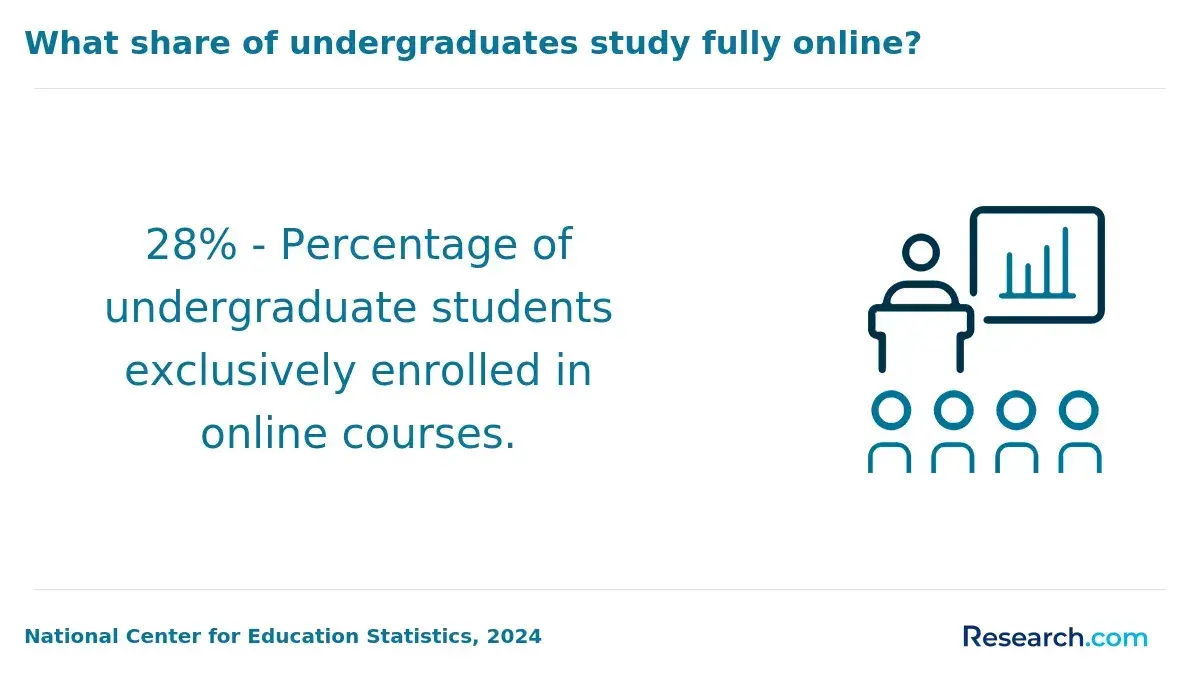
Deciding where to launch or advance a career in social & behavioral sciences often hinges on aligning local workforce demand with accessible education pathways. Yet, aspiring professionals face significant geographic disparities in program availability, while nearly 45% of adult learners enrolling in related fields in 2024 seek flexible online or hybrid options, according to the National Center for Education Statistics.
This shift reveals growing reliance on adaptable learning models, affecting timing and career mobility. Understanding how state-level variations influence both job market strength and educational access can clarify strategic moves. This article evaluates the best states for career growth in social & behavioral sciences, guiding readers toward informed, location-specific decisions.
Key Things You Should Know
- States with higher concentrations of research universities, such as California and Massachusetts, offer a 20% wage premium in social & behavioral sciences but require navigating intense regional competition for limited advanced roles.
- Employers in states with expanding health and social services sectors, notably New York and Illinois, increasingly demand interdisciplinary skills, pressuring candidates to blend quantitative analysis with policy expertise.
- Midwestern states provide faster degree completion rates at 12-15% lower tuition costs, yet face slower job growth, presenting a cost-access tradeoff impacting timely career pivots within social & behavioral sciences.
Which U.S. states currently offer the strongest job growth in social and behavioral sciences careers?
California, Texas, and Florida lead the top U.S. states offering social and behavioral sciences career opportunities, but choosing among them requires weighing practical tradeoffs. For example, California's diverse population drives demand for culturally competent community health roles, yet its stringent licensure processes can delay workforce entry.
Texas benefits from rapid urban growth and expanded outreach services, though licensing inconsistencies pose navigation challenges for professionals moving between regions. Florida's aging demographics shape hiring priorities towards behavioral health support tailored to elderly populations, affecting both training and workforce needs.
The strong job growth states for social and behavioral sciences careers reflect broader shifts in Medicaid expansion and public health investment. Specifically, the Bureau of Labor Statistics projects 17% growth for substance abuse and mental health counselors and 11% for community health workers from 2024 to 2034, rates well above average occupational growth. This creates strategic considerations for professionals prioritizing job stability and salary prospects.
A critical operational factor is credentialing variability, which influences both entry timing and career mobility. Candidates in states with faster, less complex credentialing might face smaller job markets and limited advancement opportunities. In contrast, states with robust growth often require higher upfront investment in training and licensure.
For working professionals pivoting careers, states with established partnerships between universities and health agencies can significantly improve practical training and employment outcomes - reducing common investment-employment tradeoffs. Those evaluating educational options might also explore an online accelerated psychology degree to align training duration with labor market demands.
How do social and behavioral sciences salaries compare across the best states for career growth?
Virginia's dominant position for social and behavioral sciences salary differences by state highlights how regional economic conditions and employer density shape earning potential. With an average annual income of $103,640 supported by a workforce of 3,190 professionals, Virginia sets a clear financial benchmark driven by proximity to federal agencies, research centers, and consulting firms in the Washington, D.C. area. This environment creates intense competition for talent, directly influencing higher pay levels.
Job seekers face a meaningful tradeoff: states with more available positions often pay less, while top states for social and behavioral sciences career salaries, like Virginia, demand advanced expertise and a willingness to compete in concentrated labor markets. Employers prefer candidates demonstrating applied skills in data analytics or program evaluation alongside advanced degrees, reflecting the interdisciplinary complexity required in the field.
Career trajectories vary accordingly. Professionals relocating to high-paying states must balance stronger earnings against increased living costs and competitive entry barriers. In contrast, those in emerging markets may encounter greater job growth but lower ceilings on salary and advancement.
Students and workers evaluating educational commitments should also consider program relevance to local market needs. Exploring child psychologist master's programs online can provide flexible options that align with these regional dynamics without sacrificing employability in specialty roles.
What degree levels and majors in social and behavioral sciences lead to the best state-specific opportunities?
States like Maine demonstrate the tangible advantages of targeted degree planning in social and behavioral sciences careers, offering the highest demand and competitive compensation. With a median salary exceeding $99,000 and over 200 positions, the local market rewards candidates holding at least a bachelor's degree, particularly those with advanced specialization in psychology, sociology, or social work.
These regions exemplify how aligning majors with state-specific job growth areas can yield measurable workforce benefits. Employers increasingly prioritize graduate-level credentials, especially for leadership or specialized roles in clinical psychology, market research, and policy evaluation. For instance, a bachelor's in sociology generally opens entry-level doors, but obtaining a master's is often necessary to qualify for government positions or higher responsibility within community organizations.
Understanding the best degree levels for social and behavioral sciences careers in top states involves weighing these credential thresholds against practical considerations such as time and financial investment. Majors that integrate quantitative skills like statistics or data analytics with traditional social sciences stand out in high-growth states, as they fulfill demand for expertise in data interpretation and evidence-based policymaking.
However, this concentration depends heavily on regional funding and institutional support. Continuous certification and applied research experience remain critical complements to formal degrees, particularly where licensure applies. Tradeoffs extend to pursuing doctorates, which hold value primarily for federal or academic employment, rather than broader state labor markets focused on applied skills.
Prospective professionals should evaluate industries dominant in their target regions to optimize educational alignment, especially when considering roles such as forensic psychology, where understanding how much do forensic psychologists make can inform career decisions. Top social and behavioral sciences majors for state-specific job growth, therefore, marry practical expertise with tailored educational trajectories.
How do online and campus-based social and behavioral sciences programs differ for students in top states?
Differences between online and campus social and behavioral sciences programs in leading states hinge largely on how each format facilitates employer connections and practical experience, which directly influence career outcomes. Campus-based programs offer structured local internships, dedicated faculty mentorship, and on-site labs that foster strong regional networks-an advantage in states like New Hampshire where sociologists earn an average of $94,220 annually against a moderate cost-of-living index of 119.2.
These in-person contacts often translate into superior employment pipelines in such top states social and behavioral sciences online vs campus programs. By contrast, online programs cater to working adults or those outside major urban centers by providing flexibility without relocation. However, this format risks weaker employer ties and fewer hands-on opportunities, which matters for positions requiring fieldwork or interpersonal skill development.
Employers in high-paying states frequently prioritize candidates with demonstrable local experience and access to institutional resources. For a student targeting government social work roles in New Hampshire, for example, the critical question is whether a DSW online program offers sufficient state agency field placements or partnerships with local organizations. Without these, theoretical knowledge often fails to convert into competitive job offers.
Considerations include:
- The depth of experiential learning integrated into the program
- The degree of regional workforce engagement provided
- How the program supports development of practical skills valued by employers
Students should also note labor market specificity, such as how variations in health information management salary entry-level pay affect career trajectories in social and behavioral sciences fields. Evaluating these factors ensures a more informed choice aligned with long-term professional goals.
Which accreditation standards should students prioritize when choosing social and behavioral sciences programs by state?
Licensure eligibility profoundly hinges on selecting programs with the correct accreditation, particularly from the Council on Social Work Education (CSWE) for clinical social work roles. States such as New York and California strictly require CSWE-accredited degrees for Licensed Clinical Social Worker (LCSW) licensure, creating significant barriers for graduates from nonaccredited programs, including extended timelines and reduced income potential.
State licensing boards differ markedly in which credentials they accept for supervised clinical hours. Some approve supervised experience under a Licensed Master Social Worker (LMSW) paired with a CSWE-accredited MSW, while others demand evidence of regional accreditation recognized by the U.S. Department of Education, limiting employability in public agencies or private practice if these criteria are unmet.
Consider that Licensed Clinical Social Workers earn approximately 24% more annually-$74,256 versus $59,824-highlighting the financial advantage of prioritizing CSWE accreditation and state board requirements. Professionals relocating or pivoting careers benefit from programs that balance national accreditation with regional recognition to avoid delays in licensure reciprocity and workforce entry.
- Confirm program CSWE accreditation aligned with state licensure rules.
- Validate acceptance of supervised hours by state licensing boards.
- Choose hybrid or in-state programs for smoother license transfer or reciprocity.
What are typical admission requirements and program lengths for social and behavioral sciences degrees in leading states?
Admission to undergraduate social and behavioral sciences programs typically requires a high school diploma with competitive GPAs between 2.5 and 3.5, reflecting the institution's selectivity. Applicants must often provide transcripts evidencing coursework in English, math, and science, alongside personal statements and sometimes recommendations. Graduate entry demands a related bachelor's degree, with GRE scores and relevant professional experience or volunteer work enhancing candidacy.
Bachelor's programs commonly span 4 years of full-time study, requiring 120-130 credit hours, though accelerated options condense this into 3 years with heavier course loads. Master's degrees in social work or behavioral sciences range from 1.5 to 2 years full-time (30-45 credit hours), with part-time or online formats extending duration, impacting workforce integration and study flexibility.
Workforce demand substantiates program length and rigor; social work employment is projected to grow 6-7% annually, adding over 67,300 jobs per year. Graduates equipped with practicum or internship experience meet employer expectations better and navigate state-specific licensure requirements more effectively-such as California's supervised clinical hours that lengthen the timeline but improve earning potential.
Students balancing full-time work must weigh flexible delivery against intensive field experiences mandatory for clinical roles. The decision involves trading upfront time investment for long-term employability and access to advanced positions, making program format and licensure pathways critical to career alignment.
How does the curriculum in social and behavioral sciences programs prepare graduates for high-demand roles by state?
Social and behavioral sciences programs must align closely with region-specific workforce needs to ensure graduates meet employer expectations. For example, California's 14% projected growth in social work jobs through 2033 reflects local factors like demographic aging and healthcare expansion. Consequently, programs there emphasize mental health, gerontology, and healthcare policy, equipping students with skills exactly tailored for hospitals and integrated care settings.
State-to-state curriculum variation affects employability and licensure readiness. New York's urban challenges drive specialization in community development and substance abuse counseling, while Midwestern programs focus on rural service models and family welfare. This means graduates moving across regions may face gaps in training or additional licensing requirements.
Field placements mandated by states provide essential hands-on experience calibrated to local employers' needs, making practical exposure a critical factor in program evaluation. Moreover, policy and regulatory content embedded in curricula helps graduates navigate complex state licensure frameworks efficiently.
Prospective students should assess how well a program's curriculum matches their intended work geography and sector, understanding that relocating may necessitate supplementary credentials or retraining. Strategic selection based on these practical elements mitigates transition risks and enhances long-term workforce integration in social and behavioral sciences.
What are the most common career paths and job titles for social and behavioral sciences graduates in top states?
The career trajectory for social and behavioral sciences graduates is conditioned by regional labor markets, employer demands, and licensure requirements rather than uniform entry options. For instance, Florida offers 12,600 social work positions with average wages near the national median ($48,705) and a cost-of-living index close to 100, creating a practical balance for new graduates prioritizing manageable expenses alongside stable roles.
By contrast, entry into equivalent positions in California or New York typically requires advanced degrees or specialized licenses but yields salaries that exceed Florida's by 20-30%. This disparity demands careful weighing of upfront educational investment against longer-term compensation potential and cost-of-living hikes.
Hiring preferences diverge significantly across sectors:
- Public agencies emphasize licensed clinical credentials for social work positions.
- Nonprofit and private employers often prioritize communication skills and quantitative research experience, typically demonstrated via internships.
- Program coordinators and research analyst roles call for project management expertise and comfort with statistical software.
Relocation decisions should consider these tradeoffs: metropolitan hubs facilitate faster advancement but can create financial pressure due to living costs, whereas states with moderate cost indices like Florida sustain entry-level affordability with slower salary growth. Prospective candidates must align educational paths and skill acquisition strategically with these sector-specific requirements and regional economic conditions to navigate realistic workforce integration in social and behavioral sciences.
How do licensing and certification requirements for social and behavioral sciences professions vary by state?
Licensing and certification in social and behavioral sciences demand strategic navigation, as they vary extensively by state and impact earnings, job flexibility, and professional scope. For instance, Texas requires 3,000 supervised clinical hours for clinical social workers, double Florida's 1,500-hour mandate, creating a substantial difference for those considering relocation or initial licensure.
This disparity forces professionals to weigh if the time and financial investment in stricter licensure states aligns with potentially higher salaries and market demand. Beyond mandatory licenses, voluntary certifications-like board credentials in behavioral analysis-serve as career differentiators rather than entry requirements. However, states such as California impose rigid scope-of-practice rules that restrict counseling roles exclusively to licensed clinicians.
Deciding where to secure licensure often hinges on a tradeoff between quicker workforce entry in less regulated states and higher median wages that exceed $98,000 annually in stricter jurisdictions. By comparison, the national median runs near $80,450, reflecting varied employer expectations and regulatory landscapes across approximately 31,360 professionals.
Non-licensed roles, like research analysts, face fewer geographic barriers but generally lower compensation and slower career progression. Early alignment of educational credentials with the licensing standards of targeted states reduces costly credentialing delays and positions candidates for sustainable career mobility within social and behavioral sciences.
How can students compare tuition, financial aid, and total program costs for social and behavioral sciences degrees across states?
Net cost differences between states often outweigh sticker tuition, with in-state versus out-of-state rates varying by more than 50%, shaping total affordability in social & behavioral sciences programs. For example, California and New York's average net costs run $6,000 to $8,000 lower than some Midwestern states when factoring in typical financial aid. This emphasizes the need to move beyond headline tuition and assess grants, scholarships, and work-study that directly reduce student debt.
Beyond tuition, essential program expenses like textbooks, technology fees, and clinical practicum costs can inflate total investment significantly, especially where practicum site scarcity forces longer commutes or delays graduation. This is a practical barrier for students targeting behavioral health counseling licensure in rural states, where lower tuition may be offset by limited financial aid and weaker local healthcare partnerships.
Conversely, urban programs with stronger employer engagement often involve higher tuition but enable accelerated workforce entry through assistantships or tuition reimbursements, reducing overall debt and improving employment outcomes. Behavioral health counseling roles are projected to grow 17% over the next decade, increasing the payoff of thoughtful program selection aligned with demand.
Pragmatic use of state net price calculators and institution-specific cost reports allows candidates to model real expenses and career timing tradeoffs. Students should weigh local workforce connections and financial aid robustness alongside tuition to avoid hidden costs that affect licensure timelines and job readiness.
Other Things You Should Know About Social & Behavioral Sciences
In 2027, states like California, New York, and Texas lead in career growth opportunities for social and behavioral sciences graduates. These states benefit from a high concentration of research institutions, diverse job opportunities, and supportive policies that foster sector development.
Programs with strong research components develop analytical and data interpretation skills highly valued by employers but can require significant time commitments and often less practical job training. Graduates from research-heavy programs tend to qualify for roles in policy research, academia, or specialized analysis but may lack direct experience with client-facing or applied tasks. For those prioritizing immediate workforce entry over academic careers, programs balancing research with internships or practicum elements provide better employer alignment and faster career advancement.
Program reputation influences employer perception but can be less important than geographic location for social and behavioral sciences careers, given state-specific licensure and networking requirements. Graduating from a reputable program outside a target job market may limit internship access and local hiring opportunities. When choosing, prioritize programs within or near states where you intend to work, ensuring stronger employer connections and alignment with state licensing or certification demands over national rankings.
Graduates encounter varied licensing regulations, employer expectations, and local funding for social and behavioral sciences roles depending on the state. Some states have rigid certification processes that delay entry into counseling or clinical positions. Others offer more roles in research or community outreach without licensure. Understanding these differences is crucial; graduates should target programs and states with licensing pathways that match their career goals, or expect workload shifts to administrative or support roles if licensure is delayed.
References
- Online Student Trends and Success Factors - OnlineEducation.com https://www.onlineeducation.com/guide/who-studies-online
- Stockton University https://stockton.edu/academic-affairs/agreements/sowk-program-standards-aligned-with-college-standards.html
- Social and Behavioral Sciences (All Areas)--(Area of Concentration) https://www.lawsonstate.edu/learn_at_lawson/programs_and_divisions/college_transfer_programs/social_and_behavioral_sciences.aspx
- Mental Health Licensing Requirements by State - Updated Summer 2025 - HealthCare Recruiters International https://hcrnetwork.com/mental-health-licensing-requirements-by-state-updated-summer-2025/
- Scaling Online Education for State University Systems https://changinghighered.com/scaling-online-education-for-state-university-systems/
- Clinical Social Worker License Guide: LCSW & LMSW Requirements by State https://www.directshifts.com/clinician-resources/clinical-social-worker-license-guide-lcsw-lmsw-requirements-by-state
- Standards for Accreditation and Requirements of Affiliation | Fourteenth Edition - Middle States Commission on Higher Education https://www.msche.org/standards/fourteenth-edition/
- Behavioral Sciences https://www.southmountaincc.edu/degrees-certificates/behavioral-science-human-services/behavioral-sciences-9300-bs
- Types of Social Workers: Exploring the Many Fields in Which They Serve https://www.umassglobal.edu/blog-news/types-of-social-workers