2027 Best Online Public Health Programs for Mission-Driven Professionals Seeking Systems Impact

Co-Founder and Chief Data Scientist
Mid-career professionals aiming to influence systemic change in public health often face a narrow window to pursue advanced education without sacrificing job stability or family obligations. This challenge intensifies as a 2024 National Center for Education Statistics survey reveals that over 60% of graduate students balance studies with full-time employment, underscoring the urgent need for flexible learning models. Traditional program schedules and rigid residency requirements risk sidelining those whose impact potential grows with professional experience yet requires timely credentialing to access senior leadership roles. This article evaluates the best online public health programs tailored to overcome such structural barriers and accelerate career transformation for mission-driven practitioners.
Key Things You Should Know
- Market demand for systems-focused public health graduates is rising 7% annually per Bureau of Labor Statistics projections, but programs emphasizing policy and data analytics face longer completion times, delaying employment entry by 6-12 months.
- Employers prioritize graduates with demonstrable impact through practicum or cohort-based capstones, increasing hire likelihood by 22%, yet many accredited online programs lack scalable applied learning models.
- Cost premiums for top-tier online public health programs average 15% above traditional degrees, forcing candidates to weigh immediate debt burden against projected median wage increases of under 10% in the first 3 years post-graduation.
What are the best online public health degree options for mission-driven professionals?
Selecting the best online public health degree programs for mission-driven professionals involves weighing curriculum focus, practical experience, and employer priorities. Degrees with concentrations in community health, health policy, and epidemiology align closely with the skill sets demanded by complex health systems management and prevention efforts. Graduates who demonstrate proficiency in real-world data analytics and grant writing gain a measurable edge in job markets that emphasize actionable impact from day one.
Accreditation by recognized bodies such as CEPH remains a key hiring signal, linking program quality and relevant skill-building to faster access into public health roles. For those targeting nonprofit or government roles, degrees offering practicum placements in these sectors leverage employment growth trends for health education specialists and community health workers, projecting approximately 7% job growth through 2032. This practical exposure bridges theoretical learning and community-centered public health outcomes.
Program format tradeoffs are significant. Fully asynchronous options offer schedule flexibility but may sacrifice interactive peer collaboration essential for leadership skill building in health departments or advocacy organizations. Part-time students should consider potential delays in graduation and the related timing of career pivot opportunities. Tuition investment should also be balanced against regional salary variations where salary compression may limit returns despite high-impact roles.
For professionals embedded in healthcare systems, prioritizing programs integrating health informatics or health equity enables multi-disciplinary leverage, while recent graduates might focus on core epidemiology and biostatistics to establish foundational competencies for systems impact careers. Strategic decisions must align curricular content with targeted public health roles and labor market realities inherent in the top online public health education options for systems impact careers.
For those comparing pathways related to allied fields, especially mental health, consider reviewing the mental health degree online options, which highlight contrasting program structures and workforce entry points important for holistic health interventions.
How do online public health programs compare to campus-based programs in quality and outcomes?
Choosing between campus-based and online public health programs requires weighing tangible tradeoffs beyond surface equivalence. Online MPH degrees now meet comparable professional standards if students select CEPH-accredited institutions with robust employer connections, yet cohort interaction and immediate access to labs remain distinct advantages for on-campus learners. Tuition costs, as noted by U.S. News, vary substantially-ranging from roughly $59,000 for University of Washington's 18-27 month online MPH to over $83,000 at UNC Chapel Hill for out-of-state students-reflecting program length, institutional prestige, and resource availability.
Employers increasingly accept credentials from online public health program quality comparison, particularly when candidates supplement coursework with internships or capstone projects demonstrating practical skills. Working professionals, such as a mid-career epidemiologist pivoting into policy roles, benefit from online formats' flexibility to maintain employment while acquiring advanced competencies. However, these learners must proactively build mentorships and field experience outside the curriculum to mitigate limited face-to-face networking.
Campus programs offer stronger in-person collaboration and hands-on clinical training, favoring candidates aiming for clinical research or community leadership roles. Conversely, online study suits those balancing family or cross-state commitments but risks losing nuances in interpersonal engagement some employers value.
Decisive factors in selection include alumni employment rates and practicum alignment with individual career goals. Candidates considering an accelerated healthcare management degree online should conduct a granular comparison of outcomes and costs rather than rely on brand reputation alone.
What accreditation should online public health programs have to support credible careers?
Employers in government and healthcare sectors routinely filter out candidates who lack degrees from CEPH-accredited online public health programs for career advancement. This accreditation validates that the curriculum aligns with core competencies like epidemiology, biostatistics, and health policy analysis-skills essential for roles involving certification or licensure. For instance, professionals shifting from clinical roles into health policy analysis require assurance of robust quantitative training, which CEPH accreditation guarantees; non-accredited degrees often result in skill gaps that hinder effective systems impact.
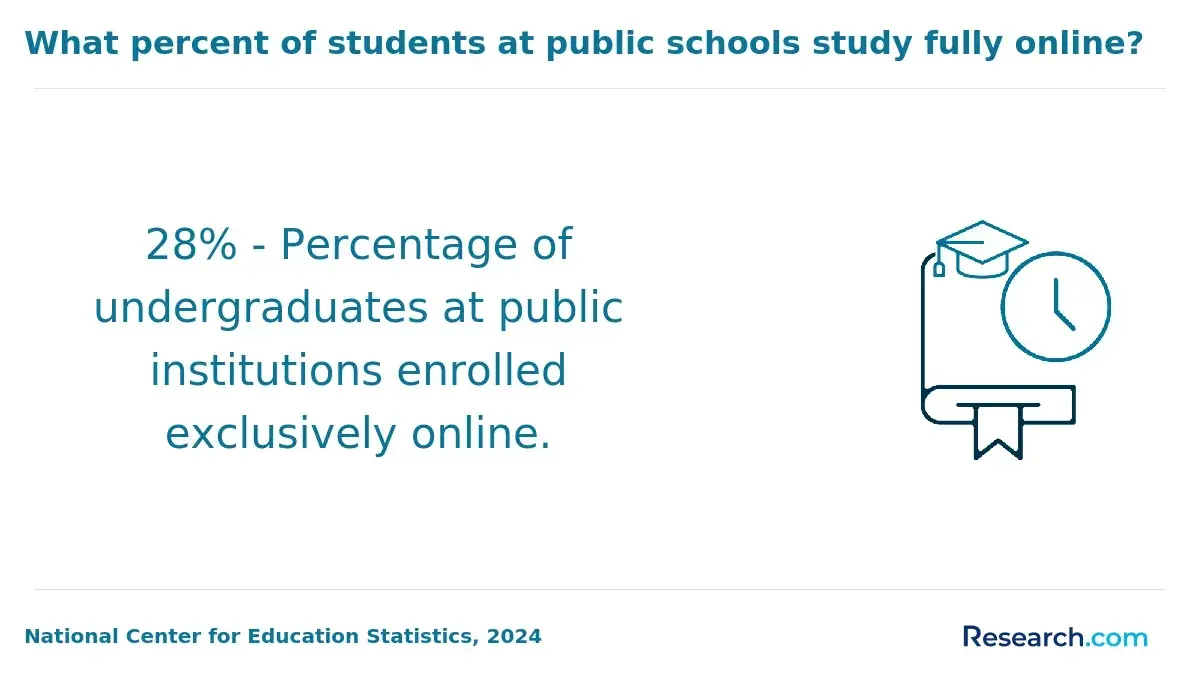
Beyond workforce expectations, CEPH accreditation directly influences eligibility for federal funding, scholarships, and work-study programs, making it a practical financial consideration for prospective students. Data from NCES examined by BestColleges indicates online MPH students incurred roughly 49% less net cost compared to on-campus students, highlighting a notable tradeoff favoring accredited online programs without compromising credential credibility.
Choosing among the best public health program accreditations in the United States means also verifying the institution's regional accreditation. Without both accreditations, graduates face limited credit transfer, restricted access to advanced degrees, and diminished employer recognition. Navigating these complexities is critical when comparing options for MBA in healthcare and public health pathways.
Which online public health degrees prepare graduates to drive systems-level health impact?
Programs that emphasize systems-level impact in public health develop expertise in epidemiology, health policy analysis, and organizational leadership, equipping graduates to address complex care delivery challenges. Concentrations such as health systems management or community health informatics cultivate skills essential for driving system-wide intervention strategies, making graduates attractive to employers who value data-driven decision-making and cross-sector collaboration. These competencies are best attained through applied capstones or practicums integrated into top online programs for public health systems change.
Cost considerations remain critical, as average annual tuition ranges from $10,740 for in-state students at 4-year public colleges to $38,070 at private institutions, according to CollegeBoard data cited by FindBestDegrees. For working professionals pursuing online public health degrees for systems-level impact, selecting accredited, flexible programs that minimize time-to-degree while aligning with current workforce demands can enhance return on investment.
Consider a mid-career professional in a state health department aiming to transition into a policy analyst role: programs incorporating real-world policy case studies and local agency partnerships accelerate skill application and employability. Programs lacking practical, multi-agency coordination components risk underpreparing graduates for systemic challenges. Additionally, degrees including training in health equity analytics better position candidates to influence structural determinants prioritized in public health reform.
For those seeking advanced nursing pathways with an eye on affordability and flexibility, the BSN to MSN program offers a relevant model of competency-based online education aligned with workforce needs.
What courses and specializations do online public health programs typically include?
Online public health programs develop critical technical and strategic capabilities to address population-level health problems, but prospective students must weigh real-world constraints. Core courses cover epidemiology, biostatistics, environmental health, health policy, and social behavioral sciences, serving both foundational knowledge and workforce needs. Specializations in areas like global health or emergency preparedness align with targeted career pathways, yet choosing a focus disconnected from local labor market demand can limit practical impact.
For professionals transitioning from clinical to policy roles, courses in health economics and policy analysis provide necessary frameworks for understanding systemic effects and decision-making structures. Coursework increasingly integrates health equity and data-driven leadership skills, which employers value amid a projected 17% growth in public health jobs in the Mid-Atlantic/Eastern U.S., according to the University of Maryland School of Public Health.
Students must anticipate that online formats restrict fieldwork opportunities, requiring supplemental internships to develop applied competencies. Effective time management is essential to balance academic rigor with professional obligations, especially where synchronous sessions or virtual collaboration are limited.
Technically, mastery of software like SAS or R is indispensable for public health data science, which underpins real-time outbreak monitoring. Emergency preparedness tracks emphasize multi-agency coordination, crucial in handling pandemics and climate crises. Aligning specialization with these operational realities and regional job trends enhances both employability and career resilience.
What are the admission requirements and prerequisites for online public health programs?
Applicants to online public health programs must generally hold a bachelor's degree with a GPA around 3.0, though admissions committees often weigh relevant professional experience heavily. For example, a candidate with a business background and healthcare administration experience can compensate for limited direct public health coursework, which reflects real-world hiring practices where interdisciplinary skills are increasingly valued.
Standardized tests such as the GRE are less frequently mandated but remain a barrier in highly selective programs. Clinical or public health-related work experience remains a decisive factor, signaling readiness for advanced study and immediate workforce contribution. Those without such experience may encounter additional prerequisites or struggle with selective admission processes.
Letters of recommendation and personal statements must go beyond formality to demonstrate concrete career aims tied to systemic public health issues like epidemiology, policy, or health education. Applicants need to convey how their goals align with practical outcomes rather than abstract ideals.
Technical competence with online learning tools is essential to navigate asynchronous or synchronous coursework effectively-a frequent hurdle for working professionals balancing study and job commitments.
Financial factors influence admissions indirectly; programs averaging $12,780 in tuition with a net price around $9,293 steer recruitment toward candidates with secure funding or employer support. Planning finances is thus a critical strategic step alongside meeting academic and experiential criteria.
How long do online public health degrees take, and what do they cost?
Choosing an online public health degree demands careful assessment of time, cost, and career intent rather than focusing solely on credential type. Accelerated master's programs often condense essential training into 18 to 24 months, catering to professionals aiming for leadership or epidemiology roles where a master's is typically required. In contrast, bachelor's degrees span about 3 to 4 years full-time, aligning with entry-level or community health positions; part-time study can extend this timeframe considerably. Certificate programs, usually 6 months to 1 year, serve narrower skill gaps but rarely suffice for specialized roles demanding advanced credentials.
Cost considerations reflect significant variability:
- Bachelor's degrees range between $15,000 and $40,000 tuition overall
- Master's degrees typically fall between $20,000 and $60,000
Employers in public health explicitly seek credentials from accredited, focused programs-not generic health or science degrees-since these verify relevant skills and regulatory understanding. Working adults must balance tuition, time investment, and opportunity costs; thus, asynchronous and part-time formats dominate, especially for mid-career shifts. For example, a government epidemiologist candidate should budget about two years at roughly $30,000-$50,000 tuition, acknowledging lost income from reduced work hours.
Strategic program selection involves weighing total time, financial aid options, and program accreditation quality against specific workforce outcomes and realistic lifestyle constraints.
What public health careers can online graduates pursue, and in which settings?
Choosing an online public health graduate program requires careful consideration of career alignment and financial investment, especially given the steep tuition costs of top-tier accelerated options-up to $79,260 for Johns Hopkins' 11-month MPH and $69,300 for Harvard's one-year program. These figures demand scrutiny of return on investment, as some employers may prioritize tangible experience over prestigious credentials.
Graduates typically occupy specialized roles such as epidemiologists in federal agencies like the CDC or state health departments, where managing real-time disease data directly influences outbreak response strategies. In healthcare systems, these professionals lead quality improvement initiatives, leveraging data to refine patient outcomes, while nonprofits deploy them to design targeted campaigns addressing social determinants of health. The private sector values their regulatory compliance expertise and analytical skills for shaping policy and product development.
Key considerations for students include:
- Whether accelerated programs' intensity matches employer demand for advanced leadership skills.
- The need for cross-sector collaboration abilities in complex public health networks.
- Specializing according to career goals-mastering legislative economics for policy positions or statistical software for epidemiology roles.
Ultimately, prospective students must weigh program costs, curriculum focus, and practical experience opportunities against their targeted workforce niche to maximize relevance and employability.
What salary ranges and job outlook can public health professionals expect?
Salary ranges for public health professionals in the U.S. vary significantly by role, experience, and sector specialization. Entry-level positions such as health educators start near $50,000, while mid-level epidemiologists or policy analysts tend to earn between $75,000 and $95,000. Senior roles-public health directors or healthcare consultants-commonly surpass $110,000. Such variations reflect differences in technical skill requirements, leadership responsibilities, and employer type, with government and private sectors offering the highest compensation.
The Bureau of Labor Statistics projects a 12% job growth rate for public health occupations through 2032, exceeding average occupational growth. This trajectory is driven by expanded pandemic preparedness and increasing population health challenges, suggesting stable demand for graduates who combine applied skills with flexible credentials.
Financially, online MPH programs present a practical cost advantage. According to BestColleges' NCES-based analysis, students enrolling online pay nearly $9,000 less on average than on-campus counterparts, which can reduce debt burden and shorten return-on-investment timelines for working professionals.
Tradeoffs exist depending on career focus: pursuing niche areas such as global or environmental health might involve lower starting salaries but quicker advancement, while sectors like healthcare administration require quantitative skills but offer top earnings. Employers increasingly seek candidates who unify technical expertise with leadership ability, pressing MPH curricula to emphasize applied competencies relevant to market needs.
Prospective students should strategically align program selection with their target industries and skill demands to justify educational costs and optimize employment outcomes.
How can applicants evaluate and choose a reputable online public health program?
Choosing a public health program without CEPH accreditation risks limiting eligibility for federal certifications and reducing employer recognition, especially for government or large healthcare positions. Accreditation signals curriculum rigor and ensures alignment with workforce standards. Professionals targeting infectious disease roles, for instance, benefit from programs with a strong epidemiology and biostatistics focus reinforced by active faculty research.
Graduation and job placement rates strongly influence employability; programs with at least 80% of graduates securing relevant work within six months demonstrate practical outcomes. Flexibility in course formats-part-time or asynchronous-can help working students but may extend time-to-degree and delay entry into new roles.
Cost-to-value assessments must consider total expenses against projected salary gains in a labor market expecting 27% growth for epidemiologists over a decade. Programs with employer networks, internships, and strong alumni engagement enhance access to public health job markets. State or federal agency partnerships provide practical pathways toward specialized careers.
Additionally, transparent curricula with clear competency mapping differentiate programs offering actionable skills from those that are overly theoretical. Confirming course alignment with niche areas such as health policy or environmental health is essential for those focused on these domains. Effective program selection demands weighing accreditation, demonstrable outcomes, structural flexibility, cost implications, and employer integration.
Other Things You Should Know About Public Health
Fieldwork remains a core public health competency even online, but securing local placements is often the student's responsibility, which complicates planning. Some programs offer virtual practicums or partnerships, but these can lack direct community interaction employers value. Choosing a program with strong field placement support and clear guidance on practicums will better prepare students for real-world challenges and employer expectations.
Employers increasingly accept online public health degrees when they are from accredited institutions with rigorous curricula. However, networking opportunities and experiential components in campus programs still offer stronger career-launching advantages. For mission-driven professionals aiming for system-level impact, supplementing online study with active professional association involvement or local public health projects strengthens credibility and practical skills beyond the degree.
Broad curricula offer flexibility in career paths but may dilute expertise in competitive job markets focused on areas like epidemiology or environmental health. Specializing sharpens skills for targeted roles, enhancing employability in those niches but limits versatility. Professionals must align program choice with their intended career trajectory and employer demand in their region or sector to avoid misaligned qualifications.
References
- Bachelor of Public Health Online | BPH Degree Online | Norwich University https://health.norwich.edu/public-health/bph
- Public Health Degrees https://www.publichealth.org/public-health-degrees/
- Accreditation https://www.rsph.org.uk/services-resources/accreditation/
- Highest Paying Jobs in Public Health and their Salaries - MPH Online https://www.mphonline.org/highest-paying-jobs-public-health/
- Online Public Health Degrees: Find Your Program https://www.degreesforgood.org/online-degrees/public-health-programs/
- MPH Program Online in Kentucky | Thomas More University https://www.thomasmore.edu/program/master-of-public-health/
- MPH https://www.publichealthdegrees.org/program/masters/mph/
- What is an MPH degree? | edX | edX https://www.edx.org/resources/what-is-a-master-of-public-health-degree
- Professional degrees of public health - Wikipedia https://en.wikipedia.org/wiki/Professional_degrees_of_public_health
- What is the Accreditation I Should Look for in a School of Public Health? - Healthcare Management Degree Guide https://www.healthcare-management-degree.net/faq/what-is-accreditation-for-school-of-public-health/