2027 Political Science Job Market Outlook Through 2030

Co-Founder and Chief Data Scientist
Facing a rapidly evolving labor market, political science graduates increasingly confront delayed hiring cycles and shifting employer expectations, complicating timely job placement in a field where practical experience often outweighs academic credentials.
Recent data from the National Center for Education Statistics shows a 27% surge in part-time and non-traditional student enrollment in political science programs between 2022 and 2024, driven by demand for flexible, career-relevant education amidst workforce volatility. This shift reveals a critical need for adaptable educational strategies that align with fluctuating hiring trends and sector-specific skills gaps, especially for professionals balancing full-time work with upskilling.
This article examines labor demand projections, evolving credential value, and enrollment innovations to guide prospective political science students and career changers in selecting educational paths and timing decisions that maximize employability through 2030.
Key Things You Should Know
- Adjunct positions in political science increased 12% between 2022-2024 per the National Center for Education Statistics, forcing candidates to weigh lower pay and job instability against needed teaching experience.
- Government and think tank hiring demands expertise in quantitative methods and policy analytics, creating a skills gap that 45% of PhD programs currently fail to address according to the APSA workforce survey.
- Graduate enrollment dropped 8% since 2020, amplifying competition; programs averaging $30,000 annual costs add financial barriers that disproportionately affect low-income candidates' entry timing.
What political science jobs will grow through 2030?
Growth in political science careers in the United States will increasingly favor professionals who combine analytical rigor with interdisciplinary technical skills. Positions in policy analysis, legislative advising, and international relations are projected to expand notably through 2030, with the World Economic Forum estimating a 14% net global job creation between 2025 and 2030-translating to roughly 170 million new roles.
Specialized roles such as political data analysts and public opinion researchers are expected to outpace traditional positions due to the growing reliance on big data in government and organizational decision-making.
Emerging political science job opportunities through 2030 will demand proficiency beyond theory, requiring workers skilled in geographic information systems (GIS), statistical software, and digital diplomacy. For example, a graduate targeting urban policy planning must integrate these competencies to meet employer expectations, reflecting a broader market trend prioritizing applied problem-solving over purely academic knowledge.
Tradeoffs are evident: highly specialized roles in electoral strategy consulting may offer immediate advantages but face volatility, while broad policy research roles in think tanks demand ongoing upskilling for sustained stability. Effective navigation of this evolving landscape calls for targeted educational pathways that blend core political science with technical expertise.
For those evaluating long-term pathways, exploring opportunities related to jobs with elementary education and environmental science degree may provide useful comparative insights into interdisciplinary skill integration.
What careers can you pursue with a political science degree?
The pipeline for tenure-track political science faculty has narrowed significantly, reflecting a 16% decline in U.S. political science job postings on APSA eJobs from pre-pandemic levels. This contraction intensifies competition, forcing graduates to broaden their career focus beyond academia.
Careers in political science and government policy analysis frequently require augmenting the degree with specialized skills such as quantitative methods or industry-specific certifications, especially in roles tied to public and private sectors.
Graduates considering political science degree jobs in public and private sectors should evaluate tradeoffs between immediate employment and long-term career trajectory. For instance, those aiming for policy analyst positions within think tanks or government agencies benefit from internships and field experience that compensate for scarce academic openings.
Corporate government relations or compliance roles often demand additional regulatory knowledge plus communication abilities, underscoring the limits of a standalone degree.
Typical career pathways include legislative assistance, intelligence analysis, or nonprofit management, where analytical rigor and institutional understanding are vital. The constrained academic market makes practical experience essential: entry-level government jobs or NGO internships can build networks and improve candidacy. Professionals entering tangential areas like healthcare policy must combine political science insights with sector-specific frameworks.
Those weighing educational options should also consider interdisciplinary alternatives-for example, an online bachelor's degree in nutrition can complement public health policy roles and offer wider job market reach outside traditional political science tracks.
How much do political science graduates earn?
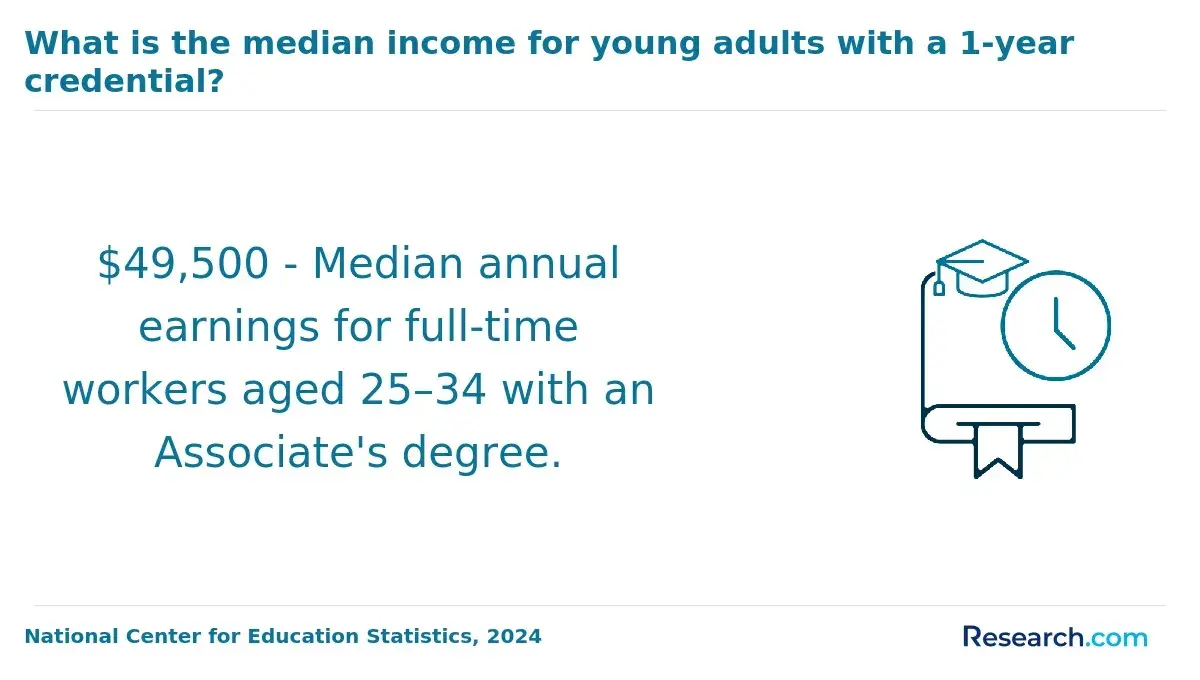
The median annual wage for political science graduates working as political scientists in the U.S. stands near $125,350 but varies widely with sector, role, and region. Federal employment, capturing 57% of this workforce, tends to offer a more predictable salary structure tied to General Schedule (GS) pay scales and locality adjustments.
Entry-level federal political scientists often begin at GS-9 or GS-11 with salaries between $60,000 and $85,000, whereas those at GS-13 or higher earn $100,000 to $140,000. This pay scale reflects the sector's emphasis on advanced analytical skills and relevant internship experience, along with security clearance requirements.
By contrast, private sector roles-ranging from think tanks to consultancy and nonprofits-usually offer lower starting salaries, roughly $60,000 to $80,000, but may provide bonuses linked to performance. Graduates targeting academia face starting salaries nearer to $60,000, impacted by institutional resources but compensated with tenure-track prospects and long-term growth.
The average earnings of political science majors by region also demonstrate meaningful disparities, reinforcing the importance of geographic considerations in salary expectations. Those focused on federal roles must weigh the structured pay and benefits against competitive entry barriers, while private sector candidates should factor in income variability and bonus potential.
For professionals considering advanced qualifications, exploring a master's degree in data science online can expand quantitative skill sets valued by employers in all sectors.
Is a political science degree enough for policy and government jobs?
Holding a political science degree alone rarely meets the requirements for many policy and government jobs political science degree requirements now demand. Employers increasingly prioritize specialized skills and hands-on experience over purely academic credentials. For instance, federal agencies and think tanks emphasize candidates with advanced quantitative skills or experience leading complex stakeholder engagement, reflecting a shift beyond foundational theory.
Employment growth for political scientists in nonacademic research organizations and think tanks is projected to rise by 7% from 2023 to 2033, surpassing average occupational trends. Yet, career prospects for political science graduates in public policy still hinge heavily on demonstrated applied abilities such as targeted internships, specialized certifications, or graduate-level qualifications rather than bachelor's degrees alone.
Local government policy roles similarly favor candidates with proven results and practical experience.
Failing to supplement political science education with these skills risks confining candidates to support roles with limited career mobility. Some may consider complementary training options such as paralegal school to strengthen legal expertise relevant to policy settings. Developing a strategic skill portfolio is critical to succeeding in government-related careers.
What courses are included in a political science degree?
Programs in political science increasingly demand quantitative competencies to meet shifting employer expectations, with core coursework spanning American government, international relations, political theory, and public policy analysis. The integration of research methods and statistics reflects a labor market where data literacy is no longer optional-it's essential.
The World Economic Forum projects a 30% growth in data-centric roles globally through 2030, making graduates without strong analytical skills less competitive for emerging positions.
Electives focusing on electoral systems, political economy, and constitutional law provide specialized knowledge but insufficiently prepare students without complementary technical skills like GIS, R, or Python coding. Graduates lacking these practical tools often find their career paths constricted, especially in data-driven policy, legislative analytics, or cybersecurity policy roles.
Those targeting public administration or research institutions should rigorously pursue budgeting, organizational management, advanced statistics, and experimental design to increase marketability. The operational reality is clear:
- Employers prioritize demonstrated competency in both quantitative analysis and the ability to communicate complex findings effectively.
- Students splitting focus between theory and applied skills tend to secure roles with greater long-term stability and growth potential.
Political science curricula that blend empirical research rigor with targeted technical proficiencies equip graduates to navigate competitive sectors such as AI oversight in government or data-driven policymaking more adeptly than those with a purely theoretical orientation.
How do online and campus political science programs compare?
Employer preferences in political science favor campus-based programs where networking, internships, and experiential learning generate stronger recruiter trust. This is particularly evident in competitive hubs like the Washington, DC metro area, where median wages exceed $150,000 annually-over 10% higher than the national median. For roles in government agencies or think tanks, in-person preparation aligned with local policy environments remains a decisive advantage.
Online programs, while offering flexibility for working professionals and those outside metropolitan regions, often deliver less direct access to local policy networks and live debate formats. This creates a gap in workplace readiness that many federal and policy analysis employers recognize.
Prospective students targeting government or research-intensive careers should prioritize programs featuring embedded internships and regional connections. Conversely, those aiming to pivot into political consulting or data-centric roles in less geographically constrained industries can find foundational research skills through accredited online options.
To mitigate the limitations of online formats, candidates may consider hybrid models or supplementary in-person seminars. Evaluating graduate outcomes data-including employment sectors and internship durations-provides crucial insight into how well a program's structure aligns with targeted employer expectations and regional market demands.
What accreditation should a political science program have?
Regional accreditation recognized by the U.S. Department of Education remains the definitive marker of quality for political science programs, directly influencing graduate success in competitive sectors like government and research.
Without this accreditation-often from bodies such as the Middle States Commission on Higher Education or Southern Association of Colleges and Schools-graduates frequently face barriers to federal financial aid, security clearances, and employment with government agencies requiring standardized qualifications.
Specialized accreditation from the American Political Science Association (APSA) is uncommon but indicates a curriculum finely tuned to disciplinary research and quantitative policy analysis, which can advantage candidates targeting academia or federally funded think tanks.
Employers in public policy fields prioritize candidates with credentials that ensure foundational educational rigor and verified competency, which translates into tangible outcomes such as internship opportunities and faculty mentorship aligned with a median annual political scientist wage of $139,380 reported by the U.S. Bureau of Labor Statistics.
Practical advice for evaluating programs includes:
- Confirming regional accreditation status via the Council for Higher Education Accreditation (CHEA) or U.S. Department of Education.
- Assessing if curricula incorporate real-world policy analysis and quantitative methods relevant to federal, consultancy, or research roles.
- Reviewing historical graduate placement in federal agencies, political offices, or research institutions where accreditation is a hiring baseline.
For professionals shifting careers, selecting an accredited program safeguards credit transferability and often strengthens negotiating power for promotions within politically focused organizations.
What admission requirements do political science programs use?
Admission to political science graduate programs demands more than minimum GPA thresholds; competitive PhD tracks often require higher academic standing and demonstrated fluency in social sciences such as political theory, comparative politics, and statistics.
GRE quantitative scores have growing significance due to employer preferences for candidates capable of rigorous data analysis. For applicants lacking this background, targeted coursework or certifications can materially affect employability, as political scientist roles are projected to grow 7% over the decade-outpacing many other social sciences and general occupations.
Admission committees typically insist on two or three letters of recommendation from faculty with direct knowledge of an applicant's research ability, which operate as key signals of academic readiness.
A statement of purpose should clearly connect research interests with faculty expertise to navigate constrained program capacity. Practical experience via internships in government or policy organizations enhances candidates' profiles by demonstrating applied skills valued by employers beyond theoretical knowledge.
For working professionals balancing career shifts or advancement, part-time or online program formats maintain the same admissions standards but may alter application timelines and resource demands. Writing samples evidencing analytical rigor remain integral, given the emphasis on research output within the field. Candidates should weigh these requirements alongside their existing skill sets to align educational investments with specific workforce trajectories in political science.
How long does a political science degree take and cost?
Choosing whether to pursue graduate study after a bachelor's in political science involves a nuanced cost-benefit analysis that extends beyond tuition. Public universities charge roughly $10,000 to $30,000 annually for in-state students, while private colleges can exceed $50,000. A master's in public policy or affairs typically requires two years and costs between $20,000 and $50,000 per year depending on the program.
Consider the workforce impact: senior roles in government and nonprofit sectors often require a completed master's, making this credential a practical necessity for career shifting or advancement. However, the added two-year commitment comes with opportunity costs like forgone earnings.
Financially, median federal debt for graduates stands near $40,000, while median earnings 10 years post-graduation exceed $80,000-a manageable 0.5 debt-to-income ratio based on U.S. Department of Education data. This balance signals a relatively sustainable investment compared to fields where debt surpasses income.
Prospective students should weigh all costs, including living expenses and lost wages, against potential earnings growth. For example, one might opt for immediate employment after undergrad if entering government entry-level roles is viable, whereas those targeting senior management may prioritize graduate credentials despite short-term financial constraints.
Which political science certifications improve job prospects?
Certifications in geopolitical risk analysis and intelligence studies tangibly affect job prospects by fulfilling employer demands for verified analytical competencies beyond general political science degrees. The World Economic Forum projects over 25% growth in geopolitical risk specialist positions from 2025 to 2030, reflecting the sector's preference for credential-backed expertise amid complex global challenges.
For candidates, certifications such as Certified Political Analyst (CPA) or Intelligence Analyst Certification provide demonstrable methodologies required to interpret international crises and regional instabilities.
Certification benefits materialize notably in roles embedded within governments, international NGOs, and private firms addressing defense, security, or supply chain vulnerabilities. This translates to:
- Enhanced eligibility for supervisory or advisory positions requiring standardized credential verification.
- Greater leverage in salary negotiations grounded in verified technical skills rather than solely academic qualifications.
- Improved proficiency in scenario forecasting and conflict impact assessment, vital for multinational corporations handling supply chain risks from unstable regions.
However, prospective candidates must evaluate the opportunity costs; some employers prioritize practical intelligence experience over formal certification.
Pairing technical credentials with data analytics or regional language expertise generally outperforms standalone policy certifications, allowing for multifaceted capabilities that align with targeted professions like security consulting or international relations. This nuanced credential strategy helps optimize hiring potential and career durability in a competitive job market.
Other Things You Should Know About Political Science
The largest employers are federal, state, and local government agencies, plus nonprofits, public affairs firms, research organizations, and political consulting companies. U.S. federal hiring commonly runs through USAJOBS, and many policy jobs now require data analysis, policy writing, or stakeholder research alongside a political science degree.
Specializing within political science is advisable in the 2027 job market. As employers increasingly seek candidates with specific expertise, focusing on areas like international relations, public policy, or political economy can enhance employability and offer a competitive edge in a specialized job market.
Program reputation and alumni networks significantly affect job access in competitive metropolitan job markets. Graduates from well-connected institutions tend to secure internships and entry positions more readily, especially in government and lobbying sectors.
However, for roles focused on data or research, demonstrated skills and project portfolios can outweigh school brand. Prioritize programs offering strong professional ties or practical project opportunities aligned with your target employer.
References
- Job Market Status (2025-2026) https://poli-sci-jobs.org/
- What Can I Do With a Political Science Degree? https://www.belmont.edu/stories/articles/2024/what-can-i-do-with-a-political-science-degree.html
- Part I: You’ve Decided to Go on the Job Market. What Might Your Next Year Look Like? - https://politicalsciencenow.com/youve-decided-to-go-on-the-job-market-what-might-your-next-year-look-like/
- Academic Job Market Trends in Politics and International Relations - Political Studies Association https://www.psa.ac.uk/resources/academic-job-market-trends-in-politics-and-international-relations/
- Applying to Political Science PhD Programs | Mariana Carvalho https://www.maricarvalho.com/post/application-polsci/
- Political Science Degree Jobs: 12+ Career Paths (2026) | Extern https://www.extern.com/post/political-science-degree-jobs-career-guide