2027 Online Political Science Degrees With Strong Practical Policy Execution Training

Co-Founder and Chief Data Scientist
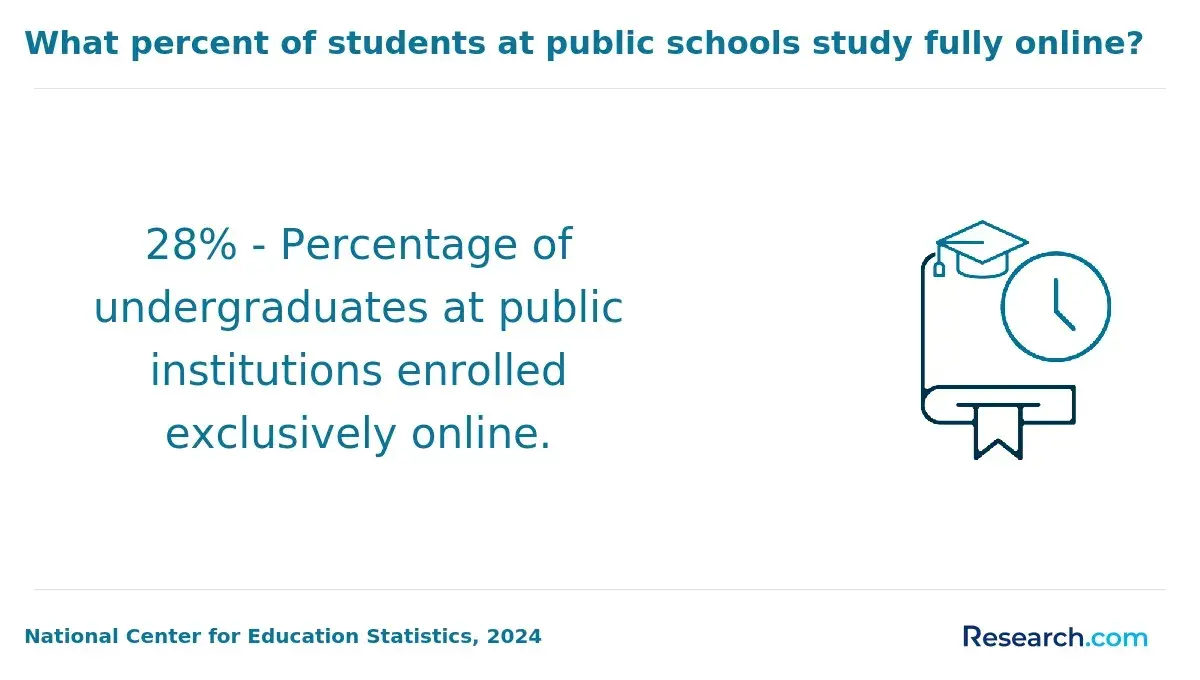
Professionals aiming to influence policy often struggle to find political science programs that integrate strong practical training alongside theoretical foundations, leaving graduates underprepared for the realities of policy execution. With 40% of U. S. undergraduates now pursuing at least part of their studies online, according to the National Center for Education Statistics, the rise of flexible online degrees caters to working adults balancing career advancement and education. Yet, many programs lack sufficient focus on actionable skills that employers demand for policy implementation and analysis. This article assesses online political science degrees emphasizing practical policy execution, helping readers identify offerings that align with workforce expectations and career goals.
Key Things You Should Know
- Programs integrating empirical policy labs show 15% higher graduate employment in government roles versus theory-focused curricula, forcing candidates to balance depth in analytics against broader political theory understanding.
- Federal labor data reveals agencies increasingly prefer Political Science graduates with quantitative policy execution skills, shifting hiring priorities away from traditional political theory backgrounds toward measurable impact capabilities.
- Average tuition for accredited online programs rose 8% since 2024, with accelerated tracks reducing completion time by up to 25%, presenting a cost-timing tradeoff critical for midcareer professionals pivoting under tight financial constraints.
What is an online political science degree with a practical policy execution focus?
Online political science degrees with practical policy training sharpen skills that extend beyond theory into the operational realities of policy design, implementation, and evaluation. Unlike traditional programs, these policy execution focused political science programs integrate simulation exercises and quantitative tools such as program evaluation and policy modeling, preparing graduates for roles where measuring impact and navigating bureaucratic hurdles are paramount. For example, a city planning department hire must manage stakeholder engagement and compliance monitoring throughout the policy lifecycle rather than rely solely on political theory.
The labor market for political scientists is growing modestly, with the U.S. Bureau of Labor Statistics projecting 6% employment growth and a median wage of $132,350, reflecting steady demand for candidates able to translate policy goals into actionable strategies. However, these benefits hinge on disciplined self-management in online formats and access to internships or mentorship networks, which remain critical to gaining hands-on skills that employers expect.
Practical training components address common employer critiques that graduates lack applied skills, but the tradeoff can be less depth in traditional political theory. Students should prioritize programs that balance these aspects while understanding potential challenges in acquiring meaningful practicum experiences remotely.
Cost considerations also factor into decisions about program selection; interested students may compare financial commitments by visiting resources like the costs associated with an animal science bachelor degree online to put expenses in perspective.
How do online political science degrees compare to campus programs for policy training?
Pragmatic evaluation of online political science degrees with practical policy training reveals a distinct divide in experiential learning compared to campus programs. While both formats deliver robust theoretical frameworks, campus pathways excel through embedded internships, direct networking with government and NGOs, and cooperative policy projects that cultivate applied competencies.
Online students often face a self-directed environment that limits spontaneous engagement with real-world policy execution, requiring proactive pursuit of remote internships or virtual policy labs. This dynamic poses challenges for those targeting fields like government relations or public affairs, where employers prioritize candidates demonstrating measurable project experience. Structured case simulations and synchronous seminars in online programs partially address these gaps but demand heightened self-discipline and resourcefulness.
Key workforce implications emerge from U.S. Bureau of Labor Statistics projections showing 13% growth in market research analyst roles and 6% in public relations specialists, both reliant on skills in data analysis, communication, and advocacy taught in policy training. Campus programs better facilitate these through direct client collaborations or research assistance roles, which online candidates must independently arrange.
Students weighing a comparative analysis of campus vs online policy execution programs should assess program affiliations offering internships or real-time projects aligned with career objectives. Flexibility in online options suits working professionals but may require supplementing practical experience externally. Those eager to pivot into advocacy or market analysis should also consider advanced options, including online PhD data science, to enhance data-driven policy expertise.
Which types of students benefit most from online political science policy programs?
Mid-career professionals pursuing an online political science degree programs with practical policy training typically aim to transition into roles requiring concrete policy execution skills. For example, a communications specialist moving into government relations must acquire expertise in policy drafting, stakeholder negotiation, and regulatory compliance-skills emphasized through hands-on coursework. Unlike theoretical curricula, the best online political science programs for policy implementation skills include simulations or capstone projects connected to real-world challenges, which are essential for enhancing employability and workforce readiness.
Financial and time investments are substantial: average tuition runs about $620 per credit, with total costs reaching $75,000. This expense must be weighed against a median political scientist annual income near $122,510. Students lacking employer tuition support or schedule flexibility risk delayed career returns, while those from sectors like urban planning or public health see measurable benefits when programs offer cross-disciplinary policy training paired with applied casework.
Practical training often distinguishes candidates in competitive job markets, as employers prioritize demonstrable outcomes in policy implementation. Those weighing this pathway should also consider how their field experience and program structure align with desired roles in government agencies, NGOs, or consultancy firms.
For comparisons beyond political science, individuals may explore cost-effective alternatives such as a data science degree online, which may provide complementary analytical skills sought in policy-related positions.
What accreditation and institutional quality standards should these online programs meet?
The value of an online political science program hinges on institutional and program-specific quality standards that directly affect employability and skill acquisition. Programs without regional accreditation recognized by agencies like the Middle States Commission on Higher Education or the Southern Association of Colleges and Schools often lack credible quality assurance, undermining long-term career prospects. Accreditation standards for online political science programs in the United States act as a fundamental baseline, yet practical workforce relevance depends on integrating applied quantitative methods and real-world policy experience.
Consider a working professional pivoting to a government analyst role: degrees emphasizing experiential learning with datasets, scenario simulations, and policy drafting provide tangible, outcome-based competencies aligned with employer expectations. A 2023 study on "Data for Political Research" degrees found such hands-on curricula are scarce despite growing market demand, revealing a significant supply gap. Programs failing to meet these institutional quality criteria for practical policy execution training in political science degrees leave graduates ill-equipped for complex challenges in sectors like healthcare, urban planning, or international relations.
Prospective students should always verify accreditation status through official databases and examine whether a program maintains transparent outcomes and employer engagement networks. Investing in degrees lacking these features risks wasted time and resources without meaningful career returns. Those balancing academic quality with applied skill development might also explore complementary pathways, such as a paralegal school, to broaden practical credentials in related policy-adjacent fields via paralegal school.
What core courses and applied policy labs are included in these degrees?
Online political science degrees with a strong applied policy focus in 2026 emphasize skill-building through hands-on coursework rather than pure theory. Core classes like policy analysis, comparative politics, and quantitative methods provide foundational knowledge, but the practical edge comes from applied policy labs. These labs mimic real-world scenarios such as urban planning or environmental regulation, requiring students to draft actionable proposals and conduct stakeholder impact assessments using current tools.
For example, a graduate working in city urban development benefits directly from experience with cost-benefit analyses and stakeholder mapping gained through these exercises, which traditional survey-style courses typically omit. This applied orientation is critical because purely online cohorts show lower retention and weaker skill acquisition compared to those in mixed or in-person settings. Programs incorporating synchronous sessions or face-to-face intensives help mitigate these challenges by improving engagement.
Employers prioritize candidates fluent in data analytics, legislative drafting, and program evaluation-skills best developed in blended environments that combine lecture content with supervised internships or consulting projects. Prospective students should thus scrutinize whether programs offer embedded experiential components and explicit policy labs, as these significantly enhance employability in policy-driven workplaces.
How do online political science programs provide real-world policy experience and internships?
Effective online political science programs integrate project-based learning with direct policy experience, replicating real-world decision-making through partnerships with government and advocacy organizations. Students engage in capstone projects requiring data analysis, policy brief development, and presentations to panels including external professionals, simulating workplace environments. This approach provides exposure to policy evaluation methods and professional standards beyond theoretical knowledge.
Internships, a core component, frequently take place remotely with municipal, legislative, or nonprofit entities, offering geographic flexibility. These placements, often requiring 100 to 150 supervised hours, bridge academic concepts and operational policy environments but vary in quality depending on whether programs facilitate placements or students source their own. Prospective enrollees should scrutinize placement support and mentor involvement to ensure meaningful experience.
Specialization in quantitative policy analytics addresses growing labor market demand, exemplified by roles like operations research analysts, which the Bureau of Labor Statistics projects will expand by 23% through 2032. Coursework emphasizing GIS, statistical software, and forecasting builds essential competencies for data-driven policy advising. This dual focus on politics and analytics is increasingly critical as employers seek graduates who can interpret complex datasets within policy contexts.
- Project-based learning aligned with external policy professionals enhances applied skills.
- Internship quality and support vary widely; vet program facilitation carefully.
- Data analytics skills are essential for competitive positioning in emerging quantitative roles.
What are typical admission requirements and application materials for these online programs?
Admission to online political science programs in 2026 hinges on demonstrating both academic competence and relevant practical experience, reflecting employer demand for graduates ready to navigate complex policy environments. Minimum GPA expectations generally range from 2.5 to 3.0, with foundational social sciences coursework often required. For working professionals, documented policy or governmental experience can sometimes supplement formal prerequisites, acknowledging real-world expertise in lieu of traditional academic credentials.
Application components emphasize evidence of analytical thinking and policy understanding through a career-focused personal statement and one or two recommendation letters from credible academic or professional sources. While standardized tests like the SAT or ACT are increasingly optional, competitive graduate track applicants may still face GRE requirements.
Applicants should prepare to showcase independent research capabilities and applied policy skills, qualities valued by public administration and policy employers. The financial investment is considerable: for example, Penn State World Campus charges $638 to $685 per credit for a 123-credit B.A. program, accumulating roughly $78,000 to $84,000 before financial aid. Prospective students must weigh the cost against the potential for career pivots or advancement in policy roles where demonstrated expertise and problem-solving abilities often outweigh elite credentialing.
How long do online political science degrees take and what do they cost?
Completing an online political science degree typically aligns with traditional timelines-around four years full-time-yet most nontraditional students extend study to six years or more due to work and family demands. This demographic, often older and professionally employed, faces clear tradeoffs: accelerating courses shortens time-to-degree but increases stress and reduces work flexibility, while part-time pacing extends overall costs and delays return on investment.
Costs vary substantially: public universities usually charge $8,000 to $15,000 annually for in-state students, while private institutions range from $20,000 to $40,000 per year. Additional expenses such as technology fees and textbooks add 10-15% to total costs. For working adults, it's critical to factor in potential income loss if reducing employment hours when planning finances.
Employers in government, nonprofits, and consulting sectors expect candidates to demonstrate applied policy skills beyond theory. Programs incorporating internships or practicum components lengthen completion time slightly but significantly improve employability. Fully online students should seek local or remote policy engagement opportunities to fulfill these experiential expectations.
- Longer durations suit those balancing careers and families but increase total educational investment
- Accelerated paths demand rigorous time management and may reduce work capacity
- Practical experience embedded in programs is crucial for competitiveness in policy-related roles
Choosing a program with robust support tailored to nontraditional learners improves retention and outcomes, addressing the distinct needs documented by the Council of Graduate Schools' 2024 report.
What careers, salaries, and advancement paths follow an online political science degree?
Online political science degrees featuring applied policy training channel graduates into roles emphasizing execution over theory, such as campaign management, consulting, and legislative analysis. Entry-level salaries typically range from $55,000 to $70,000, with median wages climbing to $90,000+ within five years in federal or private policy sectors, per U.S. Bureau of Labor Statistics 2024 data. Progression hinges on demonstrated skills in stakeholder engagement, policy implementation, and project management-competencies best acquired through internships and real-world fieldwork.
For example, programs like the University of Akron's Master of Applied Politics integrate hands-on projects that mirror political action roles rather than academic tracks, preparing students for tactical campaign or organizational policy positions early on. Employers prioritize candidates with verifiable, outcome-focused experience over purely academic credentials, often favoring those who develop niche policy expertise-such as healthcare or economic development-to differentiate themselves.
Students should weigh geographic mobility seriously; most impactful jobs cluster in political hubs like Washington D.C. or major state capitals, demanding active networking beyond remote learning environments. Navigating irregular political cycles and job market volatility remains a constant challenge requiring adaptability and long-term strategic planning.
Effective steps for career growth include:
- Securing internships with measurable policy impact through elected offices or advocacy groups
- Maintaining active involvement in ongoing campaign cycles to build both reputation and contacts
- Developing specialized expertise in high-demand policy fields to enhance professional value
- Using fieldwork outputs as practical portfolio evidence when pursuing analyst or governmental relations jobs
How can students evaluate and choose the best online political science program for policy work?
Effective selection of an online political science degree hinges on program alignment with actionable policy skills rather than theoretical emphasis. Graduates aiming for roles in policy advisement or government analysis benefit from curricula incorporating applied policy analysis, legislative processes, and data-driven decision-making. For instance, students seeking state-level advisory positions should prioritize programs offering internships or capstones in partnership with local governments, enabling direct engagement with policy drafting and evaluation.
Faculty expertise and research impact matter significantly for access to networks and career pipelines. Accreditation assures academic standards but verifying an institution's capacity to facilitate internships and job placement in policy-relevant sectors is equally important. Programs with proven graduate placement in legislative offices or advocacy groups demonstrate meaningful outcomes.
The U.S. Bureau of Labor Statistics forecasts a 6% employment growth for political scientists through 2032, highlighting sustainable demand. Decision-makers should weigh logistical factors like asynchronous learning for working professionals, tuition costs balanced against return on investment, and the value of alumni networks specific to policy fields.
- Tradeoffs exist between shorter programs with limited experiential opportunities and lengthier courses offering substantial practicum engagement.
- Consider how current job commitments and targeted policy niches influence the choice in maximizing workforce readiness.
Other Things You Should Know About Political Science
Balancing rigorous policy coursework with full-time employment requires disciplined time management. Programs that offer asynchronous learning and modular project work are more feasible for working professionals than those with fixed schedules or frequent synchronous sessions. Prospective students should prioritize programs with flexible assessment methods to avoid compromising either work performance or academic outcomes.
The choice depends on career goals within political science. Quantitative training is critical for roles involving data-driven policy analysis, budget forecasting, or program evaluation, while qualitative skills better serve positions focused on negotiation, legislative strategy, or community engagement. Students should evaluate labor market demands in their target sector and select programs aligned with employers' preferred competencies rather than seeking a one-size-fits-all curriculum.
Online formats limit spontaneous interactions but can still support network building through structured group projects, alumni events, and faculty connections focused on policy fields. Programs that integrate mentorship from practitioners and facilitate access to professional policy organizations provide stronger networking returns. Prospective students should prioritize programs with clear post-graduation networking support, as informal connections formed on campus remain more common and influential.
References
- Political Science - Bachelor's Degree - The Institute of Political Science https://politologia.uwr.edu.pl/en/candidates/bachelor-degree-political-science/
- Political Science https://www.commonwealthu.edu/academics/programs/political-science-ba
- What Can You Do With a Political Science Degree | PathWise https://pathwise.io/what-can-you-do-with-a-political-science-degree/
- Apply for Admission https://www.brandeis.edu/online/admissions-aid/admissions.html
- Online Bachelor's Degree: Political Science https://www.umgc.edu/online-degrees/bachelors/political-science
- Online Political Science Degree | Programs & Career Options https://www.learnhowtobecome.org/best-online-bachelors-in-political-science-degree-programs/
- European degree: A potential crossroads for higher education https://e-kariera.vistula.edu.pl/european-degree-a-potential-crossroads-for-higher-education
- Top 10 Political Science Research Programs for High Schoolers - Guide https://pioneeracademics.com/news/top-10-political-science-research-programs-and-internships-for-high-school-students-guide/
- Quality Standards and Accreditation of Distance Education Programs in a Pandemic - OJDLA https://ojdla.com/articles/quality-standards-and-accreditation-of-distance-education-programs-in-a-pandemic
- Center for Policy Design and Evaluation - SWPS University https://english.swps.pl/science-and-research/discover-our-potential/research-centers/254-research-institutes/institute-of-social-sciences/research-centers/33207-center-for-policy-design-and-evaluation-c4pde