2027 Online Political Science Degrees With Public Administration Foundations

Co-Founder and Chief Data Scientist
Professionals seeking to advance in political science often confront the challenge of integrating public administration expertise without disrupting their careers. Traditional on-campus programs rarely accommodate full-time work or family commitments, limiting options. According to the National Center for Education Statistics, over 40% of graduate political science enrollees in recent years choose online formats, signaling a shift toward flexible, career-compatible pathways.
This trend reflects growing employer preference for candidates who balance theoretical knowledge with administrative skills and adaptability. This article evaluates online political science degrees with public administration foundations, guiding prospective students through program structures, flexibility, and career alignment to optimize strategic educational investment.
Key Things You Should Know
- Combining political science and public administration degrees in 2026 concentrates students into hybrid skillsets valued in 58% of government job openings, but risks diluting specialized analytical depth required for advanced policy roles, per U.S. Bureau of Labor Statistics.
- Employers increasingly demand applied governance experience alongside political theory knowledge; 67% of mid-tier civic institutions prioritize candidates with dual-focus credentials for leadership pipelines, indicating a shift in hiring norms.
- Online program costs average 15%-20% lower than on-campus equivalents, yet delayed cohort start dates and fewer networking opportunities create timing and access tradeoffs impacting immediate career acceleration prospects, based on National Center for Education Statistics data.
What is an online political science degree with a public administration foundation?
Combining an online political science degree with public administration integration addresses a critical gap between theoretical frameworks and operational realities in public sector roles. Graduates equipped with both analytical and administrative skills are positioned to handle complex governmental functions, such as budgeting, regulatory compliance, and organizational management, which standalone political science programs often overlook.
Consider a professional aiming for leadership in municipal government: this dual focus enables understanding legislative nuances while effectively managing departmental resources and public initiatives. Without public administration, new graduates frequently experience steep learning curves transitioning into management roles, hindering early advancement.
This aligns with employer demand for dual-competency candidates amid a 30% increase in U.S. political science and government bachelor's degrees since 2010-11, heightening competition for limited leadership positions.
This hybrid degree format particularly suits working professionals seeking flexible scheduling and relevant skill application. However, it requires proactive pursuit of internships or practicum experiences, as many online degree programs lack embedded experiential learning or networking opportunities crucial for access to local policymakers.
Candidates must carefully evaluate if their program integrates applied projects and maintains relevant accreditation tied to public administration employment standards.
Workforce outcomes include eligibility for roles such as policy analyst, city manager, or nonprofit director where combining political insight with operational expertise is essential. It is also valuable in an evolving labor market where credential inflation demands demonstrated practical skills beyond academic knowledge. Those exploring related paths might find insights about forensic careers informative when comparing cross-disciplinary degree programs.
Degree programs in political science and public administration online continue to evolve in response to these practical employment conditions, but prospective students must weigh tradeoffs between flexibility, experiential access, and credential utility.
How does an online political science program compare to a campus-based option?
Online political science degrees with public administration foundations deliver core theoretical knowledge on par with campus-based alternatives but diverge sharply in engagement and career networking outcomes. Employers in government and public sectors prioritize practical skills and verified credentials, whether earned online or on campus, particularly as management roles within public administration are projected to grow by 5% over the next decade, adding approximately 550,000 jobs.
Working professionals often favor online programs for their flexibility, enabling immediate application of coursework to existing roles. However, campus-based political science programs versus online options offer distinct advantages by providing enhanced access to live policy simulations, direct faculty interaction, and local internships that forge in-person leadership experience and connections-critical factors for transitioning to management positions in government or nonprofit sectors.
Students unable to relocate benefit from the affordability and asynchronous format of online learning but must actively cultivate professional relationships through virtual networking or local workshops to mitigate weaker peer engagement. Additionally, campus programs tend to hold stronger reputational weight among established government agencies, an important consideration for applicants targeting traditional hiring pipelines.
Decision-makers should balance these factors according to their geographic, professional, and skill development needs. For those exploring advanced interdisciplinary options, programs such as a PhD in data science online may complement political science studies by expanding analytical competencies relevant to policy analysis and management.
Are online political science degrees with public administration concentrations respected by employers?
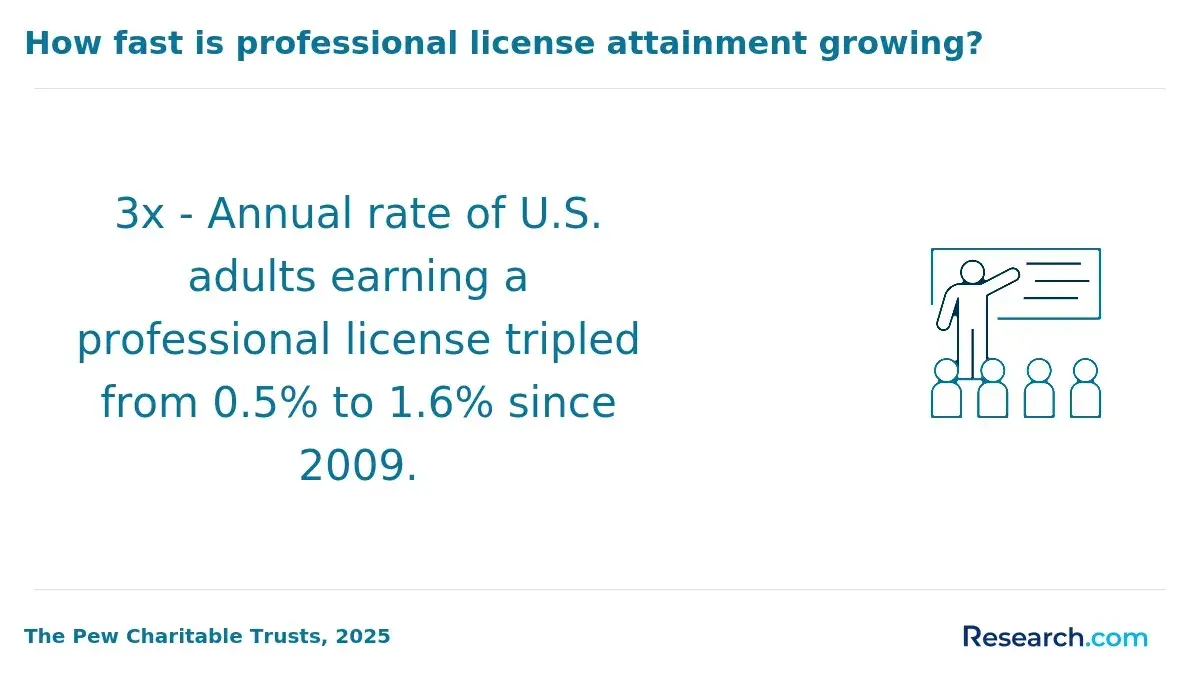
Employer recognition of online political science degrees with a public administration focus hinges primarily on the inclusion of rigorous quantitative training. More than 70% of accredited undergraduate programs mandate coursework in data analysis or quantitative methods, a shift driven by demand for professionals who can leverage data to enhance policy implementation, budget management, and transparency.
Government agencies, particularly city management offices, increasingly prioritize candidates who demonstrate such competencies in practical scenarios like resource allocation and performance measurement.
However, online degrees without accreditation or without substantial applied coursework in public administration often face skepticism during hiring. Recruiters scrutinize depth of curriculum, favoring graduates versed in operational public finance or regulatory frameworks over those with nominal degree titles alone. Candidates lacking this rigor risk diminished employability in competitive roles.
Students pursuing online political science and public administration programs should seek clearly defined, data-driven learning outcomes and pursue internships emphasizing real-world application. Effectively articulating the use of quantitative techniques and public management tools during interviews significantly improves hiring prospects.
Those considering further specialization in data skills might explore master's in data science online as a complementary path to strengthen analytical capabilities critical in public sector careers.
What accreditation should online political science and public administration programs have?
Online political science programs accreditation standards significantly shape employability and credit transferability. Regional accreditation from U.S. Department of Education-recognized agencies or the Council for Higher Education Accreditation (CHEA) ensures degrees meet enforceable academic criteria valued by government and nonprofit employers.
For public administration, programmatic accreditation by the Network of Schools of Public Policy, Affairs, and Administration (NASPAA) verifies curriculum relevance to sector needs and is often required for legitimate career entry.
Consider a professional pursuing a federal policy analyst position: a degree lacking these accreditations risks being devalued or rejected during credential verification. Government agencies frequently mandate accredited credentials tied to federal funding compliance, making institutional and programmatic accreditation non-negotiable for career mobility in public administration.
Cost factors can't be overlooked. BestColleges' 2026 data shows average annual tuition at $13,416 with a net price near $8,171 for online political science degrees. While lower-cost, non-accredited options appear financially attractive upfront, they often underdeliver on long-term wage and placement outcomes, resulting in a lower return on investment. Students must strategically balance price against the accreditation that underpins professional legitimacy.
Professionals evaluating accredited public administration degree programs online should verify credentials through the U.S. Department of Education and NASPAA databases before enrolling. Additionally, those interested in comparable alternatives such as paralegal online programs can explore vetted options at paralegal online programs, demonstrating the value of verified accreditation in related fields.
What courses and concentrations are typical in these online political science programs?
Online political science programs with public administration emphases train students in governance, policy evaluation, and administrative law, aligning academic rigor with applied workplace competencies. These programs typically cover core areas such as Public Policy Evaluation, Comparative Government, Research Methods, and Ethics in Public Administration, equipping graduates to interpret legislative frameworks and manage bureaucratic operations effectively.
Specialization tracks like Public Budgeting and Finance, Urban Policy, Environmental Policy, and Emergency Management reflect workforce demand and shape career readiness. For example, a student focusing on public budgeting might work on a simulated county fiscal plan, honing skills crucial for roles like municipal financial analyst or crisis response planner. This practical engagement compensates for remote learning limitations in navigating political negotiations and stakeholder dynamics.
Employers consistently prioritize candidates combining policy literacy with operational expertise. Effective programs bridge theory and practice through capstone projects or virtual internships partnering with agencies, which solidify critical thinking and administrative proficiency.
Data from trusted sources such as BestColleges reported that 84% of online bachelor's graduates in this field perceive a positive return on investment, closely paralleling on-campus counterparts at 86%. This suggests that high-quality online political science degrees can deliver comparable market value for mid- to upper-level public sector employment.
What are the admission requirements for online political science programs focused on public administration?
Admission criteria for online political science programs focused on public administration typically balance academic benchmarks with practical readiness for evolving workforce demands. Undergraduate entry requires a high school diploma or equivalent, while master's programs mandate a relevant bachelor's degree, usually alongside a minimum GPA of 2.5 to 3.0.
Applicants must present official transcripts, letters of recommendation, and a personal statement detailing how their objectives intersect with public administration or policy analysis.
Standardized test expectations are shifting: SAT or ACT scores may be optional for many undergraduate programs, and GRE requirements for graduate studies often waive in favor of demonstrated professional experience. This flexibility recognizes the value of governance or nonprofit work as valid preparation for further study, particularly for individuals pivoting careers.
Technological competency is non-negotiable, given the reliance on online platforms. Candidates lacking digital literacy risk academic difficulty or drop-off, underscoring the need for realistic self-assessment before enrollment.
Employment projections for urban and regional planners-a common career outcome-indicate modest growth, with a median wage around $81,800 according to the U.S. Bureau of Labor Statistics. Admission committees prioritize applicants who connect their educational goals to tangible labor market opportunities and regional policy needs.
How long do these online political science degrees take and what do they cost?
Completing an online political science degree with a public administration focus involves significant time and financial investment that must be weighed against career outcomes. Full-time study generally takes three to four years, while part-time options extend to five or longer-an important consideration for working professionals juggling employment.
Accelerated tracks compress this timeline to roughly 2.5 years but require a demanding workload that few can sustain without compromising work or personal obligations.
Costs vary widely, with public institutions charging $10,000 to $25,000 annually for in-state students and private schools ranging from $30,000 to $50,000. Many programs price tuition per credit hour, typically between $300 and $700, with bachelor's degrees requiring about 120-130 credits. Beyond tuition, fees for technology and course materials add to expenses, and practicum or internship requirements tied to public administration may extend completion time.
From a labor market standpoint, graduates should recognize that roles like social and community service manager command a median wage above $77,000, with top earners exceeding $120,000. This wage differential reflects how combining political science knowledge with administrative skills positions candidates for competitive jobs in government and nonprofit sectors, but the upfront cost in time and money can be substantial.
Those evaluating this pathway need to balance program intensity, total cost, and potential earnings against their current work and life responsibilities to realistically assess whether an online political science degree aligned with public administration fits their professional goals.
What careers can a political science degree with public administration groundwork prepare you for?
Graduates blending political science with public administration face distinct tradeoffs between broad theoretical frameworks and applied management skills. For example, city managers must integrate political insight with detailed administrative capabilities to manage budgets, resource allocation, and policy enforcement effectively.
The evolving landscape increasingly favors those with expertise in nonprofit leadership, appearing in roughly 40% of online master's programs in public policy, a signal toward mission-driven roles emphasizing stakeholder collaboration and grant oversight.
Employment in government and nonprofit sectors demands measurable impacts amid constrained finances or competitive donor environments. Practical career planning should prioritize sectors with stable funding and growth, such as healthcare policy or environmental nonprofits. However, a narrow focus risks limiting versatility; conversely, an overly broad curriculum may reduce technical proficiency valued by employers.
To stay competitive, candidates often need supplemental credentials in public finance, project management, or related fields. Understanding policy implications alongside administrative execution positions graduates as essential intermediaries balancing political strategy with operational realities and evolving governmental reforms.
- Positions typically targeted include policy advisors, program analysts, city managers, and nonprofit executives.
- The nonprofit sector requires skills distinct from public agencies, focusing on ethical governance and stakeholder engagement.
- Strong employer preference exists for candidates demonstrating fiscal responsibility tied to measurable results.
What salary ranges and advancement opportunities exist for graduates in public sector roles?
Graduates of online political science degrees focused on public administration often enter government roles with starting salaries between $50,000 and $65,000, but advancing beyond entry level requires more than just a degree. For example, a city planner combining political science insight with public administration skills can move from analyst to department leadership in 5 to 8 years, contingent on earning certifications or gaining supervisory experience.
Mid-career roles such as program analysts typically earn $70,000 to $95,000, especially in agencies managing regulatory or grant programs. Senior-level policy advisors or administrators command salaries north of $110,000, heavily influenced by location and agency size. However, public sector wage growth tends to be incremental and closely tied to tenure and civil service exams rather than rapid salary jumps.
The rise of distance education, with over half of U.S. undergraduates taking at least one online course, has reduced barriers to obtaining these degrees. Yet employers remain pragmatic, favoring candidates who pair online credentials with relevant internships or work experience rather than relying on the degree alone.
Successful advancement demands ongoing learning, practical public administration application, and networking within government circles. Federal administrative law judges and legislative affairs specialists, for instance, often require advanced degrees and demonstrated expertise in policy or compliance to compete for promotion.
How can prospective students evaluate and choose a reputable online political science program?
Deciding on an online political science degree with a public administration emphasis requires a critical evaluation of program accreditation, faculty expertise, and graduate success metrics to ensure alignment with labor market realities. Regional accreditation is non-negotiable, confirming the institution's academic credibility as recognized by employers and professional bodies.
Faculty actively engaged in research and consulting relevant to political science and public administration warrant particular attention, as this often translates to a curriculum tuned to current policy challenges and applied skills.
Graduate employment rates over 85% within six months serve as a pragmatic indicator of program effectiveness. Students juggling work and study demands or transitioning into government or nonprofit roles must also weigh course delivery flexibility and access to applied internships. Programs lacking robust practicum opportunities may limit a graduate's ability to compete for positions such as policy analyst or municipal manager, roles that typically offer above-average compensation.
- Confirm regional and specialized public administration accreditation where available.
- Examine faculty qualifications including recent publications and government experience.
- Analyze graduate employment and salary data over recent years.
- Evaluate courses for both political theory and practical public administration skills.
- Ensure availability of online internships or partnerships for hands-on experience.
For example, a mid-career professional aiming for city management should opt for a program integrating public administration training and strong internship placement rather than one focused narrowly on theory. This selection directly impacts immediate employability and long-term career trajectory.
Other Things You Should Know About Political Science
In 2027, online programs balance theory and practical skills by integrating case studies, simulations, and theoretical coursework. This combination equips students with critical analytical skills and hands-on experience, preparing them for both academic pursuits and real-world challenges in public administration roles.
Online political science programs with public administration foundations often combine rigorous reading, case studies, and project-based assignments, leading to a high workload intensity. Managing this workload requires strong self-discipline, especially since applied assignments can involve real-time data analysis or team collaboration.
Students balancing full-time jobs should assess the program's pacing and support services, as poorly structured curricula increase the risk of burnout and hinder competency acquisition.
An online degree may face skepticism in highly competitive government positions, especially where networking and internships are crucial. Such roles often demand direct workplace experience, leadership exposure, or security clearances not easily obtained via purely online programs. Combining an online degree with targeted internships, mentorships, or certifications enhances competitiveness. Without these, graduates risk being filtered out in early hiring stages despite academic credentials.
Many 2027 online political science degrees with public administration foundations require a supervised internship or practicum of 120 to 300 hours, usually completed with a city, county, state, or nonprofit agency. Some programs let students substitute approved fieldwork or a capstone project if they already work in public service.
References
- Public Sector Salary Overview https://employer.macildowie.com/blog/public-sector-salary-guide
- Best 73 Online MPA Programs for 2024-2025 Academic Year https://www.mastersofpublicadministration.org/top-online-mpa-programs
- What can I do with a Political Science degree? https://www.coloradomesa.edu/iris/explore-majors/what-can-i-do-with-a-political-science-degree.html
- Online Bachelor's in Political Science Degree Programs (Poli Sci Major) https://www.onlineeducation.com/liberal-arts/bachelors-in-political-science-programs
- Maasai Mara University https://www.mmarau.ac.ke/academics/schools-departments/school-of-arts-humanities-social-sciences-and-creative-industries/department-of-social-sciences/bachelor-of-arts-in-political-science-and-public-administration/
- Political Science, Public Administration | Study https://www.uottawa.ca/study/career-experiential-learning/career-development/what-can-i-do-with-my-studies/political-science-public-administration
- Top Public Sector Career Opportunities in Singapore: Salary, Roles and Benefits - foundit https://www.foundit.sg/career-advice/public-service-career-opportunities-singapore/
- Public Administration Degree | Bachelor of Public Administration | University of Phoenix https://www.phoenix.edu/online-criminal-justice-degrees/public-administration-bachelors-degree.html
- BA, Public Administration https://www.catawba.edu/publicadmin/
- Career Path in the public service https://www.publicjobs.ie/en/information-hub/civil-service-career-path