
2026 Online Library and Information Science Degrees With Leadership and Management Coursework

Co-Founder and Chief Data Scientist
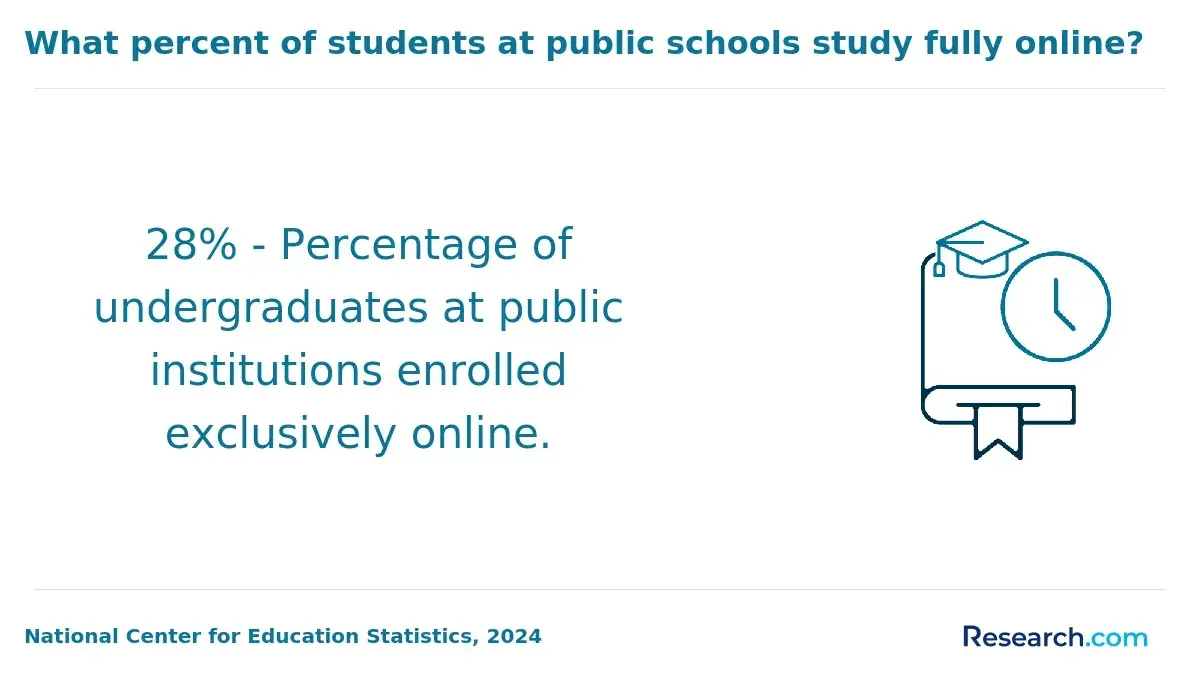
Library & information science professionals poised to take on leadership roles face a critical dilemma: advancing management expertise without halting career momentum. Traditional degree programs often offer rigid schedules incompatible with working adults' responsibilities, limiting timely promotion into supervisory positions. According to the National Center for Education Statistics, enrollment in fully online graduate programs surged by 14% in 2024, driven largely by mid-career learners seeking flexible options.
This shift underscores the demand for accessible curricula that integrate leadership and management training with core library science competencies. This article outlines viable online degree pathways that combine these essential skills, enabling strategic career advancement without sacrificing professional continuity.
Key Things You Should Know
- Leadership and management coursework in 2026 LIS degrees yields a mid-career salary premium averaging 12%, yet extends program length by up to 25%, impacting cost-benefit timelines for working professionals, per National Center for Education Statistics data.
- Employers in academic and public library sectors prioritize candidates with management training for supervisory roles; LIS graduates lacking leadership skills face stalled advancement despite technical proficiency, as detailed in the 2024 ALA workforce survey.
- Limited availability of fully online LIS leadership tracks restricts access for rural and nontraditional students, disproportionately delaying credential completion and consequent career shifts, according to the 2024 EDUCAUSE institutional report.
What is an online library and information science degree with leadership and management focus?
Library and information science management programs online that emphasize leadership coursework train students to integrate traditional LIS skills with strategic oversight, fiscal responsibility, and team coordination-capabilities critical for managing modern information institutions. For instance, a professional moving from a librarian role to an administrative director will need to juggle resource allocation alongside staff development and community relations, areas regularly covered in leadership-focused curricula but often absent from standard LIS programs.
Employers prioritize candidates versed in data-driven decision-making, project management, and organizational change, which heightens the value of this specialization despite the overall projected 2% job growth for librarians through 2033. Graduates gain a competitive edge in securing managerial positions that involve negotiating contracts, ensuring compliance with privacy laws, and obtaining funding in a constrained budget environment.
Typical program requirements include advanced courses in organizational behavior, budget analysis, and personnel management, complementing core library and information science topics. Students considering an online library and information science degree with leadership coursework should weigh the flexible scheduling against the demands of self-directed learning-especially as these programs target working professionals aiming at leadership roles.
Prospective enrollees are advised to research ALA accredited schools to ensure that managerial training aligns with recognized standards and maximizes career mobility within public, academic, or corporate libraries.
How do online and campus library science programs compare for leadership and management training?
Choosing between campus and online formats for library and information science leadership programs hinges largely on specific career objectives and workforce realities. While the 67 ALA-accredited master's programs uniformly cover administration competencies, their delivery shapes practical leadership development differently. Campus programs lend themselves to hands-on leadership through internships, group projects, and local professional networks-elements highly valued by employers in academic and public library systems.
Online library and information science leadership programs comparison reveals a key advantage: flexibility. Employed professionals can integrate leadership concepts immediately, accelerating skill application within their current roles. However, purely online study may limit interpersonal management skill-building critical to effectively leading diverse teams. Hybrid formats can bridge this by combining remote coursework with occasional campus residencies or synchronous peer interaction.
Employers increasingly assess leadership impact-such as project execution and staff oversight-over instructional mode alone. Prospective students should weigh practicum placements, mentorship, and organizational connections. For example, someone targeting a metropolitan public library leadership role will likely benefit more from campus-based networking, whereas a digital library administrator might prioritize the scheduling flexibility of online study.
Considering these tradeoffs is essential, especially when planning a strategic career pivot. Assessing leadership development alongside practical networking options ensures alignment with career goals in library and information science management coursework. For additional perspective on related environmental science pathways, see what can you get with an environmental science degree.
What types of online library and information science degrees offer leadership coursework?
Master's programs in library and information science graduate degrees focusing on management skills typically integrate leadership coursework tailored to supervisory roles in complex organizations. These include strategic planning, team leadership, budgeting, and organizational development-skills essential for positions like public library directors who must balance community engagement with fiscal oversight. Programs combining foundational library science with specialized leadership tracks equip students for these real-world demands, though curriculum design challenges arise from blending practical leadership theory with core discipline competencies.
Employers increasingly expect graduates to navigate emerging digital technologies and evolving information policies, necessitating skills in project and change management. This reflects broader workforce trends, including a projected 35% growth in data scientist roles related to analytic leadership within library settings by 2032. Students pursuing online library and information science degree programs with leadership courses should anticipate rigorous time management and peer collaboration to build these competencies effectively.
Choosing a program requires evaluating the depth of leadership content and experiential learning opportunities, such as internships or applied capstones, which provide context for management challenges. While certificates in library leadership exist, full graduate degrees demonstrate strategic and operational capabilities more convincingly on the job market.
For those comparing pathways, it can be useful to study exercise science online to understand how other fields structure leadership education and balance technical and managerial training.
What leadership and management courses are typically included in these online programs?
Leadership and management coursework in online library and information science programs pivot on pragmatic skills vital to overseeing evolving information environments. Core classes address strategic planning, organizational behavior, change management, and human resource administration specifically tailored to library contexts. Graduates are trained to lead cross-disciplinary teams, manage technology-driven services, and navigate institutional complexities that influence operational outcomes.
For instance, disaster preparedness and crisis communication modules equip students to handle both digital and physical collection emergencies. This preparedness is increasingly important as libraries adopt sophisticated technologies, creating challenges in staff adaptation and user support during periods of rapid change.
Employers now demand managers with a mix of leadership and technical know-how, making data-driven decision-making and performance metrics essential coursework in many programs. This data emphasis enables future leaders to rationalize budget decisions and assess service effectiveness based on quantifiable evidence rather than intuition. Legal and ethical challenges related to information governance further prepare students for compliance responsibilities with sensitive data and intellectual property.
Cost considerations are significant; typical online MLIS programs range from $12,000 to $36,000 depending on specialization and depth, forcing candidates to weigh tuition against potential managerial roles. Those seeking the cheapest masters in data science should note that cost savings may affect the availability of specialized leadership coursework in library and information science degrees.
What are the admission requirements for online library science degrees with leadership tracks?
Admission to online library science degrees with leadership tracks often hinges on more than academic benchmarks, reflecting employer expectations for managerial readiness. Candidates typically need a bachelor's degree with a minimum GPA near 3.0, although some programs permit 2.75 with a holistic review. Applicants must submit transcripts showing foundational knowledge tied to library and information science or allied domains such as education or information technology.
Professional experience weighs heavily, especially for leadership emphasis-programs may require one to three years in roles like archives or educational services. Letters of recommendation focus on tangible leadership potential and communication skills. GRE requirements are increasingly waived for qualified professionals or those with graduate coursework, but international students must meet English proficiency through TOEFL or IELTS.
Financial considerations merit close scrutiny: typical median debt for these degrees ranges between $19,000 to $22,500. The University at Buffalo's ROI ratio of 3.73 reflects a challenging balance of up-front cost against likely earnings, emphasizing the need for admissions strategies aligned to realistic career trajectories rather than abstract competitiveness.
In practice, those without work experience must compensate with strong leadership narratives and relevant internships, as inconsistent prerequisites across programs can prolong time to credential or increase costs without guaranteed gains. Public library managers or corporate information specialists entering leadership tracks exemplify candidates who translate prior roles into streamlined admissions and clearer workforce pathways.
How can students verify accreditation and quality for online library and information science programs?
Choosing a library and information science program without accreditation from the American Library Association (ALA) risks misalignment with evolving workforce demands, particularly as roles like metadata analyst, data officer, and digital manuscripts project manager grow in prominence. Employers actively favor graduates from ALA-accredited programs, viewing the accreditation as an assurance of curriculum relevance and professional readiness.
Beyond accreditation, verifying institutional legitimacy through the U.S. Department of Education's Database of Accredited Postsecondary Institutions and Programs is vital to avoid diploma mills. Graduates' employment data offer a practical measure of program effectiveness: for example, placements below 60% in LIS-related roles often signal a program's limited real-world impact.
Faculty qualifications and inclusion of leadership, management, and technical coursework such as data curation and project management are crucial for students targeting supervisory or digital scholarship positions. These skills have become differentiators in hiring decisions, as noted by recent industry analyses.
Geographic and sector-specific reputation also shape outcomes: localized hiring networks can streamline access to positions in concentrated job markets but may reduce mobility. Prospective students must weigh these tradeoffs carefully when selecting programs.
How long do online library science degrees with management coursework take and what do they cost?
Leadership and management coursework embedded in library & information science degrees directly responds to evolving employer demands for candidates who grasp both technical library functions and organizational oversight. Completion time varies: full-time tracks typically span 18 to 36 months, while part-time students often extend to 3-5 years, reflecting a tradeoff between workforce continuity and academic progress. A mid-career librarian targeting a managerial role, for instance, might select accelerated leadership-focused options to minimize lost income and time out of practice.
Tuition costs range widely, from about $15,000 to $60,000, with public institutions generally more affordable for residents. Additional fees for technology and materials add 5-10% to total expenses-critical considerations for professionals balancing budgets. Accreditation status and alumni employment rates materially affect credentials' market value, influencing hiring outcomes and career mobility.
Core coursework extends beyond cataloging and databases to include marketing, budgeting, ethical leadership, diversity, and communication-skills essential for managing resources and fostering inclusive teams. Fully online programs increase accessibility for those unable to relocate but require disciplined self-management to avoid drawn-out completion times common among remote learners.
- The inclusion of leadership content equips graduates for operational challenges and strategic planning roles in libraries.
- Choosing between program acceleration and flexibility depends on individual career timing and financial priorities.
- Program reputation and alumni outcomes meaningfully impact employability in competitive job markets.
What library and information science careers benefit most from leadership and management training?
Leadership and management training in library and information science (LIS) is essential for roles demanding strategic oversight, financial planning, and resource coordination beyond traditional librarian tasks. Positions like assistant university librarian for finance and administration or dean of university libraries require skills in budgeting, personnel management, and organizational development that typical LIS coursework may not fully provide.
For example, an assistant university librarian responsible for finance must convert institutional objectives into detailed fiscal strategies, requiring expertise in financial forecasting and grant management-competencies often absent from core library science curricula. Public and special library directors face similar challenges, needing to balance community engagement with operational efficiency through data-driven decision-making and human resource development.
Students considering leadership-focused coursework should weigh these trade-offs:
- Enhanced leadership credentials can open pathways to upper management roles.
- Early specialization in areas like cataloging or archival science may be deprioritized.
- Federal and research library employers increasingly expect documented management skills alongside LIS proficiency.
This practical combination often results in measurable gains in career trajectory and influence but requires facing interdisciplinary demands and complex administrative responsibilities not covered by typical LIS programs.
What salaries and advancement opportunities are common for library leaders and managers?
Salaries for library leaders and managers in 2026 typically range from $65,000 to $95,000, shaped significantly by sector, geography, and institution size. Roles like chief librarian or library director tend to earn between $89,000 and $94,000 annually, while mid-level managers see $65,000 to $75,000. Real-world hiring emphasizes candidates with demonstrable management skills-budgeting, staff oversight, strategic planning, and digital project leadership-over purely technical credentials.
Public library systems, for instance, value experience managing community engagement and digital transitions, which often correspond with higher salaries and executive duties. Academic libraries reward proficiency in research data services and digital repository management with elevated titles and pay, especially in competitive urban or research-intensive settings.
Advancement pathways typically lead to roles such as library director, archive manager, or digital services coordinator where compensation can exceed $100,000. However, reaching these levels demands ongoing development in fiscal management and information policy amid evolving technology. Employers prioritize candidates with accredited degrees combined with proven leadership impact rather than tenure alone.
Students considering programs like USC's online MMLIS should note the practical balance required: a minimum 3.0 GPA expectation highlights the academic rigor alongside the need for real-world administrative outcomes. Essential skills that enhance promotion opportunities include grant writing, data analytics, and staff training in addition to core library knowledge.
What is the job outlook for library and information professionals in leadership roles?
Leadership roles in library and information science increasingly hinge on expertise in data-driven decision-making and strategic management, reflecting the sector's shift beyond traditional library settings. Employers value candidates who combine library science knowledge with skills in data analysis, fiscal oversight, and technology integration to navigate budget constraints, stakeholder demands, and digital transformation.
For instance, a municipal library director must balance community access goals with managing digital resources and ensuring compliance with grant requirements, while a private sector information manager merges library principles with business intelligence to support competitive strategies.
Practical workforce implications include prioritizing coursework in management and analytics, as employers expect measurable outcomes such as improved service efficiency and cross-department collaboration. Without these competencies, professionals risk professional stagnation, often plateauing in mid-level roles.
The U.S. Bureau of Labor Statistics projects steady growth of about 6% in librarianship through 2032, paralleling demand for leadership positions that align with increasing organizational complexity. Graduates pursuing leadership pathways should weigh the real-world value of education that emphasizes IT proficiency and strategic planning against the friction of advanced skills development and evolving employer expectations.
- Balance between traditional library expertise and emerging data skills is critical.
- Leadership roles require managing competing institutional priorities.
- Adaptation to digital workflows drives employability and role advancement.
Other Things You Should Know About Library & Information Science
Work experience is not universally required but strongly recommended for leadership-focused library and information science programs. Programs that admit students without professional background often expect a steeper learning curve, especially in management courses. Prior practical experience shapes understanding of organizational dynamics and service challenges, enhancing the ability to apply leadership concepts effectively. Candidates without experience should prioritize programs that integrate practical internships or applied projects.
Leadership and management courses add significant depth and complexity beyond traditional library science topics, increasing overall workload and time commitment. Students must manage not only technical cataloging or information retrieval skills but also organizational behavior, finance, and human resource management. This dual focus demands strong time management and prioritization skills. Prospective students should assess whether their schedule can accommodate these demands without sacrificing mastery of core library competencies.
Employers expect a balanced skill set but often prioritize leadership credentials higher for supervisory or administrative roles. Technical skills remain essential for entry and mid-level positions, whereas leadership coursework directly impacts eligibility for management and strategic roles. Candidates aiming for upward mobility should prioritize programs with robust leadership content and demonstrated outcomes in organizational management. For technical roles, a pure library science degree may suffice, but leadership training opens access to a narrower and higher-paying job market.
Programs with synchronous leadership sessions provide real-time interaction valuable for developing communication and decision-making skills crucial to management roles. However, these can limit flexibility for working professionals. Fully asynchronous programs offer convenience but may reduce opportunities for live discussion and immediate feedback, potentially weakening leadership skill development. Students targeting leadership positions should prioritize programs that provide at least some synchronous elements to align learning with real-world managerial collaboration demands.
References
- Salary Expectations and Career Growth in Library Science https://www.librariancertification.com/salary-expectations-and-career-growth-in-library-science/
- Most Affordable MLIS Programs Online, Updated for 2025 https://www.librarysciencedegrees.org/programs/online/most-affordable-mlis
- Library & Information Resources Network | Accrediting Bodies that LIRN Supports https://www.lirn.net/licensing-accreditation/accreditors/
- 7 Best Leadership Courses for 2026. MANCOSA https://www.mancosa.co.za/blog/b2b/best-short-leadership-courses/
- Leadership courses & programs | Build confidence and lead with impact https://www.edx.org/learn/leadership
- Online Master’s in Library Science https://www.mastersindatascience.org/programs/masters-in-library-science/
- Best Online Master's in Library Science Programs 2026 https://www.mastersinlibraryscience.org/degree/
- Which Colleges Offer an Online Library and Information Science Master's? https://www.gograd.org/online-masters-programs/best-library-information-science-degrees/
- MLIS Library Management and Leadership Curriculum - Library Science Degrees Online https://librarysciencedegreesonline.org/curriculum/management-leadership/
- The Role of Leadership in Library Administration | Jenkins | Library Student Journal https://www.librarystudentjournal.org/index-php/lsj/article/view/278/316/