2027 Nurse Practitioner Clinical Skills You'll Build Before Graduation

Co-Founder and Chief Data Scientist
Facing an overwhelming clinical workload with limited hands-on exposure before graduation places many nurse practitioner candidates at a significant disadvantage in today's healthcare environment. With workforce demand surging-projected by the Bureau of Labor Statistics to grow 40% over the next decade-programs must go beyond theoretical frameworks to equip students with practical, decision-ready skills.
Yet, a 2024 National Center for Education Statistics report shows nearly 60% of NP graduate enrollees choose part-time or online study, reflecting their need for scheduling flexibility but also posing challenges in securing comprehensive clinical experience.
Navigating these conflicting pressures requires clarity on which clinical competencies students should prioritize to maximize job readiness. This article outlines the essential nurse practitioner clinical skills gained before graduation and how mastering them addresses gaps in real-world preparedness and employability.
Key Things You Should Know
- Clinical skills emphasizing telehealth management now constitute over 35% of NP programs' practical hours per AHRQ 2024 data, requiring students to balance digital proficiency with direct care competencies, often extending graduation timelines due to added training demands.
- Employers prioritize integrated diagnostic reasoning and complex patient management skills, shown by a 42% higher hire rate for graduates demonstrating documented interdisciplinary case handling in the 2024 AACN employer survey, pressuring students to secure diverse clinical placements beyond standard primary care.
- Programs compressing pharmacology and procedural skills training into fewer semesters reduce tuition cost exposure but correlate with a 27% increase in postgraduate remediation needs per National Board of Certification reports, indicating tradeoffs between upfront cost savings and long-term credentialing efficiency.
What core nurse practitioner clinical skills are typically mastered before graduation?
Mastering nurse practitioner clinical skills before graduation is a strategic necessity rather than a formality. Employers expect new NPs to independently perform procedures such as venipuncture, suturing, and catheter insertion with minimal on-the-job training.
However, a gap persists: while 74% of practicing NPs conduct clinical procedures independently, only 67.4% report receiving adequate procedural training during primary education. This shortfall signals significant workforce risk and underscores the importance of core nurse practitioner competencies gained in clinical training, especially hands-on exposure to varied patient populations and diagnostic reasoning.
Graduates' readiness hinges on clinical decision-making proficiency tailored to specialty contexts. For example, an NP in rural family practice must competently handle wound care and joint injections, whereas a psychiatric NP requires advanced skills in mental status exams and pharmacologic management. Ensuring clinical placements provide authentic patient interaction rather than passive observation is critical for building this proficiency.
Emphasizing simulation alongside supervised clinical hours helps mitigate risks associated with independent procedures and better aligns skill acquisition with employer expectations and credentialing standards. Decision making about program selection should consider such practical training elements carefully, especially for those seeking specialization transitions exemplified by an FNP to acute care NP bridge program.
Which physical assessment and diagnostic skills do NP students develop in clinical rotations?
Mastery of physical assessment techniques for nurse practitioner students is a pivotal component shaping diagnostic accuracy and clinical independence. Advanced skills such as cardiovascular auscultation, neurologic evaluation, and systematic head-to-toe examination are essential competencies developed through repeated, diverse clinical rotations.
This hands-on exposure enhances the ability to interpret vital signs and recognize abnormal findings that directly affect patient management decisions.
Diagnostic skills developed during nurse practitioner clinical rotations extend beyond physical exams to include practical proficiencies like EKG interpretation, point-of-care testing, and wound assessment. For instance, applying risk stratification in primary care settings enables differentiation between benign and urgent cardiac symptoms, influencing referral timing and patient outcomes.
Invasive and non-invasive procedures integrated within hospital rotations reinforce this skill set, bridging theoretical knowledge and real-world practice demands.
Employers prioritize graduates who demonstrate not only technical ability but also critical thinking-integrating clinical data and patient history to formulate evidence-based differential diagnoses. This emphasis reveals a crucial tradeoff: over-focusing on specialized diagnostic tools may reduce adaptability across varied clinical environments, where broad multisystem assessment ability remains vital.
A 2024 study in Clinical Practice Competence and Its Associated Factors found that nursing students assessed with objective measurement methods were 3.77 times more likely to achieve clinical competence, underscoring the value of validated skill checklists and standardized patient encounters within NP Programs. Prospective students seeking the best DNP programs online should weigh these evidence-based training components carefully.
How do NP programs train students in safe prescribing and pharmacologic management?
Programs emphasizing safe prescribing training in NP programs United States that include more than 750 direct clinical hours consistently yield higher certification exam pass rates and better prepare nurse practitioners for complex medication management. This threshold corresponds to nearly eight times the odds of a perfect score on the certification exam, reflecting the importance of extensive hands-on experience in real clinical environments.
Pharmacologic management education in np programs US is most effective when students encounter diverse patient profiles, such as elderly individuals with polypharmacy or patients requiring nuanced opioid prescribing strategies for chronic pain. These supervised exercises develop critical skills in medication reconciliation, dosing adjustments, identifying drug interactions, and minimizing adverse effects.
For example, family nurse practitioner candidates often navigate competing demands of state prescribing regulations and effective pain control under preceptor guidance.
Simulation labs equipped with electronic health record systems supplement clinical hours by reinforcing competencies in medication safety and adherence monitoring.
Programs that fall short of robust clinical hour requirements commonly produce graduates who struggle with independent prescribing and face hesitancy from employers concerned about onboarding costs and patient safety risks. Employers overwhelmingly prefer candidates from programs with substantial pharmacologic training for ambulatory or acute care roles.
Students evaluating accelerated FNP programs should weigh programs based on clinical hour intensity and integration of pharmacologic content to align with workforce expectations for prescribing authority. The balance between didactic content and clinical immersion directly influences both readiness and employability in advanced practice roles. Additional details on accelerated FNP programs can be found at accelerated FNP programs.
In what ways do NP clinicals build advanced patient communication and counseling skills?
Advanced patient communication techniques for nurse practitioners become indispensable during clinicals, where students confront diverse real-world challenges that shape counseling proficiency beyond scripted interviews. These settings teach nurse practitioners to clarify complex information into accessible language, directly influencing patient adherence and treatment success.
For instance, managing chronic conditions requires nuanced dialogue tailored to individual health literacy and cultural backgrounds.
A 2024 longitudinal study shows that prior RN clinical experience contributes significantly-accounting for 36.9%-to nurse practitioner clinical competence, emphasizing the value of early exposure to interprofessional collaboration. This interaction sharpens the ability to coordinate care with physicians, pharmacists, and social workers, which is critical when relaying clinical data in patient-centric counseling sessions.
During clinicals, students develop nurse practitioner counseling skills development during clinicals through strategies such as teach-back, motivational interviewing, and shared decision-making. These skills help navigate barriers like language differences and time constraints, while also managing documentation demands without compromising rapport.
Programs lacking immersive clinical exposure risk producing graduates ill-prepared for autonomous practice and the complex communication environments employers prioritize. Those weighing educational pathways should consider how these experiences impact readiness and employability, especially given the variability in program structures. For a practical understanding of training timelines, prospective students can consult a detailed nurse practitioner course analysis.
How do NP programs ensure students gain supervised experience in procedures and hands-on skills?
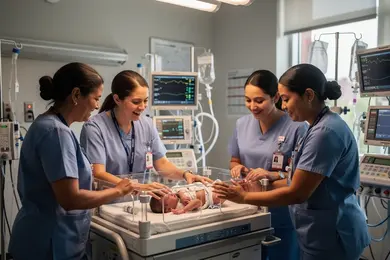
Clinical rotations and simulation labs within NP programs serve as gatekeepers for hands-on competence, yet they also reveal stark logistical challenges and evolving skill demands. Students must juggle tightly coordinated clinical placements with licensed preceptors who rigorously assess procedures ranging from venipuncture to respiratory treatments.
This direct evaluation shapes technical ability, but programs often struggle to provide diverse patient exposure, particularly in rural or specialty fields.
The rise of telehealth-now a routine part of over 90% of nurse practitioners' workflows-significantly recalibrates training requirements. Incorporating digital communication and remote patient assessment in simulations extends program length or heightens clinical hours, forcing students to balance traditional and virtual skill sets.
For example, a primary care track student may divide clinical hours between managing chronic diseases in person and through telehealth platforms, responding to employer expectations for immediate telehealth proficiency post-graduation.
Employers increasingly prioritize graduates versed in both conventional procedures and remote care technologies, prompting programs to adopt layered supervision models that allow graduated autonomy. Integrating this dual approach mitigates skill erosion while aligning curricula with evolving workplace norms.
- Supervised clinical rotations are indispensable yet constrained by site availability and patient diversity.
- Simulation labs augment procedural mastery but must now incorporate telehealth competencies.
- Extended program duration or intensified clinical requirements reflect tradeoffs in skill breadth versus training time.
- Layered supervision balances safety and independence, preparing students for complex clinical and remote encounters.
What evidence-based practice and clinical reasoning skills are emphasized in NP training?
Mastering evidence-based practice in nurse practitioner training hinges on extensive, targeted patient care hours combined with the systematic application of validated clinical frameworks. This blend ensures that students develop adaptive clinical reasoning skills instead of relying on rote memorization, an essential competence given employers' growing expectation for independent, rapid decision-making in complex care settings.
Clinical hours serve as a measurable predictor of success, with NCSBN's 2026 analysis demonstrating a positive correlation between logged direct patient care and certification pass rates across family, adult-gerontology, and pediatric populations. The practical application involves nuanced skills such as:
- Using structured algorithms to distinguish between chronic conditions and acute exacerbations.
- Contextual interpretation of diagnostic tests informed by patient history and epidemiological data.
- Performing risk-benefit analyses to tailor pharmacologic and non-pharmacologic interventions with an eye toward outcome optimization and harm reduction.
Consider an adult-gerontology nurse practitioner managing a diabetic patient with concurrent cardiovascular risks: evidence-based protocols guide dynamic adjustments to treatment during routine visits, emphasizing scenario-driven problem-solving over checklist adherence.
NP programs that dedicate 20% to 40% of clinical hours to such realistic decision-making exercises better prepare candidates for workforce demands that prioritize flexible, population-specific competence over formulaic care delivery.
How do online and campus NP programs differ in arranging and managing clinical placements?
Clinical placement logistics distinguish campus and online Nurse Practitioner (NP) programs in ways that directly affect student preparedness and employability. Campus-based formats leverage local healthcare networks to assign clinical sites, which benefits students by reducing administrative hurdles and ensuring faculty supervision. This arrangement often favors those in metropolitan or less competitive regions where hospital affiliations are readily accessible.
In contrast, students in online NP programs must locate and secure clinical placements independently, relying heavily on personal networking and regional resources. This challenge is particularly acute for those in rural or underserved areas, where the scarcity of suitable sites can delay program completion and limit exposure to diverse patient populations.
Both pathways must comply with regulatory mandates for clinical hours and varied practice settings, with growing expectations for experience in leadership and interdisciplinary care environments. Employers increasingly seek NP graduates whose clinical experiences align with integrated health systems or specialized care sectors.
Key practical considerations for prospective online students include
- proactive planning for clinical site acquisition
- evaluating program support against local healthcare affiliations
- recognizing that fewer institutional placements can extend time-to-degree
These factors make campus-based NP programs more straightforward for students targeting established healthcare markets, while online options require greater self-direction and strategic networking to maintain competitiveness.
Which clinical competencies do NP students need to qualify for certification and licensure?
Clinical competence for nurse practitioner students demands targeted mastery that exceeds foundational skills, reflecting the nuanced requirements of their specialty area. For example, an NP in emergency medicine must be capable of immediate airway management, EKG analysis, and minor surgical interventions without extended supervision.
In contrast, psychiatric NPs heavily rely on in-depth pharmacologic expertise and behavioral assessments. This differentiation forces students to prioritize clinical skill development relevant to their eventual practice setting.
The certification process hinges on accumulating documented direct patient care hours and demonstrating synthesized diagnostic reasoning rooted in patient history and physical exam correlation.
Additionally, medication management involves navigating complex pharmacokinetics and drug interactions, critical for managing polypharmacy in geriatrics or psychiatry. Employers place high value on these capabilities to reduce oversight and enhance patient throughput, particularly in high-volume environments like primary or urgent care.
Clinical rotations designed around the chosen specialty, supplemented by simulation labs mimicking authentic scenarios, remain necessary but often insufficient; a recent national survey found 60% of nurse practitioners sought further procedural training post-graduation. This gap reflects a systemic challenge within NP programs to embed advanced hands-on procedural training or to establish structured post-graduation upskilling pathways.
How do clinical skills acquired in NP school translate into early-career job roles and responsibilities?
Clinical proficiency gained during NP programs directly influences a nurse practitioner's capacity to operate independently and meet employer expectations. In primary care, for example, NPs must efficiently perform assessments, diagnose, and manage chronic conditions without constant oversight, relying heavily on diagnostic judgment and patient communication.
Acute care settings demand swift clinical decisions and interdisciplinary coordination, highlighting the practical variance in skill application.
Communication skills and cultural competence, often emphasized in training, significantly affect treatment adherence and healthcare equity. Data shows that students receiving active, formative feedback are over twice as likely to achieve clinical competence, indicating that interactive learning environments better prepare candidates for real-world healthcare roles requiring clear communication and teamwork.
New NPs frequently face the challenge of balancing demanding caseloads with continuous skill enhancement. Structured mentorship and ongoing education are essential, especially for those entering specialties where initial generalist training falls short of specific procedural or regulatory requirements.
Prospective students should critically assess whether NP programs offer targeted clinical rotations and reliable feedback mechanisms, as these components strongly correlate with job readiness and long-term professional resilience.
Employers prioritize candidates who combine sound technical skills with adaptive communication abilities, underscoring a tradeoff: programs emphasizing feedback and clinical focus better position graduates for autonomous practice, while less rigorous pathways risk prolonged adjustment periods and frequent reliance on supervision.
What should prospective NP students look for when evaluating the quality of a program's clinical training?
Effective nurse practitioner preparation hinges on clinical training that prioritizes hands-on, supervised patient care over passive observation. Programs that ensure exposure to diverse patient populations and complex cases better equip graduates for immediate workforce demands, reducing costly employer-led onboarding.
Data from the AACN shows over 40,000 students enrolled in practice-focused DNP programs by 2021, underscoring the shift toward readiness for advanced roles with minimal transitional lag.
Essential evaluation factors for prospective students include:
- Access to clinical sites offering varied specialties, enabling skill development in both primary and acute care settings.
- Mentored clinical experiences that integrate evidence-based protocols and encourage interprofessional collaboration critical for healthcare environments.
- Competency assessments aligned with national NP certification standards that confirm students' preparedness for certification exams and clinical responsibilities.
- Transition-to-practice modules that bridge the gap between academic training and employer expectations, shortening adjustment periods for new nurse practitioners.
Consider a student aiming for rural healthcare roles; such a candidate must prioritize programs with clinical rotations in underserved communities and telehealth systems. Conversely, those targeting acute care specialties require direct hospital-based procedural training. Programs lacking these tailored clinical pathways risk producing graduates who struggle to meet employer expectations, potentially prolonging job entry or necessitating additional employer investment in training.
Affiliations with reputable healthcare providers and support for securing diverse clinical placements further affect skill relevance and workforce preparedness.
Other Things You Should Know About NP Programs
In 2027, nurse practitioner students typically need to fulfill around 500 to 700 clinical hours, influencing the program duration. This hands-on experience is essential for skill acquisition and varies by institution, impacting the overall time a student needs to graduate based on full-time or part-time enrollment.
Full-time enrollment accelerates completion but intensifies weekly demands, often requiring students to pause employment or reduce hours significantly.
Part-time pathways provide flexibility for working professionals but prolong exposure to student debt and delay entry into full NP roles. Students must weigh the urgency of career advancement against financial and personal constraints, prioritizing programs that offer structured support for their chosen pace without compromising clinical training quality.
Exposure to diverse clinical sites enhances adaptability and broadens practical skills across patient populations and care settings. Programs limiting rotations to a narrow range of locations may inadequately prepare students for the full scope of NP responsibilities. Prioritizing programs with established partnerships in multiple specialties or community settings delivers more comprehensive, employment-ready graduates who meet employer expectations for versatility.
Programs incorporating structured interprofessional education better prepare students for teamwork demands in modern healthcare environments. Employers increasingly expect NPs to coordinate care across disciplines, so experiential learning with physicians, therapists, and pharmacists provides measurable career advantages. Prospective students should prioritize programs that require documented collaborative clinical activities, as this signals stronger alignment with workplace realities.
References
- Nurse Practitioner Programs & Careers | How To Become A Nurse Practitioner https://www.learnhowtobecome.org/nurse/nurse-practitioner/
- 7 Practical Tips to Thrive During Advanced Practice Nursing Clinicals https://clickclinicals.com/blog/7-practical-tips-thrive-during-advanced-practice-nursing-clinicals
- Unlocking Advanced Care: Essential Pharmacology CME for Nurse Practitioners https://www.universitylearning.com/weblog/unlocking-advanced-care-essential-pharmacology-cme-for-nurse-practitioners
- Brushing Up on Communication Skills Gives NPs a Boost https://www.directshifts.com/clinician-resources/brushing-up-on-communication-skills-gives-nps-a-boost
- How NP Students Are Evaluated in Clinical Rotations https://www.preceptorlink.com/blog-posts/how-np-students-are-evaluated-in-clinical-rotations
- The Importance of Effective Communication in Nursing | USAHS https://www.usa.edu/blog/communication-in-nursing/
- NP Certification and Licensure: Myths and Realities – Fitzgerald Health Education Associates https://www.fhea.com/resource-center/np-certification-and-licensure-myths-and-realities/
- Ep #141: Non-Clinical Skills Every Nurse Practitioner Needs | Sarah Michelle NP Blog https://blog.npreviews.com/non-clinical-skills-every-nurse-practitioner-needs/
- From Bedside to Prescribing: Mastering Pharmacology for Nursing and Beyond | Lecturio https://www.lecturio.com/blog/from-bedside-to-prescribing-mastering-pharmacology-for-nursing-and-beyond/
- The Importance of Clinical Experience for Nursing Students https://bealuniversity.ca/clinical-experience-for-nursing-students/