2027 Online Marketing Degrees With Advertising Coursework

Co-Founder and Chief Data Scientist
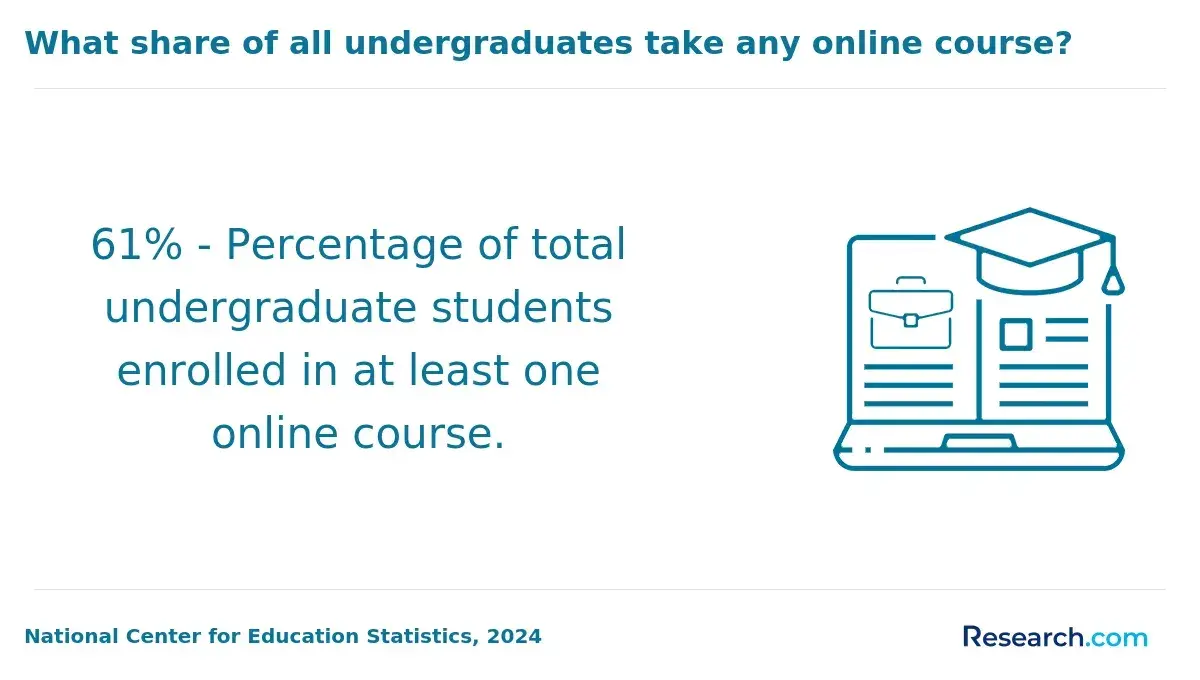
Professionals seeking to pivot or ascend in marketing careers often confront a difficult scheduling bottleneck: balancing rigorous work commitments with the need for specialized advertising coursework that genuinely enhances employability. According to the National Center for Education Statistics, over 40% of undergraduate enrollment in online programs stems from working adults prioritizing flexibility, signaling a decisive shift away from traditional classroom constraints.
This trend matters because it directly influences how programs must integrate practical advertising skills with adaptable formats without diluting academic rigor or market relevance. This article evaluates online marketing degrees with advertising coursework to help students navigate program structures, career alignment, and timing for maximum advantage.
Key Things You Should Know
- Advertising-focused online marketing degrees report 23% lower median starting salaries compared to digital-marketing-only programs according to 2024 Bureau of Labor Statistics data, highlighting a tradeoff between specialized skills and entry-level earning potential.
- Employer surveys from the 2024 American Marketing Association reveal 67% preference for candidates with integrated advertising coursework due to enhanced creative strategy skills, emphasizing workforce demand for hybrid skill sets.
- Online programs with advertising content average 18 months and $32,000 total cost per NCES data, presenting accelerated career pivot opportunities but requiring upfront investment that may disadvantage working professionals lacking employer tuition support.
What is an online marketing degree with advertising coursework, and who is it best for?
An online marketing degree with advertising specialization offers a blend of analytical and creative skills necessary for roles such as digital marketing specialists, brand managers, or advertising coordinators, especially within sectors requiring integrated marketing communications like retail and technology. However, its value depends on a student's ability to translate academic knowledge into measurable campaign results and adapt to evolving media landscapes.
Unlike traditional formats, many of the best online marketing programs for advertising careers emphasize asynchronous learning and real-time digital tools, enabling mid-career professionals to upskill without disrupting employment. The National Center for Education Statistics notes a significant 38% average tuition savings for fully online bachelor's in marketing compared to hybrid or in-person options, increasing accessibility for working adults.
Success in this pathway hinges less on credentials alone and more on securing internships and building a portfolio that demonstrates proficiency in data-driven content optimization. For example, a student targeting tech advertising must supplement coursework with tangible projects reflecting campaign impact and platform agility. Employers prioritize adaptable skill sets validated by practical experience over theoretical knowledge.
Students should also consider that the online marketing degree serves best those integrating coursework with continuous professional networking and self-directed learning strategies to navigate the competitive job market effectively.
How do online marketing degrees with advertising classes compare to traditional on-campus programs?
Outcomes from online marketing degrees with advertising classes increasingly align with those of traditional on-campus programs when analyzed through return on investment, curriculum relevance, and employability metrics. CSU Global's data shows a $4.90 average return in increased earnings per dollar spent on its online bachelor's in marketing, demonstrating that online graduates can realize salary gains comparable to brick-and-mortar counterparts.
This is significant given the ongoing debate about online marketing degrees versus traditional programs. Employers focus on demonstrable skills rather than course delivery mode, emphasizing up-to-date digital advertising capabilities, strategic campaign management, and tangible hands-on experience. For example, a digital retail professional pursuing an online marketing degree can directly apply skills learned to optimize ad spend in real time, bridging study and work effectively.
Yet, online and on-campus advertising courses differ in experiential learning: campus programs offer spontaneous networking and face-to-face mentorship that can influence access to agency roles where personal connections matter. The tradeoffs in choosing online marketing degrees include navigating self-discipline demands and potential limitations in informal networking.
Candidates seeking client-facing or collaborative creative roles might find hybrid models preferable. Decision-makers should also consider industry expectations to align education with long-term career goals. Students balancing time constraints may explore options like a accelerated business degree online to complement marketing skill sets, enhancing cross-functional versatility in competitive job markets.
Are online marketing degrees with advertising coursework respected by employers and properly accredited?
Employers prioritize candidates holding online marketing degrees with advertising accreditation because such credentials ensure the curriculum meets industry-accepted standards. Lack of accreditation often casts doubt on the relevance and rigor of coursework, limiting a graduate's hiring prospects, especially in competitive roles like marketing and advertising management.
For example, a candidate applying for a marketing manager position at a retail chain gains distinct advantage if their degree reflects recognized accreditation and includes validated skills such as campaign analytics and media planning. Employer recognition of online marketing and advertising programs depends not only on accreditation but also on the program's alignment with current market demands.
Key competencies include digital marketing tactics, consumer behavior analysis, and promotion strategy that translate directly into operational value. Given that advertising and marketing managers report median salaries exceeding $130,000 according to the U.S. Bureau of Labor Statistics, employers expect graduates to contribute immediately in strategic campaign roles rather than only theoretical concepts.
Practical experience within online programs is critical. Real-world projects or internships help offset the absence of in-person networking opportunities and are often decisive in employer evaluation. Candidates must confirm their degree includes these experiential components; otherwise, they risk competing against peers from traditional or hybrid programs with hands-on campaign management experience.
Students exploring advanced degrees might also consider an MBA in healthcare management as a parallel pathway with distinct industry focus but similar accreditation concerns.
What advertising-focused courses and specializations can you expect in an online marketing degree?
Advertising coursework within an online marketing degree primarily develops proficiency in digital advertising tactics, consumer analytics, and multi-platform content strategy, emphasizing execution over theory. Students acquire targeted campaign skills, including programmatic advertising and real-time bidding, relevant for operational roles needing swift adaptation to platform nuances like social media ad tools and performance indicators such as CTR and ROI-a key consideration since metrics differ notably between sectors like retail and B2B technology.
Specializations such as mobile marketing or advertising ethics equip students to address legal and reputational challenges in evolving digital landscapes. A practical focus on integrated paid, owned, and earned media management, budget oversight, copywriting, and A/B testing prepares graduates for entry-level roles that feed into more strategic management tracks.
Data from UNC Greensboro and December 2024 BLS reflect significant income growth from social media specialists earning $54,000-$56,000 to marketing managers averaging $157,480 annually, highlighting the value of advanced skills and leadership readiness embedded in advertising specializations in online marketing programs.
Students must balance foundational knowledge with hands-on experience, often through projects or internships, since employers prioritize familiarity with industry platforms like Google Ads and Facebook Business Manager for competitive advantage. Those assessing educational pathways should also consider programs such as an accelerated project management degree to complement marketing expertise with operational leadership capabilities, further supporting career mobility and managerial roles.
What are the admission requirements for online marketing degrees that emphasize advertising?
Admission requirements for online marketing degrees with an advertising focus tend to prioritize established academic readiness, yet they reveal meaningful flexibility reflecting workforce realities. Most programs mandate a high school diploma or equivalent and request standardized test scores such as the SAT or ACT, though test-optional policies now reduce barriers for some candidates. A minimum GPA between 2.5 and 3.0 on a 4.0 scale typically sets a competence baseline, but practical marketing experience often weighs heavily in admissions decisions.
Applicants presenting internships, work portfolios, or industry-related accomplishments may offset lower academic metrics, highlighting the value employers place on applied skills. Prerequisite coursework in English composition, statistics, or introductory business helps ensure foundational subject mastery essential for advanced marketing concepts.
For students pursuing the cheapest business administration degree online, admissions pathways increasingly recognize relevant certifications and professional experience in lieu of traditional credentials. This approach aligns with digital advertising's emphasis on platform fluency and real-time market adaptability, qualities that frequently supersede formal test scores in hiring.
Cost considerations also affect decision-making: according to NCES data compiled by BestColleges, online bachelor's programs average tuition 38% below campus or hybrid options ($10,473 vs. $16,941 annually). This tuition differential critically shapes return on investment, particularly for students weighing upfront academic entry hurdles against ongoing professional development costs.
How long do online marketing degrees with advertising coursework take and how are they structured?
Completing an online marketing degree with an advertising focus typically demands two to four years, but this timeframe masks important tradeoffs. Associate degrees, usually two years, cover foundational topics like consumer behavior and digital ads, sufficient for entry roles but limited in upward mobility. Bachelor's degrees, extending to four years, combine core marketing principles with data analytics and advertising strategy, addressing employer expectations for brand management and market research competence. Accelerated tracks or transferring credits can reduce duration but may intensify workload.
Course progression mirrors practical skill-building: early terms cover business fundamentals, while later ones emphasize campaign planning, media buying, copywriting, and digital content, culminating in advanced training on marketing analytics and data-driven decision-making. This layered approach equips graduates to navigate a market that values both creative and quantitative capabilities.
Working professionals often face a three-to-five-year commitment through part-time or asynchronous programs, balancing work and study but delaying access to roles that require a Bachelor's as a baseline for advancement. The U.S. Bureau of Labor Statistics reports that market research analysts, a common destination for graduates with advertising and analytics skills, earn a median annual wage of $65,810-above average, underscoring demand for data proficiency combined with marketing insight.
- Associate degrees offer quicker entry but less competitive salary potential.
- Bachelor's degrees require longer commitment but access higher-level roles.
- Part-time study suits working adults but may slow career progression.
How much do online marketing degrees with advertising classes cost, and what financial aid is available?
Cost variations in online marketing degrees often reflect institutional prestige, residency, and program format, with total tuition ranging from about $10,000 at lower-cost programs to over $50,000 at prestigious universities. Public institutions typically charge $300 to $600 per credit hour for in-state students, while private or out-of-state students face costs exceeding $1,000 per credit.
Certificate and associate programs present more affordable options ($5,000-$20,000), but their limited scope may restrict long-term earnings potential compared to bachelor's degrees. Financial aid, including federal Pell Grants (up to $7,395 annually), federal student loans, merit scholarships, and employer tuition assistance, can mitigate costs. Veteran students benefit from GI Bill support. Nevertheless, the interplay between debt and future earnings must guide choices, especially given stark disparities in lifetime return on investment (ROI).
For instance, a Penn State marketing graduate's median salary at age 45 supports an $815,490 ROI, whereas West Texas A&M's comparable figure is only $55,297. Working professionals should weigh flexible payment options and employer reimbursement against actual post-graduation salary growth within specific market roles. Program selection significantly impacts financial outcomes and career trajectory beyond upfront costs.
What careers can you pursue with an online marketing degree focused on advertising?
Advertising-focused marketing degrees prepare graduates for roles that blend creative messaging with data-driven strategy, such as brand management, media planning, and programmatic advertising. Employers expect a dual skill set: creative insight paired with analytical rigor, especially in digital campaign execution and consumer targeting. For instance, managing seasonal retail ad campaigns often involves optimizing budgets based on detailed conversion metrics segmented by consumer behavior-a practical application seldom captured fully by coursework alone.
Work environments vary considerably. Graduates working in-house may concentrate on singular brand campaigns, while agency roles require juggling multiple client portfolios, managing cross-channel media buys, and adapting swiftly to evolving tools and platforms. This demands ongoing professional development beyond the degree itself.
Tuition costs for online marketing programs average around $10,476 per year, slightly below the broader online education average, positioning these degrees as cost-conscious choices for those seeking entry into business settings that integrate creative and analytical responsibilities.
Advancement often requires supplemental experience in digital technologies and client relationship management, especially in sectors like technology, healthcare, or consumer goods, where campaign scale and target market complexity differ.
- Graduates should focus on gaining practical expertise tailored to industry demands to improve employability.
- Early roles frequently emphasize technical execution; senior roles demand strategic leadership capabilities.
- Ongoing skill development is essential to keep pace with rapidly changing advertising technologies.
What salary ranges and job outlook can graduates of advertising-focused marketing programs expect?
Advertising-focused marketing degrees yield starting salaries typically between $45,000 and $65,000, but these figures mask important nuances in employer expectations and geographic variation. Mid-career earnings range widely, from $70,000 to $110,000, influenced largely by specialization and location. Positions demanding skills in digital analytics or creative strategy often command above-average pay, while traditional roles such as advertising coordinators start in the mid-40,000s.
Graduates concentrated in hubs like East Lansing, MI; Austin, TX; and Eugene, OR benefit from dense employer networks combining advertising agencies and tech firms. These ecosystems prioritize candidates with hands-on expertise in data-driven advertising tools and integrated campaign management. Without proficiency in these areas, graduates may encounter limited mobility and slower income growth, despite holding relevant degrees.
Practical challenges include securing internships to build measurable portfolios and adapting to programmatic advertising's fast-paced evolution. For example, an individual targeting a tech startup role in Austin should expect a salary premium of around 15% over general marketing peers if equipped with digital advertising certifications. Conversely, lack of these skills often results in plateaued earnings and constrained career paths.
How can you choose a reputable online marketing program with strong advertising training?
Selecting an online marketing program requires prioritizing curricula that align with concrete workforce skills and income trajectories, not just broad educational promises. Programs focused on digital advertising strategies, data analytics, consumer behavior, and campaign management better position students for roles valued by employers, such as marketing managers and digital designers.
For instance, graduates trained mainly in entry-level digital tasks often face slower salary growth compared to those prepared for managerial responsibilities, where the median annual earnings can reach $138,730 versus $80,730 for foundational web design roles, according to the Bureau of Labor Statistics.
Beyond content, the tangible benefits of a program hinge on faculty expertise grounded in industry experience and exposure to credible research. Real-world training through live client projects or internships strengthens practical competencies employers prioritize. Flexible pacing and robust technology platforms enable working professionals to pivot without sacrificing job performance.
Key employer criteria-such as accredited programs with ties to recognized industry bodies and transparent outcome reports detailing graduate salaries and employment rates-should inform your decision. Evaluating the cost-to-benefit ratio demands scrutiny of tuition against these verifiable outcomes and the availability of career support services, including job placement and networking within marketing circles.
- Focus on programs that develop managerial skills to enhance long-term salary potential.
- Seek evidence of practical, applied learning opportunities integrated into coursework.
- Verify program accreditation and institutional connections to industry.
- Consider flexibility and career services as critical factors for working adults.
Other Things You Should Know About Marketing
Advertising courses often demand creative output, group collaboration, and frequent deliverables, which can be challenging alongside full-time employment. Workload intensity varies by program but expect an uneven pace, with spikes during campaign planning and media buying assignments. Working professionals should evaluate programs with flexible deadlines or asynchronous formats to manage workload without sacrificing quality of learning or professional responsibilities.
Yes, prioritizing programs that combine advertising coursework with training in digital marketing platforms and analytics software aligns better with employer expectations today. Purely creative advertising training without analytical skills limits your competitiveness in an environment where data-driven decision-making shapes campaign success. Programs that balance creative strategy with measurable performance metrics prepare students for broader roles and faster career progression.
It should come from a regionally accredited institution, and the business school or marketing program should preferably hold AACSB accreditation. Accreditation confirms the degree meets recognized academic standards and is the main requirement employers and graduate schools use when reviewing online marketing programs.
References
- 5 Ways to Build a Great Career with a Digital Marketing Degree - Bethany College https://www.bethanywv.edu/5-ways-to-build-a-great-career-with-a-digital-marketing-degree/
- Online Bachelor’s in Marketing & Digital Marketing Programs - Marketing Majors https://www.mastersincommunications.com/related-degrees/bachelors-in-marketing
- Best Marketing Courses to Level Up Your Career https://cxl.com/blog/best-marketing-courses/
- What's the difference between our marketing and digital marketing courses? https://www.bcu.ac.uk/blog/marketing/difference-between-digital-marketing-and-general-marketing-courses
- 2025 Most Affordable Online Marketing Degrees https://www.onlineu.com/most-affordable-colleges/marketing-degrees
- Digital Marketing and Advertising, BA Hons https://www.gre.ac.uk/undergraduate-courses/business-school/digital-marketing-and-advertising-ba-hons
- Online Degree Program Marketing | Vital Design https://vitaldesign.com/marketing-for-online-degree-programs/
- CourseCareers https://coursecareers.com/blog-posts/how-to-choose-the-best-digital-marketing-course
- Careers in Digital Marketing https://www.unitemps.com/career-advice/careers-in-digital-marketing/
- What Careers Can I Pursue with an Advertising Qualification? | learndirect https://www.learndirect.com/blog/what-careers-can-i-purse-with-an-advertising-qualification