2027 Online Kinesiology Degrees With Strong Fitness Assessment Training

Co-Founder and Chief Data Scientist
Clinicians, fitness coaches, and educators aiming to enhance client outcomes often confront the challenge of integrating advanced fitness assessment techniques without interrupting their professional activities. The surge in demand for accessible, rigorous training options responds to this obstacle but varies widely in quality and applicability.
Recent data from the National Center for Education Statistics reveals a 35% increase in enrollment among adult students pursuing online health sciences degrees since 2023, illustrating a broader shift toward flexible, competency-focused education models tailored for working professionals. This trend reflects evolving employer preferences for candidates able to demonstrate practical skills alongside academic credentials.
This article examines online kinesiology degree programs with strong fitness assessment training, helping prospective students identify options that align with both career advancement goals and real-world scheduling constraints.
Key Things You Should Know
- Programs with strong fitness assessment training extend average completion time by 20%, raising direct costs 15%, a critical tradeoff for working adults balancing career acceleration versus credential depth, per National Center for Education Statistics data.
- Employers increasingly seek graduates with hands-on fitness assessment competencies, with 67% of hiring managers in health sciences prioritizing applied skills over theoretical coursework, according to a 2024 AACN workforce survey.
- Online kinesiology degrees offering integrated fitness assessment practice reduce employer onboarding time by 30%, directly impacting employability and long-term wage growth, as reported by the U.S. Bureau of Labor Statistics in Q1 2024.
What is an online kinesiology degree with a focus on fitness assessment training?
Online kinesiology degree programs with fitness assessment specialization require balancing scientific rigor with practical skill acquisition, a key factor in employer hiring. Graduates need proficiency in biomechanics, physiology, and motor learning, combined with applied tools like body composition and cardiovascular fitness testing. These skills directly influence employability in sectors such as rehabilitation, corporate wellness, and sports performance labs, where precise fitness diagnostics drive measurable health outcomes.
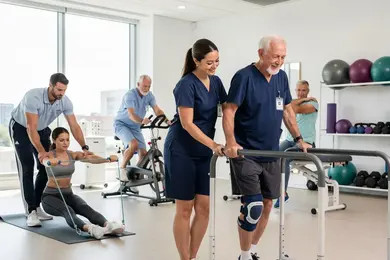
Fitness assessment training in accredited online kinesiology courses often involves a hybrid model, mixing remote theoretical instruction with essential in-person clinical practicums. This structure can present logistical challenges, including the need to secure local placements for supervised practice hours and ensuring that content aligns with industry-recognized certification standards.
Students must weigh program support availability for practicum placement, a factor that significantly impacts timely completion.
The U.S. labor market outlook for exercise physiologists and fitness trainers is robust, with combined roles expected to grow 9-14% through 2034, reflecting increasing demand for professionals who translate kinesiology knowledge into personalized, effective health interventions. Those choosing this path should consider how well programs integrate fitness assessment modules, as they correlate strongly with workforce readiness in healthcare technology and community health initiatives.
For students exploring related fields, a nutritional science degree online can complement kinesiology expertise, broadening practical application in interdisciplinary health settings.
How do online kinesiology programs teach and assess hands-on fitness testing skills?
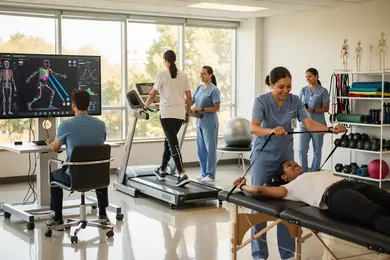
Programs offering online kinesiology with practical fitness assessment training must reconcile the inherent tension between virtual instruction and the tactile demands of fitness testing. These hybrid approaches combine virtual simulations and remote assessments with mandatory in-person labs to validate hands-on skills, such as muscular strength evaluation, aerobic capacity measurement, and flexibility testing.
Without these direct assessments, students risk graduating without the proficiency employers expect, particularly for roles demanding precise data collection and client interaction.
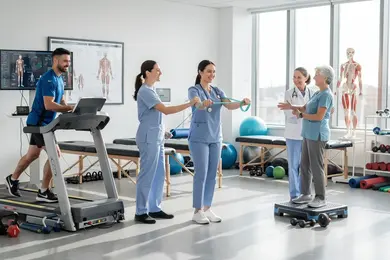
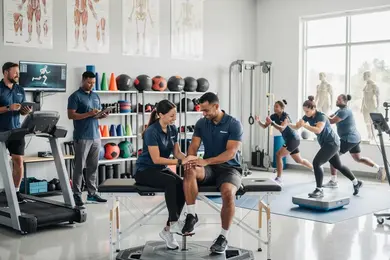
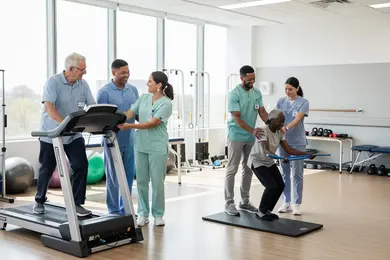
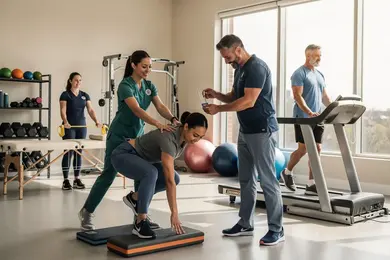
Assessment typically unfolds in two phases: students submit videos demonstrating test administration on peers or volunteers, followed by supervised practicums held regionally or at partnered exercise facilities. This structure ensures competency in standardized procedures like VO2 max testing or gait analysis, critical for clinical, rehabilitation, and fitness industry careers.
The practical reality is that employers prioritize graduates who have demonstrated accuracy and real-world application, not just theoretical knowledge.
Given the 13% employment growth projection for exercise physiologists from 2024 to 2034, programs lacking rigorous practical training limit students' workforce readiness and long-term career viability. Prospective students evaluating virtual kinesiology courses teaching hands-on fitness testing techniques must weigh these tradeoffs carefully.
Students interested in expanding their credentials might consider accelerated healthcare programs as a complementary pathway to diversify skills and improve adaptability in healthcare settings.
What types of online kinesiology degrees are available for careers in fitness assessment?
Choosing an online kinesiology degree program with a fitness assessment focus demands scrutiny beyond surface-level curriculum descriptions. Graduates must navigate employer expectations that increasingly prioritize advanced competencies in biomechanics, physiology, and data analytics for fitness evaluations.
Programs tend to offer Bachelor of Science or Bachelor of Arts degrees, where the BS pathway integrates stronger math and science frameworks, critical for interpreting complex assessment data widely used in clinical and athletic environments. Many accredited online kinesiology degrees for fitness career pathways combine virtual labs and case studies with local internships to bridge the gap between theoretical knowledge and practical proficiency.
This hands-on requirement is essential for mastering tests like VO2 max or muscular strength assessments, which employers consider standard for roles in rehabilitation centers and corporate wellness.
Post-graduation outcomes further inform decision-making. For instance, Oregon State University's online Bachelor of Science in Kinesiology reports a median salary near $61,000 three years after graduation, reflecting stable market valuation of skills acquired. Students balancing work should seek programs flexible enough to accommodate part-time study without stalling income.
Critical differentiators include coursework aligned with certification exams from organizations like ACSM and NASM and inclusion of client communication training, which broaden job prospects and salary trajectories. Skipping such components risks narrowing employment to entry-level fitness roles without analytics or insurance sector mobility.
Exploring related educational options, some professionals pivot towards a masters degree in healthcare management to capitalize on administrative and operational career pathways connected to kinesiology expertise.
How do online kinesiology degrees compare with campus programs for lab and practicum work?
Online kinesiology degrees cannot fully replicate the tactile, lab-intensive experiences characteristic of campus-based programs, which affects hands-on skill acquisition critical for roles involving physical fitness assessments or biomechanical evaluations.
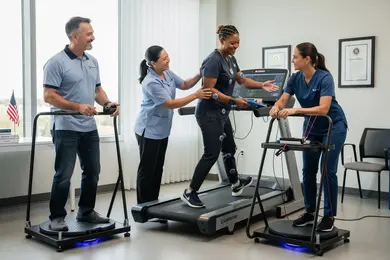
Fitness assessment training in online versus campus kinesiology programs often hinges on whether online students secure accredited practicum placements near their location or engage in hybrid lab sessions. Without these, virtual simulations fall short of delivering needed physical palpation or movement analysis skills, which employers in clinical and athletic sectors typically require.
For example, a student pursuing a personal trainer certification through an online program must verify supervised practical hours at a local gym or sports facility to satisfy employer and accreditation standards. This need for local internship arrangements introduces logistical and financial tradeoffs absent in traditional programs.
Online kinesiology degrees like Concordia University Chicago's BS program, charging $440 per credit hour, offer cost savings but also demand budgeting for practicum placement or travel expenses. Despite these hurdles, median salaries above $60,000 in related fields indicate a reasonable return on investment when experiential components are effectively secured.
Prospective students should weigh:
- Availability of accredited practicum placements near the student's location
- Inclusion of hybrid or intensive on-campus residencies
- Employer recognition of online credentials supported by verified hands-on training
Students evaluating online pathways must strategically plan practicum logistics to bridge the gap between virtual coursework and real-world competencies, ensuring employability aligned with field demands. For those researching cost-effective nursing education options, a relevant comparison can be found through the cheapest online RN to BSN programs.
What courses and competencies are included in kinesiology programs emphasizing fitness assessment?
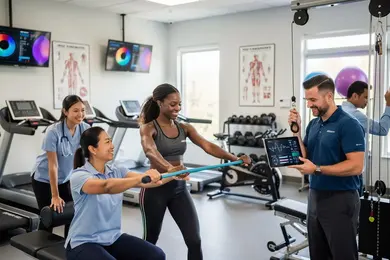
Fitness assessment coursework in kinesiology extends beyond theory, demanding proficiency in applying and interpreting advanced testing tools like VO2 max, body composition, and functional movement screenings.
These competencies are critical for tailoring exercise prescriptions to diverse populations, including athletes and those with chronic health conditions. Employers in roles such as corporate wellness prioritize professionals who can adapt assessments to varied client capabilities while maintaining data integrity.
Training in device calibration, client rapport for accurate data capture, and navigating ethical challenges such as confidentiality and informed consent is essential. Challenges arise when results are complicated by mobility issues or atypical health statuses, requiring nuanced clinical judgment rather than rote application of protocols.
Programs often combine nutrition and behavioral psychology with practical components like case studies and internships, placing students in environments such as rehab centers or community health projects. This interdisciplinary approach supports the understanding of factors affecting both performance and adherence, a vital consideration for lasting client engagement.
California Baptist University's online MS in Kinesiology offers completion in 12 months full-time, aligning with workforce needs for expedited credentialing. While this accelerated timeline suits working adults seeking swift skill acquisition, candidates must weigh intensity against depth of experiential learning.
How can students verify accreditation and program quality for online kinesiology degrees?
Accreditation verification for online kinesiology programs requires more than confirming institutional recognition by federal or authoritative bodies. The practical value lies in determining if specialized endorsements align with employer-driven certification standards from ACSM, NSCA, or NASM. This distinction impacts whether graduates are adequately prepared for assessment-intensive roles or if additional certification efforts post-degree will be necessary.
For instance, employers in clinical or fitness assessment sectors often expect applicants to demonstrate documented proficiency aligned with these certifications, making curriculum-to-certification mapping a critical factor. Programs like St. Mary's online exercise science completion that integrate preparation for multiple certifications reduce the friction of credential acquisition, which directly affects workforce readiness and employability.
Students should incorporate outcomes data, specifically, graduate pass rates on professional certifications and documented employment metrics, into their evaluation to assess program effectiveness beyond promotional claims. Such data, ideally from unbiased institutional or third-party sources like the National Center for Education Statistics, helps calibrate realistic expectations about credentialing success and market positioning.
Direct dialogue with program advisors about hands-on opportunities like labs, internships, and technology support is essential. These experiential components influence skill mastery in fitness assessment tools and remote learning efficacy, which have tangible consequences for applied kinesiology careers.
What are the typical admission requirements and time to completion for online kinesiology programs?
Admission into online kinesiology bachelor's programs typically requires a high school diploma or equivalent, submission of SAT or ACT scores, and completion of foundational courses in biology, chemistry, and mathematics. Competitive programs often enforce a minimum GPA near 2.5 to 3.0 and require letters of recommendation.
While prior healthcare or fitness experience is not mandatory, it can significantly strengthen an application-especially for programs focused on practical skill application. Transfer students face varying residency or credit residency rules and must provide official transcripts.
Program duration varies from three to four years depending on enrollment status and transfer credits. Full-time students usually finish in four years, but flexible online options enable working professionals to tailor pacing.
For example, a fitness specialist aiming to transition into advanced assessment roles might accelerate their degree by taking heavier course loads and summer classes, balancing employment with educational demands. This flexibility often means a tradeoff between faster completion, cost, and academic rigor.
Tuition per credit hour ranges between approximately $415 and $541, influenced by whether the program offers specialized fitness assessment content, access to labs, or specific software vital for employability in applied kinesiology roles. These cost differentials must be weighed against program length and curriculum depth when planning a pathway aligned with workforce expectations in the kinesiology field.
What careers can you pursue with an online kinesiology degree focused on fitness assessment?
Online kinesiology degrees centered on fitness assessment train graduates for specific, outcome-driven roles such as exercise physiologists and rehabilitation assistants. Notably, exercise physiologists working in clinical environments like cardiac rehabilitation command median salaries near $50,280 with a projected 13% job growth through 2030, reflecting solid sector expansion.
These roles demand proficiency in biometric technologies, VO2 max testing, and body composition analysis, skills that remote programs must simulate effectively, though many struggle to replicate hands-on clinical contexts fully.
Outside clinical settings, kinesiology graduates frequently pursue corporate wellness consulting or personal training with a strong emphasis on evidence-based assessment. However, embedding oneself in these markets requires more than a degree: practical certification, validated competency in fitness evaluations, and sometimes supervised experience are essential to satisfy employer expectations and justify program investments.
Effective career strategies involve pairing fitness assessment training with recognized certifications that demonstrate tested skills across diverse populations. Graduates equipped solely with theoretical knowledge may face hiring biases favoring candidates with proven applied capabilities.
Employers in hospitals, rehab centers, and corporate fitness prioritize candidates who continuously adapt skills aligned with emerging research in exercise physiology to sustain relevance and wage growth.
What salary ranges and job outlook can graduates expect in kinesiology and fitness testing roles?
Graduates with a kinesiology degree focused on fitness assessment face a salary range typically between $50,000 and $70,000 annually, with median earnings around $61,000 for online BS programs like those offered by Oregon State University. This aligns competitively with traditional campus-based health science degrees but varies notably by region and role.
A practical example: an entry-level graduate at a metropolitan hospital rehabilitation center might start near $55,000. However, earning certifications from organizations such as ACSM or NASM paired with relevant experience can accelerate wage growth. In contrast, private sector roles, personal training or applied sports performance, often begin with lower base salaries but supplement income through commissions or bonuses.
The U.S. Bureau of Labor Statistics projects a 10% employment growth for exercise physiologist and related roles over the next decade, faster than many other fields. This demand reflects a preference for professionals adept in data-driven health evaluations, individualized exercise programming, and practical fitness assessment skills, particularly in clinical and corporate wellness settings.
For professionals switching careers, recognizing that an online kinesiology degree alone may not unlock leadership roles is essential; complementing academic credentials with hands-on skills and certifications is a necessary strategic tradeoff.
Which professional certifications align with kinesiology degrees centered on fitness assessment training?
Holding Certified Strength and Conditioning Specialist (CSCS) or Certified Personal Trainer (CPT) credentials alongside a kinesiology degree focused on fitness assessment is often a practical necessity rather than a luxury.
Employers, especially in rehabilitative fitness or corporate wellness settings, prioritize professionals who combine scientific rigor with credential-backed proficiency in biomechanics, exercise physiology, and client evaluation. The CSCS, administered by the National Strength and Conditioning Association, emphasizes athletic performance testing, while CPT certifications, such as those from the National Academy of Sports Medicine, concentrate on hands-on fitness plan development.
This dual qualification addresses employer demands for valid movement screenings that can prevent injury and ensure effective programming. According to U.S. Bureau of Labor Statistics data from 2024, personal trainers specializing in assessment average around $60,000 annually, with job growth forecasted at 13%, reflecting sustained market need.
Advanced certifications like the Functional Movement Screen (FMS) or the American College of Sports Medicine's Certified Exercise Physiologist offer specialized movement analysis and health risk stratification.
However, these require additional time and financial investment, necessitating a careful cost-benefit analysis. Employers in clinical or rehabilitation contexts increasingly seek candidates who stack multiple certifications on their kinesiology background to meet complex screening and intervention demands.
Other Things You Should Know About Kinesiology
Employers in fitness and health sectors prioritize practical skills and certifications alongside degrees. An online kinesiology degree with substantive hands-on components and fitness assessment training can be as credible as a traditional degree if it integrates supervised practicums or fieldwork. Students should verify how the program embeds real-world experience since purely theoretical programs may limit job prospects in roles demanding physical skill demonstration and client interaction.
Online kinesiology degrees demand significant self-discipline, combining theoretical coursework with labs and fitness practicals often scheduled on nights or weekends. Working professionals must allocate time for study, skill practice, and sometimes in-person sessions, which complicates balancing work and family. Programs with flexible pacing and asynchronous lectures reduce conflicts but may extend completion times, requiring candidates to prioritize long-term planning over immediate acceleration.
Courses that cover advanced assessment tools and methodologies, such as metabolic testing or biomechanical analysis, provide graduates with a competitive edge for specialized fitness or rehabilitation roles. Without these advanced skills, graduates may remain limited to entry-level positions or require additional certification post-graduation. Prioritizing programs with a comprehensive fitness assessment curriculum directly impacts employability in clinical or performance testing environments.
References
- Health Education and Public Health https://healtheducationandpublichealth.com/impact-of-the-fitness-challenge-on-the-kinesiology-student-experience
- Are Online Degrees Accredited? How to Identify Quality Distance Learning Programs https://www.umassglobal.edu/blog-news/online-degrees-accredited-identify-quality-distance-learning-programs
- Bachelor's in Kinesiology Program Online | Montreat College https://www.montreat.edu/online/kinesiology/
- Online Kinesiology Degree Programs: Review Top Schools https://www.edumed.org/online-schools/kinesiology-degrees/
- What Can I Do in My Career With a Master’s in Kinesiology? https://www.pointloma.edu/resources/health-sciences/what-can-i-do-my-career-masters-kinesiology
- The Best Education Pathway for Success in the Fitness Industry - IDEA Health & Fitness Association https://www.ideafit.com/the-best-education-for-success-in-the-fitness-industry/
- Fitness Certifications https://www.ifpa-fitness.com/fitness-certifications
- How to Check if an Online Degree Is Real | Find Trusted Courses https://dsuonline.com/resources/blogs/how-to-check-if-an-online-degree-is-real/