2027 Online Kinesiology Degrees With Strong Exercise Physiology Training

Co-Founder and Chief Data Scientist
Professionals seeking advanced training in kinesiology often confront limited program flexibility that conflicts with full-time job commitments and clinical internship requirements. As workforce data from the National Center for Education Statistics reveals, over 40% of online degree enrollees in health-related fields are adult learners needing adaptable schedules, signaling a demand for programs combining rigorous exercise physiology training with remote accessibility.
Without such targeted options, students risk prolonged credential timelines or compromised skill acquisition, impeding timely career advancement in a competitive labor market that increasingly values hands-on expertise. This article evaluates online kinesiology degrees emphasizing exercise physiology to guide strategic program selection aligned with career mobility and practical readiness.
Key Things You Should Know
- Programs integrating exercise physiology tend to extend completion time by 20-25% due to lab and practicum requirements, impacting tuition cost and workforce entry timing, per National Center for Education Statistics 2024 data.
- Employers in sports medicine and rehabilitation increasingly demand graduates with verified exercise physiology competencies, raising credentialing barriers and narrowing hiring pools, according to the American College of Sports Medicine 2024 workforce report.
- The tradeoff between broad kinesiology curricula and specialized exercise physiology content affects graduate adaptability, with broad graduates seeing 15% higher job mobility but lower median starting salaries, per 2024 Bureau of Labor Statistics.
What is an online kinesiology degree with a strong exercise physiology focus?
Choosing an online kinesiology degree specializing in exercise physiology requires careful consideration of practical constraints and workforce expectations. Programs with rigorous exercise physiology training emphasize applied skills such as clinical assessment, rehabilitation, and performance optimization, preparing graduates for specific roles in healthcare or sports medicine.
Unlike more general kinesiology pathways, these distance learning kinesiology programs with exercise physiology training often mandate virtual labs and supervised clinical practicum placements, which demands local partnerships or self-arranged internships. This makes balancing work and study challenging but crucial for meeting industry standards.
Employment prospects reflect this focused skill set: the U.S. Bureau of Labor Statistics projects a 10% growth in exercise physiologist jobs through 2032, driven by increased needs in chronic disease management and aging populations. Employers prioritize candidates who can interpret exercise data and develop individualized intervention plans, especially in hospital or cardiac rehab settings. Failure to secure appropriate clinical hours can delay certification and limit access to top-tier roles.
Prospective students should evaluate programs based on accreditation, clinical practicum availability, and curriculum rigor aligned with certification requirements. Those aiming for fitness or corporate wellness fields must verify coursework relevance to industry certifications. Additionally, candidates looking to pivot to advanced healthcare roles may compare options such as ASN nursing online programs that offer alternate pathways with distinct operational demands.
How do online kinesiology programs compare to campus programs for exercise physiology training?
Choosing between online kinesiology degree programs with exercise physiology focus and traditional campus programs demands careful consideration of practical skill acquisition. While online curricula match campus programs in theoretical rigor, the critical difference lies in hands-on experience.
Campus programs embed essential laboratory work, biomechanics assessments, and physiological testing within their structure, whereas online programs must strategically arrange local clinical placements, hybrid modules, or intensive residencies to provide equivalent practical exposure.
Employers increasingly value verified practical competencies alongside academic credentials. Graduates from online kinesiology programs who complete accredited internships demonstrate competitiveness in labor markets. For example, Oregon State University's online BS in kinesiology graduates report a median salary of $60,964, ranking in the top 25% nationally for online equivalents in 2026 according to OnlineU.
This data reflects the tangible payoff when online theoretical training is complemented by substantive clinical hours.
Students considering online pathways should actively secure internships locally and confirm their program's support for clinical placements, as lacking hands-on experience restricts opportunities in specialized fields like cardiac rehabilitation or sports performance coaching.
In workforce segments such as corporate wellness or fitness technology, strengths in research and data interpretation may offset limited in-person training. Nevertheless, positions requiring manual testing or lab proficiency mandate direct experiential learning.
Pragmatic decision-making hinges on one's ability to integrate practical skill development successfully within online learning, a crucial factor distinguishing effective online kinesiology degree programs with exercise physiology focus from less comprehensive options. For students exploring alternatives such as online ADN programs for non nurses, understanding these dynamics aids in aligning educational choices to career goals.
Which types of kinesiology degrees offer the best preparation in exercise physiology?
Exercise physiology-focused kinesiology degree programs yield more targeted skill sets than generic kinesiology degrees, especially for roles requiring hands-on physiological expertise. Graduates aiming to work in clinical settings such as cardiac rehabilitation must combine detailed human anatomy knowledge with applied exercise prescription, a combination typically embedded within these specialized tracks.
This distinction significantly affects employability, as healthcare and research employers prioritize candidates with measurable physiological competencies and internship experience involving tools like VO2 max and lactate threshold testing.
The best kinesiology degrees with exercise physiology training emphasize lab-intensive coursework and partnerships with clinics, even within online formats, to develop practical skills. Students should weigh the tradeoffs between tuition costs-ranging from about $11,760 to $24,780 annually-and the depth of exercise physiology training available, especially when internships and outcome transparency are limited.
Broader kinesiology degrees may suffice for wellness coaching or fitness management but often require supplemental certifications to meet employer expectations.
Those considering a strategic shift toward healthcare leadership might also evaluate programs related to healthcare management. For example, online master's healthcare management degrees provide complementary administrative expertise valuable in clinical environments where exercise physiologists operate. This combination enhances multidisciplinary competencies, crucial for advancing within evolving healthcare systems.
What exercise physiology courses and lab experiences are included in these online programs?
Online kinesiology programs with comprehensive exercise physiology labs balance theoretical coursework with essential hands-on experiences, a necessity given employer expectations for applied exercise prescription skills grounded in lab data. This hybrid design mitigates a key limitation of remote study: practical skill acquisition.
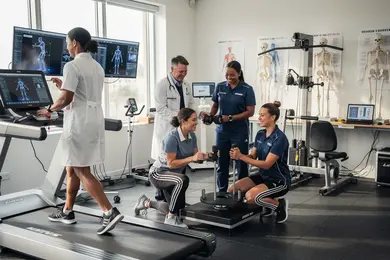
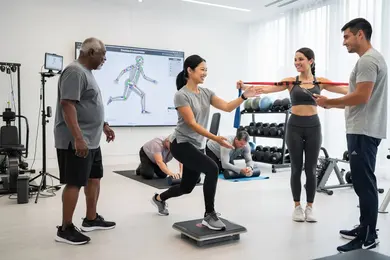
Students engage in laboratory modules through virtual simulations and partnerships with local clinics or fitness centers, completing physiological data collection, exercise testing, and fitness assessments. These exercises enable interpretation of acute and chronic exercise responses crucial for rehabilitation or athletic training roles.
This exercise physiology coursework and hands-on lab training in online kinesiology degrees routinely covers human anatomy, cardiovascular and respiratory physiology, and neuromuscular function. Practical labs sharpen competence in bioinformatics applications and cardiopulmonary exercise testing, reinforcing evidence-based decision-making in clinical or occupational settings.
However, the requirement for local clinical placements means students must navigate geographic and scheduling constraints to access formal agreements for in-person skills validation, influencing program flexibility and completion timelines.
Outcomes data from OnlineU indicate median starting salaries around $50,705 for bachelor's graduates in exercise science, paired with an 84% student recommendation rate. These figures reflect credible employability but also highlight that preparation quality hinges on the intensity and authenticity of lab experiences.
Those weighing alternative routes can consult resources like the Chamberlain vs Capella RN to BSN program comparison to understand program structures and practical tradeoffs in related health fields, valuable for parallel career decisions.
How can students verify accreditation and program quality for online kinesiology degrees?
Verification of accreditation is non-negotiable for online kinesiology degrees, as regional accreditation from recognized bodies like the Higher Learning Commission or Southern Association of Colleges and Schools significantly impacts credit transferability and financial aid eligibility.
However, beyond institutional accreditation, programmatic accreditation-such as from the Commission on Accreditation of Allied Health Education Programs-is critical for professional credibility in exercise physiology and related careers.
Program quality is determined not only by accreditation but by curriculum relevance and experiential learning opportunities. Programs aligned with standards from organizations like the National Strength and Conditioning Association tend to produce graduates better equipped for jobs in strength coaching or athletic training. Practical components-virtual labs, internships, or clinical hours-serve as differentiators in a labor market where hands-on competence is essential.
Graduation rates, job placement data, and employer feedback offer real-world indicators of program outcomes, with projected job growth in fitness and conditioning professions exceeding 45,000 nationwide through 2032. Candidates should weigh tuition costs against the availability of career services and rigor of online delivery methods, as employers increasingly emphasize graduates' applied skills and adaptability.
Due diligence requires direct verification with accrediting agencies and scrutiny of outcome data, balancing tangible tradeoffs between investment and workforce integration. These considerations influence the practical value of an online kinesiology degree in achieving professional goals.
What admission requirements and prerequisites do online kinesiology programs typically have?
Programs in online kinesiology often present hidden hurdles that extend beyond admissions criteria, directly impacting time, finances, and career outcomes. A bachelor's degree in kinesiology, exercise science, biology, or a related health field with a GPA around 2.75-3.0 is a common baseline.
However, students lacking prerequisite courses in anatomy, physiology, biomechanics, or statistics face additional semesters, added expenses, and delayed degree completion-potentially exceeding $20,000 in tuition alone. This can disproportionately affect career pivoters moving from non-science roles into exercise physiology.
Admission requirements typically include GRE scores, though some institutions waive this for professional experience or superior academic records. Employers prioritize candidates whose education demonstrates applied knowledge and rigorous prerequisites, raising the stakes for novices without documented industry exposure.
For working professionals, the tension between job responsibilities and program demands can lead to scheduling conflicts and unanticipated costs, especially if prerequisite deficiencies arise midcourse.
How long do these online kinesiology degrees take and what do they cost to complete?
An online kinesiology degree with a strong focus on exercise physiology generally requires three to four years of study, with accelerated options reducing this to about two and a half years if credits transfer and summer courses are taken.
Oregon State University's online BS in Kinesiology sets a practical tuition benchmark at $11,760 annually, summing to roughly $35,000-$47,000 total. This investment aligns with median graduate earnings around $60,964, suggesting a solid return compared to many other health-related bachelor's fields.
Prospective students must weigh several factors beyond tuition: budget for ancillary expenses such as textbooks, software, and lab kits, which add hundreds of dollars yearly. Clinical or practicum requirements often necessitate local site visits, impacting scheduling flexibility and potentially extending time to degree. Particularly for working professionals, asynchronous course delivery can mitigate conflicts but demands disciplined time management to avoid prolonging study length.
Employers in fitness, rehabilitation, and public health sectors prioritize functional skills alongside credentials. Internships or part-time roles held during the program substantially enhance employability and justify tuition outlay by providing experience that supports salary prospects seen in the OSU data. Students navigating these tradeoffs must balance time commitment, cost, and practical exposure to optimize long-term career outcomes.
What careers in exercise physiology, fitness, and allied health can these degrees support?
Online kinesiology degrees with a strong focus on exercise physiology equip students for roles that demand both scientific knowledge and applied client care, yet access to meaningful clinical experience remains a critical hurdle. Graduates commonly pursue positions such as clinical exercise physiologists, strength and conditioning coaches, and fitness managers, where expertise in physiology and biomechanics informs program design for rehabilitation, athletic performance, or community wellness.
However, these credentials alone often fall short of employer expectations without supplementary certifications or internships. Practical competence verified through recognized bodies like the American College of Sports Medicine or documented clinical hours is frequently required, especially in clinical environments.
For working adults and career changers, the transition to health promotion positions in hospitals or public health settings entails additional challenges, such as mastering data-driven program evaluation alongside kinesiology fundamentals.
Large-scale enrollment-illustrated by over 50,000 online kinesiology students at Arizona State University Online-reflects the accessibility of these programs for nontraditional learners balancing multiple responsibilities.
Yet, this scale also means graduates must distinguish themselves by combining academic credentials with hands-on experience. Prioritizing internships, clinical practice, or allied health certifications can improve employability amid a competitive landscape emphasizing applied skills.
What are the salary ranges and job outlook for graduates with exercise physiology training?
Salaries for exercise physiology graduates vary significantly by specialization and location, typically starting between $50,000 and $70,000 annually. Those with clinical or sports performance experience can earn upwards of $90,000. However, the pathway chosen heavily influences job stability and hiring competition.
Positions in rehabilitation within outpatient clinics or hospitals tend to offer more stable, healthcare-oriented work environments, often integrating exercise physiologists into established medical teams.
In contrast, careers focusing on sports performance require navigating a crowded market where additional credentials, such as the ACSM Certified Clinical Exercise Physiologist, and professional networking are critical for securing roles. Geographic mobility is also a factor, as higher salaries cluster in urban and affluent regions.
The U.S. Bureau of Labor Statistics projects a growth of 25,300 jobs for coaches and scouts from 2022 to 2032, indicating expanding demand in sports-related fields, but this growth is paired with practical hiring challenges. Employers emphasize practical experience, favoring candidates with hands-on internships or practicum work integrated into their education.
Key strategic considerations for prospective students include weighing credential requirements, recognizing sector-specific market competition, and assessing regional salary variances. Graduates should approach program selection based on how well it prepares them for these real-world workforce conditions rather than relying solely on academic credentials.
How can prospective students choose the right online kinesiology program for their goals?
Selecting an online kinesiology program requires discerning between curricula that emphasize exercise physiology and those prioritizing broader movement science-a distinction that impacts employability in clinical, rehabilitation, and academic settings. Clinical employers value accredited programs offering hands-on practicum opportunities, even if virtual, to ensure graduates can navigate real-world patient care environments effectively.
Conversely, research-focused roles demand curricula integrating current biomechanical and physiological assessment techniques validated by national bodies.
Course delivery format significantly affects skill acquisition and career compatibility. Asynchronous options provide flexibility for working adults but may lack interactive skill-building components found in synchronous labs or live sessions, which, however, require strict scheduling.
Affordability also plays a pivotal role; for example, Concordia University, St. Paul lowers undergraduate military tuition to $250 per credit-roughly 40% less than the $420 standard-offering a substantial financial advantage to veterans without sacrificing curriculum quality.
Prospective students must verify measurable outcomes such as job placement or certification exam pass rates (e.g., ACSM, NASM). Absence of clear data often signals weaker employer connections or inadequate applied training. State and sector licensure mandates should also guide program selection since not all online kinesiology degrees fulfill specialized roles' credential requirements.
- Assess partnerships with healthcare or sports organizations for internship pathways supporting employment pipelines.
- Ensure access to dedicated remote mentoring and technical support to improve completion rates and practical skill retention.
Aligning program features with specific career goals reduces the risk of educational investments misaligning with workforce demands in kinesiology careers.
Other Things You Should Know About Kinesiology
Recognition depends largely on the credibility of the institution and the program's accreditation status. Employers in clinical or sports environments often prioritize candidates with hands-on experience in exercise testing and rehabilitation labs, so online programs that integrate virtual simulations or partnerships for local practicals hold an advantage.
Without clear proof of applied practice, online graduates may face skepticism in settings where direct patient interaction or lab proficiency is essential.
Programs with strong exercise physiology components typically require significant time for labs, research projects, and case studies, which can be difficult to balance with full-time employment. Working professionals should prioritize programs offering flexible deadlines, asynchronous lectures, and access to local internships rather than those insisting on synchronous lab sessions. Overestimating one's available time can lead to delays in graduation or compromised learning outcomes.
Selecting a program with a focused exercise physiology curriculum is beneficial for students targeting careers in rehabilitation, cardiac care, or performance testing. General kinesiology degrees may offer broader knowledge but lack the specialized lab experiences and physiological assessment training employers expect for these roles.
Prioritize programs with clear exercise physiology content, including technical skills and applied physiology labs, for better employability in niche clinical or fitness sectors.
References
- Is Your Online Degree Legitimate? How to Verify Private University Approval https://matchtocollege.com/blog/verify-private-university-online-degree-approval
- Exercise Science | Columbia College https://www.columbiasc.edu/academics/undergraduate/exercise-science
- Bachelor's Degree in Kinesiology | UT San Antonio | Undergraduate Program in Kinesiology | Earn Your Degree (MS) in Kinesiology https://future.utsa.edu/programs/undergraduate/kinesiology/
- How Long to Get a Kinesiology Degree? | ValidGrad https://validgrad.com/blog/kinesiology-degree-duration/
- Explore Exercise Physiology: Your Path to Health Careers https://blog.daar.com.au/blog/explore-exercise-physiology-your-path-to-health-careers
- Online Kinesiology Degree Programs: Review Top Schools https://www.edumed.org/online-schools/kinesiology-degrees/
- Kinesiology Program Quality Indicators | Washburn University https://www.washburn.edu/academics/college-schools/arts-sciences/kinesiology/quality-indicators.html
- ESSA's career guide for Accredited Exercise Physiologists https://www.essa.org.au/Web/Web/Resources/Tools-and-templates/ESSA-AEP-Guide.aspx
- Best Online Kinesiology Degree Programs, Updated for 2026 https://www.kinesiologydegrees.org/programs/online
- Exercise Physiology Courses https://www.thefitnessgrp.co.uk/exercise-physiology-courses-which-course-is-right-for-you/