2027 Online Kinesiology Degrees With Pre-Athletic Training Preparation

Co-Founder and Chief Data Scientist
Professionals aiming to enter or advance in kinesiology often confront rigid scheduling conflicts and limited access to on-campus resources, stalling crucial pre-athletic training preparation. Recent data from the National Center for Education Statistics reveals a 37% increase in adult enrollment in online health science programs since 2022, reflecting a clear shift toward demand for flexible learning that accommodates working students.
This evolution addresses the growing need for practical credentials without sacrificing current employment or family responsibilities. Yet, navigating program quality, transfer policies, and clinical placement options remains complex. This article examines online kinesiology degrees with integrated pre-athletic training pathways, guiding readers to identify programs that balance flexibility, rigor, and workforce relevance for strategic career advancement.
Key Things You Should Know
- Graduates from online kinesiology degrees with pre-athletic training show a 12% lower immediate licensure pass rate due to limited hands-on practical exposure, influencing strategic skill gap mitigation for employers, per NCES 2024.
- Employers increasingly prioritize candidates with integrated clinical internships over purely online coursework, creating a workforce preference impacting hiring pipelines in collegiate athletic and rehabilitation sectors, according to SHRM's 2024 workforce report.
- Online degree pathways reduce tuition and relocation costs by up to 40%, but extended program durations averaging 30% longer than traditional routes affect opportunity costs and delay entry into competitive sports medicine roles, as outlined by the Bureau of Labor Statistics.
What is an online kinesiology degree with pre-athletic training preparation and who is it best for?
An online kinesiology degree program with pre-athletic training coursework must be evaluated primarily for how effectively it prepares students for certification and real-world athletic training roles. While these programs integrate foundational human movement science with targeted athletic training principles, the practical value hinges on access to local clinical experiences.
For example, students aiming to work as athletic trainers in high schools or outpatient clinics must secure internships aligning with CAATE standards, as the online format cannot fully substitute hands-on skill acquisition.
This pathway suits learners balancing work or family obligations who cannot relocate but requires careful logistical planning for required in-person components. Without confirming program support for timely clinical hour completion and proximity to athletic training affiliates, graduates may face credentialing hurdles and limited employability despite holding the degree.
Employment for athletic trainers is projected to grow 14% from 2022 to 2032, signaling strong demand-provided candidates meet certification prerequisites.
Graduates of the best online kinesiology degrees for aspiring athletic trainers who successfully combine coursework with clinical training position themselves competitively in this labor market. However, these outcomes depend heavily on the geographical realities of internships and the program's accreditation status.
Prospective students comparing programs should also consider the broader landscape of related fields and training options, including how course schedules and clinical placements might affect career timelines.
For further insights on program options and accelerated pathways, reviewing an online sports science degree can provide relevant benchmarking data and alternative approaches to athletic training preparation.
How do online kinesiology programs prepare you for entry into athletic training graduate programs?
Online kinesiology degree programs for athletic training preparation respond to a clear demand for candidates who enter graduate athletic training programs with a strong foundational grasp of integrated sciences and applied skills.
These programs combine anatomy, physiology, biomechanics, and exercise physiology aligned with CAATE prerequisites, ensuring students meet essential academic eligibility for advanced training. However, students should anticipate that limited hands-on clinical hours require securing local partnerships or internships to fulfill experiential requirements.
Preparing for graduate athletic training programs through online kinesiology studies includes practical virtual simulations and skill modules focused on injury prevention, sport-specific conditioning, and rehabilitation techniques.
This remote training, supplemented by mentorship from licensed clinicians, aims to mitigate gaps in observational and hands-on competencies that often challenge students without targeted pre-professional preparation.
Employers emphasize candidates' early proficiency in interdisciplinary movement science frameworks and applied health assessments due to the rising kinesiology enrollment trends, which have grown approximately 50% over a decade. The workforce increasingly requires athletic trainers capable of integrating evidence-based practice with clinical adaptability.
Students evaluating this pathway must weigh remote theoretical exposure against the necessity to arrange in-person clinical experiences. Additionally, considering alternative or complementary options like online PMHNP programs might fit differing career ambitions within health fields.
What accreditation and program approvals should online kinesiology and pre-athletic training programs have?
Accreditation is the pivotal factor delineating the value and employability of online kinesiology programs and pre-athletic training program approvals and certifications in the United States.
Without regional accreditation recognized by the U.S. Department of Education and specific endorsements like those from the Commission on Accreditation of Athletic Training Education (CAATE), graduates face significant hurdles.
For example, lacking CAATE accreditation typically disqualifies students from taking the Board of Certification (BOC) exam, a mandatory credential for athletic trainers in most states, limiting their career options in clinical settings.
Employers prioritize candidates from programs that demonstrate rigorous curriculum standards, validated outcomes, and faculty expertise. While some fitness-related roles may allow more flexibility, the absence of proper accreditation narrows access to state licensure and professional healthcare environments.
Students must therefore verify whether their chosen online kinesiology program accreditation in the United States includes seamless clinical fieldwork integration with local providers and consider geographic limitations on certification eligibility.
Given a national 7% growth in enrollment for online undergraduate kinesiology programs, competition intensifies, increasing the stakes of accreditation suitability.
Prospective students should avoid costly degrees lacking recognized approvals by confirming program status early. Additionally, for those seeking cost-effective options, exploring an affordable healthcare administration degree online might serve as an alternative pathway in adjacent health fields.
How does an online kinesiology pre-athletic training program compare to a campus-based option?
Online kinesiology pre-athletic training programs can offer comparable theoretical coursework to campus-based options but often fall short in delivering consistent hands-on experience and networking critical to skill development.
Campus programs enforce supervised labs and clinical hours necessary for athletic training certification, which employers prioritize, especially in sports medicine and rehabilitation roles. Online formats attempt to fill this gap through local practicum partnerships, but the variability in quality affects practical competence, a key factor in hiring decisions.
Cost considerations favor online programs, as EduMed's 2024 data show per-credit tuition ranges from about $264 at public universities to over $600 at private institutions, generally lower than total on-campus expenses when factoring in housing and travel.
This affordability benefits working adults and those in remote locations pursuing an online kinesiology pre-athletic training program benefits that balance flexibility with accessibility. However, slower skill acquisition without immediate mentorship can delay certification readiness, impacting entry into physically demanding athletic training roles.
Decision-making should weigh technology reliance and self-discipline inherent in remote learning. Working professionals pivoting careers gain from online offerings with live sessions and verified local internships, whereas recent high school graduates often benefit more from immersive, campus-based environments that enhance peer interaction and practical feedback.
Understanding this comparison of campus-based and online kinesiology pre-athletic training is essential for aligning educational choices with employer expectations and niche workforce demands. For comprehensive cost analysis in related fields, explore online BSN programs for non nurses.
What courses and clinical experiences are included in an online kinesiology pre-athletic training curriculum?
Online kinesiology pre-athletic training programs must reconcile rigorous clinical requirements with mostly remote coursework, a balance that significantly affects accessibility and scheduling for students.
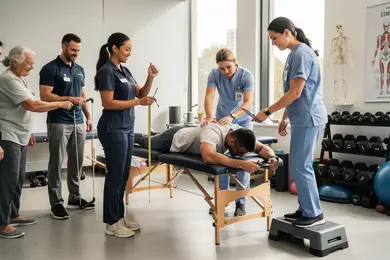
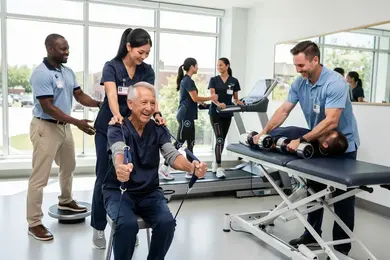
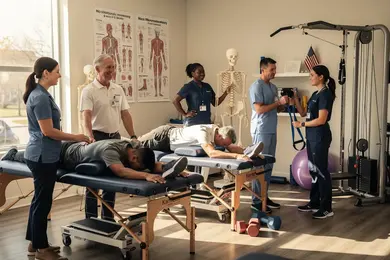
Clinical practicums involve direct injury evaluation, emergency response, and rehabilitation plan development under certified trainer supervision, often in settings like sports teams or rehab centers.
This hands-on component is non-negotiable for certification and remains a decisive factor for employers who prioritize candidates demonstrating real-world skill application alongside theoretical knowledge.
Practical challenges include the need for in-person attendance during clinical hours, complicating logistics for those relying on the online format. Programs that incorporate remote observation components can partially mitigate geographic barriers but cannot replace essential experiential learning.
For example, candidates targeting collegiate athletics must engage with high-intensity environments requiring swift multidisciplinary coordination, while those aiming for high school athletic settings often focus more on preventive education and community involvement.
The median wage of $57,810 for athletic trainers, roughly 20% above the average U.S. wage, frames the cost-benefit analysis of program expenses and clinical placement effort. Students must strategically evaluate how program design impacts their readiness and marketability, weighing factors such as:
- Balance between foundational courses in anatomy, physiology, biomechanics, and sports nutrition and practical clinical exposure.
- Alignment of clinical placement quality with targeted work environments.
- Accessibility and scheduling flexibility of hybrid models.
This nuanced understanding aids prospective students in selecting programs that not only satisfy accreditation but also maximize employability and career sustainability in athletically focused kinesiology pathways.
What admission requirements and prerequisite courses are typical for these online programs?
Admission for online kinesiology degrees with pre-athletic training preparation typically demands more than just basic academic credentials, reflecting employer expectations for a combination of theoretical knowledge and applied experience.
Candidates generally need a high school diploma or GED and a GPA around 2.5 to 3.0, but real differentiation comes from submitted personal statements and letters that demonstrate commitment and interpersonal skills. Some programs require prior exposure to athletic or fitness environments, acknowledging practical familiarity as essential for success.
The prerequisite coursework prioritizes sciences critical for understanding human movement and physical performance: biology with lab, chemistry, anatomy and physiology, and introductory physics form the core. Additional math courses like statistics or algebra support data interpretation skills.
For athletic training certification routes, biomechanics, exercise physiology, and nutrition become focal, with some schools mandating CPR and first aid certification before clinical work to meet regulatory standards.
For working professionals pivoting into kinesiology, gaps in prerequisites can substantially delay degree completion due to the need for supplemental coursework, often at community colleges. Employers value graduates who combine solid science foundations with practical skill sets suitable for roles as fitness trainers or coaches.
Labor projections reveal expanding opportunities, with over 45,000 new jobs for fitness trainers and instructors and roughly 25,300 for coaches and scouts expected nationally between 2022 and 2032, emphasizing the importance of meeting these admission and curricular standards to remain competitive.
How long do online kinesiology pre-athletic training degrees take and what do they cost?
Completing an online kinesiology degree with pre-athletic training preparation requires carefully weighing program length against hands-on clinical experience-a balance that directly impacts career readiness and licensure eligibility. Most bachelor's-level programs span about four years, but accelerated or part-time formats often compromise the quantity or quality of supervised clinical hours critical for certification.
More than 70% of states now require full licensure for athletic trainers, which mandates completion of accredited education, clinical practicum, and passing a national exam. Students who enroll in online kinesiology programs without strong local practicum support risk delayed eligibility or additional costs to secure required supervised experiences. This tradeoff can extend time to workforce entry despite potential tuition savings.
Tuition for accredited programs ranges from $20,000 to $60,000 overall, influenced by institutional policies and financial aid options. However, lower costs often correspond with weaker clinical placement infrastructure. Conversely, programs with established clinical partnerships typically charge more upfront but reduce the friction of meeting licensure prerequisites.
Employers prioritize candidates able to demonstrate licensure compliance, linking program quality with employability in this regulated field. Prospective students should weigh upfront financial investment against practical support for certification to optimize career outcomes when pursuing an online kinesiology degree.
What careers can you pursue with a kinesiology degree focused on pre-athletic training?
Choosing a kinesiology degree focused on pre-athletic training fundamentally shapes access to roles like certified athletic trainers or physical therapy assistants, where formal education alone falls short of employer standards.
Practical clinical experience-often via internships-is a gating factor directly tied to licensure eligibility and certification, such as passing the Board of Certification exam required for athletic trainers. For many students, navigating variable state licensure requirements and securing programs with established clinical partnerships can be decisive hurdles.
Employers in professional sports and rehabilitation prioritize candidates demonstrating hands-on expertise combined with recognized certifications beyond the degree.
For example, strength and conditioning coaches must prove extensive applied training, not just academic credentials. Graduates targeting occupational therapy aide or exercise physiologist roles face further certification or graduate education demands, which influence long-term employability.
Online kinesiology degrees can yield comparable licensure pass rates to on-campus programs if they include robust clinical practicum meeting regional standards. However, prospective students must critically assess online options to ensure sufficient supervised, in-person clinical hours are available, or risk compromised credential eligibility.
What salary ranges and job outlook can graduates expect in athletic training and related fields?
Salary outcomes for graduates in athletic training hinge heavily on meeting the Commission on Accreditation of Athletic Training Education (CAATE) clinical hour requirements. Accredited programs mandate at least 50% immersive, full-time clinical experience, a threshold that remains non-negotiable for certification eligibility and employer acceptance, even in online formats.
Students lacking adequate local clinical placements-common in fully virtual programs-often find their job prospects and starting salaries capped due to insufficient hands-on experience.
Entry-level salaries typically range between $45,000 and $60,000 annually, with median earnings near $52,000. However, experienced athletic trainers in clinical or professional sports environments may earn $75,000 or more, reflecting higher demand and geographic wage variation.
Licensure status influences earnings notably, as licensing states consistently offer better wages than non-licensing ones. Sector placement also matters: high school and collegiate roles generally pay less than positions in specialized healthcare or professional sports settings.
Prospective candidates must proactively secure or verify clinical internships early, as failure to meet immersive clinical hour requirements delays certification and undermines employability.
The labor market projects 18% growth through 2032, buoyed by rising needs for injury prevention and rehabilitation in healthcare and athletics. Still, this growth favors those demonstrating verifiable practical experience and appropriate credentials over those lacking these elements.
Understanding these real-world tradeoffs is essential for anyone pursuing athletic training as a strategic career move within the kinesiology field.
How can prospective students evaluate and choose a reputable online kinesiology pre-athletic training program?
Employers in athletic training increasingly require master's-level credentials, a shift that significantly impacts kinesiology pre-athletic training students weighing their educational options.
Between 2015 and 2023, accredited professional master's programs more than doubled, emphasizing advanced degrees over bachelor-level tracks for clinical certification eligibility. This trend means students pursuing only a bachelor's degree with pre-athletic training preparation may face substantial barriers to immediate employment in clinically certified roles.
Critical factors to evaluate in online kinesiology pre-athletic training programs include:
- CAATE accreditation status, which directly affects eligibility for certification exams and clinical rigor.
- Curriculum balance between kinesiology theory and practical pre-athletic training experience, especially vital in online or hybrid formats.
- Availability of clinical affiliations or practicum sites ensuring compliance with required fieldwork hours.
- Graduation rates and certification exam pass rates as objective indicators of program success.
- Faculty expertise linked to active industry involvement and current research to maintain instructional relevance.
A working professional considering a career pivot must verify flexible scheduling and part-time options that still fulfill stringent clinical requirements.
Conversely, a recent graduate should prioritize programs that explicitly map out a master's completion route to avoid stalled licensure progress or dead-ends in career mobility. Programs lacking clear alignment with employer demands and credentialing standards risk producing graduates unprepared for evolving workforce expectations.
Decision-making grounded in measurable outcomes and program structure-not just convenience or cost-can mitigate risks associated with investing time and resources in pathways that fail to meet licensing board and industry benchmarks.
Other Things You Should Know About Kinesiology
Online kinesiology degrees with pre-athletic training preparation require significant time commitment beyond coursework due to mandatory clinical or field experience hours. Students must independently secure approved clinical sites or internships, which can be difficult without dedicated program support. This adds complexity to scheduling and may extend the time needed to complete the degree. Prioritize programs that offer structured clinical placement support to minimize delays and ensure quality practical exposure.
Enrollment in an online kinesiology degree with pre-athletic training preparation in 2027 typically requires a high school diploma or equivalent, a background in biology or health sciences, and a demonstrated interest in athletic training. Some programs may also require standardized test scores or relevant volunteer experience.
While this pathway covers essential prerequisites, not all online kinesiology programs align perfectly with graduate athletic training admission standards. Some programs may not include necessary courses or sufficient practical hours required for graduate program licensure eligibility. To maximize graduate program admission chances, select an online degree that explicitly maps to the prerequisite curriculum of your target graduate schools and provides verifiable clinical experiences. Otherwise, you risk additional coursework or delayed entry into graduate programs.
The workload in these kinesiology programs is often more intense due to the dual focus on theory and hands-on clinical skills, with many students reporting that balancing asynchronous lectures, labs, and clinical hours requires disciplined time management. Unlike some health degrees that focus primarily on theory, kinesiology with pre-athletic training demands active physical skill acquisition and field experience, creating a higher time investment. Prospective students should prepare for sustained, rigorous engagement rather than expecting a primarily lecture-driven format.
References
- Undergraduate - Pre-Athletic Training Option | Neumann University https://www.neumann.edu/academics/undergrad/preathtrain/index.asp
- How to Plan Your Prerequisite Courses for College and University - Ontario eSecondary School https://oeshighschool.com/prerequisite-courses/
- Careers in Kinesiology https://www.angelo.edu/career/career-exploration/majors/kinesiology.php
- Can You Take Prerequisites Online? https://www.sophia.org/blog/higher-education/can-you-take-prerequisites-online/
- Are Online Prerequisite Courses Accepted by Colleges? https://www.straighterline.com/blog/are-online-prerequisite-courses-accepted-by-colleges
- Athletic Trainer Career | How to Become an Athletic Trainer https://explorehealthcareers.org/careers/sports-medicine/athletic-trainer/
- Online Master of Athletic Training Program in Texas - HSU https://www.hsutx.edu/academics/graduate-programs/masters-of-athletic-training/
- High School Classes Required for College Admission - National Association for College Admission Counseling (NACAC) https://www.nacacnet.org/high-school-classes-required-for-college-admission/
- The State of Employment for Athletic Training https://www.nata.org/nata-now/articles/state-employment-athletic-training
- What Can You Do With a Kinesiology Major? | USAHS https://www.usa.edu/blog/what-can-you-do-with-a-kinesiology-major/