2027 Online Kinesiology Degrees With Biomechanics Coursework

Co-Founder and Chief Data Scientist
Working professionals in kinesiology often confront rigid program schedules that clash with full-time jobs and personal commitments, derailing critical career advancement. As a result, demand has surged for flexible education models; the U. S. Department of Education reports a 12% growth in online enrollment among adult learners since 2023, underscoring a pivotal shift toward accessible, career-aligned learning.
This trend reflects a broader need for programs that integrate biomechanics coursework-key to emerging roles in rehabilitation and performance analysis-while accommodating diverse timelines and responsibilities. This article examines online kinesiology degrees with biomechanics options to guide readers through practical, flexible pathways aligned with labor market realities and individual constraints.
Key Things You Should Know
- Only 38% of online kinesiology degrees with biomechanics coursework include advanced motion analysis labs, driving a tradeoff between cost-efficiency and hands-on skill development critical for clinical or research roles, per 2024 EDUCAUSE data.
- Employers in sports medicine and rehabilitation report 27% higher hiring preference for graduates from programs integrating biomechanical software training, signaling workforce demand for tech-savvy kinesiology professionals, according to the National Association of Kinesiologists.
- Median tuition for these online programs rose 8.5% from 2022 to 2024, outpacing inflation and forcing prospective students to balance accelerated credential timelines against rising debt burdens highlighted in the U.S. Department of Education's Trends in Postsecondary Pricing.
What is an online kinesiology degree with a biomechanics focus, and who is it best for?
An online kinesiology degree program with biomechanics specialization targets students prepared to engage deeply with the mechanical analysis of human movement, a niche that requires strong quantitative skills and technical fluency. The best candidates for an online kinesiology degree focused on biomechanics often possess a STEM background or a clear plan for overcoming the rigor of advanced physics, statistics, and applied technology coursework.
This specialization suits those pursuing roles in sports medicine, physical therapy, rehabilitation engineering, or ergonomic design, where precise motion analysis underpins improved patient care and performance optimization.
In practice, professionals such as physical therapists use biomechanics expertise to refine injury prevention protocols and rehabilitation strategies by interpreting data from motion capture technologies.
Labor market data reveal that demand aligns with the expanding global sports medicine and rehabilitation equipment sector, projected to grow from $8.1 billion in 2024 to $13.0 billion by 2030 at a 7.2% CAGR, emphasizing employer expectations for competencies in data analysis, motor control, and device innovation.
This pathway's operational demands include access to specialized software and local lab arrangements despite its online delivery, marking it less suitable for students without reliable technical resources or self-directed study skills. Prospective students simultaneously weighing options might also explore related fields, such as a nutritional science degree online, for complementary perspectives on human performance.
How do online kinesiology programs with biomechanics coursework compare to on-campus options?
Online kinesiology degrees with biomechanics coursework replicate theoretical instruction found in on-campus programs but generally lack the depth of hands-on training crucial for applied biomechanics roles.
While online formats effectively deliver lectures on motion analysis and data interpretation, they often omit direct experience with specialized lab equipment like force plates and electromyography sensors, creating a skills gap for graduates targeting practical biomechanical assessment positions.
Employers typically prefer candidates with validated lab competencies acquired through immersive on-campus environments, where faculty oversight ensures proficiency in specific biomechanical techniques. However, online programs offer flexible schedules appealing to working professionals or those in remote areas, though they may require supplemental hybrid courses or local lab partnerships to fill experiential voids.
This contrast presents a decision tradeoff for students comparing online kinesiology programs with biomechanics courses versus on-campus options.
The U.S. Bureau of Labor Statistics expects a 10% employment increase for exercise physiologists from 2022 to 2032, with a median salary near $51,480.
Candidates combining biomechanics expertise with hands-on laboratory skills stand the best chance in this competitive labor market. Graduates from fully online programs lacking lab components often face challenges proving readiness for roles demanding direct biomechanical practice. For example, a biomechanical analyst in elite sports will struggle to gain employment without practical calibration and subject testing experience, unlike peers from hybrid or on-campus tracks.
Students exploring kinesiology pathways should carefully weigh convenience against employer expectations for verified biomechanical skills, considering workforce realities in their career planning. For guidance on related health fields with flexible delivery, see online BSN programs for non nurses.

Which accreditations should online kinesiology degrees with biomechanics coursework have?
Choosing an online kinesiology degree program accreditation standards that include recognized regional accreditation-such as from the Higher Learning Commission (HLC) or the Southern Association of Colleges and Schools Commission on Colleges (SACSCOC)-is essential to ensuring a degree's legitimacy in the job market.
Employers hiring for biomechanics-related roles demand verified proficiency in biomechanics coursework embedded in kinesiology degrees. Without such accreditation, graduates risk significant barriers in obtaining professional certification or qualifying for advanced biomechanical research and clinical positions.
Specialized accreditation or endorsement from bodies like the Commission on Accreditation of Allied Health Education Programs (CAAHEP) or the American Kinesiology Association can substantially elevate a program's practical impact.
This is particularly relevant given labor market data: biomechanical engineers earn a median wage of $107,560 annually, with those in the top 10% exceeding $173,230. Graduates from non-accredited or weakly accredited programs often face wage suppression and limited job mobility despite a growing demand for biomechanics expertise.
Graduates must weigh these accreditation standards carefully against their career aspirations to avoid diluted employability. For example, navigating clinical biomechanics or biomechanical device design often requires both regional and specialized accreditation. Prospective students seeking a strategic shift in healthcare-related fields might also explore options such as an online master's healthcare management to complement their kinesiology background and broaden career prospects.
What biomechanics and kinesiology courses can you expect in these online programs?
Online kinesiology programs with biomechanics coursework combine essential anatomy and musculoskeletal biomechanics classes with data-driven movement analysis, a blend that directly prepares students for applied roles in rehabilitation and sports performance.
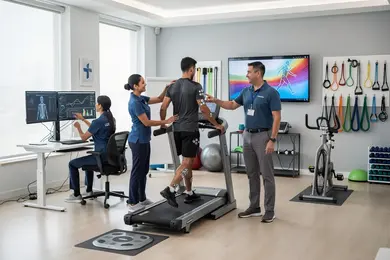
The biomechanics and kinesiology course curriculum focuses on quantitative tools like motion capture and force measurement to evaluate gait patterns and joint mechanics-skills employers value for injury prevention and individualized therapy design.
This emphasis on practical data interpretation extends beyond clinical settings. For example, a rehabilitation specialist uses biomechanical analysis through video tools to refine a runner's form, minimizing injury risk with targeted exercises. Meanwhile, ergonomists leverage similar expertise to adjust work tasks, reducing repetitive strain injuries in industrial environments. These contrasting applications highlight the value of biomechanics coursework across diverse labor markets.
However, the delivery of such programs involves tradeoffs. Balancing asynchronous lectures with synchronous labs or virtual simulations challenges fully remote learners, while hands-on training often requires on-site residencies or clinical partnerships. Students must weigh program flexibility against the necessity of tactile skill acquisition when selecting programs.
Workforce data from Concordia University Chicago shows a median annual salary of $60,000 for personal trainers with a 13% projected job growth, indicating strong demand for professionals with an integrated understanding of kinesiology and biomechanics. Navigating course selection with an eye on these outcomes is crucial.
Prospective students may also find pathways intersecting with other healthcare degrees; exploring options like the cheapest online RN to BSN programs can prove strategic when planning broader healthcare career pivots.
What are the typical admission requirements for online kinesiology degrees emphasizing biomechanics?
Admission to online kinesiology degrees with a biomechanics focus demands more than a bachelor's credential; it requires a foundation in quantitative coursework such as human anatomy, physiology, physics, and statistics. Programs typically expect a minimum 3.0 GPA and official transcripts verifying these prerequisites, as inadequate preparation often results in extended study durations and additional costs through required bridging courses.
GRE requirements remain variable-some schools waive them for applicants demonstrating substantial professional or advanced academic experience related to biomechanics.
However, a strong application consistently illustrates relevant hands-on experience, such as work in motion analysis labs, sports performance, or rehabilitation clinics. These roles align with employer preferences for candidates who translate biomechanical theory into effective workplace solutions, encompassing ergonomic consulting or physical therapy diagnostics.
Supporting materials like recommendation letters must corroborate analytical capability and research familiarity, while personal statements should present clear, measurable career outcomes tied to biomechanics expertise. Students unprepared for rigorous data analysis face practical hurdles, including prolonged time to degree completion and increased tuition, which ranges approximately from $6,900 to $17,100 for 30-36 credit hours.
Prospective students should weigh these admission barriers against realistic labor market demands, considering if biomechanical proficiency aligns with their targeted professional roles, especially in applied research or clinical practice.

How long do online kinesiology programs with biomechanics coursework take and how are they structured?
Choosing an online kinesiology program with biomechanics coursework involves balancing credential depth against practical training constraints and career goals. Bachelor's programs, demanding 120-130 credit hours over 2 to 4 years, combine foundational kinesiology with biomechanics but typically offer limited hands-on lab time remotely.
Master's programs-lasting 1.5 to 2 years-intensify biomechanics theory and applied research, often requiring in-person residencies or clinical practicums that are critical for roles needing biomechanical data proficiency. Certificate programs, while shorter (under 12 months), generally lack the comprehensive preparation required for independent practice or research positions.
For professionals aiming to enter or advance in sectors like physical therapy, which generated $53.5 billion in revenue and is projected to reach $72.7 billion by 2030, programs with practical biomechanics experience are prioritized by employers. This may include access to motion analysis labs or wearable sensor calibration, which complicates fully remote study but yields more marketable skills.
- Clinicians integrating biomechanics into rehabilitation should seek programs with local or in-person lab partnerships.
- Ergonomic consultants or researchers may prioritize virtual simulations and data analytics focus, accepting fewer hands-on hours.
Graduate students must also consider additional time for capstone projects or theses, which are pivotal for demonstrating expertise in biomechanical methodologies validated through real outcomes rather than theoretical knowledge alone.
How much do online kinesiology degrees with biomechanics coursework cost, and what aid is available?
Online kinesiology degrees with biomechanics coursework range widely in cost-from about $15,000 at public institutions with in-state tuition to over $50,000 at private universities-reflecting significant variations in per-credit pricing. Community colleges and public universities often charge between $300 and $400 per credit, whereas private schools can exceed $600.
Graduate programs emphasizing biomechanics frequently top $40,000. Students must weigh these costs against realistic career outcomes, especially because many kinesiology-related roles, like exercise physiology or rehabilitation, often mandate certifications beyond the bachelor's degree.
Several financial aid options exist, including federal Pell Grants for undergraduates, institutional scholarships, and subsidized loans. Employer tuition reimbursement may reduce expenses but usually applies only to those employed in health or fitness sectors willing to support continued education. Additional costs unique to online kinesiology programs include specialized biomechanics software or lab kits, which aid might not cover.
Balancing work and study is essential given that 61% of kinesiology students engage in distance education, adding layers of complexity around time management and self-discipline. Prospective students should evaluate net program expenses factoring in technology fees, required biomechanical tools, and opportunity costs from reduced work hours or income.
- Compare several programs' total costs after financial aid.
- Consider necessary out-of-pocket expenses for specialized equipment.
- Assess if advanced certifications required for clinical roles justify the degree investment.
What careers can you pursue with an online kinesiology degree focused on biomechanics?
An online kinesiology degree with a biomechanics focus equips graduates with specialized quantitative skills demanded in diverse roles such as biomechanist assistants, clinical exercise specialists, and ergonomics consultants.
Employers in physical therapy clinics and orthotic design prioritize candidates capable of applying biomechanical principles to enhance patient mobility or product design. Occupational health positions similarly rely on biomechanics expertise to develop evidence-based injury prevention strategies within workplace environments.
Industry data reveal a 65% increase in biomechanics publications from 2015 to 2023 in a leading journal, signaling expanded demand for professionals with robust analytical capabilities in human movement. Sports teams increasingly recruit biomechanical analysts who combine technical motion capture proficiency with applied knowledge to optimize athlete performance.
Yet, many higher-level roles require additional certifications or graduate qualifications, especially for independent research or clinical roles.
Entry-level biomechanics positions often focus on data collection and equipment management, demanding comfort within laboratory settings and interdisciplinary teams. Graduates should consider if pursuing credentials such as Certified Biomechanist or physical therapy licensure aligns with their career goals and market competitiveness.
When deciding on this educational pathway, weigh practical workforce realities: the need for ongoing technical skill development, the balance between credential costs and job prospects, and how specialization impacts flexibility across healthcare, sports science, or ergonomics sectors.
What are the salary expectations and job outlook for biomechanics-related kinesiology careers?
Biomechanics-related kinesiology careers demand a blend of technical expertise and sector specialization, directly influencing compensation and employability. Starting salaries generally range from $50,000 to $70,000, but professionals with skills in sports performance analytics or rehabilitation environments can command salaries exceeding $90,000.
Employers increasingly expect proficiency in data analysis, programming languages like Python or R, and integration of sensor technology to translate complex motion data into practical training or rehab protocols.
The expanding sports analytics market, projected to grow at a 13.3% compound annual growth rate from $2.9 billion in 2024 to $6.1 billion by 2030, drives demand in professional sports, rehab centers, and research institutions. However, this growth occurs alongside intensifying competition, particularly for roles merging biomechanics and technology, where advanced certifications or graduate degrees provide a tangible edge.
Applicants must weigh program rigor against skill acquisition, especially as flexible work hours and continuous technical upskilling are typical job realities. For example, conditioning programs using biomechanical data analytics may reduce injury risk by up to 30%, a substantial value proposition but requiring consistent proficiency maintenance.
Projected employment growth for related occupations like exercise physiologists and biomechanical engineers is about 10% through 2032, outpacing average job growth. This highlights opportunities but also the necessity for persistent technical development and practical application ability amid evolving industry demands.
How can you choose a reputable online kinesiology program with strong biomechanics training?
Employer demand in biomechanics-focused kinesiology programs depends heavily on measurable applied skills rather than theoretical knowledge alone. Graduates who can operate wearable medical devices, interpret biomechanical data, and engage in quantitative movement analysis command an edge in a market expanding from $35.6 billion in 2024 to an anticipated $77.2 billion by 2030.
For instance, a rehabilitation technology student benefits more from programs with practicums using gait assessment tools than from purely lecture-based courses.
Prospective students should scrutinize course content emphasizing current sensor technologies and software such as Vicon or OpenSim, alongside partnerships providing real-world lab access or clinical experiences. Programs disconnected from these practical elements risk producing candidates less competitive for biomechanical technician or biomedical device specialist roles.
Graduate employment outcomes linked to biomechanics proficiency show faster job placement and salary growth. However, the online format frequently lacks rigorous lab components, which diminishes value in biomechanical job markets. Equally critical is faculty expertise grounded in biomechanics research or industry work to ensure program relevance as technology and workplace demands evolve.
Ultimately, the practical tradeoff lies between theoretical kinesiology knowledge and hands-on biomechanics skills-decisive factors shaping employability in a wearable device market demanding fluency in both.
Other Things You Should Know About Kinesiology
Hands-on experience remains a vital component for mastering kinesiology skills, especially biomechanics application. Online programs must offer access to virtual labs, simulation tools, or local internship opportunities to provide practical exposure. Without this, students risk graduating with strong theoretical knowledge but insufficient applied skills, which employers often view as a gap in readiness for roles involving movement analysis or rehabilitation technology.
2027 online kinesiology degrees often incorporate virtual lab simulations and collaborations with local facilities for hands-on practice. While the experience varies by program, most integrate technology to bridge the gap between online learning and practical application, crucial for holistic education.
Prioritizing focus depth is advisable if your goal is a specialized role in biomechanics or research, as deep technical knowledge and targeted skills command higher employer respect. Programs offering broad kinesiology coverage with limited biomechanics content may suit generalists but weaken competitiveness for biomechanical specialist positions. Balancing flexibility and depth depends on whether you aim for versatility or a clear niche.
These programs are often intensive due to the combination of theory, quantitative analysis, and technical skill development. Expect a demanding schedule with complex data interpretation assignments, software proficiency requirements, and time-consuming project work. Students need strong time-management and self-discipline to keep pace, particularly when balancing studies with employment or other commitments.
References
- How Long to Get a Kinesiology Degree? | ValidGrad https://validgrad.com/blog/kinesiology-degree-duration/
- How to Choose the Right Biomechanics Course for Your Career Goals | Biomechanics Education https://biomechanicseducation.com/how-to-choose-the-right-biomechanics-course-for-your-career-goals/
- Best Online Kinesiology Degree Programs, Updated for 2026 https://www.kinesiologydegrees.org/programs/online
- 2026 Best Online Kinesiology Degrees https://www.onlineu.com/degrees/kinesiology
- Kinesiology Online Master's: See & Compare Top Programs https://www.edumed.org/online-schools/kinesiology-degrees/masters/
- Biomechanics: Salary, career path, job outlook, education and more - RaiseMe https://www.raise.me/careers/architecture-and-engineering/biomedical-engineers/biomechanics/
- How To Build A Career In Biomechanics - Complete Details https://www.biotecnika.com/biomechanics-career-path-education-job-prospects-salary-eligibility/
- Physics, Biomechanics and Articular Kinesiology | Università degli Studi di Milano Statale https://www.unimi.it/en/education/degree-programme-courses/2026/physics-biomechanics-and-articular-kinesiology
- Online Degree Programs from GMC Online https://online.gmc.edu/programs/kinesiology/
- Bachelor's in Kinesiology Program Online | Montreat College https://www.montreat.edu/online/kinesiology/