2027 Movement-Focused Nonclinical Roles You Can Target With a Kinesiology Degree

Co-Founder and Chief Data Scientist
Balancing career advancement with the demands of a full schedule presents a critical obstacle for many kinesiology graduates seeking roles beyond traditional clinical settings. With over 40% of adult learners enrolled exclusively in online programs as reported by the National Center for Education Statistics in 2024, flexibility in educational pathways has expanded.
However, translating that flexibility into targeted nonclinical employment remains a challenge. Employers increasingly prioritize candidates who combine interdisciplinary skills with movement science expertise to fill roles in wellness coaching, ergonomics, and human factors analysis.
This article identifies movement-focused nonclinical career options and navigational strategies to align education choices with evolving workforce demands and accessibility constraints.
Key Things You Should Know
- Despite rapid growth in nonclinical roles, 42% of kinesiology graduates face underemployment within 18 months post-graduation, revealing a misalignment between academic curricula and emerging industry demands, per National Center for Education Statistics 2024.
- Employers prioritize cross-disciplinary data literacy and rehabilitation technology proficiency, with 58% of reported vacancies requiring advanced skills beyond traditional kinesiology training, highlighting a workforce skills gap noted by the Bureau of Labor Statistics 2024.
- Recent tuition inflation averaging 5.3% annually at public institutions means extended degree pathways for specialization in nonclinical areas raise opportunity costs, pressuring students to balance accelerated credentials with diminishing financial aid, according to the College Board's 2024 report.
What movement-focused, nonclinical careers can you pursue with a kinesiology degree?
Nonclinical kinesiology degree jobs in the United States increasingly demand professionals who can blend biomechanical knowledge with practical applications in diverse work environments. For example, corporate wellness coordinators design programs that reduce workplace injuries and boost productivity, responding to a corporate wellness market expected to reach $79.7 billion by 2030, according to Grand View Research.
Success in these roles hinges on skills in behavior change strategies, data analysis, and program development tailored for broad employee populations.
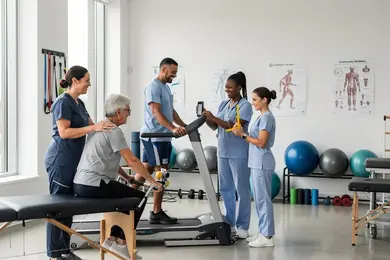
Movement-focused career options for kinesiology graduates also include ergonomists who collaborate with industrial engineers and HR to prevent musculoskeletal disorders through workstation redesign, highlighting cross-disciplinary communication as a critical competency.
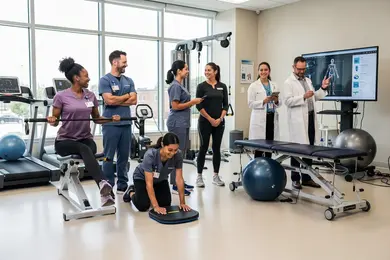
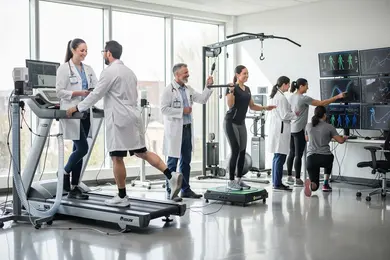
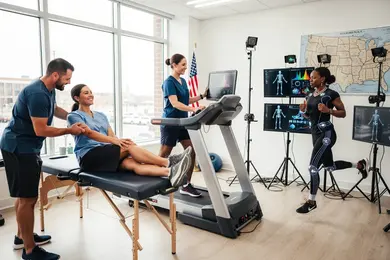
Similarly, exercise physiologists working outside clinical settings engage with wearable technology and motion capture systems to optimize performance and injury prevention, requiring a mix of technical aptitude and client engagement.
In research or sports technology sectors, movement analysts leverage data analytics and human physiology expertise to improve movement efficiency or develop assistive devices; however, these positions often necessitate advanced qualifications. Graduates must weigh quick entry into expanding wellness roles against the potential need for additional education in more technical or research-intensive pathways.
For those considering educational pathways, exploring ASN online programs may offer strategic ancillary skills, especially when targeting multidisciplinary health and wellness industries.
Which kinesiology roles let you work in movement without becoming a clinician?
Nonclinical kinesiology jobs focused on movement offer practical avenues for graduates to apply their expertise outside clinical licensure boundaries. Health coaching-a segment expected to nearly double in market size within a decade-illustrates roles where kinesiology knowledge supports exercise adherence and motivation without medical intervention. Such positions emphasize behavioral strategies rather than clinical diagnostics.
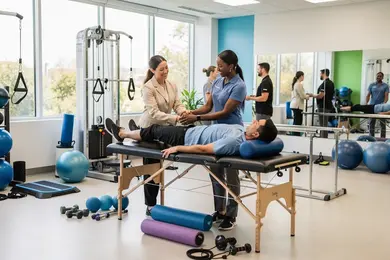
Other common roles include exercise physiologists in wellness settings and workplace ergonomics consultants who analyze postural efficiency to mitigate injury risk. These movement-based nonclinical kinesiology careers depend heavily on applied principles rather than clinical treatment, distinguishing them in scope and employer expectations.
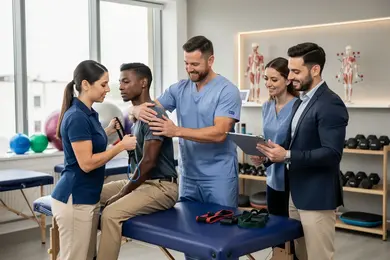
Successful transition into these roles requires targeted skill development in communication, behavior science, and certifications such as Certified Health Coach or Ergonomics Specialist. A notable workforce reality is that many employers prefer demonstrated experience gained through internships or applied projects over advanced degrees, highlighting a tradeoff between formal education and practical readiness.
Graduates must navigate balancing broader nonclinical applicability against limited clinical influence, making strategic choices about emphasizing certifications and experiential learning versus further graduate education. For those contemplating adjacent fields or administrative roles, pathways like the accelerated healthcare administration degree offer a practical supplement.
What types of employers hire kinesiology graduates for nonclinical movement positions?
Employers hiring kinesiology graduates for movement roles in nonclinical settings focus heavily on candidates who translate biomechanical principles into measurable improvements in athlete performance and injury prevention. This demand spans professional sports teams, collegiate athletic departments, and fitness facilities where strength and conditioning specialists create sport-specific training plans that adjust dynamically to mid-season injuries or changing performance metrics.
Nonclinical movement jobs for kinesiology degree holders also exist in military and tactical units, where graduates develop physical readiness protocols tailored to operational stresses, and in corporate wellness programs aimed at injury mitigation and reducing healthcare costs. These roles require balancing scientific rigor with practical constraints such as budgeting, staffing, and facility limitations.
Employment growth projections indicate a 13% increase for athletic trainers through 2033, pointing to rising demand for kinesiology professionals outside conventional clinical environments. Employers favor graduates who are proficient in client assessment, program design, and outcome evaluation, with formal certifications enhancing but not always determining employability.
Success in these roles demands effective communication skills to translate complex movement science to diverse stakeholders, ensuring program adherence and real-time adaptability. For individuals considering this pathway, investigating affordable credential options can be crucial; resources like the cheapest online healthcare administration degree may offer strategic educational alternatives aligned with workforce needs.
What degree level and specializations best prepare you for nonclinical movement careers?
Pursuing a bachelor's degree in kinesiology with specializations in biomechanics, exercise science, or sports technology is essential for securing roles focused on nonclinical movement careers. Employers in sectors such as human performance analytics and occupational ergonomics prioritize candidates who demonstrate proficiency in data interpretation and movement assessment.
In practice, this means graduates with hands-on experience using motion capture systems and wearable fitness trackers are better positioned to meet market demands, especially as the wearable fitness tracker market is expected to reach $192.4 billion by 2031 with a compound annual growth rate of 19.6% from 2024 to 2031. This dynamic growth highlights the importance of a kinesiology degree specialization for movement professions that fuse human movement science with technology integration.
Advancing to master's-level education becomes necessary for roles requiring advanced analytics, research design, or leadership within applied movement labs. Candidates often specialize in movement analytics or sports technology, acquiring technical skills like Python programming and machine learning applications.
For example, occupational ergonomics professionals with expertise in human factors design interventions that lower injury risks and reduce associated productivity losses and healthcare expenses.
Certificate programs targeting wearable or rehabilitation technology may augment a kinesiology background but generally fall short for research-intensive roles. Students should weigh programs offering interdisciplinary coursework spanning computer science, engineering, and data analytics, ideally with established industry partnerships that provide internships and project experience.
Given the practical challenges of program duration and cost, some may also consider accelerated nursing programs as alternative pathways within allied health fields.
How do kinesiology program curricula support careers in coaching, fitness, and performance?
Programs in kinesiology must balance technical expertise with applied skills to meet diverse industry demands, a distinction that directly affects graduate employability. Emphasizing biomechanics, exercise physiology, and motor control equips students to design tailored athletic or rehabilitation programs.
However, the addition of hands-on training with tools like workload monitors and ergonomic assessments sets candidates apart in fields such as corporate wellness. For instance, understanding ergonomics' expanding $25.7 billion market enables fitness professionals to address workplace injury risks effectively.
Applied learning through internships or labs is essential to translate scientific knowledge into practical coaching strategies and injury prevention protocols. However, curricula often vary in coverage of business acumen and client communication-key elements for those pursuing private or entrepreneurial roles. This gap requires additional effort from students aiming at self-directed careers.
The tradeoff between programs that prioritize soft skills and those heavy on technical content influences career flexibility, enabling graduates to navigate roles from athletic coaching to corporate consulting. Employers increasingly value this multidisciplinary competence combined with behavioral insights like client motivation and adherence psychology, which supports sustainable performance results.
- Core curriculum: biomechanics, exercise physiology, motor control
- Experiential learning: internships, workload monitoring, ergonomic tools
- Business skills: often incomplete, critical for entrepreneurial success
- Market context: rapid growth in ergonomics and corporate wellness
Source: Polaris Market Research
What certifications or credentials strengthen your prospects in nonclinical movement roles?
Certifications like Certified Strength and Conditioning Specialist (CSCS) or Certified Exercise Physiologist (CEP) distinguish candidates by demonstrating technical competence crucial to nonclinical roles focused on movement and fitness.
For instance, CSCS credentials are often a baseline requirement for public health fitness programs funded through government or nonprofit sources, where validated expertise is non-negotiable. Employers prioritize certifications that assure safety and predictability in client outcomes.
The expanding global public health market-projected to grow from $539.6 billion to $862.9 billion by 2032 with a compound annual growth rate of 5.2%-signals increasing demand for professionals adept in designing and executing community wellness programs. Credentials emphasizing behavior change, such as Certified Health Education Specialist (CHES), offer a distinct advantage for positions emphasizing active living interventions.
Practical factors like cost, time commitment, and renewal requirements influence credential choice. For example, CEP certification typically requires prior academic coursework in exercise science, which can slow market entry for some candidates. Alternatively, tiered or online certifications may allow quicker entry and easier balance with other responsibilities.
Licensure is rarely mandated outside clinical environments, but certification remains critical for advancing into managerial or program development roles. Aligning credentials with specific populations-such as senior fitness or pediatric exercise-is essential to meet employer expectations and workforce needs.
How do salaries and earning potential compare across nonclinical kinesiology movement jobs?
Salary outcomes in nonclinical kinesiology roles heavily depend on specialization and employer type, with clear tradeoffs between credential requirements and earning potential. Entry-level fitness trainers or wellness coaches generally earn between $35,000 and $45,000 annually, reflecting high competition and fewer prerequisites.
In contrast, adaptive physical activity specialists in rehabilitation or community programs command higher salaries, typically $50,000 to $70,000, particularly in hospital or large organization settings aligned with a rehabilitation market growing at a 6.1% CAGR through 2030.
Corporate or industrial sectors employing kinesiology professionals in ergonomics or occupational movement analysis offer salaries ranging from $60,000 to $80,000. Those advancing to managerial or specialized assessment roles can surpass $90,000 but must invest in additional certifications beyond a kinesiology degree. These requirements often dictate whether a candidate can break through salary plateaus.
Geographic location influences compensation markedly. Metropolitan areas with robust healthcare ecosystems provide the best pay but also present a higher cost of living. Employers routinely prioritize applicants who combine hands-on skills with recognized credentials, especially in rehabilitation contexts.
For those targeting kinesiology as a strategic pivot, weighing the upfront time and financial costs of certifications against long-term wage growth is critical. The rehabilitation and physical therapy market is a key driver of demand and wage scalability in this field.
What is the job outlook and demand for movement-focused, nonclinical kinesiology careers?
The rising demand for movement-focused, nonclinical kinesiology careers requires a strategic alignment of skills beyond foundational exercise science. As the online fitness market projects growth to $127.7 billion by 2032 with a 33.1% CAGR, professionals aiming for roles like boutique studio management or online coaching must blend kinesiology expertise with business acumen and technological fluency.
For example, managing a boutique studio extends well beyond kinesiology knowledge, involving operational oversight, staffing, and local market navigation. Similarly, online coaching success depends on mastering virtual client engagement and digital content delivery to reach and retain customers effectively.
Employer expectations emphasize verifiable certifications paired with applied experience. Programs that embed internships and real-world business scenarios provide tangible advantages, given these roles rarely require clinical licensure but demand entrepreneurial initiative and continual learning. Candidates should anticipate income inconsistency and increased self-management responsibilities relative to typical clinical positions.
Critical career strategies include:
- Developing marketing and client relations abilities to differentiate within saturated markets
- Building adaptable skill sets to respond to shifting fitness trends and technologies
- Creating a diversified service portfolio to mitigate demand fluctuations
Long-term viability hinges on cultivating a personal brand and operational competence to leverage kinesiology training into sustainable, nonclinical fitness careers.
How do online kinesiology programs compare with campus options for these career paths?
Online kinesiology programs often deliver strong theoretical foundations in anatomy, physiology, and health education. Yet, their capacity to prepare students for hands-on roles-such as wellness coaching or physical assessments-is limited without structured local internships or regional campus partnerships.
Employers emphasize real-world competencies gained through supervised practice, which campus-based programs provide via labs and clinical practicums. For instance, a student aiming to design wellness programs benefits substantially from in-person contact hours that develop interpersonal and assessment skills under guidance.
The practical gap between online and campus pathways can impact employability, as online students must independently secure externships or community projects, introducing variability in experience and skill acquisition. This disparity should weigh heavily when choosing a program, given the U.S. Bureau of Labor Statistics projection of 7% growth in health education specialist roles from 2022 to 2032, with approximately 6,600 annual openings.
Programs with embedded experiential components align better with employer expectations for nonclinical kinesiology careers.
Prospective students evaluating online kinesiology options should critically assess the availability of employer partnerships and clinical access in their region to avoid gaps in practical readiness that can hinder competitiveness. While flexible, online study demands proactive navigation of skill-building opportunities often integrated into campus curricula.
How can you evaluate and choose an accredited kinesiology program for nonclinical roles?
Selecting an accredited kinesiology program for nonclinical roles significantly shapes career outcomes by defining employer credibility and skill applicability. Accreditation recognized by the U.S. Department of Education or the Council for Higher Education Accreditation affects not only federal aid eligibility and credit transfer but signals program rigor to employers.
For example, a candidate pursuing a marketing role in professional sports franchises gains more from curricula focused on digital marketing analytics and sponsorship management than from a sole focus on biomechanics.
With the global sports sponsorship market projected to reach $180.1 billion by 2030 at a CAGR of 6.1%, specialized coursework or electives in sports business, athlete marketing, and brand partnerships increase practical employability in these expanding sectors. Graduates are expected to demonstrate data analysis, communication proficiency, and relevant project experience.
Critical evaluation should include program outcome data-graduation rates, job placement, and certifications like the Certified Strength and Conditioning Specialist (CSCS). Such indicators reveal the program's capacity to translate education into tangible career benefits.
Flexibility is another key consideration. Part-time or online formats enabling synchronous industry engagement allow mid-career students to balance ongoing employment with skill enhancement. Programs without clear pathways to industry-recognized skill validation or professional networking risk diminishing post-graduate competitiveness.
Other Things You Should Know About Kinesiology
In 2027, a kinesiology degree can lead to roles such as wellness coordinator, corporate fitness consultant, ergonomics specialist, health promotion director, and physical education program planner. These roles leverage expertise in human movement to enhance health and productivity in various settings.
Internships provide critical hands-on exposure and networking tailored to specific movement-focused fields, which is a decisive factor for many employers. The drawback is that some internships require significant unpaid hours, which may not be feasible for all students or working professionals. Prioritizing internships with concrete skill-building and employer connections over generic placements is essential to maximize return on time invested.
Interdisciplinary programs that integrate business, psychology, or technology components enhance versatility but risk diluting core kinesiology expertise. For students targeting specialized movement roles like performance coaching or ergonomics, focused kinesiology curricula provide deeper technical skillsets and better alignment with employer expectations.
If flexibility is critical, choose programs that maintain strong kinesiology fundamentals while offering selective interdisciplinary electives rather than fully integrated majors.
Employers increasingly accept accredited online kinesiology degrees but continue to emphasize practical experience and program reputation over delivery mode. Online programs lacking strong experiential components or connections to industry can hinder job candidacy. Candidates should seek online programs with guaranteed hands-on internships and faculty engagement to match the credibility and skills development of campus-based studies.
References
- Top Skills and Certifications Needed to Land High-Impact Healthcare Roles | GHR Healthcare https://www.ghrhealthcare.com/blog/certifications-high-impact-healthcare-roles
- What Can I Do in My Career With a Master’s in Kinesiology? https://www.pointloma.edu/resources/health-sciences/what-can-i-do-my-career-masters-kinesiology
- American Kinesiology Association | Careers in Kinesiology https://americankinesiology.org/careers-in-kinesiology/
- 8 Top Non Clinical Jobs for Physicians to Consider in 2025 https://clinxacademy.com/blog/non-clinical-jobs-for-physicians
- Kinesiology Careers: 3 tips to get you started | Symmetrix https://www.symmetrix.ca/blog/kinesiology-careers
- What Can You Do With a Kinesiology Major? | USAHS https://www.usa.edu/blog/what-can-you-do-with-a-kinesiology-major/
- What certifications can help boost your career prospects? - MSU Denver https://www.msudenver.edu/innovative-lifelong-learning/blog/what-certifications-can-help-boost-your-career-prospects/
- Fortunebusinessinsights - Rehabilitation And Physical Therapy Services Market 102937 https://www.fortunebusinessinsights.com/research/rehabilitation-and-physical-therapy-services-market-102937
- 6 Programs That Open Doors to Clinical and Non-Clinical Healthcare Roles https://www.ltcnews.com/articles/programs-open-doors-clinical-non-clinical-healthcare-roles
- Non-Clinical Career Options - Alternatives to Clinical Practice | West Coast University https://westcoastuniversity.edu/blog/non-clinical-career-options-alternatives-to-clinical-practice