2027 Kinesiology Specializations That Best Match Performance-Oriented Careers

Co-Founder and Chief Data Scientist
Securing a high-impact role in performance-oriented kinesiology careers is increasingly complicated by the fragmentation of specialization options and the varying rigor of program modalities. Many aspiring professionals confront a maze of pathways without clear guidance on how each specialization aligns with employer expectations or workforce trends.
Meanwhile, nearly 40% of health sciences undergraduates now enroll in fully online programs according to the National Center for Education Statistics, a shift reshaping access but raising concerns about hands-on skill development crucial for physical performance roles. This dual pressure to balance flexibility and practical competency profoundly influences enrollment timing and career trajectory decisions.
This article evaluates the most relevant kinesiology specializations tailored to performance-driven professions, helping readers navigate selection complexity and align education choices with real-world job market demands.
Key Things You Should Know
- Specializations in biomechanics dominate employer demand, making graduates with advanced lab and data analysis skills 25% more likely to secure roles in elite sports or rehabilitation by 2025 according to the Bureau of Labor Statistics.
- Careers focused on exercise physiology face growing credential inflation, requiring costly certifications beyond a bachelor's degree, which limits access for lower-income students and delays workforce entry.
- Neurokinesiology's niche growth (projected 18% by 2028 in clinical settings) offers higher salary potential but narrower job market breadth, creating a strategic tradeoff between specialization depth and employment flexibility.
What are the main kinesiology specializations that align with performance-focused careers?
Specializing in strength and conditioning within performance kinesiology remains the most direct route for those seeking careers tied to athletic performance enhancement. This path demands rigorous certification and practical experience in elite sports settings, where salaries have notably climbed to between $68,000 and $98,500, signaling clear market demand.
Candidates should weigh this against the ongoing professional networking and credential maintenance such roles require. In comparison, sports biomechanics and exercise physiology offer divergent career trajectories with somewhat different workforce implications.
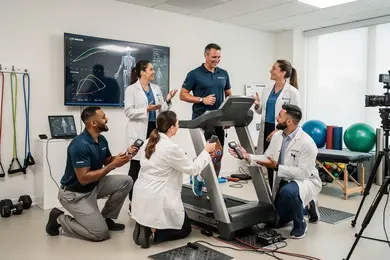
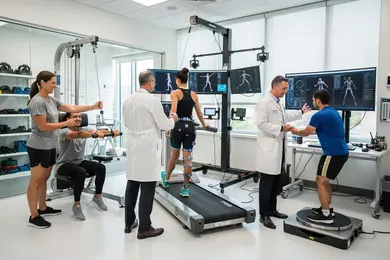
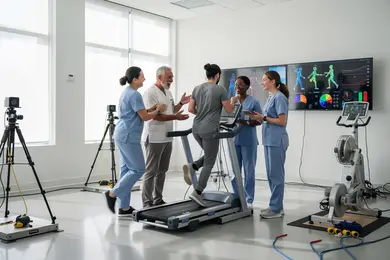
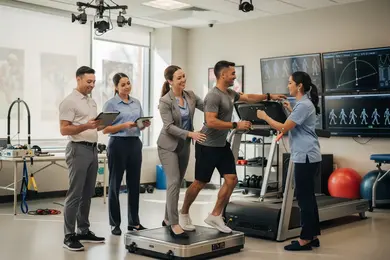
Sports biomechanics focuses on movement analysis and technology integration, such as motion capture, to optimize athlete mechanics. Professionals in this specialization often work in research or rehabilitation but face increasing pressure for cross-disciplinary skills like data analytics.
Exercise physiology supports careers emphasizing cardiovascular and metabolic responses, frequently involving clinical exercise testing or performance assessment for endurance athletes, which may limit direct involvement with high-level sports teams.
Understanding these distinctions is critical for kinesiology career paths focused on athletic performance and for aligning educational choices with long-term employability and income potential.
For example, professionals aiming to work with professional football teams prioritize strength and conditioning certifications and demonstrated program design success. Alternatively, those interested in wearable tech integration might pursue biomechanics roles within sports science departments.
Prospective students and professionals can explore broader administrative avenues tied to sports programs, such as how to become an athletic director, which leverages a different skill set and career pathway beyond direct performance roles.
How do exercise science, strength and conditioning, and sports performance tracks differ?
Choosing between exercise science vs strength and conditioning career paths requires understanding their workforce dynamics and credential demands. Exercise science offers broader roles emphasizing physiological assessment and chronic disease management in clinical and public health settings, but graduates often face stiff competition for advanced clinical positions requiring further qualifications.
Strength and conditioning is more narrowly focused on athletic development, demanding specialized certifications and hands-on experience, typically in collegiate, military, or professional sports environments where direct athlete interaction is key.
The differences between sports performance and exercise science programs become clear when considering the integration of disciplines. Sports performance merges biomechanics, nutrition, recovery protocols, and advanced data analytics, preparing graduates for multidisciplinary roles within expanding, technology-driven sports science teams.
Unlike strength and conditioning coaches, who primarily demonstrate applied training expertise, sports performance professionals must navigate complex monitoring systems and coordinate across specialties, making data literacy a baseline requirement.
Students weighing these paths should factor in realistic employment scenarios: exercise science may offer more stability within healthcare or wellness industries, but advancement often necessitates securing credentials. Strength and conditioning roles tend to grant earlier access to elite athletes yet require validated certifications.
Sports performance roles are rapidly growing but demand fluency with emerging technologies and cross-disciplinary strategies. For those interested in related allied health fields, exploring options such as bachelors healthcare administration can expand career flexibility.
Which kinesiology degrees best prepare students for careers in athletic performance?
Degrees that concentrate on exercise science or athletic training distinctly position students for performance-driven roles in kinesiology, prioritizing sport-specific biomechanics, physiology, and conditioning over generic movement studies.
Such programs embed practical skillsets critical for crafting athlete-focused training methods, with internships in competitive sports vastly improving job prospects. Conversely, kinesiology degrees emphasizing clinical exercise physiology serve better for rehabilitation and health-centered roles, reflecting differing employer demands.
Advanced specializations like master's programs in sports performance or strength and conditioning typically align with leadership roles involving athlete development and collaborative coaching.
Additional certifications such as the Certified Strength and Conditioning Specialist are often prerequisites in professional environments. These credentials underscore proficiency in injury prevention, recovery protocols, and performance analytics, distinguishing candidates beyond foundational degrees.
Industry data forecasts exercise physiologist roles to grow 9-10% from 2024 to 2034, with approximately 1,600-1,700 annual openings, driven largely by cardiac and chronic disease rehab demand. This growth highlights that kinesiology degrees for athletic performance careers must be strategically weighed against long-term employment flexibility, as clinical paths offer expanded workforce resilience beyond typical sports settings.
Practical choices hinge on accreditation, available practicum environments, and credential recognition, which directly impact career pathways. For example, athletic trainer programs prioritize on-field athlete care, while kinesiology emphases on exercise physiology may restrict immediate access to coaching but broaden medical and rehabilitative opportunities.
Prospective students should also consider how integrated degrees compare to targeted credentials like the MHA degree in bridging healthcare administration roles.
Selecting among the best kinesiology specializations for sports career preparation requires balancing employer expectations with realistic student trajectories, recognizing tradeoffs between sports performance focus and clinical versatility.
What coursework and lab experiences are essential in performance-oriented kinesiology programs?
Performance kinesiology coursework and lab experience must extend beyond theory to meet employer demands for practical, data-driven skill sets in high-intensity sports environments.
Rigorous training in exercise physiology, biomechanics, and motor control forms the foundation, but essential lab skills for kinesiology performance careers distinguish graduates through hands-on exposure to biomechanical motion analysis, VO2 max testing, and lactate threshold measurement. These competencies enable precise prescription of training regimens aligned with athlete needs and recovery protocols.
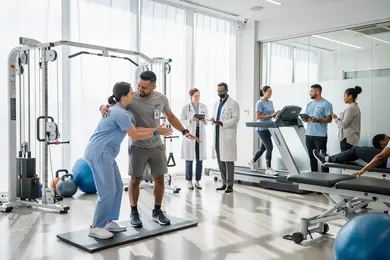
Integrated clinical environments simulate real-world conditions where students collaborate with athletic trainers and multidisciplinary teams, honing rapid decision-making under pressure. Program structures focusing on applied human anatomy and functional movement screenings reinforce injury prevention, a critical factor in career viability within competitive sports.
Awareness of labor market realities, such as 30-40% higher compensation for sports dietitians working with athletes compared to general dietitians, clarifies the premium placed on targeted expertise and applied lab proficiency.
Incorporating research on athlete performance metrics into curriculum improves graduates' ability to interpret evidence-based interventions, a skill increasingly valued in sports science roles. Programs lacking measurable outcomes using performance technology often limit employability across integrated athlete support roles.
Prospective students evaluating pathways should consider program design alongside practical market intelligence, including exploring options such as the cheapest RN to BSN online Texas to understand the value proposition of affordable, skill-focused health and performance education.
How do online kinesiology programs compare with campus options for performance training?
Choosing between online and campus kinesiology programs involves assessing the tradeoff between theoretical knowledge and essential hands-on experience. While online programs effectively deliver foundational concepts, they typically lack access to specialized labs and real-time coaching necessary for tactical strength and conditioning roles, especially within military or elite athletic contexts.
For instance, a student aiming for a position focused on the U.S. Army Combat Fitness Test will find campus programs advantageous due to direct practice with resistance equipment and supervised assessments. These tangible skills align with employer expectations in tactical fitness sectors, which emphasize both certifications and practical competency.
Conversely, online learners often face the added burden of securing external internships or practicums to gain comparable experience. This creates logistical challenges and may delay career entry or reduce immediate competitiveness.
Key considerations for prospective students include:
- Evaluating if the program structure integrates practical labs or depends heavily on virtual simulations.
- Understanding the requirement and feasibility of supplementary in-person training.
- Recognizing workforce trends projecting a 5-10% annual growth in human performance roles tied to defense fitness standards through 2033.
Ultimately, campus-based kinesiology pathways typically offer a clearer, more direct route to meet the skill demands of specialized performance careers within this expanding field.
What accreditation and program quality indicators should applicants look for in kinesiology?
Program accreditation by recognized bodies such as the Commission on Accreditation of Allied Health Education Programs (CAAHEP) or regionally accredited institutions is a non-negotiable factor for assessing kinesiology programs focused on biomechanics and sports performance technology.
Without such accreditation, graduates face obstacles in employer trust and alignment with industry standards, which directly impacts hireability in specialized roles.
Departments investing six-figure budgets in advanced motion-capture and force-plate systems, technologies detailed in the CU Chicago 2025 kinesiology white paper, reflect an industry-wide shift to data-driven performance analysis. Students must confirm that programs provide hands-on exposure to these tools since access to such labs differentiates candidates in competitive job markets.
Additional markers of quality include faculty research output in applied sport science and demonstrated partnerships with professional sports entities and rehabilitation centers. These connections translate into practical training opportunities, equipping students to interpret complex biomechanical data crucial for roles experiencing 5-10% annual growth in health and wellness sectors.
Programs overly focused on theory without applied labs constrain readiness for real-world performance roles, limiting graduates' competitiveness. Transparency in job placement and alumni career trajectories offers critical insights-programs producing professionals who secure positions in elite sports organizations or research institutions align closely with employer expectations.
What are the common admission requirements for performance-oriented kinesiology majors?
Admission to performance-oriented kinesiology programs demands more than strong grades and test scores; it requires practical readiness aligned with workforce expectations. Applicants should demonstrate competency in biology, chemistry, and physical education, supported by standardized tests typically above the 50th percentile.
Beyond academics, a personal statement reflecting career-specific goals related to sports or rehabilitation is often necessary, alongside prerequisite certifications like CPR to signal preparedness for clinical or athletic environments.
Letters of recommendation from coaches or healthcare professionals serve as evidence of discipline and commitment. Programs increasingly favor candidates with documented experience in athlete development settings-a volunteer assistant coach in track and field, for instance, gains a measurable edge over those with solely academic backgrounds.
This preference matches employment data showing low unemployment near 3% and entry-level salaries around $45,000, escalating to $70,000 mid-career with advanced specialization (CU Chicago placement and outlook data 2025).
Early acquisition of clinical internships is critical but challenging, necessitating geographic and scheduling flexibility. Failure to secure these placements can delay graduation or diminish employment prospects despite degree completion.
Admission processes that integrate hands-on experience requirements from the start better equip students for evolving job demands, emphasizing the practical tradeoff between stringent entry conditions and long-term career viability.
What performance-related jobs can kinesiology graduates pursue, and what do they involve?
Graduates with a kinesiology degree face a critical crossroads between research-focused and applied career paths, each demanding different qualifications and practical experience. Roles like strength and conditioning coaches apply biomechanical principles to enhance athlete power and injury resilience, often requiring robust industry networks, especially in professional sports or military settings.
Conversely, sport and performance psychology, expected to grow 10-15% in the coming decade, emphasizes mental resilience and anxiety management, where advanced credentials and clinical experience shape employability.
Exercise physiologists and rehabilitation specialists must navigate credentialing and interdisciplinary collaboration to develop individualized conditioning or return-to-function programs. This highlights a workforce reality: entry-level clinical support positions offer immediate access but limited long-term mobility without graduate-level education, while advanced roles demand significant academic and experiential investment.
Prospective students should consider these trade-offs carefully, aligning their education strategy with targeted certifications, internships, or dual career pathways.
Understanding sector-specific employer expectations and the balance between mental and physical performance interventions can improve decision-making, especially when real-world application and evolving health paradigms reshape job demands.
What salary ranges and job outlook can performance-focused kinesiology specialists expect?
Career outcomes in kinesiology depend heavily on specialization and the ability to demonstrate measurable impact. Entry to mid-level roles typically offer annual salaries between $50,000 and $85,000, but advanced positions in areas like sports performance analysis or rehabilitation leadership can surpass $100,000.
This disparity reflects an important tradeoff: pursuing certifications in strength and conditioning or clinical exercise physiology demands time and financial investment but significantly increases earning potential. Conversely, roles in corporate wellness or fitness coaching allow earlier employment but usually come with lower starting pay.
The employment rate for kinesiology bachelor's graduates is strong, with 85% employed or in graduate programs within six months of graduation. Most-around 90%-are engaged in health- or performance-related roles. Employers in this sector emphasize candidates who combine theoretical knowledge with evidence-based results, such as improved team performance or reduced injury rates.
To gain a competitive edge, kinesiology students must prioritize internships or practical experience that produce quantifiable outcomes. Without this, career growth often plateaus despite degree completion.
The Bureau of Labor Statistics forecasts 8% growth in fitness-related occupations through 2032, driven by demand in professional sports, military, and healthcare settings focused on injury prevention and chronic disease management.
Which certifications best support careers in strength, conditioning, and human performance?
Choosing between certifications like Certified Strength and Conditioning Specialist (CSCS), Certified Exercise Physiologist (ACSM-EP), Certified Worksite Wellness Specialist (CWWS), and Tactical Strength and Conditioning Facilitator (TSAC-F) involves assessing real-world tradeoffs in market demand, employer expectations, and career scope.
For example, CSCS dominates roles tied to elite athlete development or professional sports, requiring rigorous study and practical experience but offering higher salaries and long-term advancement. In contrast, ACSM-EP fits well in workplace wellness settings focused on injury prevention and productivity, catering to a growing industry segment but often capping career ceiling outside clinical crossover roles.
Corporate wellness professionals may benefit from adding CWWS, which complements exercise knowledge with organizational program management, expanding employability in scalable population health initiatives. TSAC-F targets specialized military and first responder sectors, limiting crossover potential but addressing niche operational fitness needs.
Employers emphasize verified credentials combined with active, hands-on practical experience. Candidates prioritizing immediate entry might choose ACSM-EP or CWWS, though this may restrict upward mobility in elite performance environments. Integrating CSCS with CWWS broadens marketability across sports, tactical, and corporate sectors.
Key considerations include:
- CSCS demands longer preparation but aligns with higher-paying, specialized roles.
- ACSM-EP supports emerging workplace health trends with less initial study.
- CWWS bridges exercise expertise to program management in wellness.
- TSAC-F fills niche tactical fitness roles with limited broader hiring demand.
These distinctions affect job functions, hiring organizations, and salary trajectories critical for strategic kinesiology career decisions.
Other Things You Should Know About Kinesiology
In 2027, kinesiology specializations such as Sports Performance, Athletic Training, and Exercise Physiology are highly relevant for performance-oriented careers. These focus on optimizing athletic performance and are in demand in professional sports, fitness training, and rehabilitation settings.
Specialized kinesiology tracks offer targeted skill development suited to specific roles like strength and conditioning or sports performance but can limit versatility if career goals shift. Broader programs provide a wider scope of knowledge but may not prepare students deeply enough for competitive roles requiring certification or advanced applied skills. Students should choose specialization when clear career objectives align with employer expectations, while a generalist approach benefits those valuing flexibility or undecided pathways.
Yes. Many 2027 programs require 200 to 400 supervised field hours in athletic training, strength and conditioning, or exercise physiology. These hours are often completed in campus labs, clinics, or sports settings and may be needed before eligibility for certifications from bodies such as the NSCA or ACSM.
Programs integrating certification prep for credentials like CSCS or ACSM elevate graduate marketability by streamlining test readiness alongside degree requirements. Students aiming directly for strength and conditioning or clinical sports roles benefit from this alignment, reducing additional study time and costs. Lack of such integration can require extended certification efforts post-graduation, delaying entry into preferred career tracks and potentially lowering immediate earning potential.
References
- Exercise Science B.S. https://manhattan.edu/academics/programs/exercise-science
- Sport Performance https://www.ualberta.ca/en/undergraduate-programs/bachelor-of-kinesiology-sport-performance.html
- Is a Kinesiology Degree Right for You? | Corban University https://www.corban.edu/is-a-kinesiology-degree-right-for-you/
- American Kinesiology Association | Careers in Kinesiology https://americankinesiology.org/careers-in-kinesiology/
- Course revamp is a hit with kinesiology students when they create their own fitness tests - The Council on Undergraduate Research https://www.cur.org/course-revamp-is-a-hit-with-kinesiology-students-when-they-create-their-own-fitness-tests/
- Best Colleges for PT, OT, and Kinesiology https://www.collegeflightpath.com/cfp-blog/best-colleges-for-pt-ot-and-kinesiology
- Reflections on Strength & Conditioning versus Sport Science https://www.oldbullfitness.com/blogs/old-bull-training/13947829-reflections-on-strength-conditioning-versus-sport-science
- CSCS Certification Alternatives for Career Growth https://blog.teambuildr.com/certifications-to-consider-that-is-not-the-cscs
- What Can You Do with a Kinesiology Degree? https://www.nec.edu/news/what-can-you-do-with-kinesiology-degree