2027 Kinesiology Roles Growing Fastest in Corporate Wellness and Sports Performance

Co-Founder and Chief Data Scientist
Facing a surge in corporate wellness initiatives and sports performance demands, professionals in kinesiology confront a strategic dilemma: how to acquire relevant credentials quickly without sacrificing depth or employer recognition.
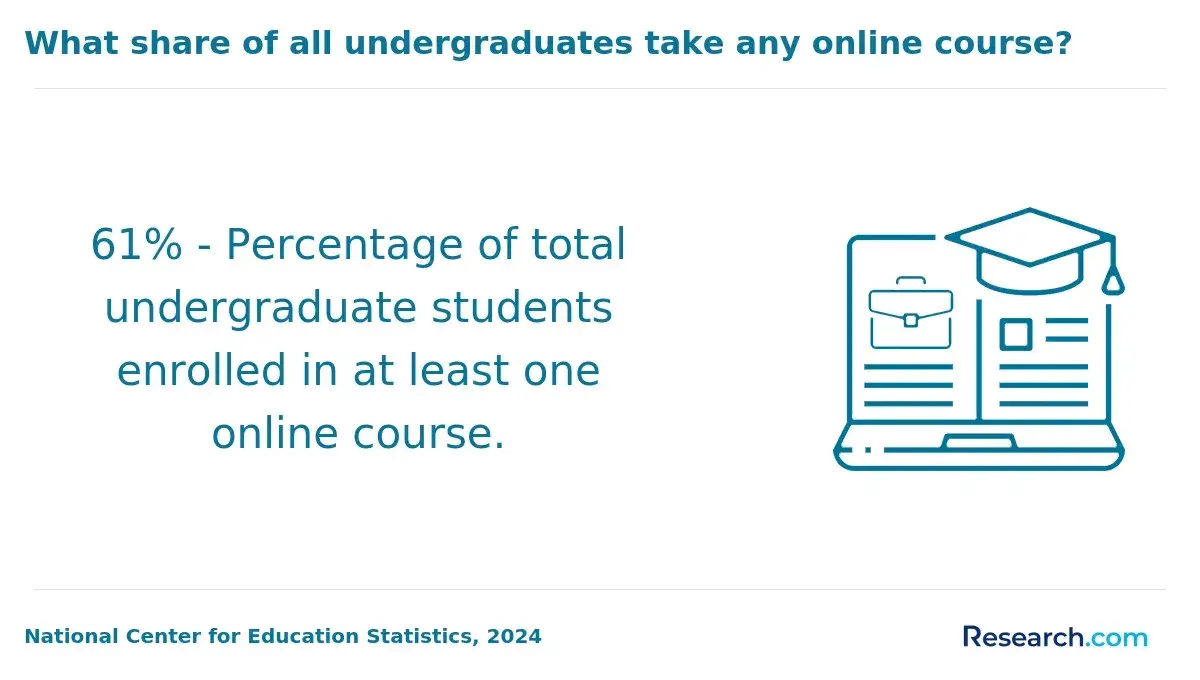
Recent federal data shows a 27% increase in enrollment among adult learners choosing flexible online modalities for allied health and movement sciences since 2023, signaling a shift toward accessible, adaptable education paths that fit working schedules. This trend reflects growing workforce pressure for practitioners capable of bridging clinical understanding with applied performance strategies, often under compressed timelines.
This article outlines which kinesiology roles are expanding fastest and how targeted education choices can position candidates for immediate impact and upward mobility within these sectors.
Key Things You Should Know
- Wage premiums for kinesiology roles in corporate wellness average 12% higher than broader fitness sector jobs per 2024 BLS data but require advanced certifications beyond bachelor's degrees, increasing upfront educational investment.
- Employers prioritize candidates with integrated biomechanics and data analytics skills, pressuring workforce entrants to pursue specialized, often interdisciplinary programs that limit options for traditional kinesiology graduates.
- Rapid 18% job growth forecast through 2031 in sports performance sectors demands accelerated credentialing pathways; extended internships pose timing challenges for those balancing reskilling with current employment.
Which kinesiology roles are growing fastest in corporate wellness and sports performance today?
Positions in kinesiology linked to corporate wellness and sports performance are increasingly defined by measurable outcomes, responding to employer emphasis on health-related productivity improvements. For instance, health coaches specializing in preventative care are hired to reduce absenteeism through personalized behavior-change plans, reflecting a strategic approach far beyond traditional fitness roles.
In corporate settings, exercise physiologists apply clinical knowledge to chronic disease management, translating into tangible reductions in healthcare costs. These developments are aligned with data showing U.S. employers spending around $973 per employee on wellness programs with a majority planning to boost investments.
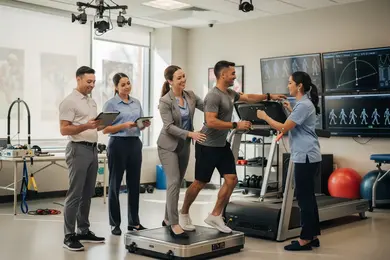
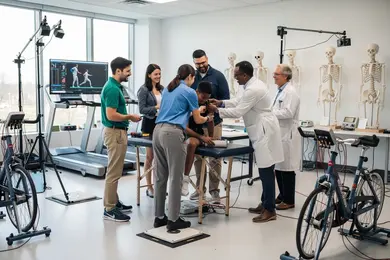
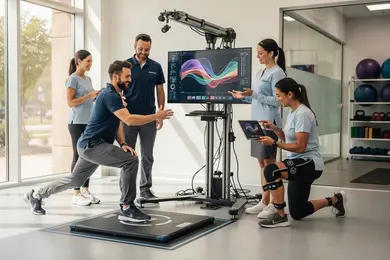
Within the top kinesiology jobs in sports performance, performance analysts using biomechanical and biometric data optimize athlete training and injury prevention. This role demands integration of scientific rigor with technology, which employers value for extending athletes' competitive longevity.
These evolving job markets highlight practical hiring preferences for candidates combining accredited certifications with relevant experience, underscoring the importance of internships and applied learning.
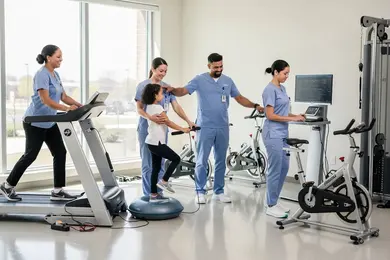
Prospective students evaluating kinesiology career growth in corporate wellness should consider the balance between advanced coursework and hands-on involvement in real-world wellness or sports environments. Those pursuing an exercise science degree online face tradeoffs between flexible study options and the necessity of securing applied placements to meet these market demands.
What degrees and specializations in kinesiology best prepare you for these emerging roles?
Degrees in kinesiology for corporate wellness careers require more than foundational knowledge; programs must embed applied exercise physiology and biomechanics skills that directly address employer expectations. Corporate wellness roles prioritize graduates who understand metabolic and cardiovascular adaptations for personalized health plans while integrating injury prevention strategies that reduce absenteeism and costs.
For instance, kinesiologists with hands-on practicum experience in occupational health environments stand out in managing ergonomic assessments and employee fitness initiatives, directly impacting organizational productivity.
Specializations in kinesiology for sports performance roles demand tailored competencies in sport-specific conditioning and recovery protocols. Graduates from sports science tracks with integrated internships in athletic settings are preferred for roles requiring precise movement analysis and injury risk mitigation.
This illustrates how students must assess program curricula for both practical relevance and certification offerings since degrees lacking credentials such as CPR or strength and conditioning certification limit immediate employability despite deep kinesiology knowledge.
Decision-makers and aspirants must consider the tradeoff between theoretical coursework and real-world skills acquisition to avoid delayed workforce entry in the $23.9 billion corporate wellness market growing at 5.5%. Seeking programs with robust practicum placements is essential.
Additionally, those comparing degree pathways may find that online RN programs for non nurses in Florida exemplify how practical certifiable skills can complement foundational science, ensuring more competitive positioning within rapidly evolving health-related fields.

What does a day-to-day job look like in leading corporate wellness and sports performance positions?
Leading corporate wellness kinesiology roles require managing complex, data-intensive programs that directly address musculoskeletal disorders (MSDs), which burden U.S. employers with nearly $242 billion annually in costs. Professionals in these roles handle detailed injury data, ergonomics assessments, and intervention design, balancing real-time operational challenges against long-term health goals.
For instance, a wellness director at a manufacturing site may focus mornings on identifying injury-prone tasks and afternoons applying targeted ergonomic training while tracking productivity improvements.
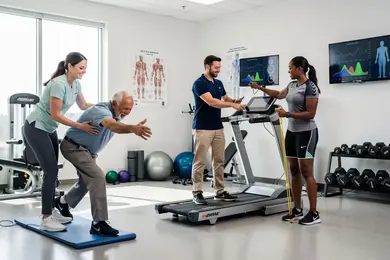
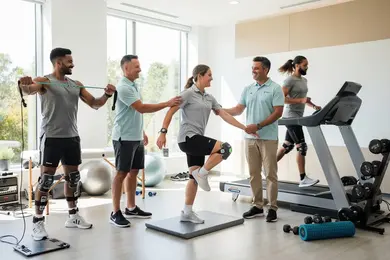
Sports performance kinesiology professional job activities emphasize athletes' functional movement optimization and injury prevention through biomechanical analysis and personalized recovery programs. Performance leads must adapt training based on wearables and clinical feedback, collaborating with medical staff to mitigate overuse injuries. Both sectors face constraints such as limited funding and variable engagement, requiring continuous education and strategic prioritization to sustain program impact.
Career entrants should weigh these operational realities carefully, as success hinges on technical expertise and the ability to navigate multidisciplinary teams and organizational policies. Those pursuing advancement frequently pursue specialized credentials reflecting practical skill sets within workplace dynamics.
For candidates considering related pursuits, examining available health administration master programs can illuminate pathways combining management with kinesiology expertise.
How do salaries and earning potential compare across top kinesiology careers in these settings?
Salaries within kinesiology career salary comparisons in corporate wellness reveal a significant division tied to specialization and employer focus. Entry-level wellness coordinators generally earn between $50,000 and $65,000 per year, reflecting roles centered on preventive health without direct performance metrics.
By contrast, top kinesiology roles in sports performance, especially those involving wearables and data analytics, command starting salaries closer to $70,000-$85,000 due to heightened demand for evidence-based athlete optimization.
The expanding global sports analytics market, valued at $4.37 billion and growing at a 27.4% annual rate to 2030, incentivizes employers to recruit professionals who pair biomechanics expertise with data science capabilities. Those with this hybrid skill set often surpass $90,000 within five years at elite teams or training facilities, illustrating a lucrative pathway distinct from traditional wellness roles where salary growth typically caps near $80,000 regardless of certifications.
This dynamic creates a practical tradeoff for prospective professionals: pursuing data-driven kinesiology training versus remaining in steadier, less financially flexible wellness careers.
For individuals aiming to pivot into these high-paying roles, proficiency in programming, statistical analysis, and wearable technology is increasingly non-negotiable. Without these credentials, even a robust kinesiology foundation may limit progression and opportunity diversity.
Evaluating educational paths demands attention to these workforce realities, much like weighing comparative advantage in programs like Capella university vs WGU RN to BSN.
Overall, those targeting top-tier sports performance roles must strategically develop technical and analytical abilities to leverage the growing intersection between kinesiology and data science, recognizing that traditional corporate wellness pathways offer more constrained financial ceilings and slower advancement.
What level of education, certifications, and practical experience do employers most often require?
Entry-level roles in corporate wellness and sports performance consistently require a bachelor's degree in kinesiology or a closely aligned discipline, but employers increasingly prioritize applied credentials such as Certified Strength and Conditioning Specialist (CSCS) or Certified Exercise Physiologist (CEP). Practical experience—gained via internships, clinical placements, or coordinating onsite fitness programs—is a decisive factor in job readiness.
For instance, corporate wellness directors are expected to provide measurable results; 58% of U.S. companies reporting onsite fitness amenities link these to improved employee retention, demonstrating how data-driven health initiatives impact organizational outcomes.
Mandatory certifications like CPR/AED appear in over 90% of job postings, highlighting the non-negotiable nature of health and safety compliance. Candidates lacking hands-on experience often struggle to translate theoretical knowledge into tailored wellness strategies, particularly when addressing diverse employee needs.
Advanced positions in sports performance typically require a master's degree, specialty certifications, and 3 to 5 years of direct client or team experience focused on biomechanical analysis and injury prevention. While larger employers and professional sports organizations prioritize graduate degrees alongside documented success metrics, smaller firms may accept equivalent expertise derived from certifications and demonstrated results.
Effective practitioners also navigate multidisciplinary team coordination and integrate wellness data with organizational goals—skills seldom developed without structured internships or on-the-job learning. With 63% of companies emphasizing reductions in absenteeism, candidates must prove they can drive both engagement and measurable health improvements to meet evolving workforce demands.
How do online kinesiology programs for corporate wellness and sports performance compare to campus options?
Hands-on experience remains a critical differentiator when evaluating online versus campus kinesiology programs, especially for roles focused on workplace injury prevention and rehabilitation. Employers in manufacturing and corporate wellness prioritize candidates able to conduct physical assessments and implement ergonomic adjustments under real-world conditions.
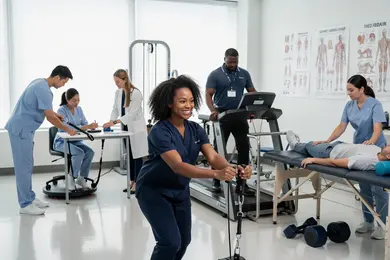
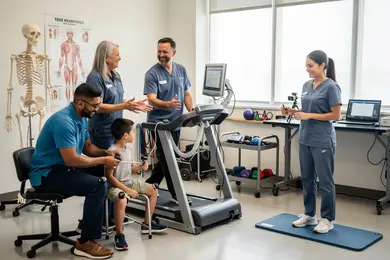
For example, a graduate tasked with reducing musculoskeletal injuries on a factory floor must demonstrate skill with assessment tools and live problem-solving, which campus programs cultivate through supervised practicums and access to specialized labs.
In contrast, online kinesiology programs primarily deliver updated theoretical knowledge-such as injury epidemiology and exercise physiology-via asynchronous modules, benefiting professionals balancing work and study. However, these programs rely on students to secure local practicum sites independently, which can impact timely acquisition of practical competencies employers demand.
Decision-making should factor in these tradeoffs: campus options generally better equip students for immediate tactile interventions and clinical proficiency, while online options suit those targeting research, wellness coordination, or remote roles with less direct physical engagement.
Given the National Safety Council's 2024 Injury Facts report detailing 103 million lost workdays and $167 billion in employer costs, robust clinical skills remain essential for kinesiology graduates to influence injury reduction effectively.
Which accreditations and program quality indicators matter most when choosing a kinesiology school?
Selecting a kinesiology program without prioritizing regional and program-specific accreditation creates significant risks for federal aid eligibility and professional licensure. Accreditation by entities like the Commission on Accreditation of Allied Health Education Programs (CAAHEP) is non-negotiable for credibility, especially when targeting sectors like strength and conditioning or corporate wellness.
Faculty credentials directly impact program quality; certifications such as Certified Strength and Conditioning Specialist (CSCS) or exercise physiologist status are practical markers of faculty industry engagement. Programs that lack structured internship opportunities typically leave graduates unprepared for employer expectations, particularly where hands-on experience in corporate wellness or sports performance settings is essential.
A student aiming for corporate wellness roles faces distinct requirements: mastering organizational health metrics and behavioral coaching demands interdisciplinary coursework and applied projects rather than theoretical focus alone. In contrast, those pursuing sports performance careers benefit from programs offering access to NCAA-affiliated facilities or pro team collaborations, which provide vital applied science exposure.
The U.S. Bureau of Labor Statistics projects a 20% growth in strength and conditioning coaching roles between 2024 and 2034—triple the average job growth—placing a premium on rigorous, evidence-based training with verified graduate outcomes. Cost and delivery mode (online versus in-person) should not override these foundational quality indicators.
What core courses and concentrations build expertise for corporate wellness and sports performance careers?
Employers in corporate wellness and sports performance increasingly demand kinesiology graduates with expertise extending beyond foundational knowledge of anatomy and exercise physiology. Specializations such as strength and conditioning, injury prevention, and occupational health address specific workforce needs but also create important tradeoffs between broad academic coverage and niche preparedness.
For instance, supporting tactical military units requires applied knowledge of human performance and recovery protocols, a priority reflected in the U.S. Department of Defense's FY 2024 investment of over $1.3 billion in performance and readiness programs.
Practical competencies in data analysis and program evaluation have become essential for demonstrating quantifiable improvements and return on investment, especially when professionals must justify wellness initiatives or military contracts. Corporate roles demand integration of ergonomics with productivity strategies, while sports performance tracks focus intensively on biomechanics and athlete-specific conditioning designed for longevity and peak output.
Students should carefully consider how well a program's applied internships or certifications align with the operational context of their target employment sector, as generic kinesiology curricula often lack the depth required by elite sports or military employers. Navigating this balance affects employability and long-term career trajectory within competitive and evolving fields.
In summary, a strategic educational path combines rigorous theoretical foundations with targeted specialization and real-world experience to meet evolving employer expectations.
How long do these kinesiology programs take, and what tuition and funding options should you expect?
Choosing a kinesiology educational path demands understanding how varying credential levels align with employer expectations and long-term career outcomes. Entry-level roles such as fitness coaches typically require two-year associate degrees or certificates centered on biomechanics and exercise science, but these credentials often cap advancement potential in data-driven wellness sectors.
Bachelor's degrees, requiring roughly four years, open opportunities for analyst or coordinator roles that interpret biometric data. Yet, jobs emphasizing healthcare analytics or intervention design increasingly necessitate graduate-level education, extending study time by two or more years.
Tuition disparities between public and private institutions significantly affect total program costs, which can surpass $80,000, including graduate study. Funding routes like FAFSA grants, private scholarships, and employer tuition reimbursements help but demand careful financial planning considering entry-level salaries in related fields. Accelerated or part-time programs offer alternatives for working students but may prolong degree completion and require rigid self-discipline.
Corporate wellness employers often prioritize candidates with bachelor's degrees plus certifications and demonstrated data skills, whereas sports performance labs tend to require specialized graduate training in exercise physiology or biomechanics. Failure to tailor educational investments toward specific industry demands can delay professional progress and limit placement options.
How can students build internships, networking, and career pathways into high-demand kinesiology roles?
Targeted internships in kinesiology demand alignment with employer needs to offer measurable skill application rather than generic experience. Placements within corporate wellness programs emphasize client health assessments, behavior modification, and return-on-investment metrics—skills essential for data-driven roles in employee well-being management.
In contrast, sports performance internships prioritize biomechanics and athlete monitoring, requiring access to advanced performance labs and technologies, which may not be universally available. Choosing between these pathways involves weighing immediate technical training against long-term access to specialized equipment.
Networking effectiveness hinges on participation in field-specific events and professional organizations connected to rapidly expanding sectors. Genuine engagement with experienced mentors and recognized industry authorities often yields job leads or freelance opportunities validated through outcome-based metrics, a deciding factor for employers assessing consultancy effectiveness.
Data from the 2025 Health & Wellness Freelancer Income Report by Upwork Research and the Global Wellness Institute show independent professionals in this space earn a median income of $78,000, with 31% exceeding six figures. This underscores how certifications recognized by employers intersect with marketable technical expertise to generate premium income streams.
Students should also actively seek employer feedback during internships to refine their practical skills and adapt to evolving health data analytics and operational demands, a responsiveness that distinctly influences hiring decisions in competitive kinesiology roles.
Other Things You Should Know About Kinesiology
While a kinesiology degree provides essential foundational knowledge, most employers in corporate wellness expect additional certifications in areas like health coaching, nutrition, or fitness training. These certifications demonstrate practical skills and commitment to specialized competencies that a degree alone often does not convey. Prioritizing certification aligned with your target role-such as Certified Corporate Wellness Specialist (CCWS)-will have a direct impact on your job prospects and credibility within corporate settings.
Sports performance roles usually require intensive one-on-one client interaction and hands-on coaching, demanding irregular hours to accommodate athletes' training schedules. In contrast, corporate wellness positions often involve managing broader programs and may focus more on group education, data analysis, and administrative tasks with more consistent office hours. Candidates must weigh their preference for direct client engagement versus program management responsibilities when selecting their career focus.
Career growth without a master's degree is possible but limited in scope and upward mobility. Entry and mid-level roles such as wellness coordinator or wellness coach typically require a bachelor's degree plus certifications, but advancing to leadership or strategic roles in corporate wellness often requires graduate education. Investing in a master's program focused on health promotion or organizational wellness is a clear recommendation for professionals aiming for senior or consultancy positions.
In 2027, kinesiology roles are increasingly emphasizing a blend of applied skills and technological integration. As companies focus more on employee wellness and athlete performance enhancement, roles that combine knowledge of kinesiology with practical application using advanced tools and systems are growing fastest. These roles often involve developing tailored wellness programs and employing data analytics to optimize physical performance and prevent injuries.
References
- Exercise Science Degree Programs Lead to Rewarding Careers in Health and Fitness https://www.carrollcc.edu/articles/exercise-science-degree-programs-lead-to-rewarding-careers-in-health-and-fitness/
- Education vs Experience: What Employers Value More https://undutchables.nl/about-us/blog/education-vs-experience-what-employers-value-more
- Well-Being: The Key to Stronger Workplace Performance | Exos https://www.teamexos.com/resources/well-being-workplace-performance
- How to Choose your Accreditation Body https://accreditation.ca/news/how-to-choose-your-accreditation-body/
- What Can I Do in My Career With a Master’s in Kinesiology? https://www.pointloma.edu/resources/health-sciences/what-can-i-do-my-career-masters-kinesiology
- Online Exercise Science Degrees: Top School Review https://www.edumed.org/online-schools/exercise-science-degrees/
- What Does a Corporate Wellness Specialist Do? https://blog.nasm.org/what-does-a-corporate-wellness-specialist-do
- Kinesiology Accreditation Process https://www.ccupeka.org/accreditation/kinesiology-accreditation-process/
- Maximizing Sport Performance Through Kinesiology - LiveWell Health and Physiotherapy https://livewellhealthandphysiotherapy.com/2017/07/01/maximizing-sport-performance-through-kinesiology/
- American Kinesiology Association | Careers in Kinesiology https://americankinesiology.org/careers-in-kinesiology/