2027 Best Online Kinesiology Programs for Professionals Seeking Hospital and Rehab Careers

Co-Founder and Chief Data Scientist
Mid-career professionals aiming to transition into hospital or rehab settings often struggle to find flexible kinesiology programs aligned with their demanding schedules and practical skill requirements. With adult learners comprising over 40% of online enrollments according to the National Center for Education Statistics' 2024 data, accessibility and part-time options have become critical factors influencing program selection.
Yet, many available programs either lack clinical focus or fail to accommodate working students, risking delayed credentialing and lost employment opportunities. This article evaluates the best online kinesiology programs designed for professionals targeting hospital and rehabilitation careers, emphasizing program flexibility, clinical relevance, and workforce alignment to guide effective educational investment decisions.
Key Things You Should Know
- Programs emphasizing hospital and rehab readiness demand extensive clinical hours, often exceeding 500, increasing tuition and delaying workforce entry by 12-18 months, as per recent Bureau of Labor Statistics data.
- Employer preference shifts toward integrated certifications combined with kinesiology degrees, with 68% of hiring managers seeking candidates holding both, highlighting necessity of multi-credential strategies.
- Access disparities persist: public institutions offer 20%-30% lower costs but limited specialization tracks, forcing professionals to balance affordability against targeted skill acquisition, affecting career trajectory timing.
What is an online kinesiology degree and how does it prepare you for hospital and rehab roles?
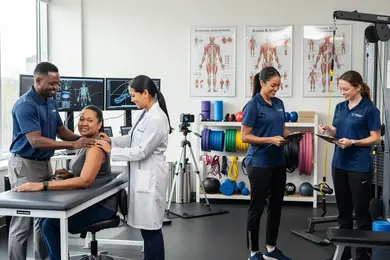
Online kinesiology degrees for hospital and rehab careers must be evaluated beyond curriculum content by their alignment with real-world clinical demands and workforce trends. Programs teach biomechanics, anatomy, exercise physiology, and therapeutic modalities essential for designing injury prevention and rehabilitation strategies tailored to patient needs in both hospital and rehab settings.
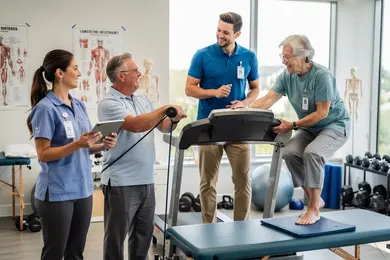
This pathway equips professionals to collaborate within multidisciplinary teams, creating evidence-based treatment plans for conditions from post-surgical recovery to chronic disease management. However, online kinesiology programs often require local, hands-on clinical experience, adding logistical complexity that impacts students' ability to balance fieldwork with employment or personal obligations.
A graduate at a major urban hospital might specialize in rehabilitating stroke patients through focused kinesiology assessments, while peers in rural facilities often handle more generalized caseloads with fewer specialized resources, demonstrating how employment settings dictate skill set breadth.
Given that the U.S. healthcare sector is set to add about 1.8 million jobs from 2022 to 2032, largely driven by aging populations needing rehabilitation services, this degree's practical value reflects these labor market realities. Yet, some roles require certifications such as Certified Kinesiologist or Licensed Exercise Physiologist beyond the degree alone.
Prospective learners should also consider program accreditation, clinical support availability, and realistic post-graduation outcomes. For a broader view on relevant educational options, evaluating an exercise science online degree can provide comparative insights into rehabilitation-oriented curricula and pacing.
Careful consideration of how an online kinesiology program prepares professionals for rehabilitation roles-particularly the integration of clinical experience with theoretical learning-is critical to sustaining long-term employability in this evolving healthcare niche.
How do online kinesiology programs compare with campus options for clinical and lab training?
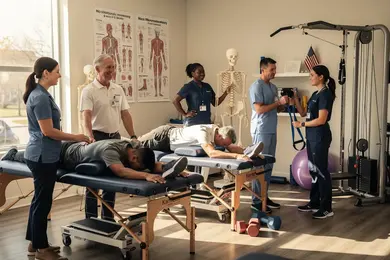
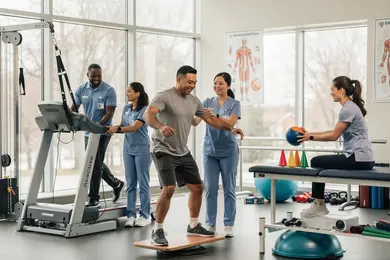
Online kinesiology clinical training differences sharply influence graduate readiness for hospital and rehabilitation roles. The core issue lies in the limited hands-on exposure remote programs offer compared to campus-based courses, which provide essential tactile skills development through supervised labs and specialized equipment access.
Employers expect new hires to be proficient in manual techniques and patient interaction-competencies that are seldom fully cultivated in purely online environments.
Hybrid programs that combine online coursework with mandatory in-person practicums address this critical gap best. Fully remote students without local clinical affiliations often struggle to find quality supervised placements, delaying licensure and workforce entry-especially in physical therapy and occupational therapy disciplines requiring documented patient contact hours. This distinction reflects the broader campus versus online kinesiology lab experience divide.
The Bureau of Labor Statistics data cited by Arizona State University spotlights a 14% employment growth for physical therapists and 11% for occupational therapists from 2023 to 2033. Due to competitive job markets, graduates from online-only programs with weaker clinical training risk longer job searches and less favorable hiring prospects in clinical settings.
When evaluating programs, prospective students and working professionals must prioritize those integrating local clinical components to align with licensure standards and employer expectations. A working adult aiming for rehab roles, for instance, should scrutinize how programs facilitate in-person labs and patient contact. Without these, theoretical knowledge remains insufficient for critical job functions.
For related professional pathways, individuals might also explore accelerated MSN psychiatric NP programs as alternatives aligning rigorous clinical preparations with flexible delivery.
Which accreditations should online kinesiology programs have for hospital and rehab careers?
Hospital and rehabilitation employers specifically require degrees from programs with recognized regional accreditation to ensure baseline academic quality, but for physical therapy, occupational therapy, exercise physiology, and athletic training roles, programmatic accreditation is non-negotiable.
For example, physical therapy programs must hold accreditation from the Commission on Accreditation in Physical Therapy Education (CAPTE) to enable graduates to sit for licensure exams required for hiring and salary eligibility.
Choosing an online kinesiology program accreditation for hospital careers without these credentials often results in lost clinical placement options and blocked licensure pathways, delaying or derailing employment in direct patient care roles.
Occupational therapy programs accredited by the Accreditation Council for Occupational Therapy Education (ACOTE) similarly affect state licensure and competency validation. Exercise physiology and athletic training programs aligned with CAAHEP or CAATE accreditation validate preparation for certification exams, directly shaping hiring decisions and compensation bands.
Median wages for these roles reflect the premium on accredited education: $101,020 for physical therapists and $98,340 for occupational therapists, versus lower earnings and limited job prospects for non-accredited graduates. Prospective students evaluating the best accredited kinesiology programs for rehab professionals must prioritize these specific accreditations over institutional prestige alone.
Without proper alignment, graduates risk costly re-education or certification gaps, impeding immediate workforce integration. Those pursuing a strategic shift or advanced credentials may also consider related pathways such as a master's in healthcare administration to diversify employment options while maintaining clinical relevance.
What types of online kinesiology degrees support careers in hospitals and rehabilitation settings?
Online bachelors and masters degrees in kinesiology designed for hospital careers must prioritize applied clinical experience alongside theoretical study to meet employer expectations. For example, a bachelor's program with a concentration in exercise physiology that integrates hands-on internships trains students for roles in cardiac rehab or clinical recovery, where measurable patient interaction is non-negotiable.
Without internships or direct patient exposure, graduates often compete with physical therapy aides holding credentials specifically tailored for healthcare support roles.
Master's pathways in rehabilitation kinesiology certifications for healthcare professionals demand even deeper clinical immersion, regularly requiring practicum hours to satisfy hospital credentialing standards. The practical challenge for working students lies in securing programs that facilitate local clinical placements through established partnerships; otherwise, degree completion can lead to delays in workforce entry despite academic success.
This bottleneck starkly contrasts with programs that provide flexible asynchronous coursework matched with structured patient care experience.
Job projections indicate a 7% growth rate for exercise physiologists in hospital and rehab settings from 2023-2033, reflecting a demand trajectory above average and emphasizing programs with certification-aligned curricula. Not meeting criteria such as ACSM Certified Clinical Exercise Physiologist eligibility directly limits employability in licensed hospital environments.
Prospective students should weigh these factors against alternative options; for instance, comparing kinesiology degrees with online accelerated nursing programs when considering career pivot timing, scope of practice, and licensure requirements.
What courses and concentrations in online kinesiology best align with rehab and clinical work?
Programs focusing on kinesiology for rehabilitation and clinical careers must prioritize applied human movement science, therapeutic exercise, and patient assessment to meet employer expectations. Essential coursework includes biomechanics, motor control, injury prevention, musculoskeletal anatomy, neuromuscular rehabilitation, and functional movement evaluation.
These foundational subjects enable specialists to design tailored recovery protocols and accurately assess movement impairments, a practical necessity in hospital and clinical environments.
For example, a rehabilitation specialist relies on expertise in functional anatomy and neuromuscular re-education to individualize patient care, while clinical roles demand proficiency in data-driven assessment and outcome measurement methods. This distinction influences curriculum choices and impacts readiness to meet day-to-day clinical demands.
Programs incorporating practicum or virtual labs improve skill translation from theory to hands-on application, critical in kinesiology-related healthcare roles. Accreditation that stresses evidence-based practices and interdisciplinary collaboration with physical therapists and physicians further strengthens employability.
Cost remains a significant consideration with tuition per credit ranging from about $129 to $800, leading to total bachelor's degree expenses between $20,000 and over $60,000. Students must balance tuition costs against program reputation, clinical alignment, and networking capacity, as these factors often determine whether the educational investment yields tangible career outcomes in rehab or hospital settings.
What are typical admission requirements for online kinesiology programs geared to working professionals?
Admission to online kinesiology programs for working professionals involves more than academic credentials; practical experience and documentation often tip the scale. Most programs require a bachelor's degree with a 2.5 to 3.0 GPA minimum, though degrees related to health sciences or biology may facilitate smoother entry due to relevant foundational knowledge.
Candidates frequently submit transcripts, personal statements outlining career objectives, and sometimes test scores-though experienced professionals might receive waivers.
Professional background in healthcare or rehabilitation settings provides a competitive advantage. For example, a nurse moving into physical therapy must demonstrate patient care hours and may need certifications like CPR to meet admission standards. Such hands-on experience can shorten integration into advanced coursework.
Programs aimed at roles with mid- to upper-tier clinical responsibilities-such as physician assistants or physical therapists-typically require letters of recommendation and health compliance checks, including immunizations and background verification. These prerequisites reflect employer expectations and facility partnerships.
Arizona State University data shows roles connected to kinesiology deliver strong salary prospects, with physician assistants earning a median of $135,880 and physical therapists $102,760. These figures emphasize the financial tradeoff: investing time and effort into rigorous admissions and coursework can pay off significantly in the longer term.
Students should balance program selectivity against regional job market demands and the practicalities of meeting these admission requirements to ensure alignment with career goals.
How long do online kinesiology programs take, and what do they cost to complete?
Deciding between shorter and longer kinesiology programs involves weighing time-to-completion against the depth of clinical preparation crucial for hospital or rehab employment. Associate degrees, typically completed in about two years full-time, offer a faster, lower-cost entry but may require supplementary certification or experience to compete in roles such as physical therapist assistant.
Bachelor's degrees span around four years and often incorporate internships or clinical placements essential for licensure. This extended training better aligns with employer expectations in specialized rehab settings, directly impacting job readiness and salary potential.
Costs vary widely, from roughly $8,000 to over $40,000. Public institutions usually provide more affordable options, while private programs tend to be more expensive. Additional fees for clinical experiences and certification exams can add $1,500 to $4,000, influencing overall investment decisions.
Job growth projections reinforce the strategic value of these credentials: physical therapist assistant roles are expected to grow by 22.0%, and physician assistant roles by 20.4% over the next decade, according to Arizona State University data. This growth underscores the importance of relevant hands-on training and employer connections built during the program.
Prospective students must balance immediate financial constraints against potential delays in career entry due to reduced clinical exposure. Programs integrating comprehensive clinical training and timely completion often yield better employment outcomes in competitive healthcare fields.
What hospital and rehabilitation jobs can you get with an online kinesiology degree?
An online kinesiology degree positions graduates primarily for auxiliary roles in hospital and rehabilitation settings rather than direct clinical practice.
Professions such as physical therapist, occupational therapist, athletic trainer, chiropractor, and physician assistant require graduate-level education and state licensure, which an undergraduate kinesiology degree alone does not provide. This creates a practical barrier: graduates must pursue further education to transition into high-impact clinical roles involving hands-on patient care.
For instance, a graduate working as a rehabilitation aide may support licensed therapists by assisting with patient mobility tasks but will not independently design or implement treatment plans. Employers in medical settings typically expect certifications like CPR or first aid for these preparatory positions, yet these roles often have limited career progression without additional credentials.
Students aiming for clinical healthcare jobs in hospital or rehab environments should anticipate enrolling in specialized graduate programs such as Doctor of Physical Therapy (DPT), occupational therapy (OT), or physician assistant (PA) studies. These programs mandate practical clinical internships that cannot be completed fully online, requiring an investment of time, expense, and in-person commitment beyond the online kinesiology coursework.
Ultimately, while an online kinesiology degree provides foundational knowledge, meaningful clinical employment hinges on pursuing graduate education and licensure aligned with employer and regulatory standards.
What are salary expectations and job outlook for kinesiology professionals in hospital and rehab settings?
Hospital and rehabilitation roles for kinesiology professionals typically pay between $48,000 and $72,000 annually, reflecting differences in credentials, experience, and geography. Positions such as clinical kinesiologists or exercise physiologists integrated into multidisciplinary teams often reach the upper salary range when combined with specialized certifications or graduate education.
Metropolitan centers with advanced medical facilities can offer 15-25% higher wages but expect commensurate practical experience and certifications.
Growth projections for exercise physiologists and related roles stand at 10% through 2032, driven by an aging population and increased rehabilitation demand. Yet, employers consistently emphasize the value of clinical practicums within academic programs; theoretical knowledge alone without hands-on exposure often hinders entry into hospital-based jobs.
Online kinesiology bachelor's degrees now report comparable job placement or graduate school continuation rates as on-campus options, suggesting employer acceptance of remote education when practical training and networking are adequately addressed.
Key factors that affect job readiness include:
- Completion of practicums specifically aligned with hospital environments.
- Certification preparation, such as for the ACSM Certified Clinical Exercise Physiologist designation.
- Developing connections within rehabilitation and hospital systems.
Decisions regarding program selection should balance accreditation status with embedded clinical experience and employer engagement to ensure realistic pathways into hospital and rehab kinesiology careers.
How can you evaluate and choose the best online kinesiology program for your career goals?
Choosing an online kinesiology program demands prioritizing curriculum and practical alignment with employer needs over convenience or prestige alone. Programs focusing on biomechanics, therapeutic exercise, and patient assessment must integrate clinical practicum experiences with hospital or rehabilitation partners to meet documented employer expectations for hands-on skills and patient care accuracy.
For instance, healthcare professionals transitioning from general fitness roles need direct clinical placements that mirror hospital workflows to ensure their competencies are recognized and valued.
Accreditation by reputable entities like CAATE or recognized regional accreditors affects licensure eligibility and employer confidence. Beyond credentials, analyzing graduation and job placement rates reveals a program's effectiveness in connecting graduates to relevant hospital or rehab roles. Programs with established networks in healthcare settings consistently demonstrate stronger employment outcomes.
Flexibility in course delivery and clinical scheduling is essential for working students, as asynchronous formats and location-based clinical placements reduce conflicts with existing job duties.
Additionally, assessing financial aid options and total program cost against the projected return on investment-given the U.S. Bureau of Labor Statistics' forecasted 15% growth in rehab support roles through 2033-is critical. Balancing these factors ensures realistic advancement rather than theoretical opportunity.
Other Things You Should Know About Kinesiology
Online kinesiology programs vary widely in their flexibility and clinical training integration. Programs designed specifically for working adults often offer asynchronous coursework, but the quality and quantity of in-person clinical components can be limited.
Prioritize programs that clearly outline structured, supervised practicum requirements within local health facilities or rehab centers, as this ensures skill development aligns with employer standards in hospital and rehabilitation settings.
Hands-on experience is essential and cannot be fully replaced by online learning. Employers in hospitals and rehab environments expect graduates to demonstrate practical skills acquired through internships or clinical placements. Candidates should select online programs that mandate extensive, supervised clinical hours on-site because this directly impacts readiness for complex patient care and team collaboration tasks.
Programs like the University of Florida and Texas A&M University provide well-balanced online kinesiology curriculums. They include comprehensive online coursework with options for in-person, real-world experience, ensuring flexibility without sacrificing vital clinical skills necessary for hospital and rehab careers.
Employer recognition of online kinesiology degrees depends on program reputation, accreditation, and clinical training quality. Large hospital systems and specialized rehab centers typically prefer candidates whose programs include rigorous, hands-on clinical exposure. For professionals targeting these employers, selecting an online program with verified clinical partnerships and transparent outcomes data is critical to avoid hiring biases and ensure competitive positioning.
References
- How to Choose the Best Online Degree for Your Career Goals https://astoriacompany.com/how-to-choose-the-best-online-degree-for-your-career-goals/
- Bachelor's in Kinesiology Program Online | Montreat College https://www.montreat.edu/online/kinesiology/
- 8 Facts to Know Before Starting a Kinesiology Undergrad https://www.symmetrix.ca/blog/starting-a-kinesiology-undergraduate-degree
- Kinesiology and Exercise Science Careers Guide https://teach.com/online-ed/healthcare-degrees/online-bachelors-kinesiology-exercise-science/career-outlook/
- Top 15 Low-Cost Online Bachelor's in Kinesiology 2020 https://www.greatvaluecolleges.net/rankings/online-bachelors-kinesiology/
- What Can You Do With a Kinesiology Major? | USAHS https://www.usa.edu/blog/what-can-you-do-with-a-kinesiology-major/
- What Is a Kinesiology Degree? https://www.nec.edu/news/what-is-a-kinesiology-degree
- Kinesiology, BS https://www.ucmo.edu/academics/programs/majors/chst/nutrition-kinesiology-and-health/kinesiology/degree-in-kinesiology/
- Bachelors in Kinesiology Degrees, Online Included, Updated 2026 https://www.kinesiologydegrees.org/programs/degree/bachelors
- Online Kinesiology Degree Programs: Review Top Schools https://www.edumed.org/online-schools/kinesiology-degrees/