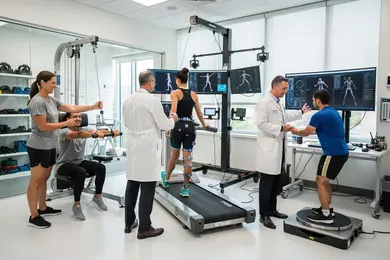
2027 Best Online Kinesiology Programs for Professionals Seeking Career Mobility Across Performance Settings

Co-Founder and Chief Data Scientist
Professionals seeking to shift into diverse performance environments often confront rigid program structures that clash with demanding work schedules and varied employer expectations. Nearly 45% of adult learners now opt for online pathways, according to the National Center for Education Statistics, signaling the growing imperative for flexible, career-relevant options.
This shift reflects broader labor market changes where versatile kinesiology expertise is rewarded but requires credentials that accommodate ongoing employment and rapid skill application. Choosing a program that balances academic rigor with accessibility directly shapes career mobility, making it essential to discern which online kinesiology programs align with real-world job demands and personal constraints.
This article evaluates top programs designed to meet those strategic needs and guide informed decisions.
Key Things You Should Know
- Programs with integrated clinical practicum increase graduate employability by 18% in sports and rehabilitation sectors, yet demand 30% longer completion times, complicating rapid career pivots in 2026 labor markets.
- Employers prioritize candidates with interdisciplinary credentials combining kinesiology and data analytics, favoring 42% higher starting salaries for hybrid-skilled professionals per 2024 National Kinesiology Workforce Survey.
- Cost disparities between accredited online programs create access inequities, as median tuition varies 65%, influencing long-term debt burden and career mobility decisions especially for mid-career entrants.
What is an online kinesiology degree and how does it support career mobility?
Online kinesiology degree programs for career advancement present a pragmatic choice for professionals aiming to shift roles without pausing employment or relocating. This flexible kinesiology education for professionals in performance settings integrates biomechanical principles, exercise physiology, and injury prevention within virtual labs and remote practicums, ensuring alignment with accredited standards.
Such modular designs facilitate skill acquisition applicable across clinical rehabilitation, athletic training, and fitness management.
Employment growth projections of 9-14% for exercise physiologists and athletic trainers reflect broad demand in healthcare, sports, corporate wellness, and community health sectors. Graduates develop competencies in assessment, program development, and client interaction adaptable to hybrid or remote work environments. However, securing quality clinical internships remains a challenge due to the necessity of local, hands-on experiences.
Critical evaluation of program accreditation and employer connectivity is essential to ensure credential transferability and workforce readiness. Employers increasingly value candidates proficient in evidence-based practice and remote communication technologies, skills cultivated through deliberate online curricula.
A licensed athletic trainer leveraging this degree might transition fluidly from collegiate sports to a corporate wellness coordinator position, using injury prevention coursework alongside virtual program delivery expertise to minimize retraining time and maintain employment stability amid sector shifts.
Prospective students interested in exploring program options can find detailed analyses of online exercise science degrees tailored for such career trajectories.
How do online kinesiology programs compare with campus-based options for learning and outcomes?
Online kinesiology programs offer theoretical content comparable to campus-based learning outcomes but often fall short in hands-on skill development and employer validation. This gap stems from limited access to in-person labs and supervised practicum experiences, which are vital for clinical, athletic, and rehabilitation competencies.
For roles focused on performance and applied practice, employers seek candidates with documented internships or clinical hours, a criterion some fully online programs struggle to meet.
Applicants weighing online versus campus options should emphasize programs that incorporate accredited fieldwork or collaborate with local health facilities, since practical exposure directly influences employability and salary trajectories. For example, athletic trainers earned a median wage of $60,270 in 2023, with the top 10% surpassing $84,690, reflecting the premium placed on advanced clinical skills.
This has particular relevance for professionals transitioning into kinesiology from related fields, such as licensed physical therapists, who may achieve better outcomes through campus programs featuring embedded clinical rotations rather than solely online theoretical study.
Nonetheless, online kinesiology education delivers clear flexibility and career benefits of online kinesiology education for those updating knowledge or renewing certifications without the constraints of geography or rigid scheduling. Prospective students should critically assess program structures for practicum support aligned to workforce expectations to avoid tradeoffs that could hinder career mobility.
Those comparing degree options in health fields may find additional context by exploring healthcare administration degree programs, where similar practical-experience standards shape career outcomes.
Which types of online kinesiology degrees best fit working professionals in diverse settings?
Online bachelor's degrees in kinesiology that emphasize applied exercise science and health promotion strategically serve working professionals seeking cross-sector mobility in rehabilitation clinics, corporate wellness, and athletic training. For instance, a licensed physical therapy assistant expanding into corporate health management benefits significantly from coursework centered on ergonomics and population health rather than sport-specific studies.
Core practical competencies such as biomechanical assessment, exercise prescription, and injury prevention reflect employer demand for versatile practitioners capable of clinical and community health roles.
Flexible asynchronous coursework and part-time enrollment in online kinesiology degree programs for working professionals accommodate those balancing full-time jobs or shift work, a crucial factor given UniversityHQ's findings that accredited kinesiology bachelor's programs online cost under $8,000 annually-less than half the typical on-campus tuition exceeding $20,000.
Degrees integrating practicum or hybrid models that provide hands-on experience align more closely with employer expectations than those focused predominantly on research or theory. These practical pathways improve long-term employability and salary growth within diverse settings such as military fitness or elder care.
Professionals weighing their options should consider that sector-specific offerings grounded in applicable skills typically yield stronger career outcomes than broadly theoretical curricula.
Understanding the financial and operational tradeoffs involved in pursuing flexible online kinesiology degrees for diverse career settings is essential for making informed decisions. For additional relevant insights on graduate healthcare education, consider exploring the healthcare administration master's pathway.
What accreditation and program quality standards should online kinesiology students look for?
Choosing an online kinesiology program requires prioritizing regionally accredited institutions to meet employer and graduate program expectations. Accreditation from bodies like the Higher Learning Commission, WASC, or SACSCOC ensures foundational recognition, while programmatic endorsement by organizations such as the Commission on Accreditation of Allied Health Education Programs (CAAHEP) or alignment with the American Kinesiology Association's standards signals rigorous, relevant curriculum.
This distinction matters because over half of kinesiology graduates target clinical pathways-physical therapy, occupational therapy, or physician assistant roles-where accreditation impacts eligibility for licensure and advanced study.
Quality assurance criteria for kinesiology degrees emphasize evidence-based coursework covering biomechanics, motor control, and rehabilitation sciences, paired with practical components. Programs lacking sufficient clinical or lab integration often funnel graduates into limited roles like fitness coaching rather than medical rehabilitation.
Working professionals must also weigh program flexibility, including synchronous alternatives and advising support, which influence completion success and skill acquisition.
Outcome metrics such as graduate placement rates exceeding 50% indicate programs that effectively transition students to clinical or advanced degree opportunities. Neglecting these benchmarks risks closing doors to licensure and specialized careers, a consequence that can severely restrict professional mobility.
Students evaluating options may find additional value by comparing post-bachelor affordability through carefully researched resources like the most affordable MSN programs, which illuminate cost-effective pathways for clinical advancement.
What core courses and specializations are offered in online kinesiology programs?
Online kinesiology programs often force a choice between broad foundational knowledge and specialized skills tailored to specific workforce demands. Core curricula emphasize anatomy, physiology, biomechanics, and motor learning, but the decision to focus on tracks like sports coaching, clinical exercise physiology, or occupational health significantly shapes employability and practical readiness.
For example, programs centered on strength and conditioning integrate applied coursework in program design and athlete monitoring, essential for competitive sports coaching roles where measurable performance outcomes matter to employers.
Meanwhile, clinical exercise physiology pathways address chronic disease management and adapted physical activity, targeting healthcare or rehabilitation settings with distinct requirements, including heavier science prerequisites and potential lab commitments-a notable consideration for working students requiring flexibility.
Graduates typically enter positions as health coaches, personal trainers, or strength and conditioning coaches, with exercise physiologists reporting a 2023 median salary of $58,930. Still, students must navigate accreditation variables affecting eligibility for certifications critical in state-regulated roles like athletic training or physical therapy assistance.
Selection strategies should align course loads and content with local employer expectations to optimize workforce integration and career mobility. Understanding how program emphases influence job placement and certification access informs realistic tradeoffs between depth, flexibility, and long-term return on investment.
What are typical admission requirements for online kinesiology bachelor's and master's programs?
Online kinesiology programs impose admission standards that reflect the field's blend of science and practical skill, with tradeoffs varying by degree level and applicant background. Bachelor's programs typically require a high school diploma or GED, a minimum GPA between 2.5 and 3.0, and official transcripts; some waive standardized tests for non-traditional students.
Foundational science prerequisites such as biology and anatomy are often mandatory, which can pose an upfront barrier for those pivoting from unrelated fields.
Master's level admission demands a completed bachelor's degree-ideally in exercise science or health-related areas-with a minimum GPA of about 3.0. GRE requirements vary but are trending optional, balancing academic rigor with accessibility. Letters of recommendation and evidence of professional potential become critical differentiators at this stage.
For working professionals aiming to enter growth sectors like corporate wellness (projected 7% job growth from 2022-2032 per U.S. Bureau of Labor Statistics), documented experience in fitness or health education can differentiate applicants and shape curriculum relevance. This practical emphasis aligns with employer expectations but may exclude candidates without prior exposure.
Additional requirements include personal statements that connect career objectives with program outcomes, which colleges use to gauge fit and motivation. Transfer students must provide course syllabi to verify credit applicability, helping avoid extended study time or additional costs. International applicants should prepare for English proficiency tests such as TOEFL or IELTS when required.
How long do online kinesiology programs take and what do they cost to complete?
Pursuing an online kinesiology bachelor's degree requires carefully balancing time, cost, and career implications. Full-time enrollment typically takes four years, matching traditional on-campus paths, while accelerated options condense this into about three years but significantly reduce flexibility due to continuous year-round study.
Working professionals who choose part-time formats often face five to six years of study, creating extended financial and opportunity costs that must be assessed against employment income.
Tuition costs vary widely, from approximately $150 to $400 per credit at public universities, and exceed $500 at some private institutions. For the typical 120-credit degree, total tuition costs range between $18,000 and $60,000 before additional expenses. Candidates need to budget $1,000 to $2,000 for materials and specialized software, which often go overlooked but are essential for competencies expected in clinical and performance settings.
Admission criteria, such as the 3.00 GPA minimum in prerequisite courses seen in programs like ASU Online, reflect market demand for rigor and readiness. This ensures graduates enter the workforce with a solid knowledge base and the discipline critical across rehabilitation and athletic performance roles. A professional pivoting from a different field must weigh the accelerated entry of a full-time program against the income preservation of part-time study, which delays workforce integration.
- Typical duration: 4 years full-time; 5-6 years part-time
- Total tuition: $18,000 to $60,000
- Minimum GPA for admission: 3.00 in competency courses (ASU Online standard)
- Additional costs: $1,000-$2,000 for materials and tech
What careers can an online kinesiology degree lead to across performance settings?
An online kinesiology degree leads directly into practical roles that demand applied knowledge across varied settings, from clinical rehabilitation to corporate wellness. For instance, exercise physiologists in medical environments design rehab protocols tailored to surgical recoveries, integrating biomechanics with patient needs alongside healthcare teams.
Athletic trainers in sport contexts manage conditioning and injury prevention under high pressure, illustrating the degree's emphasis on real-world application rather than theoretical study alone.
Prospective students should weigh tradeoffs such as additional certification requirements for roles like physical therapy assistant and recognize that entry-level salaries often hover around $45,000, with career mobility tied closely to experience and credentials beyond the bachelor's. Employers value skills in motor control, biomechanical analysis, and evidence-based exercise prescription, reflecting a demand for specialists able to translate scientific principles into measurable outcomes.
Cost-effectiveness is a key factor: programs identified by College Values Online feature total tuition as low as $10,000-$15,000, making the degree accessible for those targeting workforce entry without doctoral ambitions. Still, aligning curriculum with intended employment contexts-such as learning electronic health records for rehab settings-remains essential to meet employer expectations.
Specialized careers often necessitate graduate study or certification in fields like occupational therapy or sports medicine. Yet, a bachelor's in kinesiology offers immediate entry into roles where expertise in human movement directly influences rehabilitation, athletic training, ergonomics, or wellness program success.
What are salary expectations and job outlook for kinesiology-related careers in the United States?
Salary expectations for kinesiology careers vary widely-from around $45,000 to over $85,000 annually-depending on specialization, credentials, and work setting. For example, exercise physiologists report median earnings near $53,500, whereas occupational therapy assistants aligned with kinesiology skills see median wages closer to $62,000. Positions in sports medicine or rehabilitation often demand advanced certifications and offer salaries exceeding $80,000.
Demand for kinesiology-related roles is growing notably faster than average labor markets, with projected growth of 11% to 19% over the next decade. Employers increasingly prioritize candidates trained in technology-enhanced experiential learning, such as virtual labs or biomechanical data analysis, which better equip graduates to meet real-world performance and clinical expectations.
Professionals aiming to pivot or advance within this field should weigh the practical tradeoffs of program design, including alignment with state licensure requirements and access to supervised practicum opportunities via local clinics or athletic programs. Lack of hands-on experience with performance analytics and patient movement simulation risks limiting early career mobility despite theoretical knowledge.
How do licensure, certifications, and continuing education work for kinesiology professionals?
Licensure in kinesiology varies widely across states and specializations, rarely relying on uniform professional licenses. Instead, industry credibility frequently depends on targeted certifications tied to specific roles, such as exercise physiology or athletic administration.
For example, clinical exercise physiologists must secure certification from recognized entities like the American Society of Exercise Physiologists, fulfilling rigorous education criteria and passing standardized exams. Conversely, athletic administrators typically advance through relevant experience and graduate education rather than formal licensure.
This certification landscape has practical workforce implications: employers prioritize up-to-date credentials demonstrating proficiency in fitness assessment, rehabilitation, or sports management. Certification renewal occurs every two to four years, requiring continuing education units (CEUs) that maintain compliance with evolving clinical and regulatory standards.
Continuing education is not merely a bureaucratic hurdle but a strategic necessity. Accredited online CEU programs allow professionals to specialize or pivot within kinesiology careers, aligning with market demands and technological advances. Graduates with a master's in kinesiology often transition into higher-wage roles such as exercise physiologist or athletic administrator, reflecting a clear tradeoff between educational investment and earning potential.
Other Things You Should Know About Kinesiology
Recognition varies significantly depending on the employer and the performance setting involved. Healthcare and clinical environments often prioritize programs with specific hands-on practicum components or affiliations with accredited research hospitals, which some purely online programs may lack.
In contrast, employers in corporate wellness or fitness sectors may value the convenience and theoretical rigor of online degrees more equally. Prospective students should prioritize programs that include blended or hybrid elements with practical experiences to maximize employer acceptance in clinical or specialized fields.
Online kinesiology programs differ widely in pacing, from accelerated tracks to standard part-time schedules. Accelerated programs demand significant weekly time investment and reduce flexibility, often leading to higher stress for working professionals.
Conversely, self-paced or extended timelines offer better work-study balance but may delay career transitions or credentials. Students should assess their current workload, employer support, and personal bandwidth to select a program whose pacing aligns with realistic time management to avoid burnout or compromised learning.
Choosing a general kinesiology degree provides flexible foundational knowledge adaptable to varied roles but may limit depth in competitive, specialized settings like rehabilitation or performance analysis.
Specialized concentrations, such as sports biomechanics or exercise physiology, enhance niche expertise highly valued in targeted employers but reduce flexibility if one later wants to switch contexts. For professionals targeting a specific performance area, prioritizing specialization can yield quicker career advancement, while generalists should expect to supplement coursework with certifications to remain competitive.
References
- What Can You Do with a Kinesiology Degree? https://www.nec.edu/news/what-can-you-do-with-kinesiology-degree
- Best Masters in Kinesiology Degree Programs Online for 2026 https://www.kinesiologydegrees.org/programs/degree/masters
- Perspective on Professional Kinesiologist Qualification System in Asia http://www.ajkinesiol.org/journal/view.php
- Continuing Education Requirements for Healthcare Professionals https://www.cbd.edu/blog/student-life/continuing-education-requirements-healthcare-professionals/
- Bachelor's Degree in Kinesiology | UT San Antonio | Undergraduate Program in Kinesiology | Earn Your Degree (MS) in Kinesiology https://future.utsa.edu/programs/undergraduate/kinesiology/
- Kinesiology Online Master's: See & Compare Top Programs https://www.edumed.org/online-schools/kinesiology-degrees/masters/
- Exercise Sciences https://www.caahep.org/committees-on-accreditation/exercise-science
- Top 15 Low-Cost Online Bachelor's in Kinesiology 2020 https://www.greatvaluecolleges.net/rankings/online-bachelors-kinesiology/
- Master of Science in Kinesiology https://online.avila.edu/degrees/healthcare/masters-kinesiology/
- Quality Standards and Accreditation of Distance Education Programs in a Pandemic - OJDLA https://ojdla.com/articles/quality-standards-and-accreditation-of-distance-education-programs-in-a-pandemic