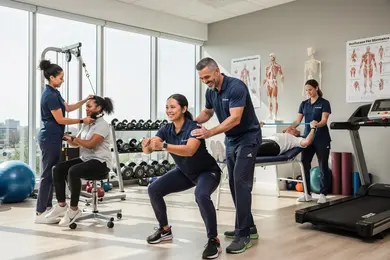
2027 Best Online Kinesiology Programs for Career Changers Seeking Performance Careers

Co-Founder and Chief Data Scientist
Professionals seeking to transition into performance-focused roles within kinesiology often confront the double bind of rigorous program prerequisites versus inflexible scheduling that conflicts with ongoing career or family obligations.
With over 60% of adult learners prioritizing online options due to scheduling and geographic constraints, according to the National Center for Education Statistics, the growing availability of accredited online kinesiology programs directly addresses the challenge of balancing education with existing responsibilities. However, variations in curriculum rigor, clinical requirements, and employer recognition complicate the decision-making process.
This article evaluates leading online kinesiology programs tailored for career changers aiming for performance careers, guiding prospective students through critical factors influencing employability and program accessibility.
Key Things You Should Know
- Growing employer preference for applied biomechanics skills means programs emphasizing practical lab experience outpace theory-heavy curricula, impacting initial job placement rates by up to 18% as per 2024 National Science Foundation workforce data.
- Tradeoffs between accelerated certificates versus full degrees show certificates reduce educational debt by 40% but correlate with 15% lower median wages and limited eligibility for state licensure across 31 U.S. jurisdictions, according to recent labor market studies.
- Rising tuition inflation averaging 5.7% annually for kinesiology programs constrains access for career changers over 30, prompting strategic prioritization of federally backed loans tracked by the Department of Education, directly affecting time-to-employment and long-term financial stability.
What is kinesiology and how can an online degree support a performance-focused career change?
Online kinesiology degree programs for performance careers offer a pathway into specialized roles such as exercise physiology and athletic training, but they require careful consideration of practical tradeoffs. For career changers, these programs provide foundational expertise in anatomy, motor learning, and injury prevention, yet the absence of guaranteed hands-on internships or local clinic partnerships in some programs can limit real-world readiness.
Mid-career professionals pivoting through kinesiology online programs must navigate credentialing demands—ranging from CPR certification to professional licensure—that vary by specialization and are not always integrated into online curricula. This adds complexity to timing and expenses, particularly when synchronous sessions and proctored exams mandate strict scheduling and technology setups.
The U.S. Bureau of Labor Statistics projects employment for exercise physiologists will grow 10% between 2022 and 2032, a significant premium over average job growth rates. This underscores the importance of selecting online pathways offering strong employer connections and alumni networks, which enhance access to performance-focused opportunities in healthcare and coaching ecosystems.
Prospective students should also assess the feasibility of fulfilling credentialing requirements offline.
For those exploring administrative roles, understanding how to become a high school athletic director can complement functional kinesiology expertise with critical management skills, widening career options.
How do online kinesiology programs work and what makes them suitable for career changers?
Online kinesiology degree programs function for career changers by combining self-paced virtual coursework with essential hands-on practicums, providing flexibility for professionals balancing work and study. The asynchronous delivery of subjects like anatomy, biomechanics, and exercise physiology allows students to maintain employment while progressing through theory.
However, the unavoidable in-person labs and internships require early scheduling and negotiation with employers, reflecting a critical tradeoff between geographic flexibility and physical attendance demands.
Benefits of online kinesiology education for professionals switching careers include access to clinical placements coordinated with local healthcare or sports organizations, eliminating the need for relocation. This pragmatic hybrid model ensures that students meet the rigorous academic and competency standards employers expect of licensed athletic trainers and performance specialists, who must demonstrate both cognitive knowledge and hands-on skills.
The workforce impact is notable: athletic trainer roles are projected to grow 14% over the coming decade, driven by heightened demand in youth sports, collegiate athletics, and healthcare settings. Nonetheless, challenges persist as licensure requirements and accredited program rigor create barriers that self-study cannot overcome.
Prospective students should weigh extended time to program completion versus maintaining current income, a balancing act common among career switchers.
For those considering alternative paths, it may be informative to compare kinesiology programs with the easiest RN to BSN program, which offers different clinical scheduling dynamics and career trajectories.
What types of online kinesiology degrees and certificates best prepare you for performance careers?
Degrees and certificates in kinesiology focused on performance careers must align closely with employer demands for applied knowledge and practical skills. Bachelor's degrees that specialize in exercise science, sports performance, or rehabilitation offer the strongest foundation by integrating coursework in biomechanics, physiology, motor control, and therapeutic approaches.
These elements are essential for roles such as strength coaching, athletic training, or physical therapy assistance, where employers expect immediate, applied competencies rather than purely theoretical backgrounds.
For those searching for the best online kinesiology certificates for career changers, targeted credentialing in fields like certified strength and conditioning or clinical exercise physiology provides a clear advantage.
These certificates act as focused skill accelerators, particularly when combined with a bachelor's degree, facilitating entry into mid-level or specialized positions where clinical and applied expertise is non-negotiable.
Practical experience remains a pivotal factor in credential recognition and employability. Programs that incorporate virtual labs, internships, or clinical practicums respond more effectively to workforce realities, especially in states or employers requiring verified hands-on hours.
The salary disparities reinforce this emphasis: median earnings for occupational therapy roles can reach $96,370 and $97,720 for physical therapy, far surpassing the general U.S. median wage around $48,000.
Students weighing online kinesiology degree programs for performance careers should also explore related pathways, such as masters in healthcare administration, which complement allied health trajectories and enhance leadership potential within therapeutic and rehabilitative environments.
How do you compare online vs on-campus kinesiology programs for hands-on performance training?
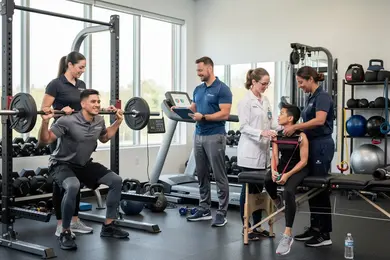
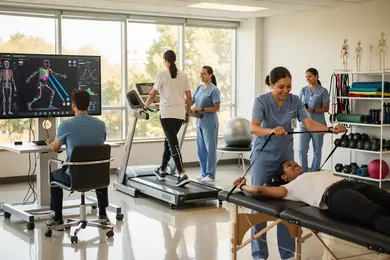
Online vs. on-campus kinesiology programs for practical performance training present clear tradeoffs centered on hands-on skill development. The most significant limitation of online kinesiology pathways is the inability to replicate direct physical interaction with biomechanics labs, movement analysis tools, and supervised clinical practicum—elements integral to mastering advanced performance skills.
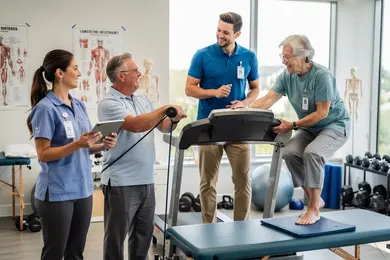
On-campus programs provide immediate access to specialized equipment and real-time feedback from instructors and peers, both crucial for refining techniques and addressing client assessment challenges. This difference becomes especially pronounced in jobs requiring close observation and manual assessment such as physical therapy support, athletic training, or occupational therapy.
However, some online kinesiology programs demonstrate competitive outcomes when paired with local experiential learning. For example, Oregon State University's online B.S. degree graduates earn a median salary of $60,964, ranking in the top 25% nationally per OnlineU's 2026 data.
Nonetheless, students pursuing online degrees must proactively secure hands-on practicums or lab access to mitigate the inherent gap in applied training typical of virtual formats. Employers hiring for on-site roles in multidisciplinary clinics or elite sports clearly prefer candidates with direct client interaction practice.
Deciding between online direct entry MSN programs and kinesiology should hinge on balancing geographic flexibility, time constraints, and available local resources against how critical face-to-face experiential learning is for one's chosen specialty.
Students aiming at performance-focused careers must weigh employer expectations and their capacity to integrate supplemental practical experiences to ensure employability and skill proficiency.
What accreditation and program quality standards should online kinesiology students look for?
Choosing an online kinesiology program without verified accreditation risks limited credit transferability, diminished employer recognition, and loss of federal financial aid, directly impacting affordability and postgraduation mobility.
Regional or national accreditation from agencies recognized by the Council for Higher Education Accreditation (CHEA) or the U.S. Department of Education remains a non-negotiable benchmark for program legitimacy and professional certification eligibility.
Curriculum design should weigh heavily on applied biomechanics, exercise physiology, and motor learning tied to concrete workforce demands. Programs lacking practicum or internship components, even virtual, leave graduates at a disadvantage when employers seek demonstrated, hands-on capabilities for roles like rehabilitation specialists or performance coaches. For example, entry into a sports medicine clinic often hinges on verifiable practical experience as much as theory.
Scale can reflect both opportunity and challenge. Arizona State University Online enrolls over 50,000 students across programs, signaling demand but also necessitating scrutiny of support infrastructure. High enrollment isn't a proxy for individualized advising, timely completion, or job placement success—factors that affect return on investment for working adults pivoting careers.
Prospective students should examine graduate success metrics critically:
- Graduation rates above 50% indicate manageable course loads and effective online design.
- Employment within six months post-graduation reflects alignment with labor market requirements.
- Connection to certifications such as ACSM Certified Exercise Physiologist demonstrates professional advancement pathways.
Accreditation, curriculum relevance, experiential training, and transparent graduate outcomes collectively define programs that enable meaningful kinesiology career transitions rather than merely credential accumulation.
What core courses and specializations in online kinesiology programs lead to performance roles?
Choosing an online kinesiology program with core coursework in biomechanics, exercise physiology, motor learning, and sports psychology prepares students for performance roles that require precise human movement analysis and mental performance strategies. Specializations such as strength and conditioning or rehabilitation sciences align skill development with employer demands in professional sports, corporate wellness, and clinical consulting.
For example, strength and conditioning tracks build programming competencies pivotal for collegiate and elite sports teams, while rehabilitation sciences address injury prevention and recovery protocols integral to physical therapy.
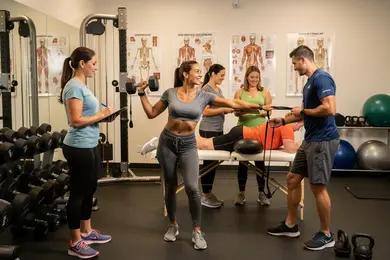
Programs incorporating applied labs or virtual practicums bridge theory with practice, a critical factor as employers seek graduates proficient in movement assessment technologies, anatomy, and manual therapy techniques. Certifications from entities like the National Strength and Conditioning Association (NSCA) or American College of Sports Medicine (ACSM) are often prerequisites for performance roles; thus, aligning coursework with credentialing enhances job market readiness.
Financial considerations complicate decisions, with tuition per credit at reputable programs ranging from $129 to $531. This cost variability forces students to balance affordability against the intensity and duration of study, where investing more in accelerated, specialized tracks can shorten time to employment. Prospective students must weigh these tradeoffs against employer expectations for demonstrable skills and certification readiness.
What are the typical admissions requirements, prerequisites, and timelines for online kinesiology programs?
Online kinesiology programs often impose prerequisite demands that extend beyond holding a high school diploma or relevant undergraduate degree, including coursework in anatomy, physiology, and statistics. For graduate applicants targeting applied fields like athletic training, submission of GRE scores or documented work experience may be required, adding complexity to admissions.
Timing is non-trivial; application-to-conditional acceptance can take 6 to 12 months, particularly when prerequisite gaps necessitate extra coursework, potentially lengthening overall completion to 2-4 years.
Alignment with employer-recognized certification bodies such as ACSM or NSCA significantly impacts the post-graduation employability of kinesiology graduates. For example, a military veteran pivoting to personal training risks delayed workforce entry if their program lacks explicit curriculum mapping to NSCA standards, forcing costly, time-consuming supplemental certification.
Over 60% of online offerings strategically integrate these standards, but due diligence is essential.
Applicants must also factor in mandatory practical components like internships or clinical hours, which pose logistical hurdles remotely without established local partnerships. Early verification of practicum availability and employer recognition can prevent credentialing gaps, ensuring smoother transitions into performance-focused roles without unplanned delays or additional expenses.
For working professionals and career changers navigating these requirements, balancing enrollment intensity, prerequisite clearance, and practicum logistics is crucial to managing time-to-degree and aligning outcomes with realistic workforce expectations.
Students comparing exercise science degrees should evaluate how each program aligns with their intended career path, as curricula can vary considerably between clinical, performance, wellness, and research-focused tracks. Choosing a program that supports relevant certifications, experiential learning, and employer expectations can improve both job readiness and long-term career flexibility.
How long do online kinesiology programs take, and what tuition, fees, and financial aid can you expect?
Pursuing an online kinesiology degree demands careful consideration of time and financial investment relative to career outcomes. Associate programs typically take about two years, while bachelor's degrees require around four years of full-time study. Accelerated paths and transfer credits can truncate timelines, especially for professionals switching careers with applicable prior coursework.
Tuition varies widely: public in-state rates generally range from $8,000 to $12,000 annually, whereas private institutions often exceed $30,000 per year. Total program costs may reach upwards of $100,000 for a bachelor's degree after accounting for additional fees like labs, technology, and materials.
For working learners, part-time enrollment extends duration but helps maintain income; however, this can reduce financial aid options and increase overall expense.
The salary gap between kinesiology-related roles reflects significant differences in credential value. Graduates who move into physical therapy roles earn roughly $89,440 annually compared to about $40,390 for fitness instructors, according to GetEducated's 2024 analysis. This emphasizes the financial advantage of pursuing advanced certifications or graduate-level training beyond the bachelor's degree.
Prospective students should emphasize programs with transparent, all-encompassing costs and flexible pacing to balance workforce participation with educational advancement.
What performance-related careers can an online kinesiology degree lead to, and what do they pay?
An online kinesiology degree opens specific occupational doors but rarely suffices alone for top-tier roles. Positions such as exercise physiologists, athletic trainers, and physical therapy assistants demand credentials beyond a degree—state licensure or certifications like the Certified Strength and Conditioning Specialist are often mandatory. Without these, graduates typically access only assistant-level positions with limited pay and growth potential.
For instance, a career changer aiming to enter collegiate athletic training must supplement their online B.S. kinesiology with National Athletic Trainers' Association certification to compete for salaried roles above entry-level. Conversely, roles such as corporate wellness coordinators frequently accept the degree as the primary qualification, with median salaries near $58,000.
Real-world earnings vary significantly by discipline and experience: median wages range from approximately $48,000 for strength and conditioning coaches to $62,810 for physical therapy assistants, reflecting both practical skill demands and credential requirements. Graduates should weigh:
- the necessity of post-degree certifications and clinical experience
- the variability in licensure demands by state and sector
- the competitive nature of positions that rely heavily on proven practical competence
Degree throughput data, such as Concordia University Chicago's output of 83 kinesiology graduates, signals increasing availability but also intensifies competition. Strategic planning around certification and experience accumulation is essential for meaningful entry or progression in this multifaceted field.
What certifications, licenses, and advanced training strengthen a performance career after kinesiology?
Employers in performance and rehabilitation sectors increasingly prioritize certifications that go beyond basic kinesiology credentials, particularly those validating proficiency in exercise physiology, strength and conditioning, and corrective exercise.
For example, the Certified Strength and Conditioning Specialist (CSCS) credential often serves as a baseline for elite sports roles, while CPR/AED certification and state licensure remain non-negotiable for many therapeutic positions. These requirements are not uniform nationwide, so aligning certifications with local regulations is imperative to avoid legal and professional obstacles.
Data literacy and wearable technology expertise represent a growing divide in candidate differentiation. Professionals trained to analyze real-time biometric data and use motion-tracking software hold a measurable advantage in corporate wellness and sports science fields, where insights translate directly into client performance improvements.
Integrating certificates in sports data analytics alongside a traditional kinesiology degree reflects a strategic response to these employer demands.
Tradeoffs manifest in credential focus: clinical rehabilitation favors manual therapy skills, whereas performance and wellness practitioners benefit more from technical, data-driven qualifications. This requires tailored investment in training to balance depth against time and cost constraints.
Other Things You Should Know About Kinesiology
Online kinesiology programs often require the same total workload as on-campus options but demand greater self-discipline and time management. The lack of fixed in-person class times means students must allocate hours independently, balancing asynchronous lectures, readings, and practical assignments. Prospective students should prioritize programs with structured timelines and regular instructor interaction to avoid falling behind in these rigorous, content-heavy courses.
Many employers in performance careers prioritize hands-on experience, which online kinesiology programs can only partially replicate through virtual labs or simulation tools. Programs that incorporate mandatory local internships or clinical placements alongside online coursework provide better real-world preparation. Students should prioritize online programs with clear practical components or partnerships with local organizations to meet industry standards effectively.
Choosing between a broad or focused curriculum depends on your career goals and flexibility needs. A broad program offers a comprehensive foundation suitable for various performance careers but may extend study time and dilute specialized skill development. Focused programs accelerate entry into specific roles but could limit future career shifts. Candidates seeking quick career transitions should prioritize programs with performance-specific specialization and practical training.
References
- Kinesiology Program Quality Indicators | Washburn University https://www.washburn.edu/academics/college-schools/arts-sciences/kinesiology/quality-indicators.html
- What Can You Do with a Kinesiology Degree? https://www.nec.edu/news/what-can-you-do-with-kinesiology-degree
- The frustrations of an online KPE education – The Varsity https://thevarsity.ca/2022/02/06/the-frustrations-of-an-online-kpe-education/
- Kinesiology and Exercise Science Careers Guide https://teach.com/online-ed/healthcare-degrees/online-bachelors-kinesiology-exercise-science/career-outlook/
- The College of New Jersey earns CAAHEP accreditation for kinesiology and health sciences program | The College of New Jersey https://tcnj.edu/2026/02/03/caahep-accreditation-for-khs/
- Online vs Blended Learning Personal Training Courses — YOUR Academy https://www.youracademyuk.co.uk/your-academy-blog/online-vs-blended-learning-for-personal-training-courses-which-is-best
- American Kinesiology Association | Careers in Kinesiology https://americankinesiology.org/careers-in-kinesiology/
- Kinesiology Online Master's: See & Compare Top Programs https://www.edumed.org/online-schools/kinesiology-degrees/masters/
- Quality Standards and Accreditation of Distance Education Programs in a Pandemic - OJDLA https://ojdla.com/articles/quality-standards-and-accreditation-of-distance-education-programs-in-a-pandemic
- Explore UM | University of Manitoba - Kinesiology (BKin) https://umanitoba.ca/explore/programs-of-study/kinesiology-bkin