2027 Best Online Kinesiology Degrees for Performance Testing Careers

Co-Founder and Chief Data Scientist
Meeting employer demand for expertise in performance testing often clashes with the rigid schedules of working professionals pursuing kinesiology degrees. The challenge intensifies as many programs require on-campus attendance, delaying career transitions for those balancing jobs or family.
Meanwhile, U. S. Department of Education data shows a 17% surge in adult enrollment in online undergraduate programs since 2023, signaling a shift toward flexible learning that directly impacts how future practitioners enter the workforce.
This evolving landscape compels prospective students to scrutinize program accessibility, curriculum relevance, and career outcomes carefully. This article evaluates the best online kinesiology degrees designed to navigate these constraints and maximize career mobility in performance testing fields.
Key Things You Should Know
- Over 45% of online kinesiology graduates report salary increases within two years post-graduation, though delayed clinical hours in virtual formats can undermine immediate employability as noted by National Kinesiology Workforce data 2024.
- Employers increasingly prioritize applied biomechanics certifications over general kinesiology degrees for performance testing roles, reflecting a 37% rise in demand for specialization per the Labor Market Intelligence Report 2024.
- Programs averaging $15,000+ tuition present a cost-benefit dilemma: accelerated two-year tracks enhance entry speed but limit internship options critical for network-building, according to the 2024 Council on Higher Ed Outcomes.
What is an online kinesiology degree and how does it prepare you for performance testing careers?
Online kinesiology degree programs for performance testing equip candidates with applied skills necessary to assess and enhance human movement, physiology, and biomechanics across varied professional settings. These programs blend rigorous coursework in exercise science, motor control, and anatomy with practical training in data analysis and assessment tools.
A graduate working directly with athletes, for example, must translate scientific data into actionable plans that both improve performance and mitigate injury risks, a balance refined through specialized protocols embedded in these curricula.
This pathway also requires candidates to navigate tradeoffs between theoretical knowledge and hands-on experience, especially when balancing clinical hours or internships remotely.
The online format offers flexibility but demands proactive engagement to meet certification requirements, influencing licensure viability in exercise physiology and related specialties. Employers prioritize applicants who demonstrate this combination of academic rigor and field-tested skills, often valuing programs with integrated labs or virtual simulations.
Understanding how an online kinesiology degree prepares you for performance testing careers involves recognizing labor market realities. According to Arizona State University's analysis based on Bureau of Labor Statistics data, exercise physiologists earned a median wage of $73,850 with 7% growth projected from 2023 to 2033, underscoring sustained demand for evidence-based performance optimization in healthcare and sports.
Prospective students should weigh program accreditation, access to current testing technologies, and curriculum depth-particularly regarding data analytics-to maximize readiness for certification exams and job placement.
For those exploring educational pathways, programs such as an ASN program online may offer parallels in balancing practical requirements with flexible learning models within allied health fields.
Which online kinesiology degrees are best for students focused on performance testing careers?
Employers seeking candidates for performance testing roles increasingly favor online kinesiology degrees for performance testing careers that integrate rigorous applied physiology and biomechanical analytics with practical lab experiences.
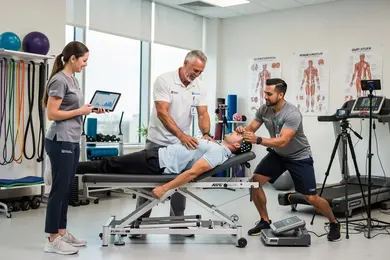
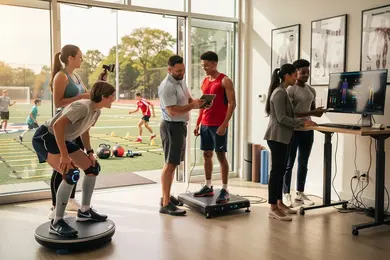
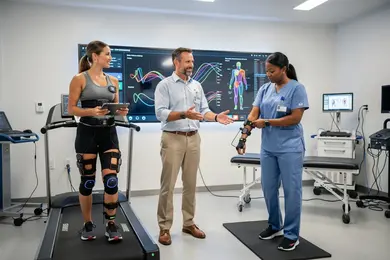
Programs offering specialized coursework in exercise physiology, performance diagnostics, and advanced human movement analysis align closely with the skills required to operate force plates, motion capture systems, and metabolic analyzers in real-world settings.
Students must carefully assess whether a program includes in-person or hybrid clinical practicums, as many remote kinesiology options fall short on applied testing components essential to employability in performance or rehabilitation environments.
For full-time working students, programs blending asynchronous online modules with access to local labs help balance flexibility with hands-on credentialing.
Choosing among the best kinesiology programs focused on performance testing involves trade-offs between accessible online delivery and quality of experiential learning partnerships.
Graduates targeting advanced roles like physician assistants, where the U.S. Bureau of Labor Statistics forecasts 28% growth from 2023 to 2033 and a median annual wage of $133,260-will need to ensure their degree fulfills prerequisites for graduate health programs as well.
Evaluating faculty expertise, externship options, and graduate placement rates will reveal which degrees best prepare students to translate theory into measurable outcomes. For individuals contemplating related fields or pathway pivots, exploring healthcare administration degree programs might diversify options aligned with clinical and administrative health roles.
How do online and on-campus kinesiology degrees compare for performance testing training?
Online kinesiology degree versus on-campus programs for performance testing reveal critical tradeoffs rooted in practical skill acquisition and employer expectations.
While online degrees like Oregon State University's B.S. in Kinesiology offer cost savings of 15-30% and flexible pacing suitable for working professionals, the hands-on training essential for roles involving biomechanical assessments, physiological measurements, and sports-specific analytics tends to be more accessible in traditional settings.
Students enrolled in on-campus programs benefit from direct access to specialized labs, motion capture technology, and supervised internships, providing clearer documentation of clinical hours valued by employers. Conversely, online candidates face challenges in independently securing equivalent field placements, which can delay the development of applied competencies critical for performance testing careers.
Differences between online and traditional kinesiology degrees in athletic performance assessment thus hinge on balancing flexibility with direct mentorship and facility access. Employers commonly prioritize demonstrated practical experience, making proactive documentation and local internship coordination vital for online graduates.
Decision-making must consider current employment, local internship availability, and self-motivation capacity. Those seeking a less costly, adaptable path might explore online degrees, but must actively mitigate hands-on experience gaps.
For those interested in expanding healthcare administration expertise alongside kinesiology, exploring options like masters in hospital administration may offer complementary career flexibility.
What accreditation and program quality standards matter for online kinesiology degrees in performance testing?
Accreditation by agencies recognized by the U.S. Department of Education and CHEA is non-negotiable for online kinesiology degree accreditation standards United States employers and graduate programs rely on to validate performance testing credentials.
Without regional accreditation or specialized approval by entities such as the Commission on Accreditation of Allied Health Education Programs (CAAHEP) or the National Strength and Conditioning Association (NSCA), graduates risk limited access to licensure and certifications central to career mobility in exercise science and sports performance roles.
Quality criteria for kinesiology performance testing programs extend beyond accreditation to include curriculum relevance, faculty expertise, and integration of applied learning. Programs incorporating biomechanics, motor control, exercise physiology, and data analysis linked to real-world performance assessments tend to produce candidates with stronger applied competencies.
Practicum or internship components, even delivered remotely, correlate with higher early employment success, addressing the workforce's demand for hands-on testing skills critical in fields such as athletic training and rehabilitation.
Salary benchmarks from the 2026 UniversityHQ review confirm that top online kinesiology bachelor's degrees emphasizing performance evaluation yield early-career earnings around $60,000-$61,000, a premium reflecting employer preference for accredited skills verifiable in practice.
Prospective students should scrutinize programs for alignment with current industry standards including ACSM certification prerequisites, transparent graduate placement data, and adaptive curricula responsive to evolving technologies. Choosing degrees lacking these benchmarks risks stagnant career trajectories and limited practical utility.
Additionally, those weighing educational investments might explore related pathways like 12-month accelerated nursing programs online, which can offer contrasting timelines and outcomes for those pivoting into health-related professions.
What courses and specializations in online kinesiology programs support sports performance and testing roles?
Prospective sports performance professionals selecting online kinesiology programs must prioritize applied skills that align directly with measurable career outcomes. Specialized coursework in exercise physiology, biomechanics, and sports nutrition sharpens capabilities needed for roles like athletic trainer and exercise physiologist, which command median 2024 wages of $60,250 and $73,850 respectively and project growth of 13% and 7% through 2033.
A functional emphasis on advanced statistical analysis and software tools such as SPSS or R is critical for parsing athlete performance data and guiding evidence-based training adaptations.
Programs incorporating practical experiences-labs focused on cardiorespiratory and musculoskeletal testing or internships embedded in collegiate sports environments-offer tangible skills that theoretical curricula often lack.
For instance, understanding metabolic outputs or biomechanical stress helps tailor conditioning to prevent injury and optimize recovery, reflecting employer demand for candidates with both analytical insight and hands-on proficiency.
Students must carefully weigh tradeoffs between broad foundational knowledge and niche specialization. Degrees that integrate certifications like Certified Strength and Conditioning Specialist (CSCS) along with practicum opportunities better position graduates for upward mobility, given the increasing employer preference for dual academic and experiential credentials.
Without such practical grounding, kinesiology graduates risk stagnation despite holding advanced degrees. These dynamics emphasize how workforce readiness in this field hinges not only on mastering theory but also on demonstrable field-based application of testing and analytics, an intersection essential for sustained career progression.
What are the typical admission requirements and prerequisites for online kinesiology bachelor's and master's programs?
Admission into online kinesiology bachelor's programs demands more than minimum academic thresholds; they function as initial filters for applicants' readiness to engage with complex human movement sciences. Foundations in biology, chemistry, and math are baseline prerequisites, ensuring students possess the scientific literacy essential for degree progression.
Some programs incorporate letters of recommendation and personal statements to gauge candidates' communication skills and motivation. For working professionals, relevant healthcare or fitness experience can offset lower GPAs or test scores, underscoring the value of practical exposure over purely academic metrics.
At the master's level, admission tightly hinges on prior completion of a relevant bachelor's degree with documented success in anatomy, physiology, biomechanics, and statistics. While some schools still require GRE or equivalent tests, many have adopted test-optional policies, reflecting evolving graduate admissions landscapes.
Relevant work experience in rehabilitation, athletics, or wellness can tip the balance in competitive selections, especially for research- or clinically focused tracks. Candidates must provide statements of purpose and letters of recommendation to clarify intent and fit within specialized kinesiology fields.
Consider an athletic trainer with professional certifications seeking an online master's to advance clinical skills or research capabilities: balancing strict prerequisite verification against asynchronous course delivery is a critical tradeoff. Institutions managing these constraints vary widely in academic rigor and schedule flexibility.
Financially, tuition disparities-from approximately $22,200 to $87,320-significantly impact return on investment and program accessibility, without guaranteeing superior employment outcomes.
Prospective students must weigh prerequisites, work commitments, cost, and true career impact to select programs that align with their professional trajectories rather than defaulting to perceived prestige or cost alone.
How long do online kinesiology degrees take and what do they cost for performance-focused students?
A kinesiology degree centered on performance testing demands careful weighing of time, cost, and market relevance. Bachelor's programs typically span 3 to 4 years, with accelerated tracks available for well-prepared transfer students reducing this to 2-2.5 years.
Master's programs require about 1.5 to 2 years depending on pacing. Tuition ranges broadly-approximately $20,000 to $45,000 for bachelor's and $15,000 to $30,000 for master's online-reflecting public versus private institution differentials and residency status.
Workforce outcomes improve significantly when programs emphasize performance measurement, analytics, and ergonomics over purely theoretical study.
For instance, graduates trained in sports performance analysis or workplace ergonomics enter niches valuing hands-on data from movement science labs, requiring specialized software and sometimes proprietary sensor equipment. This incurs additional fees beyond tuition and can affect overall affordability.
Students targeting competitive employment must also address the frequently required in-person practicum components, which can raise logistical challenges and travel costs-factors difficult to overlook for those balancing work or geographic limitations.
Tradeoffs include compressed program duration offering faster labor market entry but intensifying study demands, often unsuitable for less flexible working professionals. Traditional kinesiology without a performance focus risks positioning graduates within crowded fitness sectors without distinctive, data-driven skills.
What performance testing careers can you pursue with an online kinesiology degree?
Pursuing an online kinesiology degree serves as a foundational step toward careers in performance testing roles such as exercise physiologist, strength and conditioning coach, and clinical exercise specialist. However, the degree alone does not fulfill employer expectations, which typically require accredited certification in addition to academic credentials.
For example, a certified clinical exercise physiologist must complete supervised clinical hours and pass a national exam, extending the timeline well beyond degree completion. This requirement is a critical consideration for prospective students balancing educational investment with workforce entry.
Exercise physiologists report a median wage of $73,850 with a 7% job growth forecast, indicating stable opportunities primarily in healthcare, rehabilitation, and sports performance environments. Strength and conditioning specialists focus on enhancing athletic or tactical performance using biomechanical and physiological assessments but often require specialized certification and practical experience.
Students should anticipate additional licensure or certification steps after their degree, frequently involving internships or clinical placements. These hands-on experiences are essential to gain employer-preferred applied skills and practical credibility.
- Performance roles demand a blend of kinesiology theory and real-world test administration experience.
- Career entry requires evaluating physical, credentialing, and regulatory barriers upfront.
- Graduates from research-oriented kinesiology paths may need professional upskilling for applied performance testing roles.
Decision-making about this pathway hinges on balancing academic completion with the certification timeline and workforce readiness, especially for professionals transitioning from unrelated industries.
What certifications and professional credentials align with kinesiology-based performance testing careers?
Employers targeting kinesiology professionals increasingly demand certifications that reflect both scientific rigor and practical application within specialized contexts.
The Certified Strength and Conditioning Specialist (CSCS) and American College of Sports Medicine (ACSM) Exercise Physiologist credentials showcase a candidate's ability to integrate biomechanics and physiology into measurable, data-driven training programs-a non-negotiable skill for roles blending sports analytics with performance optimization.
Real-world hiring practices reveal clear distinctions based on industry focus. For example, professional sports amplify the value of CSCS and ACSM-EP certifications combined with proficiency in analytics software, while rehabilitation centers often require Certified Clinical Exercise Physiologist (CEP) licensure, which includes supervised clinical hours and ongoing continuing education to fulfill regulatory mandates.
Technological fluency-especially in interpreting wearable sensor data and musculoskeletal screenings-is becoming a baseline expectation. Credentials such as the National Strength and Conditioning Association-Certified Personal Trainer (NSCA-CPT) with biomechanical specialization add practical leverage where employers emphasize ergonomic risk assessments or occupational health.
Workplace ergonomics credentials, like the Board of Certification in Professional Ergonomics (BCPE), expand career flexibility by aligning kinesiology expertise with human factors applications beyond athletic contexts, addressing injury prevention and productivity.
Strategic credential alignment is essential: sports organizations prioritize performance-focused licenses and analytics skills, whereas clinical and occupational sectors demand licensing and ergonomics credentials meeting state-specific and employer-driven standards. This calibrated approach reduces the risk of credential inflation and better supports sustainable career trajectories.
How is the job outlook and salary potential for kinesiology graduates in performance testing careers?
The demand for kinesiology graduates specialized in performance testing surpasses many other sectors due to its alignment with healthcare and athletic performance priorities. Exercise physiologists command a median salary of $47,940, above the general occupational median of $45,760, indicating tangible value placed on their specialized expertise.
Work environments vary, impacting both wage levels and job stability. For example, kinesiology professionals embedded in professional sports teams often earn premium compensation, reflecting intensive performance monitoring and injury prevention responsibilities.
In contrast, practitioners in community health or rehabilitation settings experience steadier employment opportunities, albeit typically paired with more modest pay.
Several operational factors influence employability and income potential:
- Certification from recognized bodies is frequently mandatory for accessing advanced roles within clinical or sports performance sectors.
- Graduates from online programs must confirm that credentials are recognized by employers in regulated states or institutions to avoid barriers to hiring.
- Hands-on experience, including internships and clinical hours, remains critical despite the theoretical foundation provided by most programs.
The continued expansion of wellness initiatives and the aging population's need for clinical exercise guidance add to this steady demand. Prospective candidates should weigh the practical tradeoffs between program format, accreditation status, credentialing requirements, and real-world experience opportunities before committing to online kinesiology education pathways.
Other Things You Should Know About Kinesiology
Programs that include a clinical practicum or hands-on internship often provide a competitive edge in performance testing careers, as employers expect direct experience with assessment tools and client interaction. Purely theoretical online programs may limit immediate job readiness, requiring graduates to seek additional supervised practice after graduation. Prioritize programs with clear, structured practicum components integrated into the curriculum to meet employer expectations without delaying your entry into the field.
Online kinesiology programs demand strong self-discipline since students often balance coursework with personal and professional commitments without immediate in-person oversight. The asynchronous nature can create challenges in managing lab simulations and performance testing projects remotely, which may extend study time and require advanced planning. Prospective students should assess their capacity for independent learning and time management before committing, as poor adaptation may result in delayed graduation or superficial skill acquisition.
A broad health science-focused degree offers flexibility to enter multiple fields but may dilute specific skills needed for in-depth performance testing roles, affecting employability in specialized settings. Conversely, a performance testing-centered program narrows content to biomechanical assessment, exercise physiology, and data interpretation, enhancing immediate job fit but limiting broader career pivots. Choose based on long-term goals: prioritize specialization for direct performance testing roles and breadth if considering interdisciplinary health careers.
References
- Online Bachelor’s in Kinesiology and Exercise Science Programs https://teach.com/online-ed/healthcare-degrees/online-bachelors-kinesiology-exercise-science/
- Kinesiology Program Provides Options in Health and Human Performance | Florida College https://floridacollege.edu/news/kinesiology-program-options/
- Accreditation processes for technical programs https://edquip.co/blog/accreditation-processes-for-technical-programs
- Online Bachelor of Science in Kinesiology https://calbaptist.edu/academics/programs/online-bachelor-of-science-kinesiology/
- Exercise science program accredited by national organization | Lipscomb University https://lipscomb.edu/news/exercise-science-program-accredited-national-organization
- Online Kinesiology Degree Programs: Review Top Schools https://www.edumed.org/online-schools/kinesiology-degrees/
- Best Exercise Science Careers - Let's Find out! https://www.ptpioneer.com/personal-training/exercise-science-careers/
- Best Masters in Kinesiology Degree Programs Online for 2026 https://www.kinesiologydegrees.org/programs/degree/masters
- Preparing for a Career in Kinesiology https://bcak.bc.ca/for-the-public/what-kinesiology/careers-kinesiology/
- Course revamp is a hit with kinesiology students when they create their own fitness tests - The Council on Undergraduate Research https://www.cur.org/course-revamp-is-a-hit-with-kinesiology-students-when-they-create-their-own-fitness-tests/