2027 Best Online Kinesiology Degrees for Community Wellness Careers

Co-Founder and Chief Data Scientist
Healthcare employers increasingly demand kinesiology professionals who can integrate community wellness strategies with flexible, evidence-based approaches. Yet many prospective students juggle full-time jobs and family obligations, making rigid on-campus programs impractical.
According to the National Center for Education Statistics, over 40% of recent postsecondary enrollees pursue some form of online learning, signaling a sustained shift toward accessible, adaptable education formats critical for adult learners balancing workforce engagement.
This shift influences how candidates prioritize program flexibility, clinical opportunities, and credential relevance amidst evolving public health demands. This article evaluates top online kinesiology degrees emphasizing community wellness, guiding readers through actionable comparisons to optimize their education-to-career trajectory.
Key Things You Should Know
- Online kinesiology degrees show a 15% lower direct internship availability versus in-person programs per 2024 NACE data, forcing candidates to weigh hands-on skill gaps against accelerated digital completion schedules.
- Employers in community wellness emphasize interdisciplinary competencies over pure kinesiology specialization; 62% prefer graduates with adjunct training in health promotion or social work, per a 2024 National Wellness Institute survey.
- Median tuition for accredited online kinesiology bachelor's programs rose 8% since 2023, outpacing inflation and pressuring cost-sensitive career pivots especially where employer tuition reimbursement lags behind sector growth.
What is an online kinesiology degree and how does it prepare you for community wellness careers?
An online kinesiology degree benefits for community wellness professionals primarily by equipping students with targeted expertise in human movement science combined with applied program design tailored to public health contexts.
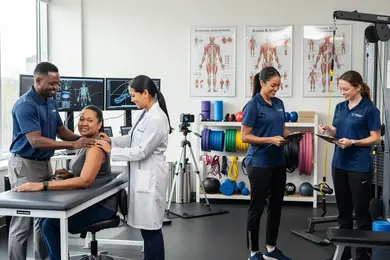
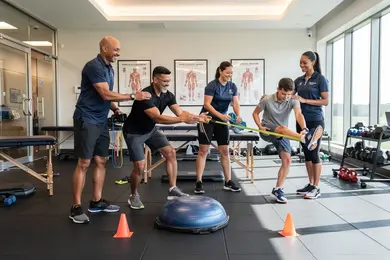
Graduates must navigate the balance between theoretical knowledge and practical implementation, such as creating fitness plans for sedentary adults in community centers or collaborating with healthcare providers on rehabilitation protocols-tasks that demand more than generalized fitness knowledge.
This preparation involves mastering biomechanical analysis, motor learning, and injury prevention to support evidence-based community wellness programs. Students in online kinesiology programs often engage with virtual labs and case studies that simulate clinical exposure, a critical factor given the remote format and the workforce's demand for hands-on competence.
The field's practical orientation aligns with the projected 13% job growth for fitness trainers and instructors from 2024 to 2034, well above the average for all occupations. However, prospective candidates should critically assess online curriculum alignment with certification standards and internship availability, as those without proper clinical applicability may face employability challenges.
For those weighing online options, comparing program quality and outcomes is essential. Resources such as the exercise science online degree rankings can help clarify distinctions among accelerated offerings designed for working professionals.
How do online kinesiology programs compare with campus-based options for quality and outcomes?
Evaluating online kinesiology degree quality comparison hinges on practical experience integration. Programs delivering synchronous labs, accredited curricula, and facilitated local internships come closest to replicating campus-based outcomes.
Without structured practicum access, online students risk skill deficits that limit eligibility for client-facing or physical assessment roles, a notable drawback given employer emphasis on applied capability.
Deciding between campus-based versus online kinesiology program outcomes requires sensitivity to tangible tradeoffs. Campus formats usually offer immediate access to gyms, labs, and faculty mentorship that accelerates skill mastery and professional connections.
Conversely, online options enhance accessibility for working professionals but depend on proactive local placement arrangements to ensure equivalent hands-on experience.
Key considerations include:
- Balancing flexible scheduling against timely, supervised access to physical training environments.
- Availability and formalization of internships or community wellness projects within a student's locale.
- Alignment with industry standards through accredited curricula designed to meet employer expectations.
The US Bureau of Labor Statistics projects a 12% growth for health education specialists and community health workers through 2031, driven by expanding community health initiatives. This reinforces the imperative for kinesiology programs to blend theoretical knowledge with verified experiential learning.
Prospective students seeking accelerated pathways might also evaluate options for an accelerated healthcare administration degree online when considering interdisciplinary expansions involving health program management.
Which accreditation and program quality standards matter most for online kinesiology degrees?
Regional accreditation from recognized U.S. bodies such as the Higher Learning Commission or WASC Senior College and University Commission remains the primary benchmark for evaluating online kinesiology degree accreditation standards.
Employers in healthcare, rehabilitation, and community wellness sectors prioritize candidates from programs meeting these rigorous criteria, which assess curriculum quality, faculty expertise, and institutional stability. Programs without such accreditation face diminished recognition, complicating licensure and job market entry.
Quality assurance for kinesiology programs involves more than accreditation; it demands integration of practical training like supervised internships or virtual labs. For example, a graduate pursuing a clinical wellness role will struggle if their degree lacks applied skill-building components, resulting in limited real-world readiness and slower career progression.
Salary data from Oregon State University's online Bachelor of Science in kinesiology, with a median of $60,964 and placement in the top 25% nationally, illustrates that accredited, outcome-oriented programs enhance earning potential. Students evaluating online kinesiology options should also explore broader pathways supporting their goals, such as a healthcare administration masters, to complement practical knowledge with management skills.
Verifying accreditation status and curriculum alignment with employer expectations and state licensure remains critical to avoid narrowing career opportunities within the evolving kinesiology job market.
What community wellness careers can you pursue with an online kinesiology degree?
An online kinesiology degree equips graduates for community wellness careers where applied human movement science intersects with real-world job requirements. Employers in community health centers and wellness programs expect foundational knowledge in anatomy, physiology, and biomechanics paired with practical experience.
For example, a community fitness specialist working within a public health initiative must balance designing effective exercise programs with engaging clients directly, often necessitating certifications beyond the degree.
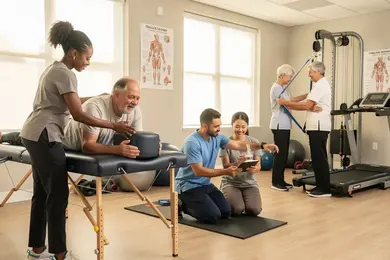
Job opportunities in kinesiology for community health often hinge on supplemented hands-on exposure, such as internships or volunteer work, especially for roles like occupational therapy aides that require clinical experience. Graduates serving diverse populations contribute by developing injury prevention strategies, leading group exercise, or assisting in rehabilitation, but these roles demand adaptability beyond online coursework.
Financial tradeoffs weigh heavily on career trajectories. Public university online kinesiology bachelor's programs can cost from around $22,200 in-state to $87,320 out-of-state, generating a pricey debt burden compared with entry-level wellness salaries typically between $35,000 and $50,000.
Prospective students should examine affordable in-state options or programs with clinical partnerships to minimize this gap. For comparative insights on degree pathways balancing cost and employability, see the Capella vs WGU RN to BSN analysis.
What courses and specializations are typically offered in online kinesiology programs focused on community health?
Online kinesiology programs oriented toward community health prepare students to apply foundational science to diverse, real-world settings, where social context and health disparities significantly shape intervention success.
Core curricula cover anatomy, physiology, biomechanics, exercise science, and nutrition, but the practical value lies in integrating these with community-focused applications such as chronic disease prevention and health promotion across varied populations.
A critical skill set involves motor learning and control principles, which inform tailored rehabilitation strategies-essential when designing programs for seniors or individuals recovering from conditions like stroke or arthritis.
Employers increasingly expect proficiency not only in these scientific foundations but also in managing health data from electronic health records and fitness technologies, reflecting the expanding role of health informatics and data-driven decision-making in community wellness.
Programs demand awareness of socioeconomic and cultural factors to effectively address health disparities, emphasizing culturally competent care when crafting inclusive wellness initiatives. This rigor can pose challenges for working professionals balancing study with practical community engagement requirements.
Arizona State University Online's large enrollment-over 52,000 students in kinesiology-related disciplines-illustrates the growing accessibility and normalization of online formats for professionals seeking flexible pathways into roles such as community fitness coordinators or wellness educators. However, prospective students should weigh the tradeoff between flexibility and rigorous science applied within real-world constraints.
What are the admission requirements and application materials for online kinesiology bachelor's programs?
Admission to online kinesiology bachelor's programs hinges on more than baseline academic credentials; the practical realities of program rigor and workforce readiness shape selection criteria.
Applicants typically must present a high school diploma with minimum GPAs around 2.5 to 3.0 alongside strong transcripts in science and math-foundation subjects critical for success in kinesiology. While standardized tests like the SAT or ACT have become optional in many cases, competitive programs may still weigh these scores.
Letters of recommendation and personal statements focused on community wellness articulate an applicant's preparedness for a health-related curriculum. For career changers, relevant experience in fitness, health education, or rehabilitation can compensate for weaker academic records and align with program expectations.
Practical demands, such as health clearances for in-person practicum components, reflect kinesiology's applied nature. Students must juggle online coursework and hands-on fieldwork, which is essential for eligibility in several health professions. This dual model can strain those unaccustomed to balancing theoretical and experiential learning.
Financial outlooks provide further perspective: exercise physiologists with a bachelor's degree earn a median annual wage around $50,280, whereas physical therapists, who often require advanced credentials, make $91,010. Such disparities should inform how applicants assess program accessibility and long-term career trajectories.
How long does it take to complete an online kinesiology degree and what does the schedule look like?
Choosing an online kinesiology degree requires balancing time-to-completion and practical experience demands against personal and professional obligations. Bachelor's programs generally take 3 to 4 years full-time, while associate degrees average around 2 years.
Part-time students face extended timelines, often exceeding 5 years, to accommodate work or family commitments through asynchronous coursework. Weekly effort typically involves 15 to 20 hours, integrating lectures, assignments, and interactive labs.
Critical to program completion is the integration of hands-on internships or clinical hours, which must align with local health centers or exercise physiology facilities. These requirements often mandate fixed scheduling during evenings or weekends, potentially conflicting with standard working hours and necessitating employer cooperation or flexible management of time.
The U.S. Bureau of Labor Statistics forecasts 10% growth in exercise physiologist roles between 2022 and 2032, emphasizing preventive care and chronic disease management. Programs prioritizing applied techniques and coordinated community placements significantly enhance employability within this expanding sector.
Prospective students should weigh accelerated tracks that shorten duration but intensify weekly time demands against traditional pacing that allows steadier progress but delays labor market entry.
How much do online kinesiology degrees cost and what financial aid options are available?
Choosing an online kinesiology degree demands a pragmatic approach to cost, especially for out-of-state students where per-credit tuition varies from $185 to over $700. This disparity forces candidates aiming for roles like community health coordinators to weigh affordability against access to specialized curriculum and networking networks that higher-priced institutions may offer.
Financial aid landscapes shape these decisions significantly. Qualified students typically rely on federal Pell Grants and Direct Subsidized Loans to ease immediate expenses, while state grants tend to favor in-state residents, exacerbating cost disparities. Private scholarships and employer tuition reimbursement add layers of opportunity but frequently require balancing work obligations with academic commitments.
Beyond per-credit fees, the total credit requirement-often between 120 and 130 hours-can push out-of-state tuition totals above $90,000. Students driven by community wellness goals must assess whether the debt burden aligns with entry-level salary expectations.
Alternative pathways, such as regional publics or hybrid programs, may lower costs yet restrict access to nationally ranked faculty and comprehensive clinical experiences that can influence employability and advancement.
Strategic planning involves early FAFSA submissions, verifying residency status, and engaging financial advisors to optimize aid packages. This multi-source strategy is vital to ensure an online kinesiology degree remains a financially sustainable investment for repositioning within health-related workforces.
What are the salary expectations and job outlook for kinesiology graduates in community wellness roles?
The median annual salary for kinesiology graduates entering community wellness roles, such as personal trainers or community fitness professionals, is approximately $60,000, according to the U.S. Bureau of Labor Statistics in 2024. However, actual earnings depend heavily on certifications, regional demand, and experience.
Job growth for these positions is forecast at 13%, higher than the overall occupational average, driven primarily by urban and suburban opportunities due to greater access to facilities and programs.
Those without specialized certifications from recognized personal training organizations may see limited salary progression and fewer job prospects, especially in underserved or rural areas.
For instance, a kinesiology graduate targeting a role in a community health center should pursue additional qualifications in exercise prescription and health coaching to differentiate themselves. Employers prioritize skills in behavior change facilitation and chronic condition management alongside core kinesiology knowledge.
Advancement into leadership or program development roles usually requires a minimum of five years of relevant experience and often graduate-level education in health promotion or public health. This level corresponds to employer expectations for proficiency in strategic planning and evidence-based program design.
Do you need certification or licensure for community wellness jobs with a kinesiology degree, and how do programs help you qualify?
Certification requirements in community wellness roles for kinesiology graduates are a decisive factor that directly affects employability and career trajectory. While a degree provides foundational knowledge, many community health positions mandate additional credentials, such as Certified Health Education Specialist (CHES) or licenses for exercise physiologists and occupational therapy assistants.
These certifications entail passing state-specific exams and meeting regulatory standards designed to ensure public safety and program effectiveness.
For example, a municipal health department hiring a community wellness coordinator will prioritize candidates with credentials that confirm competency in community assessments and regulatory compliance, which are essential for managing programs and securing grants. Without such certifications, candidates often encounter barriers in advancing or accessing funded opportunities.
Kinesiology programs that embed prerequisites, supervised clinical hours, and targeted exam preparation align better with these workforce demands, but prospective students must verify that licensing pathways correlate with their state requirements.
The U.S. Department of Labor forecasts substantial job growth in healthcare fields related to preventive and community wellness services, intensifying competition for certified professionals and elevating the value of programs with clear licensure support.
Other Things You Should Know About Kinesiology
Online kinesiology degrees often include theory-heavy coursework but may have limited in-person practical components compared to campus programs. This can affect skill development in physical assessments or direct client interaction, which employers value in community wellness roles. Choose an online program that integrates supervised internships or practicum placements to ensure hands-on experience is gained despite the distance format.
Employers prioritize competencies and relevant experience over the delivery mode of the degree, but some remain cautious about fully online credentials lacking substantial fieldwork. Graduates of online kinesiology programs must proactively demonstrate applied skills and internship experience during job searches to counter potential biases. Prioritizing programs with strong community partnerships for practicum opportunities improves employer confidence in your readiness.
Online kinesiology students must balance self-directed learning with asynchronous lectures while coordinating fieldwork hours, which demands disciplined scheduling. Unlike campus-based peers, online learners often navigate less immediate faculty interaction, increasing the burden of time management. Prioritizing programs with structured deadlines and accessible mentoring reduces these challenges and improves course completion rates.
References
- What Can You Do With a Kinesiology Major? | USAHS https://www.usa.edu/blog/what-can-you-do-with-a-kinesiology-major/
- Kinesiology, B.S. - NCCU Online https://nccuonline.nccu.edu/programs/bachelor-of-science-b-s-in-kinesiology/
- Online Kinesiology Degree – Bachelor's in Kinesiology – ECU Online https://online.ecok.edu/online-degrees/bs-bachelors-kinesiology/
- Bachelor's in Kinesiology Program Online | Montreat College https://www.montreat.edu/online/kinesiology/
- Online Degree vs. Traditional: Choosing the Right Path https://beal.edu/online-degree-vs-traditional/
- Kinesiology and Exercise Science Careers Guide https://teach.com/online-ed/healthcare-degrees/online-bachelors-kinesiology-exercise-science/career-outlook/
- Explore UM | University of Manitoba - Kinesiology (BKin) https://umanitoba.ca/explore/programs-of-study/kinesiology-bkin
- Quality Standards and Accreditation of Distance Education Programs in a Pandemic - OJDLA https://ojdla.com/articles/quality-standards-and-accreditation-of-distance-education-programs-in-a-pandemic
- Careers in Kinesiology https://www.angelo.edu/career/career-exploration/majors/kinesiology.php
- 10 Wellness Careers You Can Start Without a Medical Degree | AFPA https://www.afpafitness.com/blog/wellness-careers-without-a-degree/