2026 Online Human Resource Management Degrees With Tech Company HR Career Alignment

Co-Founder and Chief Data Scientist
Human resource management professionals seeking to pivot into technology sector roles encounter a distinct challenge: navigating a field that demands both deep HR expertise and fluency in tech industry dynamics. Traditional programs often lack alignment with tech company expectations, limiting graduates' competitiveness. Meanwhile, online degree enrollment surged 7% in 2024 according to the National Center for Education Statistics, fueled largely by adult learners prioritizing flexibility amid evolving work demands.
This shift reflects growing recognition that accessible, adaptable education shapes career mobility more than brand prestige alone. This article evaluates online human resource management degrees designed explicitly to prepare students for HR careers within technology companies and offers strategic guidance for optimizing educational choices in this niche.
Key Things You Should Know
- Online human resource management degrees aligned with tech firms demand proficiency in HR analytics, yet 42% of programs lack dedicated data science modules, forcing candidates to choose costly adjunct certificates for competitive roles, per National Center for Education Statistics 2024.
- Employer surveys from the Society for Human Resource Management in 2024 report a 36% preference for graduates with integrated tech experience, pressuring programs to embed vendor-specific platforms, which can narrow long-term adaptability across industries.
- Average tuition premiums for 100% online HR management degrees with embedded technology projects exceed traditional programs by 22%, extending return on investment timelines by 6-12 months as shown in the Georgetown University Center on Education data.
What is an online human resource management degree and how does it prepare you for HR roles in tech companies?
Specialized knowledge from an online human resource management degree shapes HR professionals uniquely suited for the tech industry's rapid growth, remote dynamics, and diverse talent pools. These programs emphasize digital tools like human resource information systems (HRIS) and data-driven decision-making frameworks, critical for aligning workforce planning with fast-evolving business objectives.
Incorporating workforce diversity management and compliance within complex regulatory environments prepares graduates for nuanced challenges specific to tech companies, where intellectual property and innovation-driven policies must coexist. Practical training often integrates case studies focused on tech workforce issues, equipping students with conflict resolution, compensation strategy, and employment law adapted to digital workplaces.
For example, an HR manager at a SaaS firm might use predictive hiring analytics learned through coursework to reduce time-to-hire and align talent acquisition tightly with product development cycles. From a compensation standpoint, the economic advantage is tangible: HR professionals in scientific and technical services earn a median wage of $138,030, surpassing the general HR manager median of $136,350, according to U.S. Bureau of Labor Statistics May 2024 data.
This differential underscores the market's preference for candidates with both traditional HR expertise and advanced digital competencies. By focusing on operational realities and specific digital skill sets, an online human resource management degree benefits for tech industry careers extend beyond foundational knowledge to strategic roles. Those evaluating upward mobility in HR should also consider programs such as the MBA operations management pathway to complement and broaden their managerial toolkit.
How do online and on-campus HR management programs compare for students targeting tech industry careers?
Deciding between online human resource management programs vs on-campus formats for tech careers involves tangible differences in employer perception, networking access, and experiential learning. On-campus programs provide direct interaction with faculty, peers, and industry recruiters, often enabling internships or co-op placements that mirror real-world tech HR environments. These experiences are critical for mastering specialized HR software, agile methodologies, and collaborative dynamics favored by tech employers.
By contrast, online programs primarily suit professionals already embedded in or near the tech sector who can leverage existing connections and immediately apply coursework. Yet, they commonly lack structured tech-specific internship opportunities, limiting hands-on exposure to HR analytics or SaaS recruitment tools-key skills sought in the technology industry.
Comparing HR management degree formats for technology industry jobs reveals that graduates without prior tech exposure risk falling behind if their program does not integrate real-world applications or employer partnerships. Growth projections from the U.S. Bureau of Labor Statistics indicate an 8% rise for HR specialists and 6% for HR managers through 2033, underscoring the premium on technology proficiency and adaptive skills.
Prospective students should weigh their current tech immersion carefully: hybrid or on-campus programs may better position newcomers through internships, while online pathways require proactive credentialing and external experiential learning to stay competitive. For those exploring practical options in related fields, online MBA programs healthcare management offer insight into flexible degree structures relevant to working professionals.
Which online HR management degrees best align with talent, people, and HR operations roles at tech companies?
In competitive tech sectors, hiring managers prioritize human resource management degrees that integrate HR fundamentals with advanced training in HR information systems (HRIS) and workforce analytics tools. Programs lacking specialized coursework in cloud-based platforms, AI-driven recruitment, and digital privacy compliance risk leaving graduates underprepared for roles tailored to fast-evolving tech company operations.
For prospective students considering online human resource management degrees for tech talent roles, understanding this technical emphasis is critical for aligning education with employer expectations. Consider a specialist in HR operations at a growing software company: hands-on skills with automation workflows and employee lifecycle software must complement a strategic grasp of diversity, equity, and inclusion initiatives adapted to tech culture nuances.
The advantage goes to programs offering applied case studies or capstone projects directly relevant to these environments rather than traditional, theory-heavy curricula. Labor market data confirms the practical value of such focused education. The U.S. Bureau of Labor Statistics' May 2024 Occupational Employment and Wage Statistics place median salaries for HR managers at $136,350 nationally.
Graduates should therefore prioritize programs demonstrating proven placement in tech firms or startups and offering access to internships or partnerships for real-world experience.
- Focus on degrees offering coursework or certificates in HR analytics, technology management, and compliance for digital workplaces.
- Evaluate program outcomes for placement rates specifically in tech firms or startups.
- Verify access to internships or industry collaborations that provide practical tech-sector HR experience.
For pathways that combine these technical and operational demands, exploring options such as a project management degree online might also complement human resource management degrees for tech talent roles, especially where cross-functional project leadership is valued within HR teams.
What accreditation and institutional quality standards should online HR management programs meet in the United States?
Accreditation is not merely a formality for online human resource management degrees in the United States; it critically shapes graduates' employability, particularly in data-driven roles prevalent in tech sectors. Regional institutional quality criteria for US online human resource management programs require recognized accreditation by the U.S. Department of Education or the Council for Higher Education Accreditation (CHEA) to ensure credit transferability and federal aid eligibility.
However, this baseline must be supplemented by programmatic endorsements from bodies like SHRM or HRCI to secure targeted curriculum relevance and employer recognition. Programs lacking specialized accreditation often omit essential competencies such as people analytics, a critical shortfall given that over 70% of leading programs now incorporate data-driven decision-making as a learning outcome.
For example, a professional transitioning mid-career to a Silicon Valley HR analytics team faces costly remediation if their degree misses these competencies. These practical tradeoffs demand students verify comprehensive program content, including strong employer advisory input and demonstrable graduate employment outcomes.
State authorization supporting multi-state online delivery further ensures legal program operation across various jurisdictions, an important consideration for remote learners tapping into diverse labor markets. Ultimately, weighing program cost, reputation, and analytical rigor against these accreditation standards determines long-term career flexibility.
Before committing, prospective students should confirm their choice aligns with accreditation standards for online human resource management degrees in the United States by checking for:
- Regional institutional accreditation recognized by the Department of Education or CHEA
- SHRM or HRCI curriculum alignment or endorsement
- Comprehensive people analytics and data-driven decision-making training integrated in the program
- State authorization for multi-state online delivery
- Strong employer advisory board input and graduate employment statistics
For those exploring allied paths, reviewing programs such as online masters in healthcare management may offer comparative insights on accreditation requirements and workforce alignment.
What HR, people analytics, and digital skills should the curriculum include for tech-focused HR careers?
Tech-focused human resource management roles demand an integration of core HR skills with sophisticated data analytics and digital fluency. Mastery of platforms like Power BI, Tableau, and Python for data manipulation is necessary to extract actionable insights from workforce metrics. Predictive modeling-such as forecasting employee turnover or performance trends-shapes retention tactics and talent allocation in competitive tech settings.
Practical proficiency extends to HR information systems like Workday and SAP SuccessFactors, where navigating complex enterprise software under operational pressure is standard. Automation technologies-including robotic process automation (RPA) and AI-powered candidate screening-are redefining recruitment workflows by handling large candidate volumes efficiently.
Consider a tech company deploying new collaboration software: HR needs capabilities in data visualization and digital engagement to analyze adoption rates and employee satisfaction. Without these skills, HR cannot effectively support leadership decisions for iterative process improvements or targeted training investments.
Courses must also ground learners in change management tailored to digital transformation, embedding agile workforce planning and feedback systems. Crucially, privacy and cybersecurity disciplines addressing GDPR and CCPA compliance are non-negotiable due to the sensitivity of employee data within tech firms.
Financially, online HR bachelor's programs average $22,676 annually, about 26% less than campus-based alternatives, which is a critical consideration for those balancing cost with the need for specialized upskilling in analytics and digital tools.
What are typical admission requirements, time to completion, and credit transfer policies for online HR degrees?
Admission criteria for online human resource management degrees often reflect traditional bachelor's standards but differ notably in transfer flexibility and experience recognition. While a high school diploma is essential, many programs waive standardized test requirements, especially accommodating working adults. Transfer credits-from prior college coursework, certifications, or military training-are decisive in shortening degree timelines and reducing costs.
Public institutions usually accept up to 90 semester credits, boosting degree completion speed for those with relevant backgrounds. By contrast, private and for-profit schools often limit transfers to 60 credits, increasing the study load and expense. This difference can extend time to degree beyond the typical four years to five or more for part-time students balancing employment.
Cost considerations intensify as excess required credits inflate tuition, with average public in-state yearly costs around $6,944, translating to nearly $28,000 over four years. A mid-career IT professional transferring an associate degree and certifications might finish in under three years but must weigh possible program prerequisites or restrictions that could limit transferability.
- Full-time students generally complete in four years; transfer and experienced students may accelerate this.
- Part-time enrollment fits working professionals but extends study duration and may delay workforce reentry.
- Researching specific program policies on credit transfer and prerequisites is essential to align timing and financial planning.
How much do online HR management degrees cost, and what financial aid options are available for working adults?
The decision to invest $11,554 to $20,015 for an online human resource management graduate degree hinges on balancing tuition costs against program relevance and career outcomes. Public institutions near the lower end of this range offer cost savings but often have more competitive entry requirements and less specialized HR content, which can limit opportunities for professionals aiming to shift into technology-focused HR roles.
Nonprofit private programs, by contrast, generally provide tailored curricula and stronger industry networking channels that align better with mid-career professionals seeking a strategic pivot, but they require either significant upfront payment or financing that may increase debt burden without guaranteed job placement.
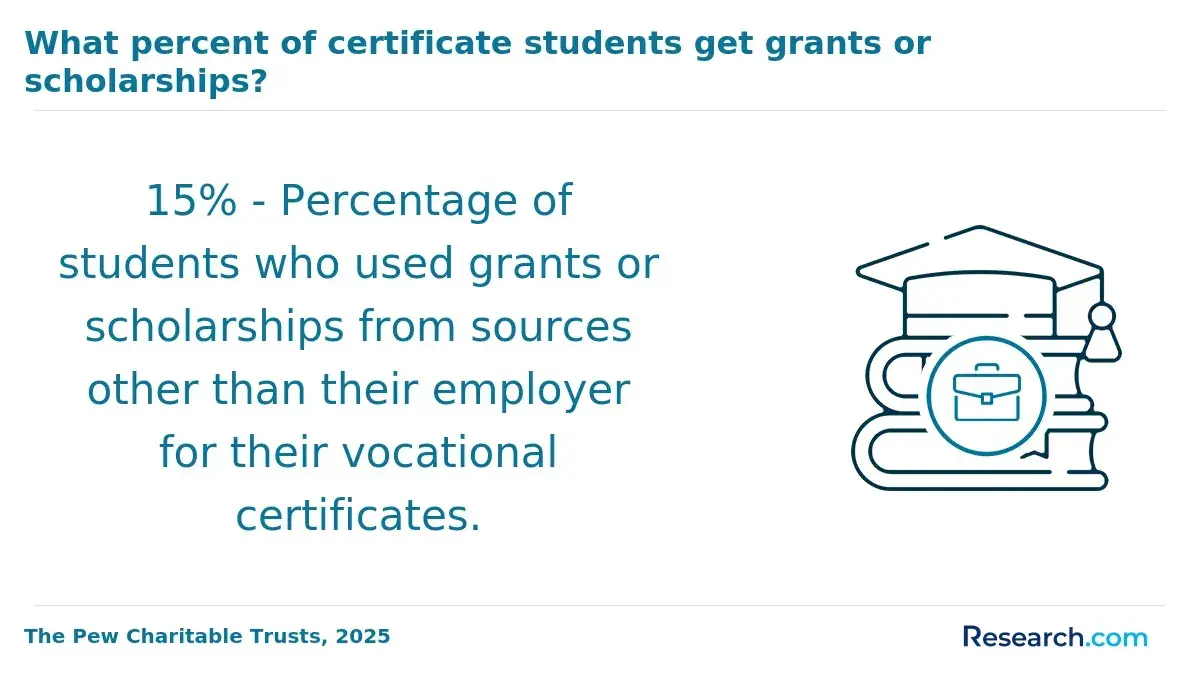
Employer tuition assistance is a critical variable; some companies cover 50% to 100% of costs if the program clearly supports job functions, though policies vary widely. Federal financial aid, including subsidized and unsubsidized loans, requires FAFSA eligibility and adds a financial layer unlike grants and scholarships, which remain scarce in professional HR education.
Accelerated or competency-based degrees can reduce overall expenses by shortening enrollment time but demand disciplined pacing and may not always align with employer reimbursement criteria. Students must verify financial aid qualification and reimbursement possibilities early to optimize cash flow and limit debt exposure.
- Employer tuition reimbursement often needs documented relevance to current or target roles
- Public programs provide cost efficiency but less specialization
- Private nonprofit options offer stronger industry connections at higher cost
- Federal aid supplements financing but depends on eligibility
- Accelerated pacing can decrease total time and cost
What entry-level and midcareer HR roles in tech can you pursue with an online HR management degree?
Online human resource management degrees primarily prepare candidates for technical sector roles such as HR coordinators, recruiting specialists, and talent acquisition assistants focused on sourcing and onboarding specialized talent. These roles demand familiarity with digital HR platforms and labor compliance specific to the technology industry, emphasizing data-driven decision-making often embedded within online curriculums.
Midcareer professionals using this degree to shift into HR business partner, compensation analyst, or employee relations manager roles confront strategic challenges: aligning workforce planning with rapid market shifts, designing competitive pay structures, and managing high-pressure conflict resolution. For example, a compensation analyst in a software firm must balance fast product delivery timelines with salary benchmarking.
Financial considerations weigh heavily in the decision to pursue online versus traditional formats. Data from NCES, as reported by BestColleges, highlights that online master's programs in business-related fields, including human resource management, averaged about $11,000 in tuition and fees, roughly half the cost of comparable on-campus options-making online study an economical choice for working professionals seeking minimal income disruption.
However, graduates must continuously update their technical proficiency to keep pace with evolving HR analytics and automation tools. Navigating online study's flexibility while meeting employer demands for practical experience remains a decisive factor for career pivot or advancement in tech-focused human resource management roles.
What salary ranges and job outlook can HR professionals expect in technology companies across the U.S.?
Salary trajectories in U.S. technology companies clearly reward advanced educational attainment in human resource management. Data from PayScale analyzed by OnlineColleges shows bachelor's degree holders earn median early-career salaries near $41,300, rising to about $66,400 mid-career. Those with master's degrees see substantially higher medians of $50,400 early and $82,900 mid-career, reflecting a 20%-25% premium tied to deeper expertise and leadership potential.
Tech employers increasingly demand HR professionals who combine foundational HR skills with industry-specific knowledge, including talent acquisition for tech roles and workforce analytics. This specialization shifts roles toward higher compensation bands such as HR Business Partner and HR Analytics Lead.
For example, an HR professional with a bachelor's in a mid-sized cybersecurity firm might max out between $65,000 to $70,000 mid-career, while advancing to a master's often aligns with leadership roles that pay above $80,000 annually. Yet this salary increase comes with tradeoffs-master's programs typically require one to three years of full-time or part-time study, impacting opportunity costs and work-life balance.
Ultimately, the decision to pursue advanced human resource management education should weigh concrete salary benefits against time and financial investments, particularly in competitive tech environments where specialized HR skills materially influence both role access and pay scales.
How can students strengthen their tech HR career prospects through certifications, internships, and networking?
Securing certifications such as SHRM-CP, HRCI's PHR, or technology-specific credentials from platforms like Workday or SAP SuccessFactors is a strategic necessity for candidates targeting tech-focused HR roles. Beyond validating relevant expertise, these credentials must be tightly integrated with practical internship experience at mid-to-large tech companies.
Such internships expose students to rapid change management, agile workflows, and data analytics-elements often undervalued in purely academic settings but essential for operational and strategic HR functions. Building a portfolio that combines certification with measurable project leadership significantly elevates employability.
For instance, spearheading the rollout of a digital performance management system during an internship provides tangible proof of applied skills-a crucial advantage given recruiters' preference for demonstrable outcomes over theoretical knowledge. Balancing certification coursework with internship responsibilities is demanding but necessary, reflecting employer expectations for multitasking under pressure.
Networking remains a decisive factor in navigating unadvertised tech HR openings. Active involvement in HR technology forums tied to hubs like Silicon Valley or Seattle facilitates connections with hiring managers and mentors, effectively bridging the gap between academic credentials and real-world openings. HRDegree.org's methodology, which weights 25% of rankings on student employment success.
- Prioritize certifications aligned with evolving HR tech platforms
- Secure internships offering quantifiable project outcomes
- Engage consistently with niche HR technology communities for insider access
Other Things You Should Know About Human Resource Management
Having prior work experience is not always mandatory, but it substantially improves your ability to connect coursework with real-world HR challenges in tech companies. Programs incorporating applied projects or internships favor applicants with some exposure to workplace dynamics. For those without experience, prioritize degrees offering strong practical components or partnerships with tech employers to bridge the experience gap more effectively.
Specialized HR degrees offer deeper knowledge in talent management, labor law, and analytics tailored for HR functions but may limit exposure to wider business strategy. Broader business degrees provide versatility but can underprepare for specific HR challenges common in technology firms. For direct tech HR career alignment, prioritizing an HR-focused degree yields more relevant skills and clearer employer signaling than a generalist business program.
Graduates should know Excel, Tableau or Power BI, and an HRIS such as Workday or SAP SuccessFactors. Many tech employers also expect basic SQL for reporting and headcount analysis. These tools support recruiting dashboards, turnover tracking, and workforce planning in data-driven HR teams.
References
- How to Stand Out in the Tech Industry | University of Phoenix https://www.phoenix.edu/articles/it/how-to-stand-out-in-the-tech-industry.html
- Standards for Accreditation and Requirements of Affiliation | Fourteenth Edition - Middle States Commission on Higher Education https://www.msche.org/standards/fourteenth-edition/
- IT Salary Trends CIOs Need to Know in 2026 - Auxis https://www.auxis.com/it-salary-trends/
- Human Resources Master’s Programs Online: Compare Top Schools https://www.onlinemastersdegrees.org/best-programs/business/human-resources/
- CourseCareers https://coursecareers.com/blog-posts/human-resources-credentials-compared
- HR Salary Range Overview: What HR Professionals Can Expect in 2026 https://www.aihr.com/blog/hr-salary-range/
- Remote HR Jobs: Careers in Virtual Human Resources https://bizky.ai/blog/remote-hr-jobs-careers-in-virtual-human-resources/
- University and college transfer students https://www.torontomu.ca/admissions/undergraduate/requirements/transfer-student/