2027 Best Online Bachelor's in Forensic Science for CSI and Evidence Careers

Co-Founder and Chief Data Scientist
For professionals juggling shift work, family obligations, and tight budgets, the challenge of entering a forensic science career without pausing life is pressing. Traditional programs often require time-consuming, inflexible schedules that exclude many capable candidates. Recent data from the National Center for Education Statistics indicates a 19% rise in adult enrollments in online science degrees, signaling both demand and opportunity for career pivoters who need adaptable learning models without sacrificing rigor.
Understanding how accredited online programs align with employer expectations and state certification requirements can shape strategic educational choices. This article evaluates top online bachelor's options to help navigate these critical trade-offs in forensic science education and workforce entry.
Key Things You Should Know
- Graduates of online forensic science programs face a 15% wage gap versus in-person peers due to limited internship access, signaling a tradeoff between remote study convenience and critical hands-on lab experience, per 2024 BLS data.
- Employers prioritize candidates with familiarity in DNA analysis and digital forensics tools, compelling students to choose programs with specialized electives over generalist degrees, according to the 2024 NIJ workforce survey.
- Median tuition for accredited online forensic science bachelor's rose 7% in 2023, outpacing inflation, influencing timing decisions for career switchers balancing upfront cost against potential 14% faster job placement rates noted by NACE.
What is an online bachelor's in forensic science and how does it prepare you for CSI work?
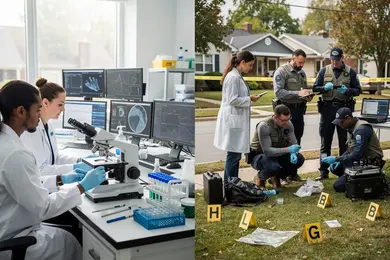
An online bachelor's degree in forensic science for CSI careers demands rigorous integration of scientific knowledge with investigative precision, preparing students for roles that require both evidence analysis and procedural compliance. Unlike traditional science degrees, these programs emphasize applied skills such as crime scene documentation, contamination control, and courtroom testimony readiness-critical competencies employers expect in forensic labs and law enforcement agencies.
Practical training often involves virtual labs and case studies, but real-world value hinges on internships or police academy experience, given physical access to crime scenes remains essential. For example, mastering contamination prevention in virtual crime scene simulations directly impacts a technician's ability to preserve evidence integrity on site. This hands-on relevance differentiates forensic science education, making workforce connections and local practicum access crucial considerations when evaluating programs.
The U.S. Bureau of Labor Statistics projects an 11% growth for forensic science technician jobs through 2031, signaling persistent demand. However, the pathway often includes challenges such as navigating state licensure variability and coordinating with multidisciplinary teams in complex investigations.
Students assessing an online forensic science bachelor degree for evidence analysis jobs should weigh program flexibility against these operational tradeoffs, ensuring coursework aligns with local agency requirements and practical exposure opportunities.
For those interested in further specialization, resources like the master's in forensic psychology online offer advanced avenues within related forensic disciplines.
Are online forensic science bachelor's degrees as credible and accredited as campus programs?
Accreditation remains the most tangible measure distinguishing credible online forensic science bachelor's degrees from those with weak market value. Programs must be regionally accredited by bodies recognized by the U.S. Department of Education or the Council for Higher Education Accreditation to match the caliber of on-campus degrees. However, beyond institutional credibility, prospective students must scrutinize whether hands-on training-labs, internships, and crime scene exercises-is sufficiently integrated. Without these practical elements, graduates risk deficits in essential skills that employers explicitly seek, especially in crime labs or law enforcement roles requiring documented practicum experience.
Employers in forensic disciplines often filter candidates based on a combination of accredited credentials and verifiable technical proficiency. A degree lacking applied components can lead to hiring obstacles or necessitate costly supplementary certifications. Career outcomes also hinge on program partnerships offering local internships and graduate employment tracking. For example, forensic professionals needing security clearances or state licensure must confirm their degree's alignment with those regulatory requirements.
From a financial perspective, online forensic science bachelor's degree accreditation can offer cost advantages, eliminating expenses like housing and commuting compared to campus programs. The National Center for Education Statistics notes the average undergraduate tuition at $14,688; many online offerings can undercut this figure while maintaining quality. This affordability suits working adults seeking to pivot into forensic paths without incurring traditional campus overhead.
When evaluating such degrees alongside other STEM-related routes, cross-disciplinary options may exist. For instance, those interested in environmental forensics might consult resources on an environmental science degree for complementary expertise.
What careers can you pursue with an online forensic science degree in CSI and evidence work?
Online forensic science degree programs must overcome significant barriers to fully replicate the critical hands-on experience required for careers in crime scene investigation (CSI) and evidence analysis jobs with an online forensic science degree. Proficiency in evidence collection, chain-of-custody protocols, and lab techniques is non-negotiable for roles such as forensic evidence technicians or digital forensic examiners, yet simulated labs and remote partnerships often fall short of the rigor expected by employers. A crime scene investigator in a metropolitan police department routinely handles diverse evidence-from biological to digital-making cross-disciplinary competence essential and difficult to achieve without in-person exposure.
Labor statistics projects a 14% growth for forensic science technician roles over the next decade, indicating demand is rising alongside technological scrutiny and crime rates. However, online learners face practical obstacles securing internships or local lab access, which remain crucial for certifications like the American Board of Criminalistics and employability. Without verified practical skill development, remote credentials alone rarely translate into access for specialized roles such as forensic toxicologist or digital forensics analyst.
The scalability of online pathways is confirmed by reports like Arizona State University Online's, showing over 52,000 students nationally, but acceptance hinges on demonstrated field competence. Online graduates should anticipate pursuing additional certifications and relevant experience beyond the degree to remain competitive in evolving forensic workplaces.
For those weighing this educational pathway, consider the balance of flexibility against the necessity for hands-on training. Prospective students might explore hybrid options or institutions with strong internship networks to mitigate distance learning's practical deficits. Comparatively, fields like library science also offer online options with clearer direct-to-employment pipelines, as reflected in resources about a librarian degree online.
What courses and lab experiences are typically included in an online forensic science curriculum?
Online forensic science degree curriculum demands a precise balance between theoretical knowledge and practical skills, aligning outcomes closely with employer expectations in both traditional and digital evidence domains. Core coursework includes crime scene investigation, forensic biology, chemistry, toxicology, serology, and forensic anthropology, supplemented with criminal law and ethics to ensure graduates grasp evidence handling and legal protocols critical during courtroom testimony.
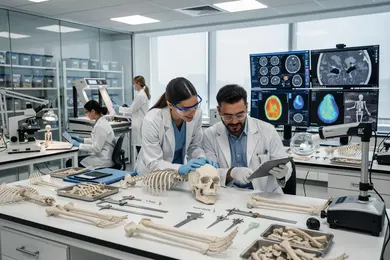
Virtual forensic science lab courses deploy simulated software or hybrid models partnered with physical sites to replicate fingerprint analysis, DNA profiling, and digital evidence recovery. For instance, digital forensics labs focus on recovering deleted or encrypted data, reflecting the growing market demand for professionals adept at cybercrime investigations.
Specialized tracks integrating computer forensics mirror labor market shifts, where digital investigation skills can notably enhance employability. In 2025, Champlain College's online BS in Computer Forensics & Digital Investigations reported median earnings of $89,716, illustrating a tangible financial advantage linked to these competencies. This outcome frames the practical tradeoff: students must secure access to technical resources and commit to physically or virtually supervised labs or externships, which are vital for genuine skill validation.
Prospective candidates evaluating program costs should consider the underlying investment against employability gains; detailed comparisons of computer science degree cost help clarify these financial implications when planning their educational path.
How do online forensic science programs handle labs, fieldwork, and hands-on training requirements?
Online forensic science programs rely heavily on practical training integrated through partnerships with local laboratories, on-site residencies, and virtual simulation tools. This hybrid structure attempts to balance remote learning convenience with necessary hands-on experience, yet physical access to crime labs or law enforcement agencies remains essential. For example, a student living outside a metro area must coordinate with approved facilities to complete supervised fieldwork, bridging a critical gap between theoretical knowledge and applied skills.
Concentrated residency modules-spanning days or weeks-are designed to limit travel while providing direct exposure to fingerprint analysis, DNA profiling, and crime scene processing. Virtual labs supplement this training but cannot replicate the tactile precision demanded by employers, who prioritize verifiable hands-on experience in hiring decisions.
Working professionals must also weigh the financial and logistical impacts of travel, housing, and varying tuition rates based on residency status. For instance, Florida International University's 2025 tuition data shows an in-state credit hour rate of $235.57 versus $690.19 for out-of-state students, resulting in a substantial cost disparity that affects total program affordability and timeline. This reinforces the need to evaluate local affiliations and employer recognition carefully, as forensic science careers require validated technical competence beyond theory.
What admission requirements and prerequisites do online forensic science bachelor's programs have?
Applicants to online forensic science bachelor's programs face a rigorous baseline: typically, a high school diploma paired with competitive GPAs around 2.5 to 3.0, often emphasizing STEM coursework. Beyond academic markers, programs usually require completed introductory classes in biology, chemistry, and sometimes math, essential foundations for disciplines like toxicology and DNA analysis. Standardized test scores remain part of the criteria for many, though test-optional trends have softened this requirement, particularly in light of shifting admissions policies.
Admissions processes often demand official transcripts and may request letters of recommendation or personal statements, with a clear focus on analytical skills, ethical judgment, and attention to detail-traits highly valued in forensic roles. Work experience, while not universally mandatory, can significantly strengthen applications, especially for career changers or professionals targeting evidence analysis positions.
Program structure influences admissions standards. Accelerated tracks usually expect prior college credits as proof of readiness, while traditional online programs accommodate students needing to build foundational knowledge. Financial investment is substantial, exemplified by one online forensic science program with tuition totaling approximately $65,110 or $345 per credit hour in 2025. This cost factor critically weighs against expected return on investment and employer valuation of credentials within crime scene investigation and forensic evidence processing roles.
How long does it take to earn an online bachelor's in forensic science, and can you study part time?
Choosing between full-time and part-time tracks in an online bachelor's in forensic science entails a significant tradeoff between speed of entry into the field and current life obligations. A full-time student typically finishes in four years, positioning themselves to compete for entry-level roles earlier-roles where employers prioritize up-to-date technical skills and hands-on lab experience. Delaying completion through part-time study (six to eight years) can accommodate work or family commitments but defers access to these positions and slows salary progression, given average earnings range from $40,000 at entry to over $110,000 for experienced forensic scientists as of 2025.
Employers increasingly expect practical lab proficiency alongside degrees, so part-time students should assess whether reduced course loads restrict internship or lab opportunities that are vital for employability. Programs offering accelerated courses or summer sessions help mitigate delays and maintain momentum in skill acquisition.
Key considerations include:
- Full-time study aligns with earlier workforce integration and faster salary growth
- Part-time study supports balancing current professional or personal commitments
- Exposure to hands-on internships may vary by enrollment pace, impacting job readiness
Prospective students must weigh immediate income needs against potential long-term earnings and advancement speed, especially amid growing demand for forensic science professionals.
How much do online forensic science bachelor's programs cost, and what financial aid is available?
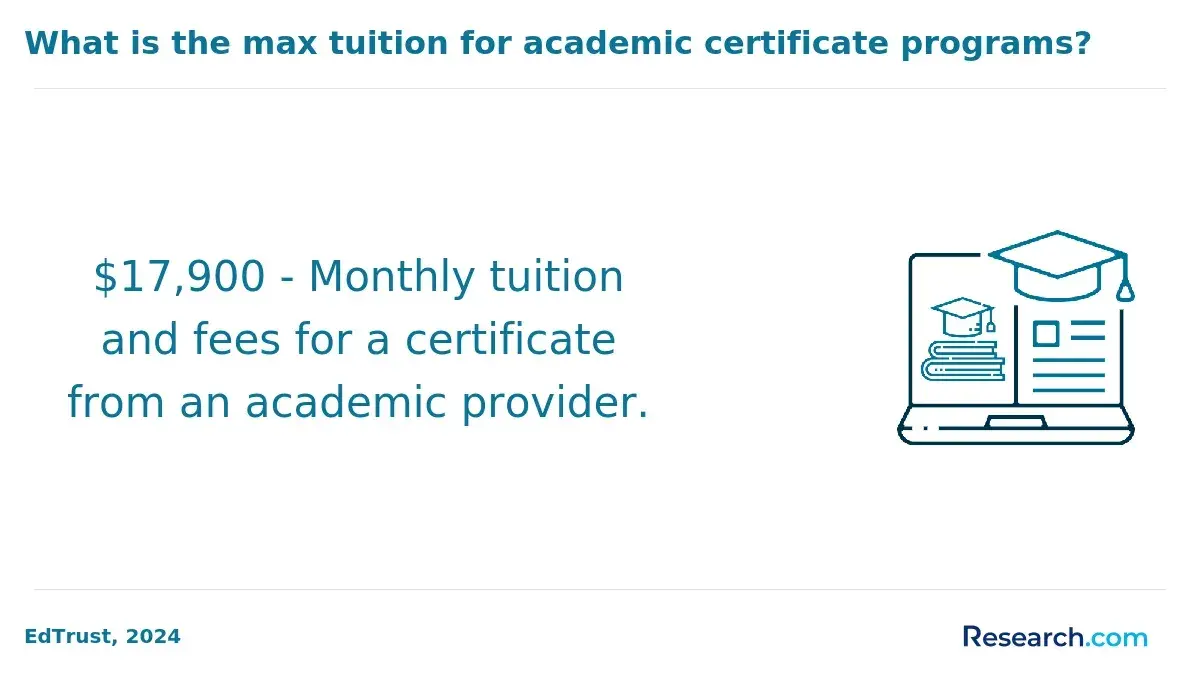
Choosing an online forensic science bachelor's program involves weighing tuition costs against realistic career outcomes. Tuition varies widely-from about $15,000 to over $50,000 total-largely based on institution type and residency. Public universities typically offer below $300 per credit for in-state students, while private or out-of-state students can expect rates surpassing $600 per credit. These fees, adding roughly $6,000 to $20,000 annually for full-time enrollment, exclude supplementary expenses such as mandatory fees, textbooks, lab materials, and fieldwork equipment essential for practical training.
Funding strategies must align with one's professional context. Federal options like Pell Grants and Direct Loans require FAFSA eligibility, but many students also rely on institutional scholarships aimed at criminal justice or STEM candidates. State grants and employer tuition reimbursement programs are particularly relevant for those already employed in allied sectors such as law enforcement. Private scholarships demand documented academic merit or career intent, which means planning ahead is crucial.
In terms of return on investment, reported salaries emphasize the divide between job roles: crime scene technicians make around $43,485 annually, while forensic scientists average about $62,325. This income gap suggests that students targeting forensic scientist roles might justify higher tuition for more rigorous, accredited programs offering superior lab resources and employer recognition. Meanwhile, prospective technicians often prioritize balancing cost with flexible scheduling to accommodate existing employment.
What are the salary expectations and job outlook for forensic science technicians and CSI roles?
Median salaries for forensic science technicians and crime scene investigators (CSIs) typically range between $65,000 and $70,000 but fluctuate considerably based on geography, employer type, and experience. Entry-level roles in smaller jurisdictions or private consulting commonly start near $45,000, whereas senior federal or metropolitan positions surpass $85,000. This wage variability underscores the importance of geographic and sector flexibility for those pursuing or advancing in this field.
Job growth projections at 11% through 2034 outpace many scientific professions, primarily fueled by increased court reliance on forensic evidence. However, opportunities cluster in states with robust law enforcement infrastructures, limiting prospects and earnings in rural areas. Prospective candidates should weigh these regional and institutional disparities carefully.
Online bachelor's degree programs in forensic science or crime scene investigation usually require four to five years, often extended by part-time study among working adults. This timeline delays workforce entry and salary gains, making early planning essential. Employers increasingly favor candidates combining completed degrees with internships or certifications such as the American Board of Criminalistics credential, emphasizing applied skills over academic grades.
Strategic program selection involves balancing flexible pacing with practical fieldwork to build the hands-on competencies and federal or law enforcement exposure that differentiate applicants in competitive job markets.
How can you choose a reputable online forensic science program that meets licensing and certification needs?
Selecting an online forensic science program requires prioritizing accreditation and alignment with relevant state licensing or certification mandates, which differ significantly and directly affect employability in both government and private sectors. Candidates must verify that the curriculum integrates not only theoretical foundations but also practical skills recognized by bodies such as the American Board of Criminalistics or state forensic regulatory entities.
Programs lacking hands-on training or affiliations with active crime laboratories generally fall short in preparing students for evidence analysis roles. For instance, forensic chemists in state labs need documented lab experience; purely online courses without hybrid or local practicum arrangements often cannot fulfill this requirement.
Graduate outcomes, including certification exam pass rates and employer placement, are vital indicators of program quality. In 2025, Arizona State University Online led nationwide online enrollment, while multiple forensic science degrees ranked among the Best Online Forensic Science Degrees for 2026 (OnlineU; UniversityHQ), indicating competitive offerings but variable certification alignment.
Prospective students must also consider state-specific prerequisites, including criminal justice background or field experience, especially where licensing statutes exist. In states without formal licensing, preparation for professional certification exams remains essential as industry benchmarks.
Logistical factors such as program duration and flexibility should be weighed against employer expectations. Federal forensic agencies and law enforcement prioritize credentials completed within defined timeframes and validated practical experience, which many fully online models struggle to deliver without integrated internships or practicums.
Other Things You Should Know About Forensic Science
In 2027, online bachelor's programs in forensic science offer specializations such as forensic biology, digital forensics, and forensic chemistry. These specializations allow students to tailor their education towards specific career paths, enhancing their expertise and employability in niche areas within the forensic science field.
Employers prioritize accredited programs with verifiable lab experience regardless of delivery format. Online degrees without integrated hands-on components or lacking reputable accreditations often face skepticism. When choosing online options, ensure partnerships with physical labs or field placements to meet employer expectations and licensing prerequisites.
Look for regional accreditation from a U.S. Department of Education-recognized accreditor, plus program approval when available from forensic or science bodies. For CSI jobs, employers also value coursework with at least 120 semester credits, laboratory science, and criminal justice or crime scene training.
Programs with direct forensic lab affiliations or law enforcement partnerships offer critical practical exposure and networking opportunities that boost job readiness. Prioritizing these networks translates to better access to internships and entry-level openings in competitive CSI roles. Without such connections, graduates often face longer job searches and may need additional certifications or experience to qualify.
References
- Online Forensic Science Degree https://www.aiuniv.edu/degrees/criminal-justice/bachelors-forensic-science
- Employment Opportunities in Crime Scene Investigation and Forensics https://www.crime-scene-investigator.net/employment.html
- BSc (Hons) Forensic Science https://wrexham.ac.uk/courses/undergraduate-courses/forensic-science/
- Crime Scene Investigation (CSI), BS - Hilbert College https://www.hilbert.edu/programs/crime-scene-investigation-bs/
- Crime Scene Investigator Careers - CSI Salary & Job Outlook https://www.forensicscolleges.com/careers/crime-scene-investigator
- Educational Requirements for Forensic Science: From Courses to Certification https://www.scuhs.edu/mshgg-article/educational-requirements-for-forensic-science-from-courses-to-certification/
- List of Bachelors in Forensic Science Programs - Campus & Online https://yescollege.com/degrees/bachelors-in-forensic-science/
- Compare Forensic Scientist Schools & Training Programs https://www.criminaljusticeprograms.com/specialty/forensic-science-degrees/
- Online Forensic Science Degrees | OnlineColleges.net https://www.onlinecolleges.net/degrees/forensic-science/