2027 Best Entry-Level Forensic Science Jobs by Work Setting

Co-Founder and Chief Data Scientist
Securing an entry-level role in forensic science often confronts applicants with a fragmented job market vividly split by work settings, demanding nuanced prioritization beyond generic qualifications. Meanwhile, a 2024 report from the U.S. Department of Education highlights a 38% increase in enrollment among adult learners pursuing flexible, hybrid programs-a shift signaling that traditional full-time campus paths may no longer suit those balancing career pivots or family responsibilities.
This fragmentation, compounded by employer preferences for specialized experience tied to laboratory, field, or digital environments, requires candidates to make finely tuned educational and vocational choices early. This article examines top entry-level forensic science jobs segmented by work setting to equip readers with targeted insights for aligning career goals with realistic job accessibility and growth potential.
Key Things You Should Know
- Entry-level forensic science roles in federal agencies require at least a bachelor's in natural sciences, with 23% more competitive hiring relative to state labs, impacting candidate specialization choices and job market timing.
- Employers prioritize hands-on crime scene and laboratory experience, with 67% of hiring managers favoring candidates from programs offering integrated internships, directly influencing workforce readiness and salary outcomes.
- Typically, forensic science certificates reduce credentialing time by 30%, beneficial for mid-career pivots but often limit access to advanced analyst roles requiring at least a four-year degree, creating a strategic credential tradeoff.
`
What are the best entry-level forensic science jobs by work setting in the U.S.?
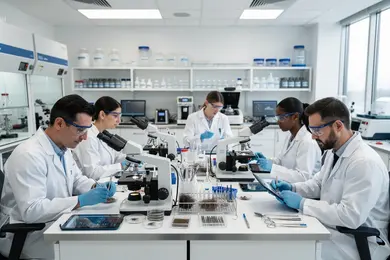
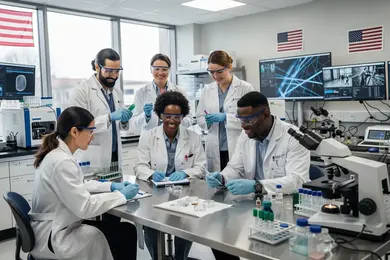
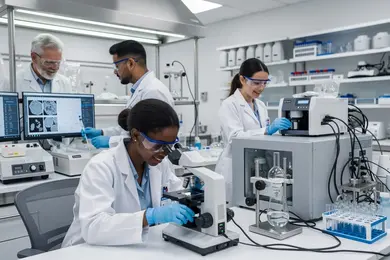
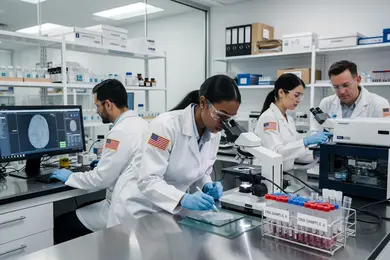
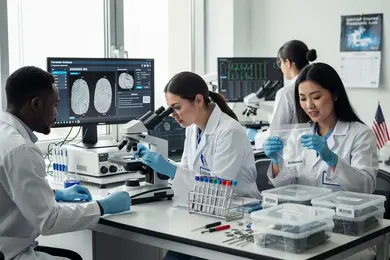
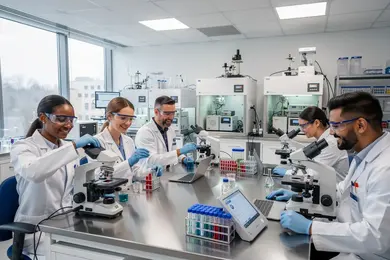
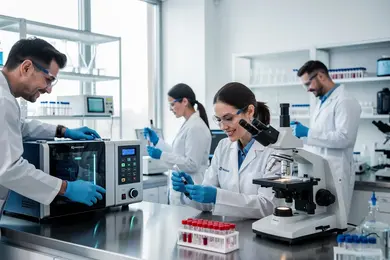
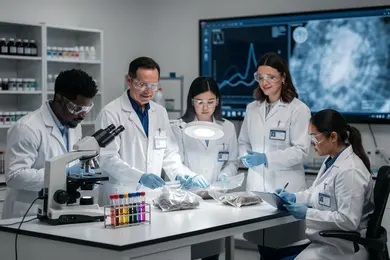
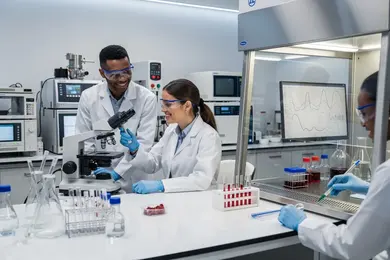
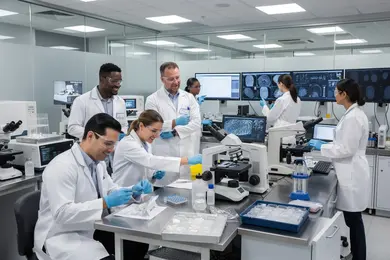
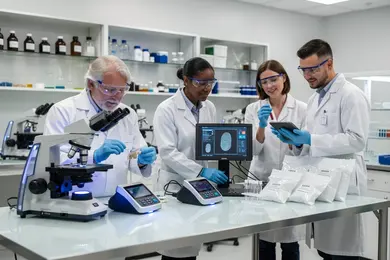
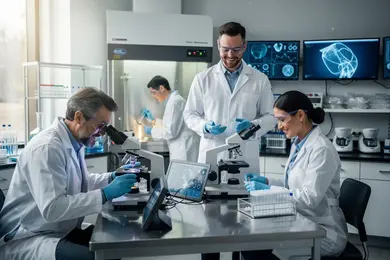
Entry-level forensic science jobs in the U.S. vary dramatically by work setting, impacting educational needs, skill application, and career durability. Crime laboratories predominantly hire forensic science technicians focused on rigorous evidence analysis-DNA, toxicology, fingerprints-which demands strict procedural adherence and a bachelor's degree, typically yielding a median wage near $64,940. The 13% projected growth in this sector reflects sustained demand for candidates capable of handling methodical analysis in controlled environments.
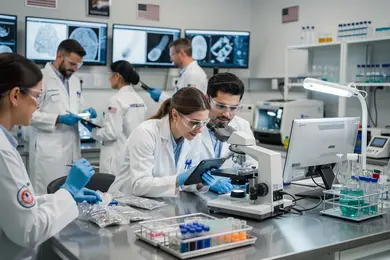
Fieldwork positions-centered on crime scenes and law enforcement agencies-prioritize adaptability, physical endurance, and on-the-spot decision-making. These roles often involve irregular hours and potential exposure to hazards, favoring applicants with certifications plus relevant academic credentials. Practical realities here include balancing physical presence with effective communication and evidence documentation under pressure. This contrasts with laboratory roles where stability and protocol compliance dominate.
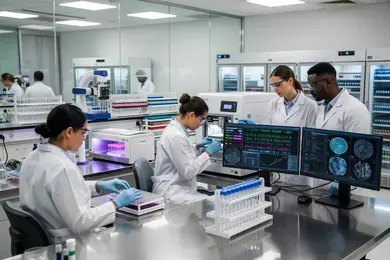
Outside traditional settings, forensic data analysis and digital forensics within corporate or government cybersecurity units are expanding fast. These roles rely on IT expertise rather than classic wet-lab skills and require integrated knowledge of forensic science and digital systems. For those exploring the best entry-level forensic science jobs in the U.S. by work setting, understanding these distinctions is vital to avoid misaligned training and subsequent underemployment.
Prospective professionals should gauge which environment fits their skill set and career ambitions, possibly exploring options for a forensic degree online to balance flexibility with rigor. This strategic alignment is crucial for navigating the divergent demands across the top entry-level forensic science careers by workplace location in the U.S.
What education and training do you need for entry-level forensic science roles?
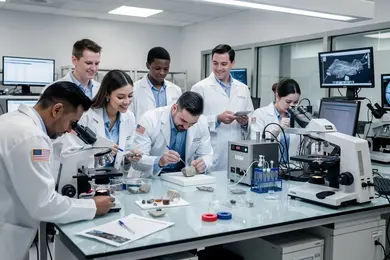
Entry-level forensic science positions in the US generally require at least a bachelor's degree in forensic science or a closely related field such as biology, chemistry, or criminal justice, ideally supported by accredited internships or cooperative education experiences. These practical work components significantly enhance employability by demonstrating applied skills and adaptability, critical in a field where employers prioritize candidates prepared to reduce extensive on-the-job training.
Many forensic science technician roles, especially within law enforcement, demand proficiency in specialized technical areas such as DNA analysis, toxicology, or fingerprint examination. Candidates arriving without focused forensic coursework often undergo prolonged probationary periods, sometimes requiring nine to twelve months of agency-specific training, delaying independent casework. This dynamic illustrates the tangible tradeoff between general science degrees and forensic-specific education when competing in the labor market.
Certification from recognized bodies, while not universally mandated, increasingly serves as a differentiator, offering measurable proof of competency. Given the U.S. Bureau of Labor Statistics projects around 2,600 job openings annually for forensic science technicians through 2032-largely due to retirements and transfers-the market rewards those minimizing training lag.
For working professionals exploring accelerated pathways, combining targeted internships with expedited bachelor's programs delivers faster entry, though those without degrees face significant barriers against degree-holders in this steady, replacement-driven demand environment. Employers also expect strong analytical reasoning, meticulous documentation, and strict adherence to chain-of-custody protocols from day one.
Prospective students evaluating entry-level forensic science education requirements in the US must weigh these operational realities and may explore complementary credentials or advanced degrees to improve market positioning. For those considering data science intersections or academic advancement, a PhD in data science online might represent a strategic investment aligned with evolving forensic technologies.
Training programs for entry-level forensic science jobs should be chosen with careful attention to how well they integrate practical lab work and analytical instrumentation familiarity, which remain essential employer expectations from the outset.
How do online and campus forensic science programs prepare you for these jobs?
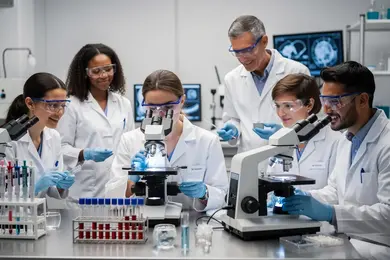
Forensic science program benefits for career readiness in different work settings hinge largely on how effectively students gain applied skills alongside theoretical knowledge. Campus programs offer direct laboratory access, mortuary practice sessions, and supervised internships essential for entry-level tasks such as evidence handling, autopsy assistance, and chain-of-custody protocols. For example, a forensic attendant position requires hands-on experience with sterile mortuary environments, typically achieved through campus internships or clinical rotations.
Online and campus forensic science programs prepare students for entry-level jobs with different experiential models. While online programs integrate virtual labs and remote mentorship, they necessitate self-directed efforts to secure local internships-particularly the one-year mortuary experience often mandated by employers. This creates a practical tradeoff: online study suits those managing work or geographic barriers but can complicate meeting employer criteria without structured supervision.
Employers in larger jurisdictions, such as Los Angeles County, consistently offer entry annual salaries between $50,000 and $60,000 for candidates holding an associate degree or equivalent mortuary experience, highlighting the premium on real-world competencies over advanced credentials alone. Job seekers must critically assess if their forensic science program delivers an accredited internship or equivalent hands-on training to satisfy these market demands. Failure to secure this directly impacts initial job eligibility and long-term employability.
Prospective students balancing educational pathways might also consider related fields; for instance, master of library science online programs demonstrate how online degrees with strong mentorship can bridge theory and practice if internships are well integrated. Similarly, forensic programs must align practical components with local licensing prerequisites and workforce expectations to ensure meaningful career entry.
What accredited degrees or certificates lead to entry-level forensic lab positions?
Entry-level forensic lab roles demand accredited degrees or certificates closely tied to forensic methodologies and laboratory science. Practical undergraduate options include bachelor's degrees in forensic science, chemistry, biology, molecular biology, or biochemistry from programs accredited by the Forensic Science Education Programs Accreditation Commission (FEPAC) or recognized regional bodies. These credentials ensure candidates possess essential skills in crime scene evidence processing, analytical instrumentation, and quality assurance.
Associates degrees centered on forensic technology or criminalistics offer technician-level entry but generally lack the upward mobility needed for forensic scientist positions without additional education. Certificates in forensic laboratory techniques or crime scene investigation can complement STEM backgrounds and accelerate eligibility for forensic scientist trainee roles, addressing a key need for certifications required for entry-level forensic science technician positions.
Virginia Department of Forensic Science salary data indicate trainee starts at $50,531-$53,057 annually, with fully qualified forensic scientists earning between $59,851 and $110,393. This gap illustrates the tangible financial advantage of pursuing a full bachelor's degree paired with internships or hands-on training. Employers prioritize candidates who combine accredited degrees with practical experience due to a common hiring challenge: graduates frequently lack evidence processing and instrument operation proficiency.
For example, a candidate holding a FEPAC-accredited bachelor's degree plus a forensic chemistry internship integrates faster into forensic workflows and achieves quicker pay-grade advancement than those with unrelated science degrees or standalone certificates. Choosing a non-accredited program or certificate-only path may limit initial employment options and delay income growth due to required supplementary training.
Students needing flexible options might consider a masters in library science online program to complement forensic science study or career transitions.
Which entry-level forensic science jobs are available in crime labs and police agencies?
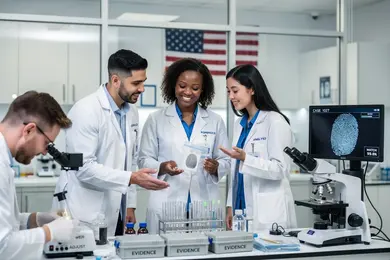
Entry-level roles in forensic science present a balance between technical rigor and evolving market demand, often revealing a distinct divide between traditional lab work and digital forensics. Forensic laboratory and evidence technicians must navigate strict protocols, requiring an associate degree or postsecondary certificate alongside specialized forensic training. These roles emphasize precision in physical evidence handling-ranging from DNA to toxicology samples-and maintaining the chain of custody for criminal investigations.
In contrast, digital forensics analysts represent a fast-growing segment with an expected workforce increase near 15% over a decade, according to U.S. Bureau of Labor Statistics data cited by Indeed. This specialization demands at least a bachelor's degree in cybersecurity, computer science, or forensic science, coupled with proficiency in forensic software tools and certifications like CFCE or ACE.
Professionals investing in digital forensics should consider long-term scalability versus immediate entry; the work environment often requires problem-solving under multidisciplinary, high-pressure settings. Meanwhile, positions in crime labs are highly competitive and constrained by rigid certification and procedural requirements, limiting flexibility but offering foundational forensic experience.
Key employability factors include:
- Cross-training and communication skills tailored to investigative contexts
- Compliance with evidence handling legal standards
- Technical certifications reinforcing specialized expertise
Prospective forensic science workers must weigh these practical tradeoffs carefully in planning their educational path and career entry point.
What entry-level forensic science careers exist in medical examiner and hospital settings?
Entry-level roles in medical examiner and hospital settings demand a focused blend of academic preparation and technical proficiency, especially in forensic pathology assistance and toxicology support. Candidates typically need a bachelor's degree in biology, chemistry, or a closely related science, paired with specific lab competencies. For instance, autopsy technicians routinely manage specimen preparation and anatomical documentation essential for death investigations, which requires precision and familiarity with medical protocols.
The forensic work environment in these institutions enforces strict adherence to medical and legal standards, emphasizing medical terminology and anatomy knowledge. A practical consideration is the compensation disparity: local government positions often offer modest salaries with slower advancement, whereas comparable federal agency roles pay 20-30% more, reflecting differences in funding and career structure.
Several factors influence hiring prospects:
- Hands-on training and competency assessments are prerequisites alongside academic credentials.
- Availability of positions correlates strongly with jurisdiction size and forensic budgets.
- Metropolitan areas, while more competitive, provide clearer pathways for progression.
Professionals pivoting into this field benefit from integrating biological sciences degrees with credentials in forensic toxicology or death investigation, increasing employability in a tightly regulated, outcomes-driven setting.
What starter forensic roles are found in government, federal, and military work settings?
Entry-level forensic roles within government and military contexts are distinctly segmented by skill sets and advancement potential. Forensic accountants, typically engaged by agencies like the FBI and IRS, emphasize financial fraud detection and compliance-skills that command starting salaries around $60,000-$70,000 and notably faster salary growth, often exceeding $80,000 within three years. Securing these roles requires not only accounting expertise but also the ability to navigate complex regulatory environments.
Conversely, crime lab technicians operate within local, state, and military labs, focusing on DNA analysis, toxicology, and firearms examination. Although their initial pay tends to be lower, these positions offer substantial practical experience developing technical laboratory skills and government benefits, with advancement dependent on certifications and accrued experience.
Investigative support specialists provide case preparation and evidence documentation, requiring adaptability across agencies with differing protocols. While these roles offer relative stability, financial progression is slower compared to forensic accountants.
Prospective students must weigh these tradeoffs carefully:
- Forensic accounting demands strong quantitative aptitude and security clearances, featuring accelerated financial returns but longer hiring timelines.
- Crime lab and investigative support roles provide hands-on forensic science experience but generally slower compensation growth.
Choosing a pathway hinges on both immediate educational fit and long-term employment objectives, where security clearance requirements introduce additional complexity but open access to federal and military career tracks.
Are there entry-level forensic science opportunities in private industry and consulting firms?
Hiring for entry-level forensic science roles in private industry requires navigating a distinct set of employer expectations compared to the public sector. Private firms prioritize candidates with specialized lab skills, interdisciplinary competence-such as combining forensic chemistry with digital data analysis-and client-facing abilities. Positions frequently involve evidence examination, quality assurance, and technical support, demanding adaptability and proactive skill acquisition. Unlike government laboratories, private employers may offer less structured training, which necessitates early-career forensic scientists to independently build competencies in project management and regulatory compliance.
Educational prerequisites typically include a bachelor's degree in forensic science or a related discipline, alongside certifications such as American Board of Criminalistics accreditation or forensic toxicology coursework. Internships and networking through professional forensic associations substantially improve hiring prospects.
- Private forensic employers expect multi-disciplinary flexibility and client communication skills.
- Training and formal mentorship are often limited, demanding self-driven development.
- Salary variability requires candidates to assess market conditions carefully when planning career moves.
What starting salaries and job outlook can new forensic science graduates expect?
Starting salaries for new forensic science graduates fluctuate significantly depending on specialization and employer type, with forensic evaluator psychologists in state agencies often earning above $90,000 annually. This salary level reflects the premium placed on specialized forensic mental health expertise, contrasting sharply with more typical entry-level forensic science positions in crime labs or law enforcement agencies, which range between $50,000 and $65,000.
Job prospects vary by location, employer, and education level. Federal and metropolitan medical examiner roles offer more stability and advancement but require navigating highly competitive processes. State and local roles pay less on average but can provide earlier, hands-on experiences that may benefit those without advanced degrees or certifications.
Key workforce trends include an 8% projected growth for forensic science technicians through 2034, though competition remains tight. Success increasingly hinges on practical skills such as operating advanced analytical tools and strong technical writing, alongside internships or applied experience, which can sway salary offers and job retention.
Graduates face a distinct tradeoff between immediate earning potential and long-term progression: forensic psychology roles demand advanced credentials but yield higher pay, while standard forensic technician paths allow earlier entry but slower financial growth.
How can you choose a reputable, accredited forensic science program for your career goals?
Choosing a forensic science program demands more than academic reputation; it requires verifying accreditation by recognized agencies, such as regional accreditors and programmatic bodies like FEPAC, to ensure targeted training in forensic methodologies. Without programmatic accreditation, graduates risk gaps in essential practical skills valued by employers, limiting entry-level prospects in positions such as crime scene investigators and evidence technicians, where median salaries range from $41,700 to $45,600.
Beyond accreditation, program outcomes like job placement rates and partnerships with law enforcement or public health labs serve as critical indicators of employability. For example, a student aiming to join a municipal crime lab benefits more from a FEPAC-accredited bachelor's with embedded forensic chemistry labs than from a generic criminal justice degree lacking hands-on components. Programs omitting internships or lab-intensive training often produce candidates less prepared for field demands, undermining their market competitiveness in a sector growing 13% nationally.
Prospective students must also weigh online versus in-person formats, recognizing that flexibility in delivery sometimes compromises access to essential hands-on experience. Considerations such as program length and credential type (certificate versus degree) should align with career pivot timelines and the practical requirements of forensic science employers to avoid costly misalignment between education and workforce expectations.
Other Things You Should Know About Forensic Science
An internship is not strictly required for entry-level forensic science positions, but it strongly improves employability. Many employers prioritize candidates with hands-on experience that internships provide, especially because forensic roles demand familiarity with strict protocols and evidence handling. Without internship experience, new graduates may face challenges demonstrating practical skills, making internships a valuable investment if your goal is to enter crime labs or medical examiner offices.
Choosing between lab-focused training and field experience depends on your target work setting. Crime labs and forensic analysis jobs demand proficiency with lab instrumentation and data interpretation, so programs emphasizing lab work offer better preparation there. Conversely, roles in police agencies or medical examiner offices often require field evidence collection and case documentation experience; in these cases, prioritize programs or opportunities that include fieldwork components to align more closely with employer expectations.
Most crime lab entry-level roles require a bachelor’s degree in forensic science, chemistry, biology, or a related natural science. Many agencies also expect at least 24 semester hours in chemistry and 12 in biology, plus coursework in statistics or genetics for specialized sections.
In 2027, top entry-level forensic science jobs include crime scene investigators for law enforcement agencies, laboratory technicians in private sector forensic labs, and digital forensic analysts in cybersecurity firms. These positions offer practical exposure and growth opportunities across various work settings.
References
- Careers in forensic science https://www.justice-ni.gov.uk/articles/careers-forensic-science
- Employment Opportunities in Crime Scene Investigation and Forensics https://www.crime-scene-investigator.net/employment.html
- How to become a Forensic Pathologist? – The education, career, and job duties https://www.umhs-sk.org/blog/how-to-become-a-forensic-pathologist
- Forensics Careers | FBIJOBS https://fbijobs.gov/forensics
- ASCLD - Job Postings https://www.ascld.org/job-postings/
- Criminal Justice Careers in Forensic Science and Investigations https://www.shawnee.edu/blog/criminal-justice-careers-in-forensic-science-and-investigations
- Forensic Medicine Careers: Job Paths and Outlook | PCOM https://www.pcom.edu/academics/programs-and-degrees/forensic-medicine/news/forensic-careers.html
- Forensic Science Degree Programs https://www.criminaljusticedegreeschools.com/degrees/forensic-science-degree/
- How to Become a Forensic Medical Examiner - Steps, Pay, Career Outlook https://www.forensicscolleges.com/careers/medical-examiner
- Careers in Forensic Science https://www.aafs.org/careers-forensic-science