2027 Exercise Science Specializations for Fitness and Wellness Careers

Co-Founder and Chief Data Scientist
Fitness professionals aiming to specialize face an urgent challenge: selecting a path that balances rising employer expectations with flexible education modes, especially as 55% of adult learners now prefer part-time or online programs, according to the National Center for Education Statistics 2024 data. This shift not only reflects increased workforce participation and time constraints but also demands that students assess specialization options for their alignment with evolving job markets and credential requirements.
The growth of remote and hybrid learning reshapes how careers in exercise science can develop outside traditional campus settings. This article outlines core specializations, evaluating their practical impact on career mobility and long-term employability.
Key Things You Should Know
- Specializing in clinical exercise physiology offers 18% faster job growth by 2032 but requires costly certification investments averaging $2,500, limiting access for many career switchers.
- Employers prioritize candidates with integrative specialties such as biomechanics and nutrition; 62% of top U.S. health systems rejected applicants lacking multidisciplinary credentials in 2024 workforce surveys.
- Graduates focusing solely on fitness coaching face wage stagnation; median salaries plateau near $45,000, per 2023 U.S. Bureau of Labor Statistics, signaling critical tradeoffs in long-term economic mobility.
What are the main exercise science specializations for fitness and wellness careers?
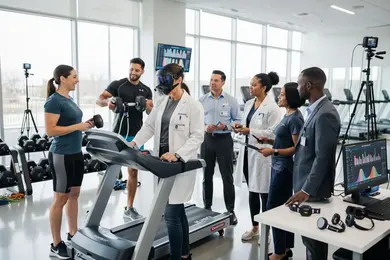
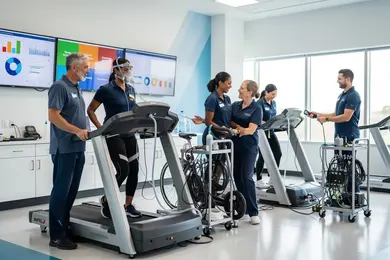
Deciding among exercise science career specializations in fitness and wellness requires weighing distinct operational realities and employment landscapes. Clinical exercise physiology presents the most stable outlook, with a projected 9% job growth through 2034 and roughly 1,700 annual openings driven by healthcare demands. However, this path involves rigorous scientific training and licensing, as practitioners monitor patients in hospitals or rehab centers using advanced pathophysiological assessments and monitoring technologies.
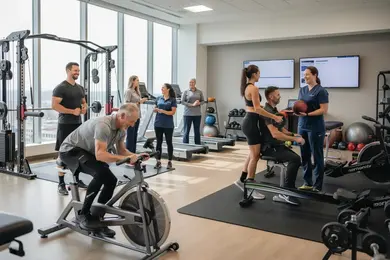
Sports performance specialists focus on enhancing athletic abilities through biomechanics, nutrition, and recovery science, requiring solid kinesiology expertise. This specialization suits those targeting sports organizations or private training environments but lacks the clinical job security seen in healthcare settings.
Occupational health combines ergonomics and exercise science to reduce workplace injuries, intersecting with organizational risk management and compliance. As employee wellness programs expand, this niche blends physical health with corporate safety protocols.
Wellness coaching, often outside clinical settings, emphasizes behavioral psychology and motivational techniques to drive lifestyle changes, offering flexibility but less predictable job security and earning potential.
Given these paths, professionals interested in exercise science fields for fitness and wellness must navigate tradeoffs between certification costs, setting accessibility, and long-term employability. For those exploring roles beyond direct clinical or athletic work, examining athletic director jobs may reveal alternative leadership trajectories within this sector.
What degree levels in exercise science best prepare you for fitness and wellness roles?
Bachelor's degrees in exercise science for fitness careers provide fundamental knowledge in anatomy, physiology, and basic program design, qualifying graduates for broad entry-level wellness roles. Employers typically expect familiarity with exercise physiology, biomechanics, and nutrition, aligning with industry certifications. However, roles demanding applied performance analysis or clinical testing increasingly require a master's degree, especially in strength and conditioning within collegiate sports where advanced data-driven athlete monitoring is standard.
A master's degree in exercise science or related fields enables professionals to lead research-based program development, advanced physiological assessments, and rehabilitation initiatives. This credential is often crucial for expanded responsibilities in human performance or corporate wellness leadership. The National Strength and Conditioning Association notes over 200 NCAA Division I programs employ specialized performance staff with graduate-level expertise, reflecting growing labor market differentiation driven by educational attainment.
Doctoral degrees generally serve academic research or policy roles rather than practical fitness careers, where certifications and hands-on experience often outweigh the degree level itself. Choosing the right degree level involves weighing career targets: bachelor's degrees support generalist roles and certification pathways, while specialist positions in strength and conditioning or clinical areas demand a master's for competitive advantage and salary growth.
Prospective students should also consider integrating targeted internships to maximize employability in advanced exercise science domains. Those evaluating pathways might explore a sports management online degree for complementary credentials and skills relevant to wellness professionals navigating this evolving landscape.
What jobs can you get with an exercise science specialization in fitness and wellness?
A specialization in exercise science opens distinct career opportunities that emphasize measurable impacts on physical health and wellness. Fitness trainers and instructors remain the most accessible roles, designing targeted regimens for diverse populations. However, the real-world employment of graduates often depends on certifications such as CPR/AED to meet professional and legal standards. According to labor data cited by Calvin University, job growth for fitness professionals could reach 15% from 2022 to 2032, largely driven by an uptick in corporate wellness programs. This shift creates pathways into workplace fitness management, where expertise translates into reduced healthcare costs and improved productivity but requires adapting to variable funding cycles.
The range of exercise science career opportunities in fitness and wellness extends beyond instruction to include:
- Strength and conditioning coaching focused on athletic performance and injury prevention.
- Corporate wellness coordination, blending fitness, nutrition advice, and behavioral strategies tailored to workplace culture.
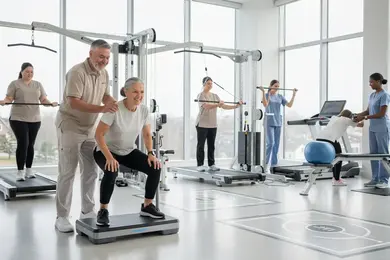
- Community health physical activity specialization, particularly aimed at chronic disease prevention and accessibility for aging or disabled populations.
- Rehabilitation assistance, working alongside physical therapists to guide recovery through exercise.
Pragmatically, those seeking jobs available with an exercise science specialization in health and fitness should anticipate workload variances linked to economic trends and seasonal demands. Pursuing advanced credentials in related fields like nutrition or kinesiology can enhance employability and align with employer expectations in multidisciplinary settings. For students balancing broad educational interests, resources such as the best online library science programs provide models of integrating complementary knowledge streams valuable in health sciences professions.
How do exercise science specializations differ in curriculum, labs, and hands-on training?
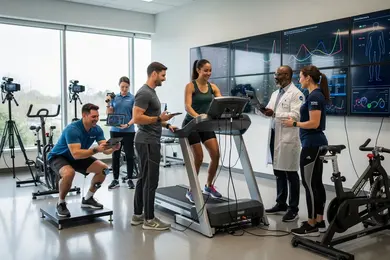
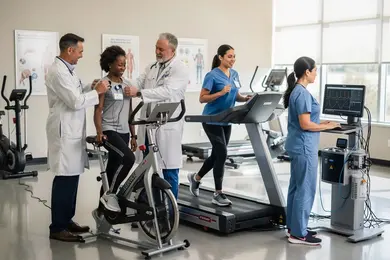
Specializations within exercise science diverge sharply in curriculum emphasis and hands-on training variations in exercise science programs, affecting career trajectories and employer expectations. Clinical paths like cardiac rehabilitation and clinical exercise physiology demand rigorous mastery of electrocardiogram interpretation, patient monitoring, and clinical assessment, with students gaining extensive direct patient experience in hospital and outpatient contexts. These programs prioritize medical protocol adherence and precision, essential for roles involving high-stakes cardiovascular care.
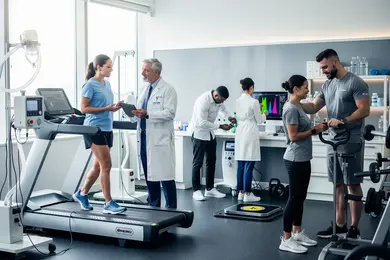
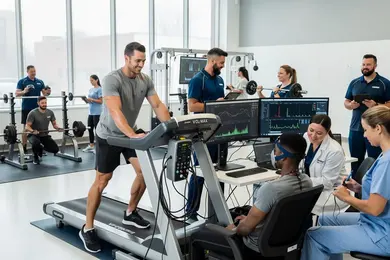
Conversely, sports performance tracks focus on biomechanics, strength conditioning, and sports nutrition, reinforced by labs using motion analysis and metabolic testing. Training with athletic teams hones skills in injury prevention and performance optimization, where coaching acumen and motivational strategies trump clinical oversight.
Nutrition-centered specializations introduce advanced dietetics labs and meal planning practicums, emphasizing metabolic response and biochemical nutrition over acute clinical intervention. This track supports chronic disease prevention through lifestyle adjustments, appealing to students interested in holistic health management.
Workforce outcomes embody these curricular divides. According to NutritionED's 2026 salary guide, cardiac rehabilitation specialists and clinical exercise physiologists command salaries ranging from $40,000 up to $85,000 annually, reflecting the premium on clinical expertise and accountability. Choosing between clinical intensity with higher pay and broader roles with variable compensation requires understanding these tradeoffs.
Prospective students should consider certification demands and practical exposure carefully, aligning program selection with career plans. For further educational options, including affordable paths, consider exploring masters in data science online.
How does accreditation impact exercise science programs for fitness and wellness careers?
Accreditation directly influences the viability of exercise science programs by ensuring they meet evolving workforce standards, particularly in areas like data analytics, recovery management, and performance technology. Employers prefer graduates from accredited programs because these candidates demonstrate validated competencies aligned with real-world demands, such as those reported by the National Strength and Conditioning Association, where sports teams increasingly hire analysts trained in exercise science for load monitoring and performance optimization. Conversely, degrees from non-accredited institutions often lack up-to-date curriculum and practical training, limiting graduate employability and certification eligibility.
Effective accreditation impacts key resources including access to contemporary research, advanced facilities, and competitive internship placements-elements critical to bridging academic theory with industry practice. Graduates without recognized accreditation risk longer job searches and restricted career entry, especially as licensing and credentialing increasingly depend on verified program quality.
Employers typically favor candidates from accredited exercise science programs due to their exposure to evidence-based methodologies and emerging technologies. Students evaluating programs should prioritize accreditation status in concert with curriculum emphasis on technology integration and applied analytics to preserve flexibility in a market converging with broader sport science and fitness technology fields post-2024.
What are the admission requirements for exercise science degrees with fitness specializations?
Choosing an exercise science degree with a fitness specialization demands careful consideration of foundational skills and realistic career trajectories. Admission standards generally require a high school diploma or equivalent with a minimum GPA near 2.5 to 3.0, alongside solid backgrounds in biology, chemistry, and math to handle the scientific rigor. Prospective students should be aware that many programs mandate prerequisite courses such as anatomy and physiology, which, if unmet, will extend time and cost via bridge classes.
Practical admissions often expect applicants to provide personal statements that highlight prior exposure to behavior change strategies or community-based health roles-especially relevant for fields like wellness coaching. This intentional alignment between academic preparation and workforce demands addresses the nuanced employer expectations across sectors including gyms, rehabilitation clinics, and corporate wellness.
Applicants must also navigate logistical challenges inherent in clinical placements, which frequently require immunizations, background screenings, or liability insurance before participation. These barriers influence both the timing and financial investment necessary to enter roles such as strength and conditioning coaches or health behavior specialists.
Growth projections, with occupational therapy and physical therapy roles rising 11% and 14% respectively between 2023 and 2033, underline the importance of selecting programs that not only educate but also develop relevant applied skills in behavior-change methodologies.
How do online exercise science programs compare to campus programs for specializations?
Online exercise science programs offer unmatched flexibility but often fall short in delivering the hands-on experience crucial for specialized roles, particularly in tactical strength and conditioning. For instance, professionals aiming to support military or first responder populations require immersive practical training-such as simulated operational exercises and real-time clinical practicums-that campus-based programs typically provide through established agency partnerships and internships.
This practical gap matters because employers in these niche sectors prioritize demonstrated applied skills alongside foundational knowledge. Data from the National Strength and Conditioning Association shows a marked rise in demand for human performance specialists with verified field competency. Online learners frequently face challenges securing local practicums, which can delay readiness and reduce access to mentorship and networking opportunities common in campus settings.
Benefits of online delivery include cost savings and convenience for working adults or remote students, but this often comes at the expense of embedded experiential learning and employer connections vital for advanced specializations. Students should carefully vet whether online programs support accredited clinical placements and offer robust lab simulations.
Ultimately, seasoned professionals with existing networks may leverage online flexibility, whereas individuals new to the tactical strength domain benefit from campus programs grounded in applied practice and industry integration. Prioritizing accredited clinical assistance and practical skill development directly impacts employability in these specialized exercise science roles.
What are typical program lengths and tuition costs for exercise science specializations?
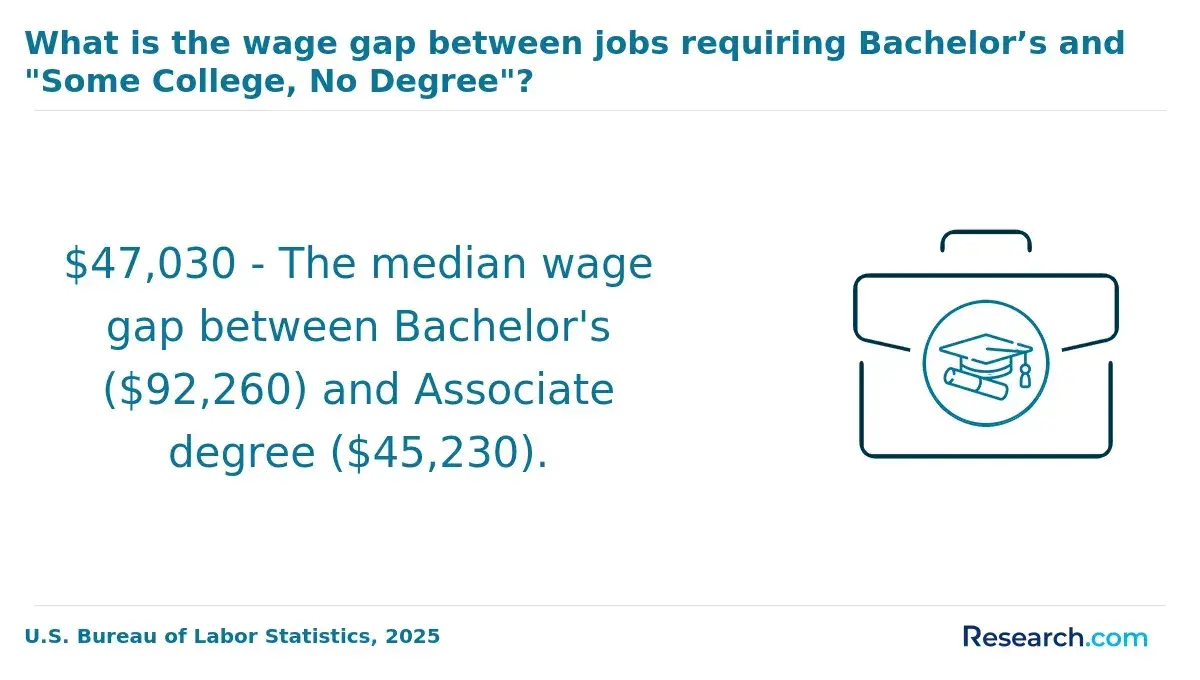
Employers seeking qualified fitness trainers and wellness specialists consistently favor candidates holding a bachelor's degree in exercise science over shorter credentials. These four-year programs provide the scientific foundation and practical skills necessary to design evidence-based training regimens, a requirement increasingly emphasized in competitive hiring environments. For instance, a community fitness center's hiring manager will typically bypass applicants with certificates or associate degrees in favor of those who demonstrate comprehensive knowledge and supervisory potential.
Program length and costs differ substantially: bachelor's degrees generally require four years, whereas associate degrees take about two. Public universities charge between $6,000 and $12,000 annually for in-state students, while private institutions can exceed $30,000 per year. Accelerated bachelor's tracks or post-baccalaureate certificates offer faster routes but often at $15,000 to $25,000 total cost and may lack the depth needed for top-tier roles.
Choosing shorter programs often limits access to positions with higher salaries and leadership responsibilities. Employers look for candidates who combine a full exercise science background with specific certifications, such as in strength training or group instruction, not just basic credentials. Online programs, while more affordable, may fail to deliver essential hands-on experience critical in community or gym settings, which can affect a graduate's market readiness.
The job outlook supports investing in a bachelor's degree, with a 14% growth rate projected for fitness trainers and instructors from 2023 to 2033, according to the University of Central Arkansas.
What certifications or licenses align with exercise science fitness and wellness specializations?
Licensing and certification choices within exercise science significantly shape career trajectories by aligning with distinct workforce demands and educational commitments. For instance, pursuing a Doctor of Physical Therapy (DPT) license requires passing rigorous exams and completing clinical hours, delaying labor market entry but enabling access to higher wages-median earnings near $100,000-and strong demand evidenced by a 15% job growth projection through 2032. This path suits those targeting clinical or rehabilitation roles where state licensure is non-negotiable.
Conversely, certifications such as the Certified Strength and Conditioning Specialist (CSCS) or American College of Sports Medicine (ACSM) credentials offer faster transitions into fitness and wellness sectors. These credentials, while lacking formal licensure status, still influence employability and reimbursement possibilities in commercial gyms or community health settings yet typically cap earning potential and exclude clinical practice.
Occupational therapy assistants and other clinical support roles represent a middle ground where state-level licensing or registration is mandatory but can be accelerated relative to doctoral paths. Employers vary credential expectations by setting:
- Hospitals and outpatient rehab centers require DPT or OT licenses.
- Corporate wellness and commercial gyms accept ACSM or fitness-aligned certifications.
This creates a practical tradeoff between a lengthier educational journey with higher remuneration and job security versus expedited credentialing with limitations on scope and salary growth. Professionals should scrutinize target sectors and long-term credential maintenance demands, including recertification and continuing education, to strategically plan their exercise science career path.
What is the salary outlook and job demand for exercise science fitness specialists?
Exercise science fitness specialists face a labor market where specialization heavily influences both job security and income potential. Employment growth estimates between 6% and 14% through 2032 depend largely on subfield choice-clinical roles involving rehabilitation or medical fitness command salaries from $60,000 to $80,000 or higher, while general wellness coaching tends to offer less stability and pay due to market saturation.
For instance, professionals in cardiac rehabilitation within healthcare settings benefit from consistent demand and enhanced compensation, driven by employer preferences for candidates with verified expertise in clinical exercise testing or nutrition. Geographic location markedly impacts earning potential: metropolitan areas with expansive healthcare systems typically require advanced credentials but reward them with higher pay, whereas rural roles align with lower salary brackets.
Focused credentialing linked to measurable outcomes such as chronic disease management or injury prevention is essential to navigate these disparities. Candidates weighing broader wellness versus clinically oriented paths face tradeoffs between upfront educational investments and long-term financial returns. Employers increasingly view proven clinical skills as a prerequisite for premium salaries rather than optional enhancements.
Key considerations include:
- Targeting healthcare-integrated subfields to maximize job growth and income
- Assessing local market demand and credential requirements before committing to a specialization
- Prioritizing continuing education aligned with evolving employer expectations and population health trends
Other Things You Should Know About Exercise Science
Choosing a broad exercise science curriculum offers more career flexibility, allowing transitions across fitness, rehabilitation, and wellness roles. Highly specialized programs enhance expertise in a niche but may limit job opportunities outside that focus. Prioritize breadth if you want varied industry options; choose specialization only if you clearly target specific roles like clinical exercise physiology or sports performance coaching.
Programs with substantial hands-on components, such as internships and lab work, significantly improve job readiness by developing applicable skills employers seek. Minimal practical experience risks poor preparedness despite theoretical knowledge. Prospective students should select programs with mandatory, supervised fieldwork to ensure they gain direct client interaction and real-world problem-solving.
For clinical fitness or wellness roles, the most useful add-ons are ACSM-Certified Exercise Physiologist, ACE Health Coach, and NSCA Certified Strength and Conditioning Specialist. ACSM-EP requires a bachelor’s degree in exercise science or a related field plus CPR/AED certification before testing.
References
- Exercise Science Degree Programs Lead to Rewarding Careers in Health and Fitness https://www.carrollcc.edu/articles/exercise-science-degree-programs-lead-to-rewarding-careers-in-health-and-fitness/
- Exercise science: What exactly is it? https://www.scienceforsport.com/exercise-science/
- Best Exercise Science Careers - Let's Find out! https://www.ptpioneer.com/personal-training/exercise-science-careers/
- Exercise Physiologist https://acsm.org/certification/get-certified/exercise-physiologist/
- Exploring Careers in Health and Exercise Sciences: From Personal Training to Public Health - UNCF https://uncf.org/the-latest/improve-human-health-by-studying-public-health-and-nutrition
- What Can You Do With an Exercise Science Degree? https://willamette.edu/academics/college/exercise-health-science/career-options
- ESSA's career guide for Accredited Exercise Scientists https://www.essa.org.au/Web/Web/Resources/Tools-and-templates/ESSA-AES-Guide.aspx
- Exercise Science | York College of Pennsylvania https://www.ycp.edu/academics/programs/exercise-science
- Bachelor of Science in Exercise Science, Fitness, and Nutrition Management (Completion Degree) https://catalog.bryanuniversity.edu/bachelor-of-science-in-exercise-science-fitness-and-nutrition-management-completion-degree
- Exercise Science Degree Programs & Career Guide 2025 https://www.nutritioned.org/exercise-science-degree/