2027 Biological Sciences Careers Most Resilient to Automation

Co-Founder and Chief Data Scientist
Biological sciences students and professionals face mounting pressure to choose career paths resilient to automation amid rapidly evolving lab technologies and AI-driven data analysis. With the National Center for Education Statistics reporting a 37% surge in adult learner enrollment in life sciences programs over the past two years, accessibility to flexible educational formats shifts the timing and nature of upskilling.
This enrollment trend signals growing urgency for mid-career pivots where program structure must align with evolving labor market demands. This article identifies biological sciences careers least vulnerable to automation, guiding informed choices that balance job security, skill relevance, and educational feasibility.
Key Things You Should Know
- Advanced bioinformatics roles show under 10% automation risk per 2024 BLS data, but require costly interdisciplinary training, creating a tradeoff between high resilience and extended educational timelines.
- Employers increasingly prioritize candidates with integrated wet-lab and computational experience, shifting hiring away from narrow specialization toward versatile skill sets impacting workforce entry and retention.
- Specialized doctoral pathways in synthetic biology, while offering top automation immunity, face limited program availability and funding cuts, constraining access and lengthening time-to-employment for many aspirants.
Which biological sciences careers are most resilient to automation and why?
Positions in molecular and cellular biology remain among the most resilient to automation because their tasks involve complexity and adaptability that AI cannot replicate. The U.S. workforce includes 63,700 molecular and cellular biologists with an expected growth rate of +1.2% through 2034 and about 4,800 annual openings, reflecting a demand for expertise that transcends routine automation risks. Unlike standardized roles more vulnerable to mechanization, these high-demand biological sciences jobs with low automation risk require nuanced problem-solving, interpretation of experimental data, and hands-on laboratory techniques.
For example, developing novel gene therapies demands flexible protocol adjustments based on unexpected molecular interactions, a dynamic unsuitable for rigid automation systems. Additionally, single-cell analysis and proteomics involve integrating diverse data types and troubleshooting equipment in real time-tasks that hinge on human judgment and contextual reasoning rather than predictable processes.
The practical barriers to automation include mastering complex wet-lab skills, interdisciplinary collaboration, and critical data interpretation. Professionals targeting careers resistant to automation should focus less on repetitive techniques and more on experimental design, continuous learning, and fluency in computational tools used as supplements, not replacements. Aligning education with these realities improves employability and workplace relevance.
Those considering educational investments might also explore options like an online animal science bachelor degree to diversify skill sets applicable in resilient biological sciences careers.
What education and degree levels are required for automation-resistant biology jobs?
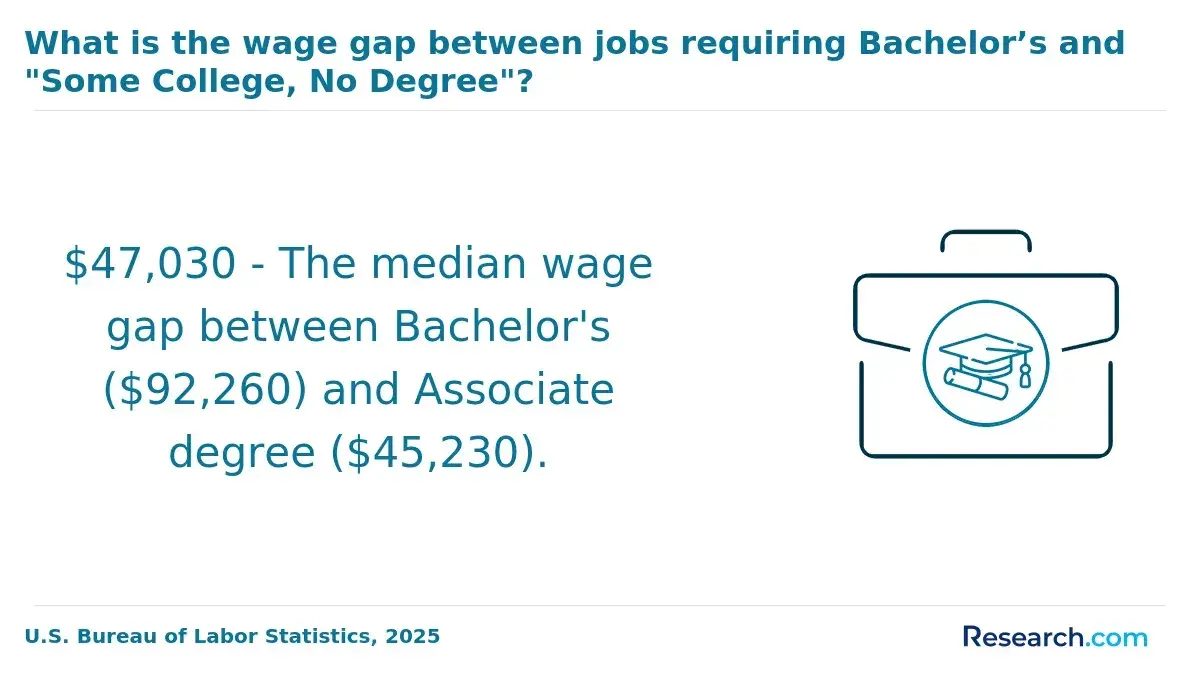
Automation-resistant biological science careers increasingly hinge on advanced degrees paired with specialized skills in computational methods and interdisciplinary data analysis. Entry-level positions frequently require a bachelor's degree in biological sciences, bioinformatics, or computational biology alongside programming expertise in languages like Python or R, but the education requirements for automation-resistant biological science careers are shifting toward graduate credentials. Employers favor master's and PhD-level professionals for roles demanding algorithm design, complex data interpretation, and integrative research beyond automation capabilities.
Bioinformatics and computational biology stand out for requiring graduate education due to the interplay of biology, statistical modeling, and software development. The projected rise in the global bioinformatics market-from $17.5 billion in 2024 to $41.6 billion by 2032-reflects industry investment in these resilient skill sets. For example, designing genomic analysis algorithms requires domain expertise and manual oversight, areas where automation falls short.
Those holding only a bachelor's degree may encounter advancement limits unless boosted by certifications or demonstrated programming skill, whereas master's graduates achieve greater autonomy bridging biological research and computational platforms. PhDs remain essential when innovation, novel discovery, and algorithm development are the focus, especially within pharmaceuticals and academic research. Choosing between these degree levels involves weighing career ambitions against time and financial costs; a master's often suits industry roles, while PhDs align with research leadership tracks.
Continuous upskilling in machine learning and database management remains critical due to evolving automation within biological sciences. Working professionals exploring this pathway may want to consider programs offering flexible delivery, such as a PhD data science online, which supports sustained workforce engagement during advanced study.
The decision around degree levels needed for biological science jobs immune to automation ultimately depends on long-term career goals, market demands, and practical limitations facing students and professionals alike.
How do biology curricula and skills prepare graduates for future-proof careers?
Biological sciences graduate skills for automation-resistant jobs increasingly require a hybrid proficiency in molecular biology and computational approaches. Graduates are expected to not only master laboratory methods but also excel at bioinformatics, programming, and machine learning to interpret complex biological data. This blend addresses sector demands, especially in pharmaceutical innovation, where venture funding for AI-driven drug discovery recently surpassed $3 billion in 2024. Such financing trends signal growing hiring of professionals capable of AI-assisted drug target validation and genetic data interpretation-roles that rely on nuanced judgment beyond automation's reach.
Workforce realities mean employers gravitate toward candidates who can:
- Interpret biological systems with computational models while adapting algorithms to experimental constraints
- Translate omics data into actionable insights for drug development or clinical research
- Collaborate across wet labs and AI engineering teams
Programs that lack practical instruction in coding languages like Python and R, database management, and AI tool integration risk leaving graduates vulnerable to automation displacement. In contrast, curricula emphasizing these interdisciplinary skills better prepare students for future-proof careers in the biological sciences. For example, biotech startups demand continuous learning to prototype AI pipelines rapidly, whereas regulatory roles emphasize data interpretability and analytical rigor.
Prospective students evaluating biological sciences curricula preparing students for future-proof careers should also consider varied program delivery methods, including online options. Those interested in a flexible approach might explore an online sports science degree as a comparative model of aligning practical skill development with workforce needs.
Which biological sciences specializations offer the strongest long-term job security?
Specializations in synthetic biology and genetic engineering offer exceptional long-term job stability in biological sciences careers due to their rapid growth and resistance to automation. The synthetic biology market, projected to expand from $19.4 billion in 2024 to $88.1 billion by 2030 at a 28.4% CAGR, demands expertise in genome editing, metabolic pathway design, and biofabrication. These skills involve complex problem-solving and interdisciplinary collaboration, which remain inaccessible to routine automation.
Environmental biology and ecosystem management also show resilience, driven by policy shifts and climate mitigation efforts. Graduates here must combine technical skills with adaptive judgment for field data analysis and ecosystem restoration-tasks challenging for automation and requiring nuanced decision-making. This specialization illustrates a tradeoff between highly quantitative, fast-evolving disciplines and those grounded in ecological complexity and regulatory navigation.
Biomedical research careers focused on personalized medicine and biomarker discovery maintain relevance through blending data interpretation with experimental design. Automation may assist but cannot replace critical thinking essential for therapy innovation, particularly valued by pharmaceutical companies and clinical research organizations.
Choosing specializations with the strongest job security in biological sciences requires balancing continuous upskilling in technology-driven fields against broader adaptability and professional networking. For those exploring strategic pivots or advancement pathways, consider how these distinctions affect employability and vulnerability to automation over time. Prospective students might also evaluate a library science degree as an alternative interdisciplinary option that intersects with biological sciences in data management and information curation.
How do salaries and earning potential compare across resilient biology career paths?
Salary prospects within resilient biology careers depend heavily on specialization and technical skills. Pure biological research roles typically offer starting salaries below $60,000, rising to about $90,000-$110,000 for senior scientists. In contrast, professionals integrating computational expertise-such as programming in Python or R-with biology, especially in fields like bioinformatics or pharmaceutical R&D, often see salaries exceeding $120,000 within five years. This divergence stems from employer demand for data science skills applied to biological data, an area projected to grow by 33% from 2024 to 2034 according to U.S. Bureau of Labor Statistics data.
For candidates weighing a transition, the challenge is acquiring relevant computational skills amidst growing competition from STEM data science graduates. Certification programs targeting biological applications of data science can shorten this learning curve but do not guarantee immediate wage gains. Employers value validated technical proficiency embedded in biology contexts, rewarding those who demonstrate practical cross-disciplinary capabilities.
Key considerations include:
- Applied computational roles offering faster salary growth than traditional wet-lab or ecological biology positions.
- The importance of programming fluency in high-demand tools such as Python and R to access premium pay.
- Slower wage growth and limited automation resilience in fieldwork-oriented biology careers.
This data reinforces the strategic advantage of combining biological knowledge with AI and machine learning competencies for sustainable employability in biological sciences.
What is the job outlook for key biological sciences roles in an automated economy?
Positions centered on regulatory affairs and quality/compliance dominate demand trends in biological sciences, particularly as automation reshapes traditional roles. Routine lab tasks increasingly succumb to robotics and automated data analysis, but nuanced regulatory interpretation and compliance management require human judgment that machines cannot replicate. For example, pharmaceutical development heavily relies on automation for screening and data processing; however, regulatory specialists remain indispensable for ensuring adherence to evolving FDA or EMA guidelines. This division creates a resilient niche less susceptible to automation-driven displacement.
Practical workforce implications include the need for students and professionals to pivot toward acquiring regulatory knowledge and compliance certifications. Compared to conventional lab technician paths vulnerable to obsolescence, investing in these hybrid skill sets substantially improves employability. Employers explicitly seek candidates who can merge biological expertise with regulatory frameworks and quality systems understanding.
Additional roles demonstrating stability include clinical trial management and biosafety oversight, where ethical and legal complexities limit automation's scope. However, this shift demands adaptability to dynamic international regulations-a critical factor for sustained career viability.
Individuals evaluating programs should scrutinize whether curricula integrate regulatory training alongside biology fundamentals. Without this combination, purely experimental focus risks obsolescence amid market changes. Realistic career planning requires balancing foundational science knowledge with the regulatory acumen increasingly valued by employers.
- Regulatory and compliance positions maintain strong demand despite automation.
- Automation primarily displaces routine benchwork, not roles requiring critical human judgment.
- Hybrid skills combining biology and regulatory training optimize long-term employability.
How should students choose between online and campus biology programs for these careers?
Students targeting laboratory-intensive biology careers must prioritize campus programs to gain hands-on exposure and direct collaboration within regulated environments. Positions such as clinical research coordinators-where global clinical trial expenditures might reach $92 billion by 2030-require familiarity with live lab workflows and compliance frameworks that campus settings uniquely provide. Employers in pharmaceutical and biotech sectors expect candidates to have demonstrated practical skills and teamwork often unattainable in purely online formats.
Conversely, online biology programs can accommodate working professionals pursuing roles concentrated on data analysis, regulatory affairs, or bioinformatics, where theoretical grounding and software proficiency dominate. Yet, these programs must ensure robust virtual lab access or local internship partnerships to prevent significant skill gaps.
Consider a candidate preparing for translational research coordination in a metropolitan biotech hub: proximity to local hospital affiliations for internships substantially enhances their employability. Meanwhile, someone shifting toward computational biology may effectively combine online coursework with targeted certificates without relocating.
Key factors to evaluate when choosing include practical training depth, the reputation employers assign to the program, and internship pipelines. The biology labor market remains tethered to applied competencies, particularly in automation-resistant roles that prioritize tangible experience over theoretical knowledge.
Which accreditation and program quality factors matter most for biology degrees?
Degrees in biology in 2026 will only hold value if they align with emerging industry demands, particularly the integration of AI and data science in biotechnology and healthcare. Traditional accreditation remains necessary, but programmatic certification from recognized bodies tied to biotechnology or bioinformatics is a decisive factor for employment prospects. Employers prefer graduates whose curricula include applied AI competencies, reflecting the expansion of the healthcare AI market from roughly $20 billion in 2024 to over $180 billion by 2032.
Graduates proficient in AI-aided diagnostics, computational biology, and automated laboratory techniques gain a distinct hiring advantage. For instance, a biomedical researcher skilled in AI data modeling will significantly outpace peers lacking this expertise. Practical elements such as licensure preparation, like Certified Biological Scientist credentials, also impact career opportunities, especially where clinical automation is prevalent.
Programs lacking clear pathways to internships or partnerships with industry risk leaving students underprepared for roles requiring hands-on automation experience. Workforce-ready skills in programming and AI are becoming mandatory; students who rely heavily on classic wet-lab training face diminishing returns amid a 32% compound annual growth market for these tools.
- Regional accreditation is a baseline; programmatic accreditation enhances employment chances.
- Applied AI integration is critical in curriculum design.
- Hands-on experience through internships or industry links is a key differentiator.
What professional certifications or licenses support career resilience in biological sciences?
Professional credentials in the biological sciences shape career durability by confirming expertise that automation cannot easily substitute. Clinical Laboratory Scientist certification, for example, remains essential for navigating complex diagnostic procedures unavailable to automated systems. Similarly, Registered Dietitian Nutritionist licenses certify specialized clinical assessments that distinguish practitioners beyond software-driven tools.
Certifications in regulatory affairs or quality control-offered by bodies like the Regulatory Affairs Professionals Society or the American Society for Quality-prepare candidates to address compliance and risk with nuanced judgment unavailable to routine automation. Roles in medical and pharmaceutical sales, projected to grow 4% through 2031 according to U.S. Bureau of Labor Statistics data cited by BioSpace, benefit from credentials such as Certified Sales Professional, which validate critical communication and product knowledge skills that machines cannot replicate.
These credentials influence hiring and advancement, especially in biotech firms where precision and regulatory expertise dictate operational success. However, earning these certifications demands substantial time and financial investment, often creating a barrier for those lacking employer support or flexible schedules.
Balancing credential acquisition with practical experience is vital. Candidates should focus on certifications aligned with their intended niche, evaluate employer preferences in job listings, and schedule preparation to avoid income interruption-thereby maintaining relevance and resilience amid increasing automation pressures.
How can current professionals upskill or reskill to move into automation-proof biology roles?
Biology professionals aiming to maintain relevance amid automation must strategically develop skills that cannot be easily replicated by AI, such as adaptability, advanced leadership, and stress resilience. Resume Now's 2026 analysis, cited by Forbes, identifies these as key factors contributing to top scores (74+) on the AI-Resistant Careers Index and safeguarding mid-to-high salary roles (≥$74,000) from automation.
Upskilling through interdisciplinary pathways is essential, but practical constraints such as time and workload require realistic options like part-time online graduate certificates or master's degrees. Effective strategies include:
- Building expertise in bioinformatics and computational biology to harness AI tools rather than compete with them.
- Obtaining project management or regulatory compliance credentials (e.g., PMP, RAC) to capitalize on oversight functions that remain human-centered.
- Enhancing emotional intelligence and adaptive leadership to thrive in fluid biotech or healthcare environments where stress management is critical.
For example, a molecular biologist transitioning to clinical trials oversight must add data analytics and leadership skills to navigate AI-driven regulatory processes. Employers increasingly expect candidates to provide measurable evidence of adaptability and interdisciplinary competence, such as leading cross-functional teams under pressure. Without targeted reskilling, biology-trained workers risk displacement as automation encroaches on routine lab and data tasks.
Other Things You Should Know About Biological Sciences
Choosing between specialization and a broad degree depends on your career goals and employer expectations. Specialized programs often develop niche technical skills that protect against automation by focusing on complex tasks, but they may limit flexibility if that specialization declines. Broad degrees offer adaptability across sectors but require self-directed skill acquisition to remain competitive. Employers increasingly value candidates who combine strong foundational knowledge with targeted expertise in emerging, non-automatable technologies.
Hands-on research experience markedly improves automation resilience because it hones problem-solving, critical thinking, and experimental design skills which cannot be easily replicated by machines. Graduates with extensive lab or fieldwork often meet employer demands for practical troubleshooting and innovation under ambiguous conditions. Prioritize programs or roles that integrate sustained research projects rather than only coursework to increase employability and long-term career viability.
Part-time or flexible programs can be effective for mid-career professionals. They offer opportunities to acquire advanced skills and adapt to technological changes in biological sciences without having to leave their current jobs. Continuous learning helps professionals remain valuable and less susceptible to automation in their careers.
Employer partnerships and internships supply critical real-world experience and professional connections, often making the difference in landing roles with lower automation risk. Students gain exposure to current industry tools and workflows, helping them develop job-ready competencies that employers require over theoretical learning alone. Prioritize programs with strong industry engagement if your goal is to secure biologically focused jobs that emphasize adaptability and practical expertise.
References
- Careers in Biological Sciences: Opportunities, Skills, and the Future of Work https://www.hyperec.com/blog/careers-in-biological-sciences-opportunities-skills-and-the-future-of-work/
- AI-Proof College Majors: 10 Highest-Paying Degrees (2026) | Extern https://www.extern.com/post/best-paying-ai-proof-majors-us-2025
- Will Biological Technicians be replaced? https://willrobotstakemyjob.com/biological-technicians
- Top 15 Highest‑Paying Pharmacy Jobs in the UK 2025 (Including Salaries) https://apexlearning.org.uk/highest-paying-biology-degree-jobs-2025-2026/
- Top Healthcare, IT, and Business Jobs Safest from AI & Robot Automation https://ccitraining.edu/blog/jobs-safe-from-ai-automation/
- Top 5 In-Demand Certifications for Life Science Professionals in 2025 https://ibri.org.in/blog/life-science-career-certifications-2025
- Get to Know Biology Education Program: Overview, Courses, and Career Opportunities | Universitas Muhammadiyah Surakarta https://www.ums.ac.id/en/news/our-stories/get-to-know-biology-education-program-overview-courses-and-career-opportunities
- Future-Proof Jobs: What Students Should Study Now https://westbournecollege.com.sg/blog/future-proof-jobs-what-students-should-study-now/
- Is there a place for biologists in the age of automation? https://www.synbiobeta.com/read/is-there-a-place-for-biologists-in-the-age-of-automation
- Reskilling and upskilling: Lifelong learning opportunities https://www.weforum.org/stories/2025/01/ai-and-beyond-how-every-career-can-navigate-the-new-tech-landscape/