2027 Supply Chain Management Master's Degree vs Graduate Certificate: Which Is Better?

Co-Founder and Chief Data Scientist
Choosing between a supply chain management master's degree and a graduate certificate poses a critical dilemma for many professionals aiming to advance their careers efficiently and effectively. The master's degree demands greater time and financial investment-often two years and upwards of $40,000-while a graduate certificate typically requires less than a year and costs significantly less. Employers may favor the master's credential for senior roles, yet certificates can offer faster entry and specialization. Notably, recent data shows graduates with a master's in supply chain management see a median salary increase of over 20% compared to certificate holders. This article examines these credentials-comparing cost, duration, admission criteria, employer recognition, salary impact, and utility-to guide readers toward the credential best aligned with their professional goals.
Key Things to Know About Which Is Better: A Supply Chain Management Master's Degree or a Supply Chain Management Graduate Certificate
- The master's degree usually demands higher tuition but yields stronger salary growth-average increases near 15%-while certificates offer a lower-cost, expedited path with modest pay gains.
- Graduate certificates require fewer credits and less than a year to complete-ideal for career changers-whereas master's degrees take 1.5 to 2 years, suiting those seeking deeper expertise.
- Master's programs often need a bachelor's in a related field and competitive GRE scores-certificates accept broader admission profiles, making them accessible for working professionals upgrading skills.
What Is the Difference Between a Supply Chain Management Master's Degree and a Supply Chain Management Graduate Certificate?
A supply chain management master's degree program typically requires 30 to 45 credit hours covering logistics, procurement, operations management, data analytics, strategy, and global supply chains. The curriculum aims to build deep expertise and leadership capabilities, preparing graduates for advanced roles and management positions. These programs usually span one to two years full-time and include a capstone project or thesis.
Conversely, a supply chain management graduate certificate focuses on a narrower set of skills-such as supply chain analytics, inventory management, or purchasing-and generally demands only 12 to 18 credit hours. Designed for working professionals, these certificates can be completed within a few months to a year and emphasize practical technical skills rather than research. This distinction highlights that a certificate is not merely a condensed version of a master's but a different credential with distinct academic and career objectives. Some certificates are stackable into master's degrees, providing flexible educational pathways rather than simple substitutes.
- Academic Standing: Master's degrees confer full graduate credentials recognized for comprehensive mastery, while certificates are supplemental qualifications.
- Curriculum Scope: Master's programs cover strategic and leadership competencies broadly; certificates prioritize focused, applied skills.
- Duration: Master's degrees require one to two years; certificates take a few months to one year.
- Intended Audience: Master's programs attract recent graduates and career changers needing extensive training; certificates serve working professionals seeking skill upgrades.
- Stackability: Certain certificates contribute credits toward a master's degree, reflecting diverse academic routes.
- Misconceptions: A certificate is often mistaken as just a shorter master's, yet they differ significantly in depth and purpose.
This comparison of a supply chain management master's degree program differences versus the graduate certificate lays the groundwork for examining how cost, admissions, employer recognition, salary impact, and career utility vary between the two credentials. Recent undergraduates and working professionals alike should find this detailed analysis useful for making well-informed decisions tailored to their career goals. For those exploring advanced social work education paths, the MSW programs overview also offers valuable insights into graduate credential planning.
What Are the Typical Admission Requirements for a Supply Chain Management Master's Program Compared to a Supply Chain Management Graduate Certificate?
When comparing typical admission requirements for a supply chain management master's program with those for a graduate certificate, clear distinctions reflect the difference in academic depth and commitment expected.
- Undergraduate GPA: Master's programs generally require a competitive undergraduate GPA-often around 3.0 on a 4.0 scale or higher-to demonstrate strong academic performance. Graduate certificate programs usually have more flexible GPA requirements or none at all, making them accessible to a broader range of applicants.
- Prerequisite Coursework: Master's admissions often require foundational courses in areas like business, logistics, or quantitative methods to ensure preparedness for advanced study. Certificate programs typically have fewer or no prerequisite demands, offering entry points for professionals or career changers without formal supply chain backgrounds.
- Standardized Tests: Many master's programs request GRE or GMAT scores to assess analytical and verbal skills-though some waive this for experienced applicants or those with strong academic histories. Graduate certificates rarely require such test scores, reducing barriers for those seeking quicker credentialing.
- Letters of Recommendation: Competitive master's programs expect two or three letters of recommendation to evaluate aptitude, character, and professional potential. Graduate certificate programs may not require recommendations or ask for just one, reflecting more accessible admission standards.
- Personal Statement or Statement of Purpose: Master's applications often involve a detailed essay outlining career goals, academic interests, and motivations-key for admissions committees to assess fit and commitment. Certificate applications might request a shorter statement or none at all, focusing primarily on skill enhancement rather than comprehensive academic pursuit.
These distinctions matter especially for prospective students building their profiles. Graduate certificates act as an academic on-ramp, letting individuals gain relevant knowledge and demonstrate capability without meeting all master's level criteria upfront. For those weighing options, certificates offer a lower barrier to entry while strengthening credentials to improve future master's admission prospects.
Those exploring their next credential step should consider how the comparison of prerequisites for supply chain management graduate certificates and master's degrees factors into their career plans and timelines. For working professionals or career changers seeking quick, focused skills upgrades, certificates provide practical benefits. Meanwhile, recent undergraduates aiming for deeper expertise might prepare to meet more rigorous master's requirements.
In balancing cost, time-to-completion, employer recognition, salary impact, and career utility, comprehensive data can guide prospective students toward the best credential. For those also curious about affordable educational pathways, resources like cheap psychology degree online highlight how exploring various credential options can align with financial and professional goals.
What Is the Minimum GPA Requirement for a Supply Chain Management Master's Program?
Minimum GPA requirements for supply chain management master's programs typically range from 2.7 to 3.5 on a 4.0 scale across regionally accredited universities. Highly selective programs usually set their cutoff near or above 3.3, emphasizing strong academic records. In contrast, programs focused on professional development or open enrollment often accept candidates with GPAs closer to 2.7 or 3.0, placing greater importance on work experience and career objectives than on grades alone.
Published minimum GPAs serve as admission floors rather than exact targets. Most admitted cohorts exceed these minimums, reflecting admissions committees' holistic evaluations that include recommendations, professional background, and test scores along with GPA.
- Conditional Admission: Some schools admit students provisionally, requiring them to complete specified courses at a minimum grade.
- Remediation Requirements: This may involve foundational classes or maintaining a specified GPA during a probationary period.
- Admissions Flexibility: Experience and potential can sometimes offset GPA deficiencies.
Applicants should consider minimum GPA benchmarks as a baseline and strengthen their applications with relevant experience and strong references to improve their chances.
A professional who completed a supply chain management master's program shared that, despite a GPA slightly below some program cutoffs, he gained conditional admission by highlighting his industry experience. He recalls, "Balancing foundational coursework while working full-time was challenging, but the opportunity to prove myself academically was worth it." His story illustrates that while minimum GPA standards are important, persistence and relevant skills can open doors.
How Long Does It Take to Complete a Supply Chain Management Master's Degree Versus a Supply Chain Management Graduate Certificate?
Duration: Time to complete a supply chain management master's degree varies broadly-from 1.5 to 3 years. Full-time learners typically finish around two years, while part-time studies can stretch beyond three. Accelerated options exist but are uncommon due to demanding credit requirements. In contrast, graduate certificates are designed for faster completion, often taking 6 to 12 months full-time or up to two years part-time, focusing on essential skills with fewer credits.
- Program Structure: Master's degrees involve 30 to 45 credits covering foundational courses, electives, and research tasks such as theses, comprehensive exams, or capstones-factors that extend completion time. Graduate certificates avoid research components, emphasizing practical coursework for swift credentialing.
- Enrollment Flexibility: Both paths accommodate working professionals with evening, weekend, or online classes. Yet, certificates typically demand less time, easing the balance between work, family, and study obligations.
- Career Considerations: Those needing rapid skill updates often choose certificates, while individuals aiming for leadership roles or in-depth expertise tend to prefer master's degrees despite the longer commitment.
- Life Circumstances: Employment status, caregiving duties, and financial factors heavily influence choice. Full-time students or employees with tuition support may efficiently complete master's degrees, whereas part-time workers balancing multiple responsibilities often opt for certificates.
The supply chain management master's degree duration comparison shows that the master's requires a greater time investment-valued in leadership careers-while the graduate certificate offers streamlined skill advancement. For those weighing their options, it's useful to consider their individual situation alongside realistic timelines.
For a detailed look at accelerated paths in related fields, prospective students can explore the degree in finance as an example of how some programs shorten time-to-completion without sacrificing quality.
How Much Does a Supply Chain Management Master's Degree Cost Compared to a Supply Chain Management Graduate Certificate?
Cost Ranges: Total expenses for a supply chain management master's degree differ considerably by institution type-public in-state students generally face costs between $20,000 and $40,000, while public out-of-state tuition often runs from $30,000 to $60,000. Private schools may exceed $80,000. Compared to this, graduate certificates in supply chain management come at a much lower price point: public in-state programs usually cost $5,000 to $10,000, and public out-of-state or private options typically range from $7,000 to $15,000.
Cost Drivers: The steep price gap arises primarily from program length and credit requirements-master's degrees demand 30 to 40 credit hours versus 9 to 15 for certificates-and extended faculty involvement, research support, and student services that increase institutional overhead.
Financial Aid: Graduate students in master's programs often gain access to more diverse funding sources such as teaching assistantships, research fellowships, and employer tuition reimbursement programs. Certificate candidates have fewer financial aid options and often pay out-of-pocket or rely on limited employer sponsorship.
Hidden Costs: Pursuing a master's degree can entail opportunity costs like lost wages from reducing work hours or taking time off, plus delayed career progression. By contrast, certificates usually require less time away from employment, but they may yield more modest salary improvements and narrower career advantages.
Return on Investment: Evaluating net expenses after aid-rather than sticker prices alone-is critical. Prospective students should use available cost calculators and tools to weigh expected career gains against total investment to choose the credential that best fits their situation.
One professional who completed a supply chain management master's reflected on her experience: "Balancing work and studies was tough, especially managing reduced hours and missing out on some projects. Yet, the depth of learning and the career doors the degree opened were worth it. Navigating funding options was complicated at first, but securing a teaching assistantship really eased the financial strain. The certificate I had before was helpful, but the master's gave me the confidence and credibility to move into leadership roles."
How Does Earning a Supply Chain Management Master's Degree Affect Salary Compared to a Supply Chain Management Graduate Certificate?
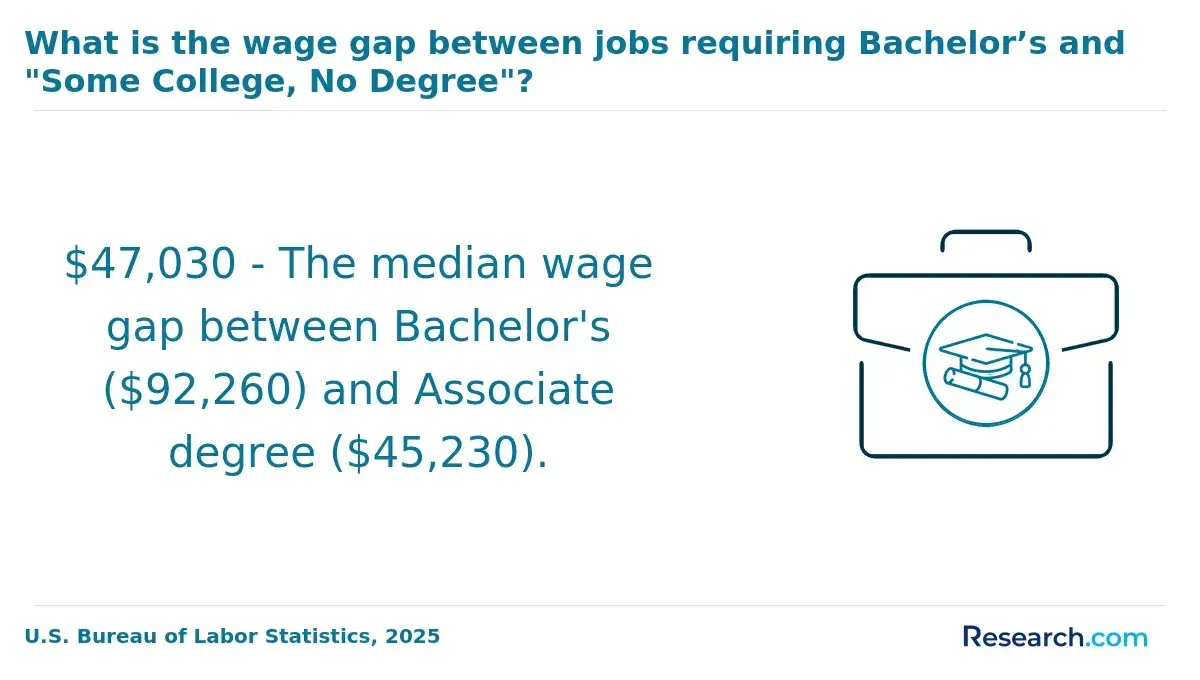
The earnings difference between master's degree holders and graduate certificate recipients in Supply Chain Management varies greatly depending on industry, role, and employer. Data from the Bureau of Labor Statistics and education-wage premium studies reveal that professionals with a master's degree generally receive a 15% to 30% higher salary, especially in high-level positions such as supply chain directors and operations managers.
- Industry Concentration: The financial advantage of a master's degree is most significant in sectors like manufacturing, technology, pharmaceuticals, and large-scale retail where complex supply strategies and analytics are critical.
- Employer Preference: Global corporations and bigger firms tend to favor candidates with master's degrees, viewing them as equipped for leadership and managing intricate supply chain networks.
- Certificate Competitiveness: Certain specialized roles-for example, procurement and inventory management-may offer salaries from graduate certificates that rival or surpass those linked to broad master's programs, particularly for mid-career professionals with targeted expertise.
- Return on Investment: While master's programs typically take 1-2 years and require higher tuition fees, certificates can be earned more quickly and at less cost, providing a faster salary boost under some circumstances.
- Career Timing: Those early in their careers often benefit more from a master's degree's long-term earning potential, whereas seasoned professionals may gain faster returns through focused certificates.
- Recent Trend: In 2024, wage surveys indicate a growing premium for specialized certificates in supply chain analytics, reflecting evolving industry demands.
Which Supply Chain Management Career Paths Favor a Master's Degree Over a Graduate Certificate?
Certain supply chain management career paths clearly favor a master's degree over a graduate certificate due to the complexity, responsibility, and academic rigor required. These roles demand a deeper theoretical foundation and broader strategic insight that a master's degree provides-going beyond the practical, skills-focused training of a certificate.
- Leadership Roles: Senior management positions such as supply chain directors, operations executives, and strategic planners often require or strongly prefer candidates with a master's degree. Employers value the advanced analytical capabilities and comprehensive understanding of global supply networks that a master's program cultivates, critical for making high-impact decisions.
- Research-Intensive Positions: Roles in supply chain analytics, forecasting, and innovation research frequently necessitate mastery of statistical methods, optimization techniques, and systems thinking-areas richly covered in master's curricula but only introduced superficially in certificates. These positions benefit from the academic depth and methodological training inherent in graduate degree study.
- Licensed and Certified Professionals: Although supply chain management is not universally subject to licensure, some specialized certifications or industry credentials may require a master's degree as part of eligibility criteria. This institutional validation often influences hiring and promotion pathways, making the master's credential essential for advancement within regulated environments.
- Promotion and Specialization Thresholds: Many corporations and public agencies use a master's degree as a formal criterion for advancing into specialized domains or senior roles. This structural prerequisite ensures candidates bring not only experience but strong theoretical and strategic proficiency validated by rigorous academic standards.
According to 2024 labor market analyses, supply chain management roles demanding a master's degree have grown by over 12% in recent years, reflecting increased employer demand for highly qualified professionals capable of navigating complex, technology-driven supply networks.
Which Supply Chain Management Career Paths Favor a Graduate Certificate Over a Master's Degree?
Certain supply chain management career paths distinctly favor a graduate certificate over a master's degree due to the nature of skills required and employer preferences. These roles emphasize practical, immediately applicable competencies rather than broad academic knowledge. This is especially relevant in contexts where employers value concise proof of technical ability and rapid skill acquisition.
- Technical Roles: Positions such as supply chain analysts, procurement specialists, and logistics coordinators often require proficiency in specific software and data analysis tools. Hiring managers in these fields may prefer targeted certificates that quickly demonstrate capability rather than the broader curriculum of a master's degree.
- Experienced Professionals: Those with a bachelor's or master's in business, engineering, or related fields choose graduate certificates to address precise skill gaps efficiently, optimizing time and financial investment compared to pursuing another full degree.
- Career Changers: Individuals moving into supply chain management from unrelated sectors benefit from graduate certificates that offer focused knowledge and credentials recognized by employers, facilitating entry-level or mid-level positions.
- Industry-Specific Expertise: Certain sectors-such as healthcare, retail, or manufacturing-demand credentials aligned with compliance, sustainability, or digital supply chain technology, where certificates often provide more relevant and cost-effective qualifications than master's degrees.
- Hiring Manager Preferences: Survey data and job posting analytics from platforms like Lightcast and LinkedIn Workforce Insights show many employers treat graduate certificates as equivalent to master's degrees in roles focused on applied skills. In some cases, certificates are preferred for their up-to-date technical content and shorter completion timelines.
These factors make graduate certificates an attractive option for expedited career advancement or focused skill recognition-particularly in fast-evolving or technically nuanced supply chain management domains. For recent graduates or working professionals weighing credential options, understanding when to choose a supply chain management graduate certificate over a master's can clarify the cost, time-to-completion, and career impact considerations that define each pathway.
Those interested in accelerated credential programs may also explore recommendations on the best online computer science degree offerings as examples of focused, skill-driven education models.
Is a Supply Chain Management Graduate Certificate Stackable Toward a Master's Degree?
The question of whether a graduate certificate stackable toward a master's degree in supply chain management is possible depends largely on institutional policies rather than being a universal academic standard. Many accredited universities enable students to transfer credits earned in a supply chain management graduate certificate to a related master's degree, often within the same institution or an affiliated one. This option makes further graduate study more flexible and cost-effective.
- Stackable Credentials: Designed so coursework from certificate programs counts toward a full master's degree, lowering time and cost to completion.
- Institutional Policies: Credits typically only transfer if the certificate and master's programs are housed within the same or closely affiliated institutions and coursework aligns with the master's curriculum.
- Academic Standards: Many schools require a minimum grade-often a B or better-for coursework to qualify for transfer to a master's program.
- Time Limits: Transfer credits generally need to be recent, usually completed within 5 to 7 years, to ensure relevancy in supply chain management.
- Benefits for Students: The graduate certificate offers a lower-risk entry point, allowing students to test academic readiness and financial commitment before advancing to a full master's degree.
- Verification: Policies vary widely; prospective students should verify transfer rules with each program's graduate admissions office to confirm whether and how credits can apply.
Students exploring transfer credits from supply chain management graduate certificate to master's program can also compare costs and completion times with alternatives like accelerated online MBA programs, which may offer different pathways to career advancement.
How Do Employers in the Supply Chain Management Field Perceive a Master's Degree Versus a Graduate Certificate?
Employer views on master's degrees versus graduate certificates in Supply Chain Management differ widely across industries, roles, and institutional reputation. Research from NACE Job Outlook, the Council of Graduate Schools, and LinkedIn Talent Insights highlights these varied perspectives among hiring managers and HR professionals.
- Industry Differences: Sectors like technology and consulting often favor graduate certificates as indicators of focused skills and commitment to ongoing learning, valuing agility and specialization over lengthier credentials.
- Regulated and Academic Fields: In industries such as manufacturing, pharmaceuticals, and government, master's degrees remain the preferred credential-valued for their comprehensive training and theoretical depth.
- Role-Based Perceptions: For entry-level or tactical roles, certificates may suffice to demonstrate relevant expertise, while strategic, leadership, or research positions typically require the broader scope of a master's degree.
- Institutional Reputation: The prestige and accreditation of the credentialing institution significantly impact employer confidence-sometimes a graduate certificate from a top-tier university outshines a master's from a lesser-known school.
- Career Alignment: Candidates benefit from matching their credential choice to employer expectations within their target industries and specific job functions to optimize hiring potential and growth.
Can a Supply Chain Management Graduate Certificate Help Someone Transition Into the Field From a Different Background?
A graduate certificate in supply chain management offers a streamlined credential for professionals shifting from unrelated fields-providing a faster, more affordable route compared to master's programs. Workforce development research shows these certificates increasingly cater to career changers, featuring condensed curricula that focus on practical skills essential for entry-level roles.
Speed: Typically completed in under a year, certificates allow swift entry into the supply chain sector without the lengthy commitment of a master's degree.
Affordability: Lower tuition and fewer associated costs make certificates accessible for mid-career professionals seeking to minimize financial burden while acquiring new expertise.
Applied Learning: Coursework is designed around project-based and hands-on training-helping students build portfolios that showcase relevant capabilities to employers.
Stackability: Many certificate programs are structured so credits can later count toward a master's degree, reducing redundancy for those pursuing advanced education.
Limitations: Certificates lack the comprehensive depth and widespread recognition of master's degrees-potentially restricting access to senior or specialized supply chain roles.
Career Advancement: To strengthen hiring prospects, supplementing a certificate with visible, practical experience-such as internships, consulting assignments, or volunteer work-is essential to demonstrate applied knowledge.
This credential serves best as an initial step for career changers-providing foundational legitimacy and flexibility while leaving room for future academic and professional growth.
What Graduates Say About Which Is Better: A Supply Chain Management Master's Degree or a Supply Chain Management Graduate Certificate
- Timothy: "Choosing between a supply chain management master's degree and a graduate certificate was tough-but the clear difference in time-to-completion really stood out to me. The certificate allowed me to upskill quickly and enter the workforce sooner, while the master's provided a deeper understanding and broader recognition with employers. Ultimately, if you want rapid career utility and can invest more time later, the certificate is ideal; for long-term salary impact, the master's degree is unbeatable."
- Emilio: "Reflecting on my journey, the cost difference between the two programs was a major factor. The master's degree required a significant financial commitment, but it opened doors with more rigorous admission requirements and added credibility in my industry. In contrast, the certificate was more accessible, yet slightly less recognized by top employers. Both paths have value, but if budget is a constraint, the certificate is a practical stepping stone."
- Xavier: "I approached the decision professionally, weighing employer recognition heavily. While the graduate certificate offers faster completion and lower upfront cost, many companies still place a master's degree higher on the hierarchy-which can influence salary and advancement opportunities. Admission might be tougher for the master's, but the payoff in career trajectory has been significant for me. Choose based on where you want to position yourself in the job market."
Other Things You Should Know About Supply Chain Management Degrees
Online supply chain management master's programs generally offer a more comprehensive curriculum than graduate certificates, covering strategic, operational, and leadership topics. Employers tend to recognize master's degrees as a sign of advanced expertise and commitment, while graduate certificates are valued mostly for focused skills and quicker upskilling. However, the quality of both depends heavily on the institution's reputation and program accreditation.
Accreditation ensures that the program meets established academic and industry standards, which affects the credential's value to employers and other institutions. For both master's degrees and graduate certificates in supply chain management, regional accreditation of the institution is crucial. Additionally, specialized accreditation, such as from the AACSB or APICS-related bodies, can enhance recognition, especially for master's degrees.
Choosing a master's in supply chain management can enhance opportunities for doctoral studies due to deeper research exposure. A graduate certificate focuses on specific skills, potentially requiring additional credentials for those interested in advanced academic paths.
Prospective students seeking long-term career advancement, leadership roles, or academic progression fit the master's degree path, given its depth and recognition. In contrast, working professionals or career changers who need to gain targeted supply chain management skills quickly and with less commitment may benefit from a graduate certificate. Additionally, current certificate holders wanting to expand their qualifications might consider progressing to a full master's degree.
References
- MS in Supply Chain Management Admissions Requirements | MSU Online https://www.michiganstateuniversityonline.com/programs/degrees/ms-supply-chain-management/admissions-requirements/
- Master of Logistics and Supply Chain Management (MLSCM) https://www.gcsu.edu/business/gradbusiness/mlscm
- Graduate Certificate in Operations and Supply Chain Management – Earn a Supply Chain Management Certification or Explore Graduate Programs in Operations and Supply Chain Management at UT San Antonio https://future.utsa.edu/programs/certificate/operations-supply-chain-management/
- MSc Supply Chain Management https://neoma-bs.com/programmes/msc-supply-chain-management
- Choose the Right Supply Chain Management Degree for Global Careers | BSBI https://www.berlinsbi.com/blog/how-to-choose-the-right-supply-chain-management-degree-for-global-careers
- Master's of Supply Chain Management Degree Program (MSCM) | Graduate Admissions - Apply Here - Concordia University https://www.concordia.ca/academics/graduate/supply-chain-management.html
- Guide to Graduate Certificate Programs in Supply Chain Management and Logistics - SupplyChainGuide.org https://www.supplychainguide.org/degrees/supply-chain-management-certificates/
- Is a Master's in Supply Chain Management Worth It? | edX https://www.edx.org/resources/is-a-masters-in-supply-chain-management-worth-it
- Master in International Supply Chain Management: Admission requirements https://www.rotterdamuas.com/programmes/master/master-in-international-supply-chain-management/admission-requirements/
- What is the salary after a Master in Supply Chain Management? - ESCE https://www.esce.fr/en/faq-all-the-answers-to-your-questions/what-is-the-salary-after-a-master-in-supply-chain-management/