2027 Online Data Science Master's After a Bachelor's in Environmental Science: Prerequisites and Program Fit

Co-Founder and Chief Data Scientist
An environmental science bachelor's can be a strong starting point for an online data science master's, but eligibility depends on the coursework and technical skills you can document - not the degree title alone. This guide helps you identify likely preparation gaps, distinguish accessible programs from those requiring substantial computing or mathematics background, and decide whether a program will support the environmental work you want to do.
Key Things You Should Know
- Environmental science coursework may provide useful statistics, GIS, modeling, or research experience; programs still assess mathematics, programming, and computing preparation individually.
- Prioritize programs whose entry requirements you can meet and whose projects let you work with environmental data - not simply those advertised as open to all majors.
- The U.S. Bureau of Labor Statistics projects 35% growth in data scientist employment from 2025 to 2035, but that occupation-wide forecast does not predict an individual graduate's job prospects.
What Is an Online Data Science Master's After Environmental Science?
It is graduate study in statistical analysis, computing, and data-driven decision-making undertaken after an environmental science degree. For this reader, the attraction is the combination: environmental training helps frame questions about climate, water, land use, or ecosystems, while data science training can strengthen the methods used to investigate them.
Environmental science degrees vary. One graduate may have written code for spatial analysis and completed quantitative research; another may have focused on policy or field methods. Neither background automatically qualifies or disqualifies an applicant. The useful question is whether a program's entry requirements and first-term courses match the skills shown on your transcript and in your projects.
Can Environmental Science Graduates Meet Data Science Master's Prerequisites?
Yes, potentially. Programs set their own rules, and environmental science coursework can overlap with some prerequisites. The table separates experience that may already be useful from preparation that often needs a closer check; it does not represent a universal admissions standard.
| Area | Possible environmental science preparation | Potential gap to assess |
| Statistics | Experimental design, regression, or analysis of field observations | Probability and statistical inference at the level expected in graduate courses |
| Mathematics | Calculus or quantitative modeling, depending on the degree | Linear algebra and, for some programs, additional calculus |
| Programming | R, Python, GIS scripting, or reproducible research workflows | Independent coding ability and familiarity with data structures |
| Data management | Cleaning sensor, survey, laboratory, or spatial data | SQL, databases, and larger-scale data workflows |
Compare your transcript with each program's published prerequisite list, including minimum grades and whether courses must carry academic credit. A project can demonstrate readiness without necessarily satisfying a formal course requirement. If a required subject is missing, ask admissions whether an approved course taken before enrollment, a conditional pathway, or a foundation course will count. Readers considering adjacent degrees can compare artificial intelligence graduate bridge programs, but should not assume an AI bridge fulfills a data science program's rules.
What Admission Requirements Apply to Online Data Science Master's Programs?
Requirements vary by institution. Applicants should expect a review of their undergraduate record and may also be asked for a résumé, statement of purpose, recommendations, or evidence of quantitative and programming ability. Test policies and minimum academic thresholds must be checked on the specific program's current admissions page.
Use the application to connect your background to a plausible goal. A statement that explains how you collected environmental data, evaluated its limitations, and want to develop a particular analytical skill is more informative than a general claim of interest in AI. If a prerequisite is ambiguous - for example, whether a GIS methods course counts as programming - send the syllabus to admissions and request a determination before paying an application fee. Do not mistake permission to apply for confirmation that you have met every requirement.
Which Data Science Courses Prepare Environmental Science Students for Graduate Study?
The best preparation depends on what you have already studied. An applicant with substantial statistical research experience may benefit more from programming and databases than from repeating introductory statistics; an experienced GIS programmer may instead need linear algebra or probability.
These subjects form a useful sequence for identifying gaps. Check course descriptions and assessment methods, not just titles, when comparing preparation options.
- Statistics and probability: Build from interpreting environmental studies toward uncertainty, inference, and model evaluation.
- Python or R: Practice importing, cleaning, visualizing, and testing analyses on a real environmental dataset.
- Linear algebra and calculus: Prioritize the topics a target program explicitly requires or assumes in its modeling courses.
- SQL and data management: Learn to combine and document datasets rather than relying only on spreadsheet or GIS interfaces.
A course is particularly valuable if it produces evidence of independent work: documented code, a defensible analysis, and an explanation of missing or biased observations. A noncredit course may help you prepare but will not necessarily replace a transcripted prerequisite. If your primary goal is AI model development rather than broader data analysis, compare the curriculum of shorter online AI master's pathways against the mathematical foundation you still need; a faster route is not automatically a better fit.
How Do Online and Campus-Based Data Science Master's Programs Compare?
Delivery format matters most for access to instruction, collaborators, and environmental projects. An online program may suit someone who needs to keep working or cannot relocate. A campus program may be preferable when a desired laboratory, research group, or hands-on collaboration is difficult to access remotely. Neither format establishes academic quality on its own.
For an online option, check whether classes meet live, how group projects cross time zones, whether exams require scheduled attendance, and whether the program permits an environmental dataset or external partner for a capstone. Ask how students obtain faculty feedback on code and research design. These details matter more than an "online" label, particularly if fieldwork or full-time employment limits your schedule.
How Long Do Online Data Science Master's Programs Take and Cost?
There is no single reliable duration or price for online data science master's programs. Credits, required foundation courses, enrollment pace, and tuition policies differ by school. An environmental science graduate who needs prerequisites should distinguish the advertised degree timeline from the time needed to become eligible to start it.
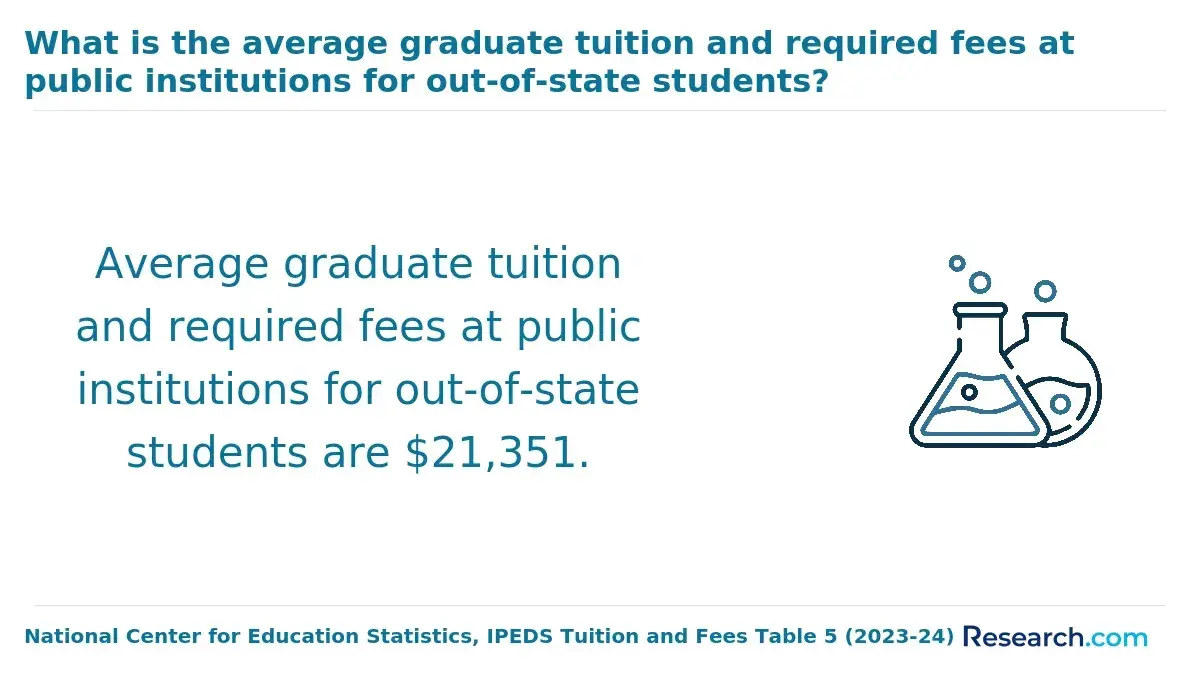
For a usable cost comparison, calculate required credits multiplied by the applicable tuition rate, then add mandatory program fees and any required courses outside the degree. Check whether tuition changes with residency or enrollment status, and budget separately for books, technology, travel if required, and financing costs. Compare that total - not tuition per credit alone - when reviewing lower-tuition online data science master's programs.
Request the current tuition schedule and a sample course sequence for your intended pace. Ask whether prerequisites qualify for financial aid and whether taking fewer courses changes fees or aid eligibility. If you plan to remain employed, compare the additional cost of slower completion with the income you would give up by studying full time; neither choice has a universal financial advantage.
How Can You Verify Data Science Program Accreditation and Quality?
First verify the institution's current accreditation through the accreditor's directory or the U.S. Department of Education's accreditation database. Then confirm that the online degree is offered by that institution and that the school is authorized to enroll students where you live. Institutional accreditation does not, by itself, establish the strength of a particular data science curriculum.
For program quality, examine required courses, faculty expertise, access to computing tools, advising, and examples of student projects. Look for substantive treatment of uncertainty, reproducibility, and data ethics - important when environmental data are incomplete or results may influence public decisions. If responsible AI is central to your goals, compare data science offerings with AI governance and ethics graduate study options. A common mistake is to treat a ranking or an appealing course title as proof that students receive meaningful practice; request syllabi or capstone descriptions when the catalog is unclear.
What Careers Can Environmental Science Graduates Pursue With Data Science Degrees?
Possible directions include environmental data analyst, geospatial analyst, climate or energy analyst, and data scientist roles involving environmental information. Actual job titles and qualifications vary by employer. Your existing knowledge can be a differentiator when a role requires understanding how measurements were collected, what a model omits, and whether a finding is useful to scientists or decision-makers.
Choose programs with projects and electives that match your target work. A remote-sensing goal calls for different evidence than a role analyzing environmental monitoring records: the former may emphasize spatial or image data, while the latter may emphasize time series, databases, and data quality. Seek a capstone that lets you explain both a technical method and its environmental limitations.
A master's is not the only route to an adjacent role. If you already meet the requirements for environmental analytics positions, a targeted course and a strong portfolio may be sufficient for applications. If you need deeper statistical and computing preparation or structured research supervision, a degree may offer more value. Students planning a significant career change should also assess mentoring and employer connections; AI master's programs with strong graduate networks offer one comparison point, though their curricula may serve different goals.
What Salary and Job Outlook Can Data Science Graduates Expect?
The U.S. Bureau of Labor Statistics reports a $120,230 median annual wage for data scientists in May 2025. That is an occupation-wide figure, not a starting salary or an outcome reported for environmental science graduates who earn a master's. Prior experience, location, employer, and the role you enter can all change the relevant comparison.
BLS projects 35% employment growth for data scientists from 2025 to 2035. This supports considering the field, but it does not establish demand for every environmental specialization or guarantee that a degree will lead to a data scientist job. When evaluating a program's salary claims, check whether results describe all graduates or only survey respondents, and whether they report salary levels or actual increases after graduation.
Which Certifications Strengthen an Environmental Data Science Career?
A certification is most useful when it verifies a skill your target employers request and your degree or portfolio does not already make clear. Depending on the role, that might mean a credential in cloud data tools, a GIS platform, or a programming-related technology. There is no single certification that substitutes for data science preparation across environmental jobs.
Read several relevant job descriptions before paying for an exam. Compare the named tools with what you will use in the master's program, then favor a certification you can support with a completed project. If postings emphasize environmental interpretation, spatial analysis, or research experience instead, further platform credentials may be a lower priority than demonstrable work in those areas.
Other Things You Should Know About Data Science
Only if your employer permits it and the program accepts the arrangement. Confirm ownership, confidentiality, privacy, and publication rules before sharing data with an instructor or classmates. A public or appropriately anonymized dataset may be simpler.
Do not assume so. Licensure rules, where applicable, depend on the state and occupation and may specify coursework or supervised experience. Check the relevant licensing board before selecting a degree for that purpose.
It can be relevant preparation, but doctoral admissions depend on the research area and institution. If a PhD is your goal, ask whether the master's offers research supervision, a thesis option, and faculty whose work matches your interests.
Possibly. Ask each target program whether it accepts that specific course, credit level, and grade before enrolling. Keep the syllabus in case admissions needs to evaluate its content.
References
- Cost of Attendance (Budget) | 2025-2026 Federal Student Aid Handbook https://fsapartners.ed.gov/knowledge-center/fsa-handbook/2025-2026/vol3/ch2-cost-attendance-budget
- Geospatial Data Sciences | umich.edu https://seas.umich.edu/academics/master-science/geospatial-data-sciences
- Online Master of Data Science Admission Requirements at Rice https://csweb.rice.edu/academics/graduate-programs/online-mds/admissions
- Admissions Information | vt.edu https://data.science.vt.edu/programs/ms-ds/admissions.html
- Computer Science Bridge Program | Case School of Engineering https://engineering.case.edu/computer-and-data-sciences/bridge
- How to Become an Environmental Data Scientist | Michigan Technological University https://www.mtu.edu/forest/undergraduate/environmental-data-science/how/
- Importance of Software Skills in Data Science | virginia.edu https://datascience.virginia.edu/news/importance-software-skills-data-science
- How to Apply - Master of Data Science - UC Irvine https://mds.ics.uci.edu/admissions/
- What's the Difference Between Asynchronous and Synchronous Learning? | Ohio State Online https://online.osu.edu/content-hub/blogs/whats-the-difference-between-asynchronous-and-synchronous-learning/
- MEM: Environmental Analytics and Modeling | duke.edu https://nicholas.duke.edu/academics/masters-programs/master-environmental-management/mem-environmental-analytics-and-modeling