2027 Choosing an Online Data Science Master's for a Career in Disaster Response

Co-Founder and Chief Data Scientist
Choosing an online data science master's for disaster response means looking beyond a program's general machine-learning reputation. Emergency managers need analysis they can use under time pressure, with incomplete data and consequences for communities.
This guide is for prospective students who want to work on hazards, logistics, recovery, or risk reduction. It explains which courses and projects matter, how to judge online programs, and when a broader data science degree - or a different qualification - may be the better investment.
Key Things You Should Know
- Prioritize programs that let you combine statistics, geospatial analysis, data engineering, and a substantial project using hazard or response data; a disaster-themed course title alone is not enough.
- The U.S. Bureau of Labor Statistics projects 35% employment growth for data scientists from 2025 to 2035, but that occupation-wide forecast does not measure demand for disaster-response specialists.
- Compare the full degree cost and online schedule against your target job's requirements; an emergency-management role may value incident experience more than another technical credential.
What is a data science master's degree for disaster response careers?
It is usually a general data science master's whose courses, electives, and projects can be applied to emergency-management problems - not a distinct credential that qualifies someone to direct a disaster response. Relevant work includes mapping exposure to hazards, forecasting demand for supplies, identifying damaged infrastructure, and evaluating recovery programs.
The distinction matters when comparing degrees. A data science program builds methods for working with complex data. An emergency-management or public-policy program may offer deeper preparation in incident coordination, government operations, and community planning. Choose the data science route when the jobs you want involve building or evaluating analytical systems; favor domain-focused study when your main goal is operational leadership or policy.
How can an online data science master's prepare you for disaster response?
A strong program teaches students to turn imperfect information into decisions that a response team can understand. That might mean joining weather observations with infrastructure records, estimating where needs could rise, then communicating both the result and its uncertainty. The work is not just model building: data pipelines, documentation, and clear maps affect whether an analysis is usable during an incident.
Online study can support this preparation if students have access to relevant electives, collaborative projects, faculty feedback, and suitable software. Ask whether the capstone permits an external emergency-management partner and whether remote students can obtain the same project support as campus students. For work involving rapidly updated feeds and multiple agencies, data infrastructure skills in artificial intelligence graduate programs offer a useful comparison: an advanced model has limited value if its inputs cannot be maintained or checked.
Is an online data science master's worth it for emergency management jobs?
It can be worthwhile when a target role calls for advanced statistics, programming, geospatial modeling, or technical leadership that you cannot readily gain in your current job. It is less compelling if the roles you want primarily require incident-command experience, interagency coordination, or a credential you could obtain through shorter training. Review actual job postings from the employers you hope to join before committing to a degree.
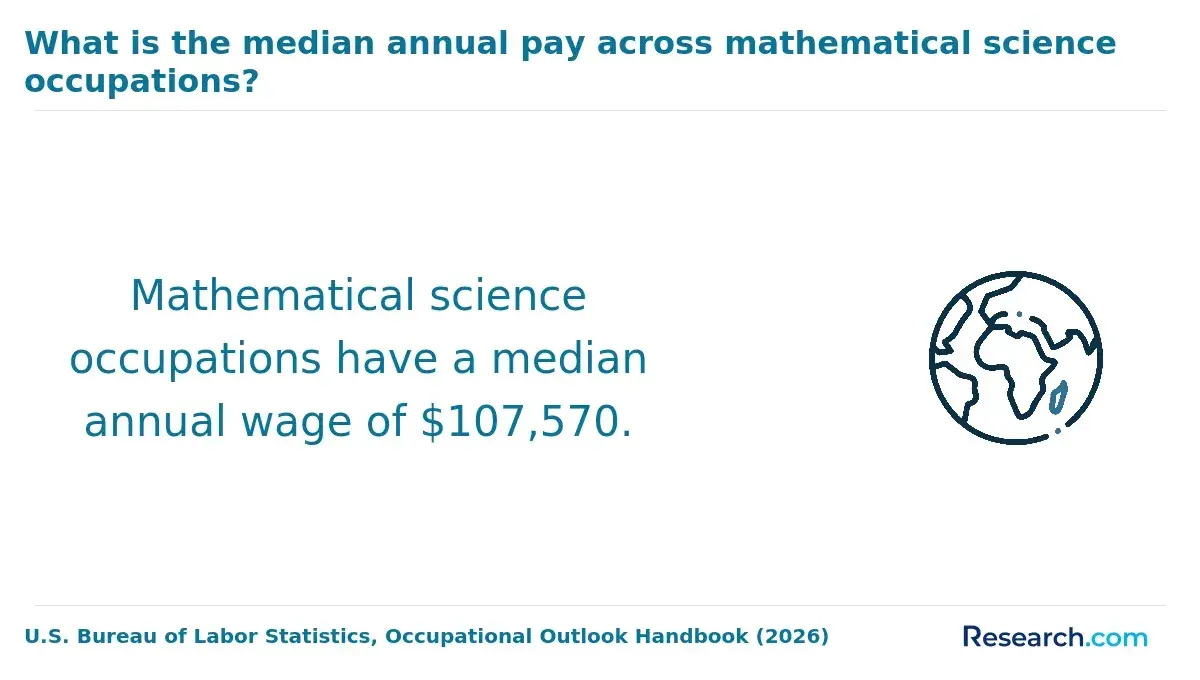
Judge value against total cost, time away from other opportunities, and evidence of career relevance - not a national data scientist salary alone. If finishing sooner is important, compare online data science master's options by program length, but check whether a shorter curriculum still leaves room for GIS, domain electives, and a meaningful project. A fast degree is not a bargain if you must develop those skills separately afterward.
What accreditation should an online data science master's program have?
Start by confirming that the university holds recognized institutional accreditation. Check the institution and accreditor against current U.S. Department of Education records rather than relying on an advertisement. Institutional accreditation is an essential baseline for evaluating a U.S. degree, but it does not establish that a particular program teaches disaster analytics well.
Do not assume a data science master's needs a specialized accreditation to be legitimate, or that accreditation of another department covers this degree. Also confirm that the institution is authorized to enroll online students in your state. Accreditation, state authorization, curriculum quality, and employer recognition answer different questions; verify each one that affects your plans.
Which courses should disaster response data science programs include?
Look for a coherent combination of analytical foundations and courses that handle where, when, and how disasters unfold. The table connects useful curriculum areas to response applications; course descriptions and sample projects are better evidence of depth than titles alone.
| Curriculum area | Why it matters in disaster response |
| Statistics and uncertainty | Distinguishes a reliable risk estimate from a misleading point prediction. |
| GIS and spatial analysis | Connects hazards, populations, facilities, and access routes across locations. |
| Time-series analysis and forecasting | Supports estimates of changing conditions and resource demand. |
| Data engineering and databases | Makes records from different agencies usable, traceable, and updateable. |
| Machine learning and evaluation | Tests whether models generalize to new events rather than merely fitting past ones. |
| Communication, ethics, and privacy | Helps analysts explain limitations and avoid exposing sensitive household information. |
A strong capstone might combine public hazard and infrastructure data to estimate service disruptions, then test performance on an event excluded from training. Ask how students document missing data, communicate uncertainty, and assess whether a model performs differently across communities. Treat the absence of substantive spatial work or project feedback as a warning sign if disaster analytics is your main goal.
What are the admission requirements for an online data science master's?
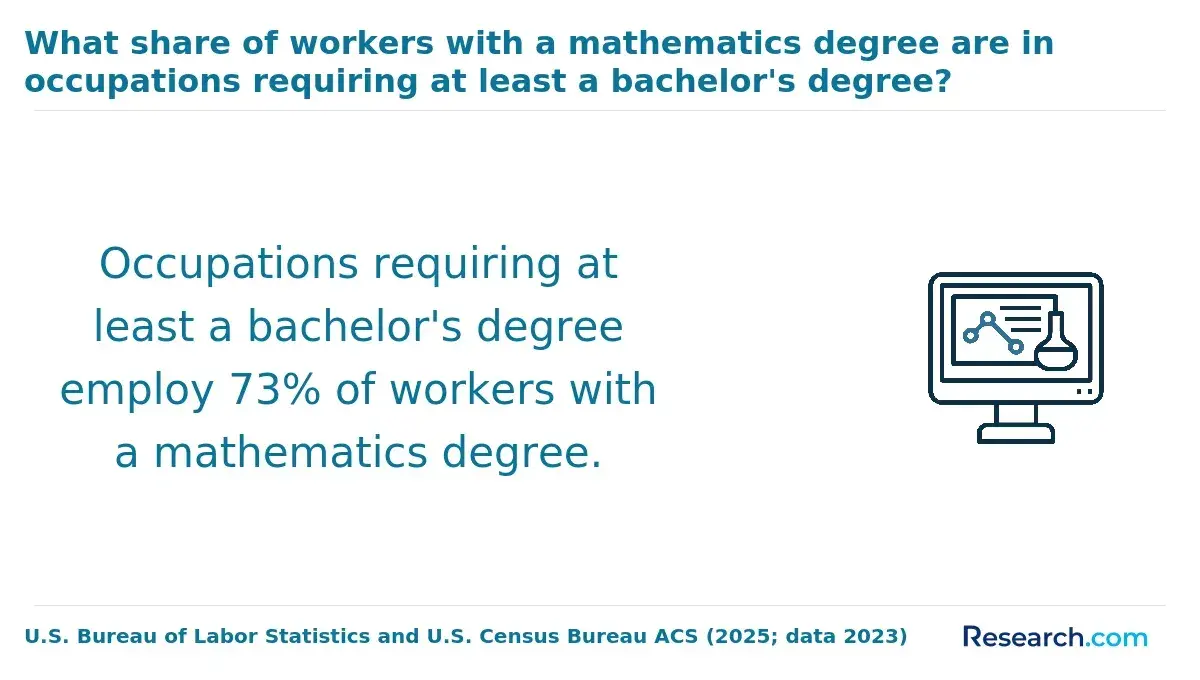
Requirements vary by institution. Programs may ask for a bachelor's degree, transcripts, evidence of quantitative preparation, programming experience, recommendations, or a statement of purpose; some offer preparatory coursework instead of requiring every skill at entry. Check the current admissions page for each program rather than assuming that an emergency-management background either qualifies or disqualifies you.
Applicants from response or public-health work can show valuable domain knowledge through incident analysis, GIS work, or program evaluation. They should also assess gaps in statistics, Python, and database work against the curriculum. If you are considering master's-level AI study after another major, compare its entry preparation with data science programs rather than assuming the two routes have identical prerequisites. Self-study can improve readiness, but it fulfills a formal prerequisite only if the university says so.
How long does an online data science master's take and cost?
There is no dependable single duration or price for online programs: required credits, course availability, enrollment pace, residency rules, and fees differ. A working professional should also check whether essential GIS or capstone courses run often enough to support the advertised completion schedule.
To compare offers fairly, calculate required credits multiplied by the applicable tuition rate, then add mandatory fees, materials or software, any required travel, and likely financing costs. Ask about employer tuition assistance and scholarships before treating the published tuition as your final expense. You can explore affordable online data science programs as a starting point, but confirm current charges and course availability directly with each school. Comparing one program's tuition-only figure with another's full estimated cost is a common and avoidable mistake.
Which disaster response careers can data science graduates pursue?
Potential paths include geospatial analyst, hazard or risk analyst, public-sector data scientist, humanitarian logistics analyst, and recovery-program evaluation analyst. These are different jobs: a logistics role may emphasize optimization and supply records, while a risk role may emphasize spatial exposure and uncertainty. Job titles and degree expectations vary by employer.
If you already work in emergency management, public health, utilities, or GIS, build on that experience rather than presenting yourself as a general entry-level data scientist. Select a target role, examine its recurring technical requirements, and produce a project that demonstrates both analytical judgment and knowledge of response decisions. Professional connections also matter for finding domain-specific projects; when comparing AI-oriented alternatives, investigate whether artificial intelligence master's alumni communities include people working in the organizations you hope to join.
What salaries and job outlook can data science professionals expect?
The U.S. Bureau of Labor Statistics reports a $120,230 median annual wage for data scientists in May 2025. That is an occupation-wide midpoint, not an expected starting salary or a documented outcome for graduates entering disaster response. Employer type, location, prior experience, and the actual job classification can substantially change an offer.
BLS projects 35% growth in data scientist employment from 2025 to 2035. This supports considering data science as a broad career path, but it does not forecast hiring by emergency-management agencies or guarantee that a disaster-focused applicant will find a position. Use local and target-employer postings to test demand for your chosen specialization.
Which certifications complement a data science career in disaster response?
Certifications should fill a specific gap, not substitute for statistical skill or applied experience. Emergency-management training in incident coordination can help an analyst understand how findings reach decision-makers. A GIS certification may be more relevant when a target posting emphasizes spatial workflows; a cloud or data-platform credential may help when it emphasizes maintaining analytical infrastructure.
Check each credential's current eligibility rules, assessment, renewal requirements, and recognition in your target job postings before paying for it. If your portfolio already demonstrates GIS competence but you lack response-domain experience, an incident-management course or supervised project may be more useful than another software badge.
Other Things You Should Know About Data Science
Yes. Public hazard, weather, population, and infrastructure datasets can support a credible project. Document their limitations and avoid presenting a public-data exercise as an operational tool that has been validated for live deployment.
Not necessarily. Modeling and evaluation projects can be completed remotely. Ask a program and any project partner whether a particular internship, field component, or capstone requires travel before enrolling.
Review faculty projects and recent capstones, then ask the program whether a faculty member or approved external partner could supervise your proposed topic. Do this before enrollment if domain mentorship is central to your decision.
Be cautious about treating a prediction as a decision. A useful project should identify who reviews its outputs, what uncertainty they see, and how they can challenge a result - especially when resources or safety are at stake.
References
- Accreditation in the U.S. | ed.gov http://www.ed.gov/laws-and-policy/higher-education-laws-and-policy/college-accreditation/accreditation-in-the-us
- Cost of Attendance (Budget) | 2025-2026 Federal Student Aid Handbook https://fsapartners.ed.gov/knowledge-center/fsa-handbook/2025-2026/vol3/ch2-cost-attendance-budget
- Types of Financial Aid: Grants, Work-Study, and Loans | studentaid.gov https://studentaid.gov/understand-aid/types
- Mission Areas and Core Capabilities | fema.gov https://www.fema.gov/emergency-managers/national-preparedness/mission-core-capabilities
- MS in Emergency and Disaster Management | University of St. Thomas https://cas.stthomas.edu/degrees-programs/graduate/online-masters-emergency-disaster-management/
- Online & Hybrid Programs | Academy for International Disaster Preparedness https://aidp.fiu.edu/degree-programs/graduate-program/online-hybrid-program/
- Emergency Preparedness & Management - Public Health https://publichealth.cornell.edu/curriculum/concentrations/epm/
- MS Emergency Management & Preparedness Online Master's Program | SEMO https://semo.edu/academics/programs/online/graduate-online/ms-emergency-management-and-preparedness-online
- 4. Statistics & Data Science Major Course Requirements | arizona.edu https://kb.math.arizona.edu/mathcenter/index.php
- Managing natural disasters: An analysis of technological advancements, opportunities, and challenges - ScienceDirect https://www.sciencedirect.com/science/article/pii/S2667345223000500