2027 Online Social & Behavioral Sciences Degrees With Applied Social Sciences Concentrations

Co-Founder and Chief Data Scientist
Professionals aiming to pivot into applied social sciences often grapple with rigid program schedules and limited geographic options that constrain timely career transitions. This challenge grows more acute given that the National Center for Education Statistics reports a 15% rise in adult enrollment for online degrees since 2023, signaling increased demand for flexible learning models tailored to working individuals.
Such growth exposes a persistent gap: not all programs align with workforce needs or integrate applied concentrations relevant to evolving social challenges. This article evaluates current online social & behavioral sciences degrees with applied social sciences options, assisting prospective students in selecting programs that balance flexibility, rigor, and real-world applicability for strategic career advancement.
Key Things You Should Know
- Applied social sciences degrees in 2026 show 18% wage growth potential versus non-applied tracks, yet require 20-35% higher tuition on average, posing access and ROI tradeoffs amid tightening education budgets (NCES 2024).
- in public health and policy sectors prioritize applied skill sets; 67% report stronger hiring preference for graduates with practical field experience included in applied concentrations.
- Program length variability-from 2-year transfers to 4-year direct admissions-creates timing dilemmas; accelerated options reduce opportunity costs but may limit depth of interdisciplinary training crucial for competitive advantage (IPEDS 2024).
What are online social and behavioral sciences degrees with applied social sciences concentrations?
Choosing an online social and behavioral sciences degree program with applied social sciences focuses requires weighing practical skill acquisition against theoretical breadth. Graduates equipped with competencies in data collection, program evaluation, and policy implementation often meet employer demand in healthcare coordination, nonprofit management, or public policy roles. For instance, a professional managing nonprofit programs might use quantitative methods learned in such a degree to evaluate community needs and improve resource distribution.
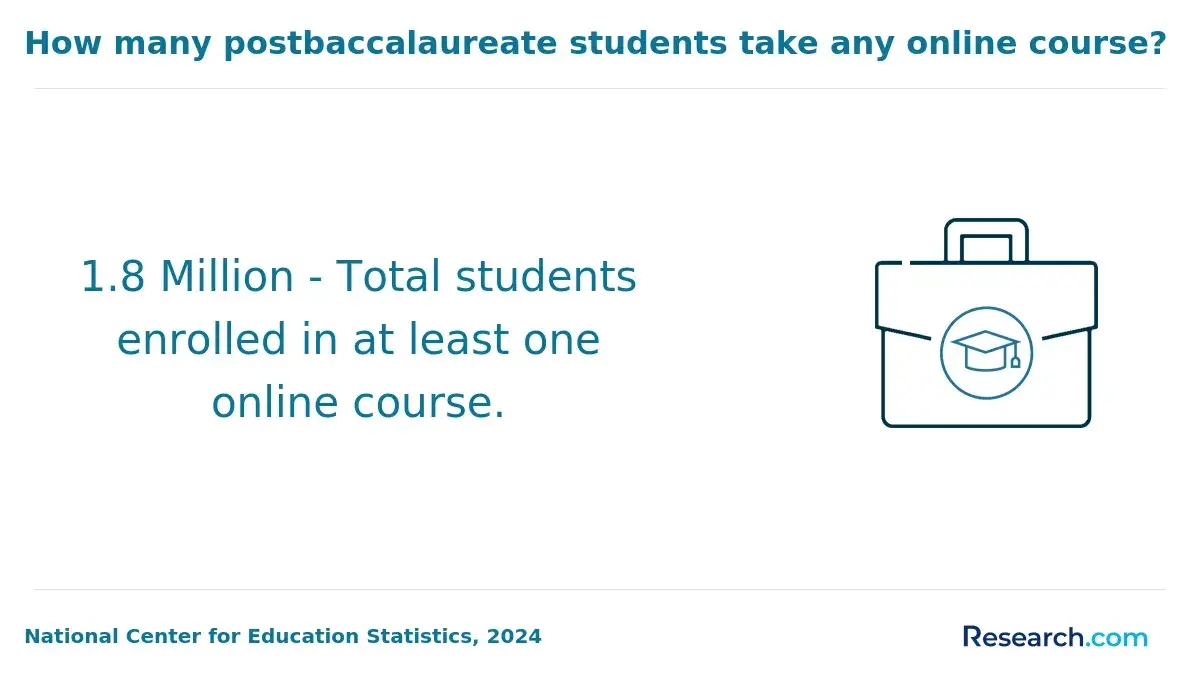
Enrollment data shows a significant shift toward online learning, with 23% of U.S. undergraduates exclusively online by 2024, highlighting growing acceptance of these formats. However, students should critically evaluate how these programs incorporate experiential learning like virtual internships or industry-aligned projects, which are essential for building a portfolio or credentials required in fields such as social work or community planning.
Prospective students targeting career pivots benefit from programs offering flexibility alongside multidisciplinary coursework. Yet, online degrees in social and behavioral sciences often do not fulfill licensing requirements for clinical or counseling roles without further certification. This underscores a central tradeoff: broader theoretical knowledge versus immediate workforce applicability through applied social sciences training.
For deeper research on accelerated psychology bachelor's degree options and how they align with workforce demands, resources like accelerated psychology bachelor's degree guides can inform decision-making.
How do online applied social sciences programs compare to campus-based options?
Employers in social and community-focused roles increasingly value applied experience alongside academic credentials, making the choice between online applied social sciences degree programs vs campus-based options a strategic one with clear tradeoffs. Campus programs typically integrate in-person internships, networking, and community partnerships that enhance practical skills and expedite workforce entry. For instance, a clinical social work student benefits from richer onsite clinical exposure, while online learners may face obstacles arranging practicum hours independently, potentially delaying certification.
Comparing online and traditional applied social sciences education reveals differences in access and employer perceptions. Online programs offer significant cost savings and flexibility, especially for working professionals or those in rural areas, but some employers prioritize traditional degrees due to perceived rigor and state-specific licensure alignment. Working students using online pathways must proactively secure field placements, often lacking the institutional support present on campus.
With community and social service occupations projected to grow 7% from 2022 to 2032, balancing these factors is critical. Candidates should consider their target roles, licensure requirements, and networking opportunities carefully. For those weighing financial and geographic constraints, exploring resources like online masters psychology programs may provide insights into affordable, flexible pathways that maintain relevance in the evolving labor market.
Ultimately, understanding these nuances allows students and professionals to align educational choices with realistic career trajectories in Social & Behavioral Sciences fields.
What types of social and behavioral sciences degrees and concentrations can you study online?
Online social and behavioral sciences degree programs with applied social sciences concentrations demand clear alignment between specialization and career objectives due to diverse workforce requirements. For instance, a licensed social worker targeting healthcare administration advancement might opt for a social work degree focusing on policy analysis and organizational leadership, while a candidate aiming for law enforcement careers would select criminology with emphasis on restorative justice or cybercrime investigations. This strategic fit shapes licensure eligibility, experiential learning needs, and long-term employability.
The rigor of these programs is underscored by employer expectations, which prioritize not only theoretical foundations but also demonstrable skills acquired through supervised practicum or internships. Online formats accommodate this via local placements or virtual scenarios, but students must manage time effectively amid demanding fieldwork, especially when balancing employment. Distance education parity with on-campus outcomes is supported by data such as a 63% six-year completion rate for online students at public institutions, closely mirroring the 64% campus rate.
Given specialty-driven licensure paths common in applied social sciences, verifying that online curricula fulfill supervised practicum hours is essential for credentialing. Programs with robust employer networks further enhance postgraduation placement in community-based roles, which dominate this sector. Prospective students must weigh these dynamics carefully, assessing course flexibility, fieldwork integration, and job market relevance. Those interested in niche concentrations such as forensic psychology may explore targeted options like the forensic psychology degree for tailored expertise within this framework.
How can you verify accreditation and institutional quality for online social and behavioral sciences programs?
Employer preferences in social and behavioral sciences degrees heavily favor regional accreditation due to its direct impact on licensure eligibility, especially in counseling or human services roles. Verifying accreditation of online social and behavioral sciences programs starts by confirming institutional recognition by the U.S. Department of Education or the Council for Higher Education Accreditation (CHEA). Programs lacking regional accreditation often limit professional certification and reduce graduate school options, creating downstream career barriers.
Assess institutional quality for social and behavioral sciences degrees by examining curriculum alignment with industry standards from bodies like the American Psychological Association or the National Association of Social Workers. Faculty expertise, active research contributions, and partnerships with relevant community organizations are crucial indicators of practical program value. Transparency in graduation and job placement data offers insight into the real-world return on investment.
Tuition cost disparities necessitate a nuanced evaluation; public four-year institutions average $10,360 annually for in-state students, while private nonprofits average $40,180, per College Board 2024 data. Since employer wage premiums for private degrees in public sector roles can be limited, students must weigh cost against career mobility carefully. Use official tools such as the College Navigator to verify accreditation and financial aid and consult industry sources for employer expectations.
Strategic enrollment decisions avoid costly missteps and long-term debt. For candidates considering environmental health specializations, exploring an environmental health and safety degree online can complement social and behavioral sciences expertise, expanding career pathways.
What are the typical admission requirements for online social and behavioral sciences degrees?
Admission to online social and behavioral sciences degrees with applied social sciences concentrations typically involves more than just academic credentials; practical implications shape acceptance and success. Bachelor's programs require a high school diploma or equivalent, with many expecting a GPA between 2.5 and 3.0, while master's tracks demand a completed bachelor's with a GPA often at or above 3.0 and relevant professional or volunteer experience. This reflects employer preferences for candidates who couple academic achievement with real-world social service exposure.
Standardized test scores like the SAT or GRE are increasingly waived, shifting emphasis toward personal statements that clearly connect educational goals with career outcomes. Such a shift aligns with workforce needs, as the U.S. Bureau of Labor Statistics projects a 9% employment growth for social and human service assistants through 2032, increasing demand for graduates who understand evidence-based methodologies.
Part-time options and prerequisite courses in disciplines such as psychology or statistics cater to working adults pivoting into human services, though this can extend time to graduation and requires balancing work-study demands. International students face additional hurdles, including English proficiency verification and documentation for clinical placements. Background checks and immunizations remain standard due to essential hands-on fieldwork.
- Official transcripts and minimum GPA thresholds indicate priority given to verified academic rigor.
- Personal statements substitute traditional testing to better reflect candidate motivation and alignment.
- Practical experience and compliance checks are non-negotiable for real-world readiness.
What coursework and skills are covered in applied social sciences concentrations?
Applied social sciences concentrations equip students with both quantitative and qualitative research skills tailored to tangible social challenges, such as substance abuse prevention or community health program design. Mastery of program evaluation, social policy analysis, and behavioral assessment is not theoretical alone; professionals must adeptly navigate policy environments and adjust interventions based on data outcomes and diverse populations. For example, a counselor implementing substance abuse programs needs fluency in policy constraints and measurable effectiveness, illustrating the integration employers demand.
Key competencies include advanced communication, ethical decision-making, and cultural competence, crucial for roles across nonprofits, government agencies, or public administration. Proficiency in statistical techniques and cost-benefit analysis increasingly influences hiring decisions as organizations seek accountable, scalable solutions rather than generalized expertise.
Employment data from the U.S. Bureau of Labor Statistics forecasts 18% growth for substance abuse, behavioral disorder, and mental health counselors between 2022 and 2032, exceeding average job market expansions. However, coursework without applied practicum or internship experience often leaves graduates unprepared for real-world constraints such as resource limitations and client confidentiality. These practical training components significantly affect market entry success and career sustainability in mental health and related sectors.
Students must therefore prioritize programs offering substantial fieldwork integration to bridge academic concepts with workforce demands, ensuring readiness to interpret complex data and execute evidence-based interventions effectively.
How long do online social and behavioral sciences programs take, and what do they cost?
Degree length and cost in social & behavioral sciences programs directly impact workforce readiness and financial feasibility, especially for those balancing employment and education. Bachelor's degrees typically require about 120 credit hours, with full-time students finishing in roughly four years, while returning students with transfer credits or accelerated paths can halve that time. Master's degrees, needing 30 to 45 credit hours, often conclude within one to two years of full-time study.
Tuition rates vary substantially: in-state undergraduates at public institutions pay approximately $200 to $450 per credit, whereas out-of-state students face rates up to $600. Private programs can cost $500 to $1,000 per credit, with graduate tuition frequently surpassing $600 to $1,200 per credit depending on prestige and program delivery.
Financial planning must extend beyond tuition to consider fees, materials, and potential lost wages for full-time study. For example, a working professional opting for part-time enrollment eases immediate financial strain but extends total program duration. This tradeoff requires prospective students to weigh time-sensitive employment prospects against educational investment.
Employers in health education and community health roles seek candidates who combine theoretical acumen with applied skills, verified by degree completion from accredited programs. The U.S. Bureau of Labor Statistics forecasts a 7% job growth for health education specialists and community health workers from 2022 to 2032, signaling persistent demand.
When evaluating programs, prioritizing flexible pacing and transparent cost structures enhances the capacity to align education with personal finances and labor market timing, thereby optimizing returns in a competitive employment landscape.
What careers can you pursue with an applied social sciences degree, and in which settings?
Graduates with applied social sciences degrees face a growing demand driven by their ability to integrate communication, analytical reasoning, and adaptability into cross-sector roles. From 2020 to 2023, technology and data-heavy positions requiring these competencies rose by 30%, underscoring a market shift toward hybrid skill sets. Employers in government, nonprofits, healthcare, education, and corporate sectors increasingly expect proficiency not only in social theory but also in analytics platforms and data tools.
In practice, applied social sciences professionals often bridge gaps between data teams and end users. For example, public health organizations rely on their expertise to design intervention programs that improve community outcomes through data-informed evaluation and stakeholder engagement. Similarly, tech companies leverage their human-centered research skills to enhance product usability, while corporate marketers use social behavior insights to target campaigns that elevate ROI.
Key tradeoffs for those considering this degree include the necessity of continuous upskilling in software and data analytics to remain competitive and the challenge of translating coursework into diverse workplace cultures. Entry-level opportunities frequently hinge on relevant field experience or internships, emphasizing the importance of program selection aligned with practical work placements. Success depends on combining analytical rigor with emerging technological skills and sector-specific knowledge, tailoring career paths to evolving workforce demands.
What salary ranges and job outlook can graduates in applied social sciences expect?
Applied social sciences graduates face a nuanced earnings landscape shaped by sector, role specialization, and location. Entry-level roles in compliance or training delivery yield salaries in the $45,000 to $75,000 range but often require targeted skills to advance. For example, training and development specialists focusing on Diversity, Equity, and Inclusion (DEI) initiatives typically earn median wages around $63,000, with top performers surpassing $90,000, reflecting the premium placed on measurable impact in workforce equity.
Job growth in this field is notably strong-employment of training and development professionals is expected to rise 8% from 2022 to 2032-yet competitive hiring prioritizes candidates with proven outcomes in cultural competence, program evaluation, and data-driven improvements. Employers frequently expect additional certifications and hands-on project experience beyond the degree credential.
Tradeoffs are significant. Corporate paths offer higher compensation at senior levels but often start with lower-paid compliance tasks, while public sector jobs provide stability and community influence despite lower pay. Meanwhile, nonprofit roles demand grant writing and program management skills, with compensation fluctuating alongside funding cycles.
Salary progression depends on candidates' ability to link applied social sciences frameworks to quantifiable workplace improvements such as enhanced employee engagement and retention, which directly affect organizational budgets for DEI and development roles.
How should students choose a reputable online social and behavioral sciences program aligned with their goals?
Choosing an accredited online program with verified student outcomes directly influences employability and long-term viability in social & behavioral sciences fields. Accreditation by recognized agencies ensures not only academic standards but also access to federal aid, a critical factor given uneven program quality across the sector. Reliable data from sources like NCES on graduation and retention rates reveal a program's effectiveness in supporting student success, a significant predictor of future workforce integration.
For instance, a student targeting community health roles must confirm the curriculum integrates applied methodologies specific to health education alongside substantive practicum or internship opportunities. Such hands-on components provide crucial professional experience and industry connections that often dictate job placement success. Graduates engaged in community and social services earn median wages above the national average, around $52,310 according to the U.S. Bureau of Labor Statistics, reflecting stable demand in these occupations. Absence of experiential learning within a program tends to limit career readiness and network development.
Program delivery format impacts accessibility for working adults. Asynchronous courses allow flexibility for those balancing employment and family responsibilities, whereas synchronous models may impose scheduling conflicts. Financial transparency is equally important: utilizing net price calculators helps students distinguish affordable options from programs with high sticker prices but minimal aid. Additionally, alignment with licensure or certification requirements-such as those for social work or behavioral counseling-is necessary to avoid investing in credentials without practical professional recognition.
- Prioritize accredited programs with robust, transparent completion and retention data
- Verify curricula include applied social science techniques and practical fieldwork
- Assess program alignment with industry internships and professional networks
- Consider asynchronous delivery when managing work-life balance
- Use net price calculators to accurately gauge true costs and financial aid
- Confirm alignment with required licensure or certification pathways
Other Things You Should Know About Social & Behavioral Sciences
Online social and behavioral sciences programs often require more self-discipline and time management than traditional campus courses. The workload itself is comparable, but the lack of face-to-face interaction means students must proactively engage with materials and deadlines. Prospective students should prioritize programs offering structured schedules and active instructor support to avoid falling behind.
An applied social sciences concentration typically improves employability by focusing on practical skills and real-world problem-solving rather than purely theoretical knowledge. Employers in social services, public policy, and community outreach value candidates who demonstrate applied experience. Students pursuing career advancement should prioritize concentrations aligned with targeted job roles to maximize relevant skill development.
Employers in competitive social and behavioral sciences fields prioritize demonstrated competencies and relevant experience over the delivery mode of education. Well-designed online degrees from accredited institutions are fully respected when paired with internships, volunteer work, or applied research. Candidates should seek programs that facilitate practical experience and professional networking to strengthen their resumes.
References
- Online Social Science Courses | University of Phoenix https://www.phoenix.edu/online-courses/social-science.html
- Applied Social Science degrees & courses https://universitycompare.com/courses/degrees/applied-social-science
- Interdisciplinary Studies: Behavioral & Social Sciences (AAT) https://www.lasc.edu/academics/aos/issbs-1
- Top 10 Social Science Degree Jobs in the UK for 2026 https://accesscoursesonline.com/blogs/news/social-science-degree-jobs
- Explore Psychology Degrees Online | Psychology.org https://www.psychology.org/online-degrees/
- Studying Human Behavior with a Behavioral Science Major https://www.cune.edu/news/studying-human-behavior-behavioral-science-major
- Behavioral Sciences https://www.southmountaincc.edu/degrees-certificates/behavioral-science-human-services/behavioral-sciences-9300-bs
- What Can Behsci Do For Your Virtual Skills-Based Program? | TDL - The Decision Lab https://thedecisionlab.com/insights/education/what-can-behavioral-science-do-for-your-virtual-skills-based-program
- Applied Social and Cultural Studies https://www.une.edu/cas/schools/social-behavioral-sciences/programs/ba-applied-social-and-cultural-studies
- Social and Behavioral Sciences https://www.soka.edu/academics/undergraduate-studies/concentrations/social-and-behavioral-sciences