2027 Best Online Social & Behavioral Sciences Degrees for Social Policy Careers

Co-Founder and Chief Data Scientist
Practitioners seeking to pivot into social policy roles confront rigid barriers when balancing full-time work, family obligations, and education access. As demand for professionals with policy expertise tied to social and behavioral sciences grows-projected workforce expansions by the Bureau of Labor Statistics affirm this-traditional degree structures often create timing conflicts or geographic limitations.
Nearly 60% of adult learners report that flexibility ranks as their top criterion when selecting programs, according to NCES data from 2024, revealing a pivotal shift toward accessible online education. This article evaluates the best online social & behavioral sciences degrees tailored to optimize career mobility and program adaptability for aspiring social policy professionals.
Key Things You Should Know
- Despite accelerated online offerings, programs averaging 24 months create cost and opportunity tradeoffs, with median tuition for social policy-focused degrees reaching $28,000, forcing careful timing decisions between income loss and skill acquisition.
- Employers prioritize candidates with applied research experience; 62% of surveyed policy agencies in 2024 prefer degrees featuring strong data analytics and community engagement, pressuring curricular alignment beyond theory.
- Labor market saturation in social policy roles has raised entry-level degree requirements; U.S. Bureau of Labor Statistics projects 9% growth through 2032, favoring candidates who combine social & behavioral sciences depth with cross-sector policy skills.
What are online social and behavioral sciences degrees, and who are they best for?
Choosing an online social and behavioral sciences degree for social policy careers involves weighing practical flexibility against real-world demands. For example, a mid-career professional moving from business to social policy can leverage online coursework in sociology, psychology, and political science without disrupting employment, acquiring critical social policy expertise through flexible scheduling.
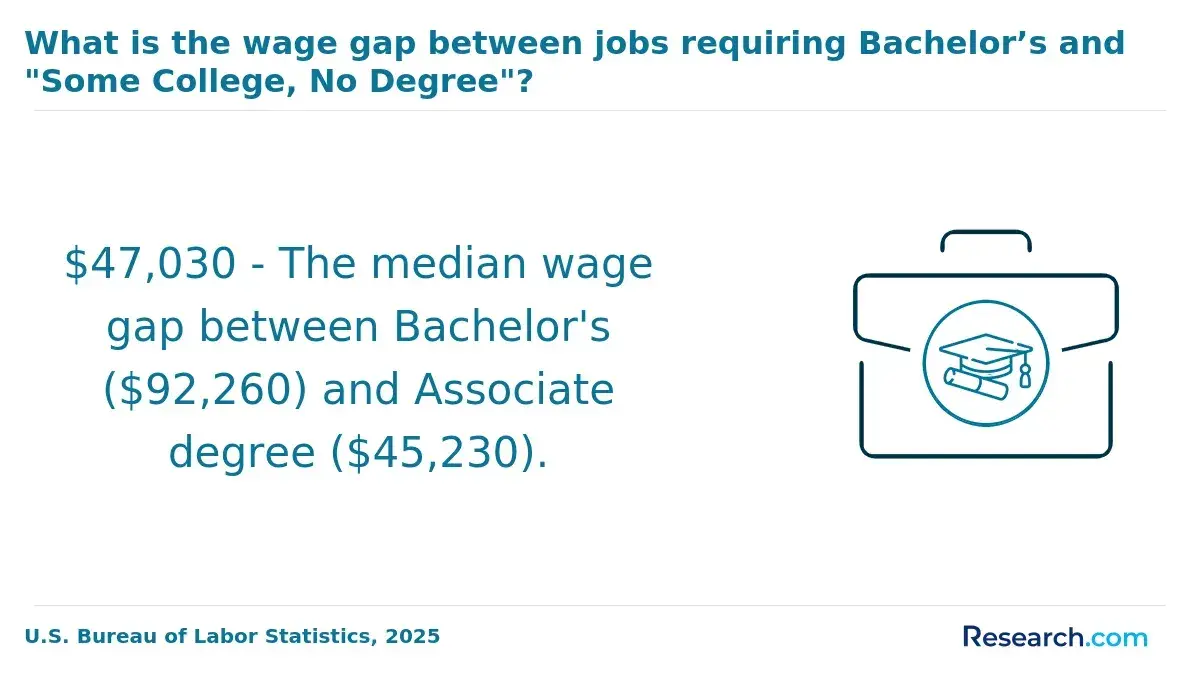
These programs cater to those targeting roles that combine contextual social insight with quantitative rigor, such as policy analysts or public program managers. Graduates typically command a median annual salary near $60,000, exceeding the general bachelor's median by roughly 20%, which signals employer preference for candidates with interdisciplinary training tailored to complex societal challenges.
However, success in an online social and behavioral sciences degree program depends on self-discipline, reliable internet access, and careful selection based on accreditation and curriculum relevance, especially courses in applied research, statistics, and policy analysis. The lack of in-person internships or local networks can delay entry into competitive positions, so programs offering virtual internships and public sector connections mitigate this risk.
For those exploring advanced credentials, reviewing options through master of social work research resources can provide critical program comparisons and help identify pathways aligning with professional goals.
Who should pursue online degrees in social and behavioral sciences must consider these tradeoffs and match program strengths to intended career outcomes rather than defaulting to generalized promises.
How do online social and behavioral sciences programs prepare graduates for social policy careers?
Graduates of online social and behavioral sciences programs for social policy jobs develop critical capabilities extending beyond theoretical frameworks, directly addressing labor market demands. These programs equip students with advanced data analysis skills-both quantitative and qualitative-which are indispensable for crafting effective interventions across healthcare disparities, poverty, and education reform.
Applied learning through case studies and simulations mirrors challenges found in policymaking environments, such as creating community health initiatives or evaluating legislative impacts on vulnerable groups. Such practical exposure is essential because navigating bureaucratic and stakeholder complexities constitutes a significant barrier in social policy roles. The labor market affirms this skill alignment, demonstrated by 28,246 related jobs in 2023 and a projected growth of 17.5% through 2035 based on UMass Lowell Graduate, Online & Professional Studies data.
Key considerations for prospective students include program credibility and strong methodological training, since employers prioritize these attributes. Programs offering practicum or internships can enhance networking and field experience-critical differentiators in this competitive space. Online formats require proactive engagement to master complex subjects and real-time policy debates effectively. Median annual earnings near $100,000 reflect the market premium placed on combined social science insights and analytical expertise.
For those investigating educational options, evaluating the cheapest online master's degree in psychology can provide a comparative benchmark and inform cost-benefit decisions related to social and behavioral sciences study paths.
Are online social and behavioral sciences degrees respected by employers and comparable to campus programs?
Employers assessing social and behavioral sciences degrees increasingly prioritize program reputation and graduate competencies over the distinction between online and campus delivery. For instance, candidates applying for government policy roles who hold online degrees from regionally accredited institutions with robust curricula are evaluated on par with traditional graduates when their practical experience and policy analysis skills are equivalent. This reflects a shift in employer acceptance of online social and behavioral sciences degrees.
Cost considerations remain significant, especially for working professionals balancing career shifts. Over the past decade, Liberty University's online tuition increases have remained below 5%, placing its 2025 graduate rates among the more affordable options, which underscores the importance of long-term price stability in managing education investments amidst rising costs.
Online social and behavioral sciences programs typically combine asynchronous coursework with digital research and simulations, fostering competencies critical to evidence-based policy development and behavioral research. Yet, hands-on practicum opportunities remain essential to connect students with employer networks and demonstrate applied skills valued by nonprofits, consultancies, and government agencies.
Candidates evaluating these pathways should carefully consider how well programs integrate experiential learning alongside accreditation standards recognized by their targeted employers. Flexible online formats enable geographic mobility and career pivots; however, ensuring access to meaningful internships or practicums can distinguish candidates in competitive labor markets.
For those exploring degree options, consulting resources such as the best online bachelors in sociology programs provides valuable comparative insights into program quality and outcomes.
What accreditation should online social and behavioral sciences programs have for social policy work?
Program accreditation directly shapes employability and professional mobility in social policy-related fields. Regional accreditation recognized by the U.S. Department of Education or CHEA is the baseline for academic legitimacy within online social and behavioral sciences programs in the US. However, specialized accreditation, such as the Council on Social Work Education (CSWE) certification for social work, holds decisive weight for licensure and job eligibility in government or compliance roles. For example, candidates holding a CSWE-accredited online Bachelor of Social Work credential often gain priority in agencies administering welfare programs, where employers strictly verify accreditation to ensure regulatory alignment.
Costs can influence access but should be weighed against the risk of limited credential recognition. Capella University's Tuition Cap, which limits its online Bachelor of Social Work program to $30,000, exemplifies how financial controls provide practical predictability without sacrificing necessary accreditations. Prospective students navigating regional accreditation standards for social policy related behavioral sciences degrees must also consider transferability of credits and graduate study prerequisites, which uncertified programs often obstruct.
Key operational points include:
- Regional accreditation is mandatory for broad acceptance of credentials across sectors.
- Specialized accreditation like CSWE ensures eligibility for critical professional licenses in social policy and social work.
- Unexpected gaps in accreditation can hinder access to federal or state roles tied to compliance or funding.
- Financial parameters aligned with accreditation facilitate manageable debt and sustainable career entry.
Students evaluating their educational trajectory should integrate these accreditation benchmarks with labor market demands and credential recognition realities to optimize long-term career flexibility. For those considering advanced degrees, exploring options like a mental health counseling online masters may complement or expand career pathways beyond initial social and behavioral sciences credentials.
What courses and concentrations are common in social and behavioral sciences programs focused on policy?
Programs in social and behavioral sciences that concentrate on policy demand more than theoretical knowledge; they require precise quantitative skills and interdisciplinary fluency. For example, a healthcare policy concentration trains students in health economics and regulatory compliance critical to navigating public health systems. Conversely, criminal justice tracks prioritize policy design and rehabilitation approaches aligned with government or nonprofit roles.
Employers expect graduates to transform complex data into actionable policy recommendations and manage multifaceted stakeholder relationships. Practical obstacles include selecting a concentration that matches labor market needs and mastering specialized software like GIS for data visualization, significantly increasing employability.
Typical curricula emphasize statistics, ethics, economic principles, and program evaluation while offering hands-on capstone work with agencies simulating real-world policy intervention. Graduates equipped with qualitative and quantitative methods tend to fare better across sectors such as government, healthcare management, and advocacy.
The U.S. Bureau of Labor Statistics anticipates a 28% growth in medical and health services management roles over a decade, illustrating the advantage of combining policy expertise with health administration. This linkage positions graduates to lead in evolving regulatory environments influenced by demographic shifts and reform agendas.
What are typical admission requirements for online social and behavioral sciences bachelor's and master's programs?
Admissions requirements for bachelor's and master's programs in social & behavioral sciences reveal critical tradeoffs between accessibility and preparation for workforce demands. Bachelor's candidates generally need a high school diploma with a GPA near 2.5 to 3.0 and may submit SAT or ACT scores, though many programs now waive these due to shifting policies post-COVID-19. Unlike undergraduate admissions, master's programs prioritize a completed bachelor's with at least a 3.0 GPA and relevant experience, often assessed via resumes detailing professional or volunteer work in policy, social services, or behavioral research.
Standardized testing is diminishing in value: while some graduate programs still request GRE scores, many have dropped or made them optional after studies showed limited predictive power for graduate success in this field. Essential components include personal statements that explicitly link candidates' experience to social policy or behavioral science impact and recommendation letters that reinforce suitability.
Applicants must also weigh application fees ($50-$100) and potential transcript processing delays. Choosing cost-effective programs can alleviate financial barriers; for example, UMass Lowell's online graduate tuition at $610 per credit for Summer 2026 represents significant savings compared to private institutions. Employers in government and nonprofit sectors expect degrees to combine academic rigor with practical skills, so admissions materials that demonstrate applied experience improve both admission odds and long-term employability.
How long do online social and behavioral sciences degrees take, and what do they cost?
Completion time for online social & behavioral sciences degrees varies significantly with enrollment intensity, impacting workforce entry and debt accumulation. A master's typically spans 18 to 24 months full-time, extending to three or more years for part-time students balancing employment. This extension delays professional licensure eligibility and increases opportunity costs, a critical factor for those aiming at social policy or clinical roles.
Tuition disparities reflect program prestige, credit requirements, and student status. For instance, Liberty University charges $580 per credit for full-time graduate students and $290 for military students. With approximately 60 credits needed for a master's degree, total costs range roughly from $17,400 to $34,800 before factoring in part-time or extended enrollment.
Practical considerations include:
- Balancing upfront tuition against long-term licensure and employability gains
- Ensuring programs hold recognized accreditation demanded by employers
- Accounting for financial aid compatibility with military benefits
- Managing opportunity costs during prolonged study periods
Students targeting government or nonprofit policy roles may accept longer studies to gain field experience that enhances employability, despite higher cumulative costs. Prospective students should rigorously evaluate net educational value by integrating program length, pricing nuances, and real-world outcomes into their decision-making framework, avoiding simplistic cost or time comparisons.
What social policy careers can you pursue with a social and behavioral sciences degree?
Social and behavioral sciences graduates face a clear tension between quantitative program evaluation and qualitative community engagement roles. For instance, a community policy analyst must balance data-driven assessments with culturally competent outreach, while policy advisors require in-depth legislative knowledge to advocate effectively for public health regulations. This tradeoff influences daily tasks and long-term career trajectories.
Employment opportunities predominantly reside within government agencies, nonprofits, and healthcare organizations focused on health disparities and behavioral interventions. UMass Lowell reports 2,746 annual openings for professionals holding an MPH in social & behavioral sciences, with median salaries near $100,000. These figures reflect robust demand in positions integrating data interpretation, behavior change strategies, and policy implementation.
Given the competitive nature of internships and entry roles in these sectors, candidates must navigate logistical challenges to gain essential practical experience. Proficiency in epidemiology, health communication, and data analysis software enhances employability and potential compensation.
- Understanding employer expectations for certifications or advanced credentials-particularly those emphasizing cultural competency and legislative frameworks-can improve alignment with specialized social policy functions.
- The practical value of a degree in social & behavioral sciences extends beyond theory, demanding adaptability to varied community contexts and policymaking environments.
What is the salary outlook and job demand for social policy and related roles?
Social policy roles tied to research and analysis present a salary range heavily dependent on specific skill sets and experience, from approximately $60,000 to $85,000 annually, with advanced specialists earning $110,000 or more. These positions are set to grow by 8% through 2032, outpacing the general job market due to increased reliance on data-driven policy evaluation within government and nonprofit sectors.
Employers distinctly favor candidates who possess strong analytical capabilities alongside foundational behavioral science knowledge. For instance, undergraduate behavioral sciences programs frequently require 40-60 credit hours in core subjects covering statistics, research methods, and policy analysis, which build a critical base for addressing complex challenges.
Consider an urban policy analyst: they must handle large datasets and policy impact assessments concurrently, necessitating advanced technical skills beyond generalist social science training. In contrast, community program evaluators lean more on qualitative techniques but still benefit substantially from quantitative proficiency. These differences influence not only earning potential but also job availability.
Graduates without proficiency in statistical software such as SPSS, R, or Python often find themselves restricted to lower-level salaries and fewer opportunities. Practical internships and certifications in data tools remain decisive factors in employability.
Therefore, prospective students face a strategic tradeoff between committing to extensive core coursework-delivering higher initial salaries and career momentum-and faster credentialing routes that may impede early earning and advancement.
How can prospective students evaluate and choose a reputable online social and behavioral sciences program?
Prioritizing accreditation and transparent outcome data decisively influences the tangible value of online social and behavioral sciences programs. Enrollment in regionally accredited institutions recognized by the U.S. Department of Education or CHEA is critical not only for federal financial aid access but also for employer recognition, which substantially impacts employability.
Graduates targeting roles in public policy, social work, or community organizing should scrutinize program outcomes such as documented employment rates in these fields rather than rely on generalized institutional reputation. For example, Arizona State University Online reports that its BA in Social and Behavioral Sciences prepares students for positions in community development, counseling, and human resources, aligning curriculum content with labor market demands.
Program flexibility is another decisive factor for working adults balancing multiple responsibilities. Key considerations include the availability of asynchronous courses, the nature of internship or practicum requirements, and access to career support services. For instance, mandatory on-site internships can encumber students with rigid schedules that hinder progress.
Cost comparisons should be grounded in projected return on investment by juxtaposing tuition fees against expected starting salaries in advocacy or nonprofit sectors. Additionally, a streamlined transfer credit policy can materially shorten time-to-degree, a significant advantage for students with prior coursework.
Other Things You Should Know About Social & Behavioral Sciences
Online social & behavioral sciences degrees often require similar total coursework as traditional programs, but the self-paced nature demands strong time-management skills. Students may face compressed deadlines and limited synchronous interaction, which shifts more responsibility to them for meeting course expectations. This structure favors disciplined learners but can challenge those who thrive on in-person support and real-time discussions.
Employer skepticism has declined but persists in some sectors, especially for positions requiring fieldwork or direct client interaction. Graduates should highlight any in-person practicums or internships completed alongside their online degree to demonstrate applied experience. Prioritizing programs with strong employer networks or clear career services can mitigate credibility concerns more effectively than the degree format alone.
Most online programs offer asynchronous coursework to support flexibility, but students must still allocate consistent weekly hours for readings, assignments, and projects. Programs with rolling admissions and extended time-to-completion options provide greater adaptability. Prospective students should prioritize programs with clear communication about workload expectations and access to academic advising tailored to managing concurrent work and family responsibilities.
References
- High-demand social work roles in California: trends and opportunities https://socialwork.pacific.edu/blog/high-demand-social-work-roles-california-trends-and-opportunities
- Informing Public Policy with Social and Behavioral Science https://issues.org/perspective-informing-public-policy-with-social-and-behavioral-science/
- Online Behavioral Science Degree Programs | University of Phoenix https://www.phoenix.edu/online-behavioral-sciences-degrees.html
- Career Options - Social Policy Association https://social-policy.org.uk/about/teaching-and-learning-2/career-options/
- Online BSW Programs: Bachelor of Social Work Major https://www.masterofsocialwork.com/related-degrees/online-bsw-programs
- Online MSW Programs with No GRE Required https://socialworklicensemap.com/social-work-degrees/online-msw-programs/social-work-programs-no-gre/
- Accredited courses | AASW https://www.aasw.asn.au/education-employment/higher-education-providers/accredited-courses/
- Social and Behavioral Health https://www.publichealthdegrees.org/specializations/social-behavioral-science/
- Behavioral and Social Sciences - East-West University https://www.eastwest.edu/behavioral-and-social-sciences/
- 10 Careers for Social Work Majors https://www.umassglobal.edu/blog-news/careers-for-social-work-majors