2027 Online Real Estate Degrees With Asset Management Concentrations

Co-Founder and Chief Data Scientist
Mid-career professionals aiming to pivot into asset management within real estate often face a pressing dilemma: balancing the need for specialized education with demanding schedules and geographic constraints. Traditional programs rarely accommodate the flexible timelines required by working adults, a gap amplified by the National Center for Education Statistics reporting a 14% enrollment surge in online bachelor's and master's programs since 2023. This shift signals growing acceptance of remote, asynchronous learning but also raises concerns about program rigor and employer recognition. This article evaluates online real estate degrees with asset management concentrations, guiding candidates to programs that best align with career timing, accessibility, and long-term advancement goals.
Key Things You Should Know
- Completion rates for online real estate degrees with asset management focus lag 15% behind traditional formats, per 2024 NCES data, implying slower ROI and extended skill acquisition timelines for career pivots.
- Employers in commercial RE asset management prioritize candidates with direct software proficiency and certifications over degree pedigree, shifting graduate hiring toward hybrid credential stacks, according to the 2024 Urban Land Institute workforce survey.
- Average program costs increased 8% in 2024, outpacing wage growth in entry-level asset management roles by 3 points, forcing prospective students to weigh upfront debt against long-term sector volatility risks.
What is an online real estate degree with an asset management concentration and who is it best for?
An online real estate degree with an asset management focus equips professionals to transition from operational property roles to strategic asset oversight, where maximizing portfolio value and financial performance is paramount. This pathway aligns with demands for analytical rigor and market insight, skills essential for managing commercial or residential holdings effectively. For instance, a property manager aiming to move into asset management must gain expertise in valuation, risk assessment, and stakeholder communication-competencies central to this concentration.
Those pursuing the best online real estate programs for asset management careers often come from property management, finance, or business backgrounds, seeking to navigate toward roles like asset managers, portfolio analysts, or investment analysts. The degree's practical value increases when programs incorporate case studies and internships, providing a bridge between theory and applicable industry practice. Hiring trends favor candidates with demonstrated real-world experience coupled with strong analytical capabilities.
The workforce implication includes a significant salary upside; U.S. master's degree holders in real estate average a base salary of $79,000, reflecting the sector's financial rewards for specialized knowledge. However, students should be mindful of the discipline online learning demands and verify coursework relevance, networking provisions, and connections to investment communities before enrollment. Those with a finance background may also consider complementing their skillset by reviewing a degree in finance to enhance their strategic perspective within asset management.
How do online real estate asset management degrees compare to on-campus programs for credibility and outcomes?
Online real estate asset management degrees hold parity in employer acceptance when conferred by regionally accredited institutions with pertinent industry connections. Hiring managers increasingly prioritize demonstrable skills over credential origin, although perceived rigor may vary by employer sophistication and region.
For professionals focusing on managing broad portfolios, including REITs or multinational holdings, online programs often provide flexible access to advanced digital tools and data analytics critical at a time when global real estate assets under management reached $4.7 trillion, a 9% annual increase per MSCI market data cited by FinancialPlannerWorld. This highlights the growing need for asset managers adept in contemporary technology and compliance.
By contrast, on-campus degrees remain advantageous for those seeking local market expertise or relationships with regional investors managing property-heavy urban portfolios. Graduates from both online and on-campus paths face comparable job outcomes when programs include robust project-based learning and financial modeling. Yet, online candidates must proactively engage virtual networking and certifications to offset limited face-to-face interaction.
When assessing these options, prospective students exploring online real estate asset management degree credibility comparisons should evaluate:
- Whether target employers emphasize digital asset management skills or value local industry networks.
- The integration of current market data and evolving regulatory standards in the curriculum.
- Availability of internships or experiential projects essential for skill application.
For professionals weighing cost-effective graduate options aligned with asset management, reviewing the best online masters in finance can provide valuable benchmarks in program affordability and quality.
Graduates from different delivery modes should anticipate similar employment landscapes but must mitigate format-specific challenges through strategic skill development and networking to maximize credentials' real-world impact.
Are online real estate degrees with asset management concentrations accredited and respected by employers?
Employers in commercial real estate consistently favor candidates from accredited online real estate degree programs with asset management concentrations because such credentials signal adherence to rigorous academic standards and relevant competencies. For instance, a portfolio manager at a real estate investment trust (REIT) will prioritize applicants who demonstrate practical skills in financial modeling, asset valuation, and market analysis-core elements embedded in accredited curricula. In contrast, degrees lacking recognized accreditation often raise doubts about curriculum quality and limit access to industry certifications like CCIM or CPM, which affect employability in asset management roles.
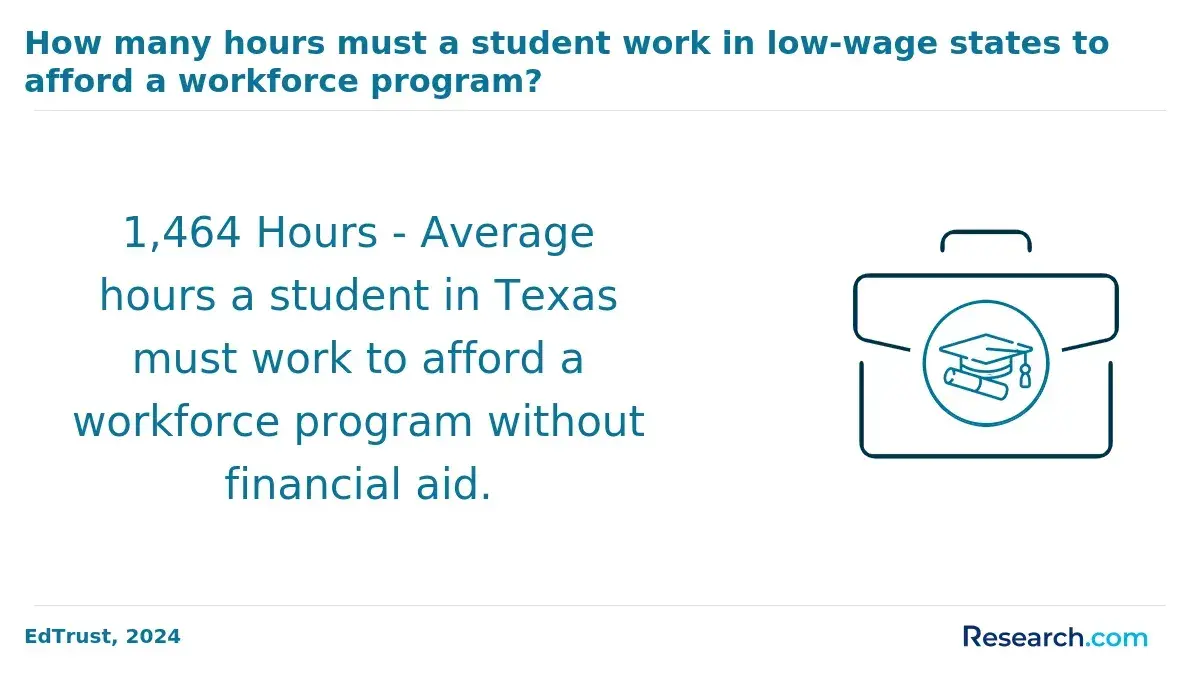
Cost remains a decisive factor in pursuing these degrees. Data from the National Center for Education Statistics indicate the average annual price for a master's degree ranges between $12,596 at public institutions and $29,931 at private nonprofits, with total expenses frequently exceeding $57,000. Such financial commitments make it crucial for candidates to evaluate whether the program's return justifies tuition, particularly regarding salary uplift and career trajectory. Those interested in cost efficiency may also review related fields; for example, a detailed analysis of construction management degree cost can offer comparative insights into education investment and market demand.
Choosing programs that pair accreditation with faculty experienced in commercial real estate asset management enhances networking opportunities and access to internships, both instrumental to navigating a competitive job market. Prospective students should recognize that employer recognition of online real estate degrees in asset management increasingly hinges on these practical connections alongside credential legitimacy.
What courses and skills are typically included in an asset management-focused real estate curriculum?
Specialized asset management courses in real estate degree programs focus on equipping students with applied skills in financial modeling, portfolio oversight, property valuation, and risk assessment. These key skills learned in real estate asset management studies include advanced investment analysis, market research, property law, and mastery of tools like ARGUS and Excel to enable data-driven forecasting and operational decisions. Graduates must navigate the complex interplay between granular asset performance evaluation and broader market forces affecting valuation and return optimization.
For instance, managing a retail property portfolio demands insight into consumer behavior and local economic indicators distinct from the tenant retention focus within multifamily housing portfolios. Students also gain negotiation acumen and stakeholder coordination abilities essential for aligning portfolio strategies with investor objectives, fostering leadership capacities often overlooked in more general real estate curricula.
Employers prioritize candidates who demonstrate analytical rigor coupled with familiarity with regulatory compliance, tax factors, and emerging sustainability metrics shaping asset values. Yet, there is a tradeoff: programs narrowly centered on asset management may limit exposure to property acquisition and disposition, whereas integrated curricula tend to improve employability through comprehensive market understanding.
Tuition for top online real estate degrees varies widely, from about $4,200 to $27,500 annually-forcing candidates to balance cost against program depth and software training availability. For those exploring advanced credentials, opportunities exist, such as an online PhD in healthcare management that, while outside real estate, reflects the growing importance of specialized knowledge in asset oversight fields.
What admission requirements and prior experience do online real estate asset management programs expect?
Online real estate asset management programs generally require a bachelor's degree in business, finance, or related fields, with admissions committees often prioritizing candidates who have two to three years of relevant industry experience. This prerequisite is critical for mastering portfolio management and financial modeling components embedded in most curricula. For instance, a professional transitioning from commercial leasing to asset management gains a significant advantage by leveraging prior exposure to property operations and market dynamics.
Applicants must demonstrate quantitative aptitudes through transcripts or standardized tests like the GRE or GMAT, as these programs emphasize analytics, investment evaluation, and risk assessment. Additional admissions components, such as personal statements or interviews, evaluate applicants' strategic thinking regarding asset lifecycle management. Those without relevant work experience may encounter greater difficulty adapting to case studies involving valuation and performance measures across diverse property sectors, including industrial, residential, and mixed-use.
Employers hiring graduates expect proficiency in asset optimization, market analysis, and capital expenditure planning-skills that these programs aim to instill. According to Intelligent's 2025 guide to online master's in real estate, compensation ranges widely from $60,000 to over $200,000 annually, depending on specialization and experience. Prospective students must critically assess the sufficiency of their credentials and consider supplemental internships or certifications to maintain competitiveness.
How long do online real estate asset management degrees take and what do they cost?
Programs in real estate asset management vary widely in duration and cost, presenting meaningful tradeoffs for professionals balancing upskilling with ongoing work commitments. Many part-time pathways span two to three years, suitable for those needing to maintain employment, while accelerated options compress study into one year for quicker market reentry. Tuition differences between public and private institutions are significant, with annual master's costs averaging around $12,394 and $26,621 respectively according to NCES data. This creates a total investment disparity from roughly $25,000 in public programs to $50,000 or more for private ones.
These financial considerations must be weighed against employer demands. Hiring managers increasingly prioritize candidates with proficiency in financial modeling, sustainability metrics, and portfolio risk management, especially as ESG expertise grows central to real estate investing. Graduates lacking these core competencies risk undermining expected salary gains despite credential attainment.
Supplemental certification or additional coursework is often required to meet specific job requirements, which can extend time-to-completion and inflate costs. As such, some professionals find more value in focused programs that emphasize actionable skills over lengthier, costly curricula.
Decision factors include:
- Balancing upfront tuition and time with realistic income projections
- Choosing programs aligned with roles in institutional investment or private equity sectors
- Assessing how ESG training enhances employability in competitive markets
Careful evaluation of these tradeoffs shapes whether a candidate opts for accelerated tracks with concentrated content or longer, flexible programs suited to working professionals.
What careers can you pursue with an online real estate degree in asset management?
The asset management concentration within an online real estate degree primarily equips graduates for specialized roles where analytical precision and operational agility intersect. For instance, an asset manager at a REIT is expected not only to interpret complex property performance metrics but also to negotiate leases and plan capital improvements to enhance portfolio returns. Conversely, portfolio analysts must apply quantitative risk frameworks to balance property diversification, highlighting distinct functional demands within the same sector.
Licensing such as the CCIM or CPM often complements academic credentials by providing industry-recognized validation, yet employers prioritize candidates who combine robust financial modeling capabilities with nuanced market insights. Regional variations in market dynamics further complicate asset valuation and management strategies, underscoring the necessity of adaptive expertise rather than generic knowledge.
Prospective students face tangible tradeoffs financially; average tuition costs exceeding $57,000 are offset by median starting salaries near $79,000 according to BestColleges' 2024 data, suggesting a break-even timeline within approximately one year if employment aligns with specialization. However, navigating multi-stakeholder interests and regulations demands decision-making aptitude under market volatility, a practical challenge that coursework alone may insufficiently address without concurrent professional experience.
Graduates entering this field must reconcile the operational realities of tenant relations, financial instrument complexities, and evolving economic conditions, positioning themselves as strategic actors capable of executing in fluid environments rather than relying solely on textbook expertise.
What salaries and advancement opportunities exist in real estate asset management careers?
Starting salaries for real estate asset management professionals typically range from $70,000 to $90,000, rising to $120,000-$180,000 with experience, depending largely on portfolio size and market complexity. Advancement beyond asset manager roles often leads to senior positions such as portfolio director or chief investment officer, where earnings commonly surpass $200,000 annually. Candidates with specialized master's degrees in real estate management, 29 programs worldwide slated for 2025/2026 per Educations.com, gain a measurable edge by demonstrating enhanced strategic oversight and analytical skills.
However, the return on investing in an advanced degree varies according to sector and geography. Commercial real estate in urban markets tends to reward faster career progression and higher salaries compared to residential asset management, where smaller portfolios and simpler financial models limit upward momentum. Employers expect asset managers to deliver concrete, quantifiable outcomes, such as increasing net operating income or reducing vacancy rates, validated by portfolio performance tools, criteria that often weigh as heavily as academic credentials in promotion decisions.
The choice between direct professional experience and formal education presents a critical tradeoff. While some firms prioritize proven deal execution, credentials can expand access to senior investment committees and fund management roles, influencing compensation trajectories. Professionals should therefore complement academic pursuits with robust financial modeling, portfolio strategy development, and legal framework expertise to align with employer demands in this pragmatic field.
How does an online real estate degree fit with licensing or certification for real estate and asset managers?
An online real estate degree with an asset management focus does not substitute for state licensing or certification but enhances essential industry knowledge crucial for licensure and career progression. Licensing mandates, such as pre-licensure coursework on local laws and ethics, typically fall outside graduate programs, requiring students to seek additional state-approved classes. For certifications like Certified Property Manager (CPM) or Real Property Administrator (RPA), practical experience combined with targeted training remains indispensable despite the value of an online degree.
Consider a portfolio manager at a Real Estate Investment Trust (REIT): advanced finance and portfolio analytics gained through the degree improve performance, yet separate licensure through local boards remains a non-negotiable credential. Students should anticipate these parallel requirements rather than expect a seamless path from degree to professional qualification.
Cost variance across programs is significant, with per-credit tuition ranging from approximately $850 at the University of Arizona to $1,620 at Georgetown University. These amounts exclude mandated licensing prep courses, exam fees, and work experience, all contributing to the total investment. Employer-sponsored learners often navigate this by pursuing degrees for skill enhancement while independently managing licensing to control timing and expenses.
Deciding which state license to pursue demands strategic evaluation of jurisdictional restrictions, transferability, and reciprocity. Multi-state practice ambitions require early navigation of these fragmented regulations, as online degrees offer limited relief from these systemic hurdles.
How can prospective students evaluate and choose a reputable online real estate asset management program?
Employers prioritize candidates from regionally accredited online programs that deliver practical skills in financial analysis, property valuation, and portfolio management. For example, Louisiana State University Online's BS in Finance with a Concentration in Real Estate costs $36,661 total but can drop to $9,165 when transferring the maximum allowable credits, demonstrating how transfer policies affect return on investment by cutting debt and study time. This makes program transferability a strategic factor for mid-career professionals shifting into real estate asset management.
Programs linked to robust industry networks consistently show higher graduate employment rates and better starting salaries, particularly in metropolitan areas where asset managers must handle diverse and complex property portfolios. Candidates who leverage business-related credits can accelerate completion and gain targeted expertise desired by employers without redundant coursework.
Flexibility is a practical necessity since many students continue working while enrolled. Fully asynchronous courses reduce scheduling conflicts, whereas mandatory synchronous sessions can hinder progress. Additionally, accessible career services and active alumni mentorship significantly impact job placement success, often overlooked when assessing program value.
Other Things You Should Know About Real Estate
The workload for these online programs often equals or exceeds that of traditional degrees due to condensed schedules and self-directed study requirements. Students managing full-time jobs must allocate significant time for complex assignments involving financial analysis, market studies, and legal considerations. Prioritizing programs with structured timelines and accessible faculty support can reduce burnout and improve learning outcomes.
Networking and internships remain limited in many fully online programs, which impacts real-world exposure and hiring prospects. Programs offering integrated internships or strong industry partnerships provide a crucial edge by connecting students to employers actively seeking asset management talent. Selecting programs with these elements is essential for gaining practical experience and employer referrals.
Specialized degrees focus deeply on portfolio and property management strategies, which benefits those targeting asset management roles directly. However, they often sacrifice broader real estate knowledge that supports versatility across development, brokerage, or investment roles. If career flexibility is a priority, students should consider whether a hybrid or broader real estate curriculum better aligns with their long-term goals.
References
- Real Estate Management & Investment https://www.napier.ac.uk/courses/msc-real-estate-management-and-investment-postgraduate-distance-learning
- Careers in real estate: paths beyond buying and selling homes https://www.glion.edu/magazine/careers-in-real-estate/
- Real Estate Degrees | What Degree Will You Need? (Full Guide) https://www.allbusinessschools.com/real-estate/degrees/
- Bachelor in Real Estate Management https://www.schellhammerbusinessschool.com/bachelor-in-real-estate-management/
- Elevate Your Career: Online MBA in Real Estate Management https://matchtocollege.com/blog/online-mba-real-estate-management-guide
- Asset Management Career Path - Financial Edge https://www.fe.training/free-resources/asset-management/asset-management-career-path/
- Asset Management | 360training https://www.360training.com/course/asset-management-11
- 10 Best Paid Real Estate Jobs & Career Paths (2026 Guide) https://www.propphy.com/blog/best-paid-real-estate-jobs-career-paths-2026-salary-guide
- Master in Real Estate & Asset Management (MREAM) https://portman.university/master-in-real-estate-asset-management/
- Commercial Real Estate Asset & Portfolio Management | The CCIM Institute https://www.ccim.com/education/courses/commercial-real-estate-asset-portfolio-management