2027 Public Policy Graduate-School-Oriented Roles You Can Target Before Graduate Study

Co-Founder and Chief Data Scientist
Prospective political science graduate students often confront a costly dilemma: gaining meaningful public policy experience while balancing the unpredictable timing and accessibility of graduate admissions. With 60% of adult learners prioritizing flexible enrollment options according to the National Center for Education Statistics, many delay formal graduate study to first secure roles that bolster their resumes without sacrificing financial stability.
This strategic waiting, however, risks becoming stagnation if suitable positions remain elusive or insufficiently aligned with graduate-level expectations. Understanding which public policy roles provide critical practical experience and credential leverage before graduate study directly informs smarter career moves and targeted program applications. This article identifies and evaluates specific pre-graduate roles designed to advance political science careers through strategic workforce engagement.
Key Things You Should Know
- Data from the U.S. Bureau of Labor Statistics shows 15% employment growth in policy analyst roles by 2028, yet entry-level salaries lag behind private sector counterparts, pressuring candidates to weigh early work experience against advanced degrees.
- A National Science Foundation survey reveals government and nonprofit employers prioritize candidates with combined quantitative and qualitative skills, forcing applicants to balance deep policy specialization against cross-disciplinary breadth.
- Graduate study costs average $45,000 annually for public policy programs, and extended time-to-degree cycles (>3 years) pose opportunity costs, highlighting a critical timing tradeoff for career changers targeting mid-career transitions.
What are public policy graduate-school-oriented roles you can pursue before a master's?
Entry-level jobs for public policy graduate school applicants often require balancing limited full-time options with the need to build analytical skills beyond administrative duties. Positions like legislative assistants, policy interns, and research analysts provide critical exposure to practical policy work, including stakeholder communication, regulatory review, and data-driven decision-making, aligning with graduate program expectations.
For example, a research analyst role in a nonprofit focusing on urban development sharpens statistical evaluation skills for housing policies, directly complementing the quantitative demands of graduate coursework. Legislative assistants contribute valuable legislative process insights but may need to supplement their experience with more technical research capabilities to match academic rigor.
Given workforce trends - including a projected 6% growth in social science and policy-related occupations - these public policy roles to gain experience before graduate school offer a strategic pathway, despite competition and tradeoffs. Key considerations include seeking positions emphasizing policy evaluation and cross-sector collaboration to enhance both graduate applications and employability.
Additionally, many candidates benefit from part-time roles or fellowships that allow simultaneous professional growth and graduate school preparation. For those comparing costs and program formats in related fields, resources like online animal science programs provide insights into educational expenses and structuring.
How can early-career public policy jobs strengthen a future graduate school application?
Early career public policy roles in the United States serve as a practical test bed, providing direct exposure to intricate policy mechanisms and organizational complexities that graduate admissions committees weigh heavily.
Positions like policy analyst or legislative assistant demand quantitative proficiency, effective communication with stakeholders, and navigation of bureaucratic processes-all essential skills that mirror graduate-level public policy curricula.
Labor market data forecasts a sustained 9% growth in demand for such roles through 2032, which contextualizes the professional value of this work experience when applying to graduate programs.
Incorporating public policy work experience to enhance graduate school applications requires demonstrating measurable impact. For instance, an applicant who has contributed data-driven policy recommendations in a state legislative office can leverage this to strengthen their research proposals.
Admissions panels look for candidates with this applied knowledge, since it grounds academic inquiry in real-world contexts often missing from purely theoretical backgrounds.
Work-study balance and the need to document tangible outcomes challenge early professionals. Effective portfolios quantifying policy contributions and strategic time management-particularly during GRE or subject-specific test preparation-are critical.
Furthermore, expertise with specialized software and data visualization tools increasingly distinguishes applicants, reflecting employers' expectation for data fluency and adaptability.
Exploring educational pathways in this field also involves weighing practical alternatives. For those assessing related disciplines, inquiries such as is a masters in library science worth it arise, emphasizing the need to align focus with career objectives rather than defaulting to broad categories in Political Science.
What education and skills do you need to qualify for entry-level policy roles?
Entry-level public policy education requirements extend beyond a bachelor's degree in political science, public administration, economics, or related social sciences. Employers increasingly demand targeted analytical skills combined with professional communication abilities.
For example, candidates aiming for federal roles need experience interpreting legislative nuances and compliance protocols, while nonprofit positions reward advocacy and impact assessment expertise. The U.S. Bureau of Labor Statistics forecasts 12% growth for policy analysts and public affairs specialists by 2032, driven by the need for professionals adept at transforming complex data and regulations into actionable policies.
Essential skills for entry-level policy analyst roles include quantitative analysis and familiarity with statistical tools like Stata, R, or Python. Beyond technical capabilities, proficiency in professional writing and stakeholder engagement is crucial, often demonstrated through policy memos, internships, or research assistantships. Candidates without such applied experience commonly face reduced employability, despite academic credentials.
Practical realities also shape career trajectories. Graduating with a generic political science degree can diminish competitiveness in a market growing over 10%, making supplemental certifications in data analysis or public management valuable. Additionally, understanding budget cycles, legislative procedures, and evaluation methods directly impacts early effectiveness.
Prospective students should weigh the time investment against tangible career benefits. Incorporating specialized skills alongside foundational education improves alignment with workforce demands. For those considering alternative advancement paths, exploring programs such as a library science masters may offer strategic diversification opportunities within public sector domains.
Which pre-graduate public policy roles are available with only a bachelor's degree?
A bachelor's degree in political science or related fields can open pathways to entry-level public policy jobs before graduate study, but navigating employer expectations requires practical clarity. Positions such as budget analyst, legislative assistant, policy analyst (entry-level), and community outreach coordinator vary significantly in their prerequisites and growth potential.
For instance, budget analysts working at state health departments might manage multi-grant budgets and ensure regulatory compliance without needing a graduate degree. The U.S. Bureau of Labor Statistics projects this role to grow 5% from 2023 to 2033, closely tracking national average job growth and indicating steady demand in governmental and large organizational contexts.
Conversely, policy analyst roles in congressional offices or think tanks typically require at least a master's degree, limiting immediate entry for those with only a bachelor's. Legislative assistants provide critical research and communication support within highly competitive political hubs, where geographic flexibility can be decisive.
Community outreach coordinators emphasize stakeholder engagement and program management, often valuing relevant experience over advanced credentials.
The practical implication for bachelor's degree holders targeting public policy roles is clear: developing quantitative skills, communication proficiency, and sector specialization is essential to maintain competitiveness and position oneself effectively for graduate study if desired.
Additionally, some candidates may explore alternative credentialing pathways, such as paralegal online programs, to supplement their qualifications or pivot pragmatically within the public affairs ecosystem.
How do salaries and advancement paths compare across common early public policy jobs?
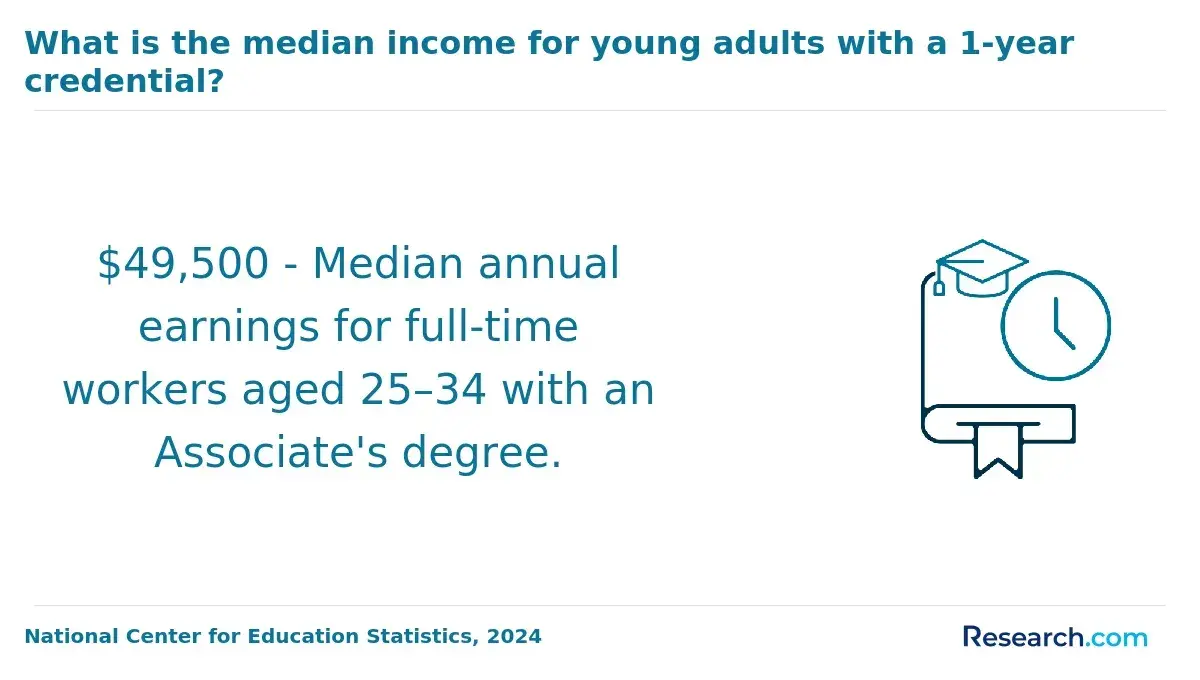
Early-career public policy roles demonstrate distinct salary patterns and advancement frameworks depending on both function and sector, influencing mid-term professional trajectories. Entry-level policy analysts generally start with median salaries ranging from $60,000 to $70,000.
Government roles provide stable but incremental pay growth constrained by structured budgets, while private research and data-centric positions-occupying 27% of MPP and MPA/ID graduates from Harvard Kennedy School-offer starting salaries between $70,000 and $85,000. These private-sector roles reward technical specialization and proficiency in policy modeling, often accelerating salary progression.
Positions such as program officers or policy coordinators in nonprofits show a broader salary range ($50,000 to $65,000) but uneven advancement paths reliant on performance and networking rather than formal promotion ladders. Government legislative assistants or public affairs specialists benefit from clearer hierarchies but modest pay increases due to public budget limitations.
Candidates pursuing strategy roles in urban planning or environmental policy face tradeoffs: private firms may pay 15-25% more, yet advancement typically requires additional credentials beyond an MPP or MPA.
Investing in quantitative analytics skills frequently delivers superior starting salaries and faster wage growth but could narrow future functional flexibility. Balancing immediate compensation with long-term career adaptability remains critical for those navigating public and private policy sectors.
What is the job outlook for entry-level public policy and policy-adjacent positions?
Entry-level public policy roles increasingly split between government and private sectors, demanding distinct skill sets and navigating differing hiring realities. Approximately 28% of graduates from Georgetown University's McCourt School now enter private firms focusing on corporate public affairs, consulting, and policy-linked communications.
This shift favors applicants who merge technical policy analysis with strategic business insights, as corporate employers seek rapid translation of regulatory data into actionable strategies.
Government roles, in contrast, emphasize stakeholder engagement and policy implementation, requiring patience for slower hiring cycles and clearance delays that can extend job searches by months. Private-sector positions offer faster onboarding but expect immediate revenue impact.
Candidates improve employability by acquiring quantitative and data analytics skills alongside internships or certifications in regulatory compliance. Graduate programs that integrate real-world practicums or employer networks offer tangible advantages, reducing the risk of extended underemployment despite advanced degrees.
Applicants must evaluate two divergent pathways: one grounded in analytic rigor tailored for public institutions, the other oriented toward cross-sector competencies demanded by private employers. Strategic networking and sector-specific skill development significantly shape employment outcomes.
How do online political science or public policy programs prepare you for these roles?
Online political science or public policy programs offer practical analytical training designed to align with employer expectations in roles such as urban planners, legislative aides, and policy advisors.
For instance, students targeting urban planning must understand regulatory environments and sustainability metrics-a key advantage given projected job growth in this sector through 2032, as noted by the University at Buffalo. This growth is driven by intensified municipal focus on sustainable development and urban expansion.
Curricula commonly incorporate applied research methods, policy modeling software, and quantitative analytics to equip students for evidence-based policy evaluation.
Asynchronous formats develop independent time management skills valued in remote and hybrid work settings. However, the lack of onsite internship opportunities or direct network access poses real challenges. Programs with established virtual internship partnerships can partially mitigate this gap.
Prospective students should critically assess program accreditation and reputation, as these factors significantly impact graduate placement rates. The increasing demand for a hybrid skill set-combining data science with stakeholder engagement-means that targeted electives and capstone projects in advanced programs are essential for matching evolving job market criteria.
Which certifications, fellowships, or service programs best position you for policy careers?
Certifications and fellowships shape distinct pathways into public policy careers, particularly for candidates without deep government experience. While certifications like Certified Public Manager (CPM) and Project Management Professional (PMP) build practical skill sets valued in sectors such as state administration or urban planning, their impact differs notably from fellowships that embed candidates in federal agencies.
For instance, the Presidential Management Fellows (PMF) program provides invaluable direct exposure to federal policy-making but requires a competitive GPA and rigorous selection, often limiting access.
Service programs such as Teach For America or the Peace Corps offer prolonged field engagement that enriches leadership and community experience, enhancing graduate applications though potentially delaying enrollment timelines. These programs complement academic credentials with tangible evidence of policy impact beyond theory.
Tradeoffs are critical: certifications deliver measurable competencies quickly but lack the immersive, network-building advantages of fellowships; service programs deepen contextual understanding at the expense of immediate career progression.
For research-oriented roles, prior analytic experience remains indispensable, correlating with higher average salaries reported by salary research for Master of Public Policy graduates. Students should align their choices with sector-specific employer expectations, balancing time commitments, financial costs, and the wage premiums linked to demonstrated policy engagement.
How can you strategically choose employers and roles to align with future graduate study?
Targeting employers whose roles align tightly with your public policy focus sharpens graduate study preparation and immediate employability. Domestic nonprofits, government agencies, and policy research institutions offer the most relevant experience, demonstrated by NASPAA data showing 23% of master's graduates work in nonprofits six months post-graduation.
These roles cultivate advocacy, stakeholder coordination, and program management skills that translate into graduate-level competence.
For example, a candidate focused on urban policy benefits from engagement in local government planning or community development nonprofits, gaining direct insight into regulatory protocols and public consultations. Those oriented toward federal policy research should pursue positions at think tanks or federal agencies to develop expertise in legislative analysis and data-intensive policy evaluation.
Role selection involves critical tradeoffs: entry-level positions with direct policy influence may offer faster experiential returns, whereas administrative roles can provide broader operational understanding but less policy immersion. Candidates must also consider employer support for professional development programs that enhance policy skills pre-graduate study.
Prioritizing roles with measurable contributions strengthens graduate applications by linking practical experience to academic focus and future leadership potential.
What criteria should you use to evaluate schools for pre- and post-graduate policy pathways?
Early placement into government roles, especially through fellowships and rotational programs, remains the dominant pathway for policy-oriented graduates, as demonstrated by Harvard Kennedy School's data showing 41% of its alumni enter public sector roles this way.
For candidates aiming at state government policymaking, prioritizing institutions with concrete partnerships and established internship pipelines at that level is essential to avoid detours into unrelated sectors.
When program outcomes are ill-defined or engagement with government entities is weak, students risk long recruitment cycles and a drift toward generic consulting or nonprofit roles that diverge from their initial policy ambitions. Targeted alignment with federal, state, or local government experiences decisively impacts employability.
Balancing these factors with tuition costs and geography matters; the highest-ranked or most prestigious schools do not automatically offer the best return if their networks do not fit the student's target government sector. Prospective students must weigh such tradeoffs realistically to activate effective career pathways in Political Science.
Other Things You Should Know About Political Science
In 2027, aspiring public policy professionals can target roles such as policy analyst assistant, legislative aide, or research associate. These positions offer hands-on experience in policy analysis, legislative processes, and research methodologies, providing a solid foundation before pursuing graduate studies in public policy.
Theoretical political science programs emphasize abstract frameworks and deep conceptual understanding but often offer fewer direct career application opportunities immediately post-graduation. Applied programs tend to integrate practical skills such as policy analysis, program evaluation, and stakeholder engagement, producing graduates who meet employer demands in policy-adjacent roles more readily. Selecting between these approaches requires weighing one's career goals: prioritizing theory favors academic or research-intensive tracks, while applied options better serve policy implementation and public-sector roles.
Reputation matters more in academic and high-level research careers than in many government or nonprofit policy positions where practical skills and relevant experience dominate hiring decisions. Candidates from lesser-known programs who acquire internships, fellowships, and real-world policy exposure can outperform peers from elite schools lacking applied experience. For those targeting policy roles, investing in hands-on learning opportunities and networking often yields better returns than prioritizing institutional prestige.
Full-time programs generally offer more intensive, immersive experiences with richer access to faculty, peers, and research resources, accelerating skill acquisition and networking. Part-time or online formats provide critical flexibility for working professionals but risk limiting direct interaction, which can delay development of soft skills and reduce employer visibility. Prospective students must weigh time availability against these factors, choosing full-time if immediate immersion and career pivot speed are priorities, or part-time for balancing work while maintaining steady progress.
References
- Testing your fit for policy careers - Emerging Technology Policy Careers https://emergingtechpolicy.org/essentials/policy-fit-testing/
- 3 Ways to Land a Government Job Through a Fellowship | ProFellow https://www.profellow.com/tips/3-ways-to-land-a-government-job-through-a-fellowship/
- Fellowships https://www.hiringourheroes.org/career-services/fellowships/
- The Role of Tailored Graduate Programs in Attracting and Retaining Top Talent - ICDL Global https://icdl.org/tailored-graduate-programmes-attract-retain-talent/
- Public Policy Careers: 2023 Guide to Career Paths, Options & Salary https://www.beyondberea.org/blog/2023/03/22/public-policy-careers-2023-guide-to-career-paths-options-salary/
- Public Policy Degrees Can Lead to Lucrative Jobs and Universities Are Starting to Notice | Insight Into Academia https://insightintoacademia.com/public-policy-degrees-can-lead-to-lucrative-jobs-and-universities-are-starting-to-notice/
- Qualifications and Skills to Become a Policy Officer in Australia https://nextgem.com.au/policy-officer-health-social-career-in-australia.html
- Policy Analyst https://www.wintec.ac.nz/future-you/explore/jobs/government/policy-analyst
- Making graduate outcomes a strategic priority - Studyportals https://studyportals.com/articles/making-graduate-outcomes-a-strategic-priority/