2027 Policy Analyst Roles You Can Target With a Political Science Degree

Co-Founder and Chief Data Scientist
Facing growing competition and shifting employer expectations, political science graduates often struggle to pinpoint policy analyst roles aligned with their expertise and career goals. The surge in demand for flexible education options-marked by a 20% increase in part-time enrollments reported by the National Center for Education Statistics since 2023-signals a broader trend toward mid-career adult learners seeking targeted skill upgrades.
Navigating these dynamics requires understanding where policy analysis positions intersect with evolving workforce needs and educational delivery models. This article outlines specific policy analyst roles suitable for political science graduates and offers strategic guidance for leveraging degree qualifications to secure meaningful employment in this fluid job market.
Key Things You Should Know
- Policy analyst roles linked to political science degrees show a 7% wage premium over general social science grads, yet require proficiency in quantitative methods, imposing a tradeoff between broader liberal arts versatility and niche technical skills, per the Bureau of Labor Statistics 2024.
- Employers prioritize candidates with experience in regulatory agencies or think tanks; 63% of job postings demand sector-specific policy analysis exposure, emphasizing strategic networking and internships as decisive for entry-level positioning, according to recent Indeed labor market analysis.
- Median student debt for political science grads rose 12% since 2020, increasing cost barriers for mid-career pivots; wage stagnation in nonprofit and government roles compels analysts to weigh debt-service burden against long-term public sector career stability per National Center for Education Statistics 2024.
What does a policy analyst do and how does a political science degree prepare you?
Policy analyst responsibilities with a political science degree extend beyond data interpretation to navigating political complexity and institutional constraints that shape policymaking outcomes. For example, in environmental regulation, analysts balance industry priorities against sustainability mandates, requiring a nuanced understanding of legislative processes and inter-agency dynamics.
This expertise supports crafting viable policy options that can realistically pass through legislative or executive branches.
A political science degree prepares you for policy analysis roles by honing analytical frameworks essential for dissecting governmental structures and political behavior. The curriculum develops both qualitative and quantitative research skills, enabling the synthesis of heterogeneous data sources into actionable recommendations grounded in evidence.
Employers emphasize advanced communication abilities; political science programs train graduates to produce clear, persuasive reports tailored to diverse audiences from technical experts to elected officials.
Federal employment for political scientists offers a median annual wage of $138,860, illustrating the market valuation of specialized policy expertise. However, sustaining competitiveness demands additional competencies such as economics and statistics, reflecting the complex empirical requirements in policy analysis today. Without these skills, a political science degree can fall short in meeting rigorous analytical expectations.
Prospective students should weigh these considerations strategically and recognize tradeoffs related to skill development and employability. For those exploring alternative educational options within related fields, programs like online animal science degree offerings provide different pathways though not directly comparable to political science in policy focus. More details on such alternative programs can be found at online animal science degree.
Which policy analyst job titles can you pursue with a political science degree?
Policy analyst careers for political science graduates often demand more than familiarity with governance structures; candidates must excel at navigating varied roles shaped by sector and specialization. Typical job titles include State Policy Analyst, Local Government Policy Analyst, Legislative Analyst, and Public Policy Consultant.
For instance, a State Policy Analyst evaluates comprehensive statewide programs requiring skilled stakeholder coordination across agencies, while Local Government Policy Analysts engage directly with community concerns such as housing or transportation. Legislative Analysts support legislators by synthesizing complex bills to evaluate their political and fiscal impacts, reflecting the nuanced roles encompassed by job titles in policy analysis with a political science degree.
Employers value candidates who merge quantitative survey capabilities with qualitative assessments contextualized by political environments. Entry-level government policy analyst positions usually start between $45,000 and $65,000 annually, escalating beyond $100,000 with experience managing complex initiatives or teams, according to the University of Toronto's Careers in Political Science guide (2024).
Understanding this salary progression helps clarify how responsibilities and compensation interrelate in practical settings.
Most policy analyst roles require skills beyond a political science degree, including data analytics and economic modeling. Networking and targeted internships in local or state government legislative affairs significantly improve access to these positions.
Specializing in sectors like healthcare or environmental policy can enhance prospects but demands continuous skill development attuned to evolving public sector priorities. For those considering advanced technical expertise, pursuing a PhD in data science online represents a strategic option to complement political science foundations and address rising analytical demands.
What education and skills do employers look for in entry-level policy analysts?
Employers seeking entry-level policy analysts in the United States expect candidates to hold a bachelor's degree in political science or a closely related field, combined with well-honed quantitative and qualitative research skills.
Practical expertise in data analysis tools like SPSS, STATA, or R is often non-negotiable, particularly within think tanks and policy institutes that maintain roughly 500 annual openings.
Despite a projected 3% employment decline from 2024 to 2034, this dynamic underscores the importance of applied analytic capabilities over purely theoretical learning in meeting employer expectations aligned with entry-level policy analyst education requirements in the United States.
Communicating complex findings clearly is critical. Analysts must produce policy briefs, reports, and presentations that decisively inform decision-makers, typically demonstrating these skills through internships, research assistantships, or capstone projects. Performance is often tied to experience in synthesizing data into actionable recommendations.
Real-world employer demands vary by sector and jurisdiction. For example, candidates targeting a municipal policy office must grasp local governance structures, while federal roles emphasize national policy frameworks. Lacking this domain-specific understanding often slows onboarding and restricts career progression.
Advanced statistical proficiency and econometrics are increasingly expected in research-heavy environments, frequently prompting graduate coursework or certificate attainment. This tradeoff involves weighing the cost and time of further education against quicker workforce entry. Adaptability and problem-solving in uncertain political contexts are also pivotal, with employers screening for demonstrated resilience.
Students exploring alternative pathways might consider options like an online library science master's degree for complementary skills applicable in policy research.
How do bachelor's vs. master's degrees in political science affect policy analyst careers?
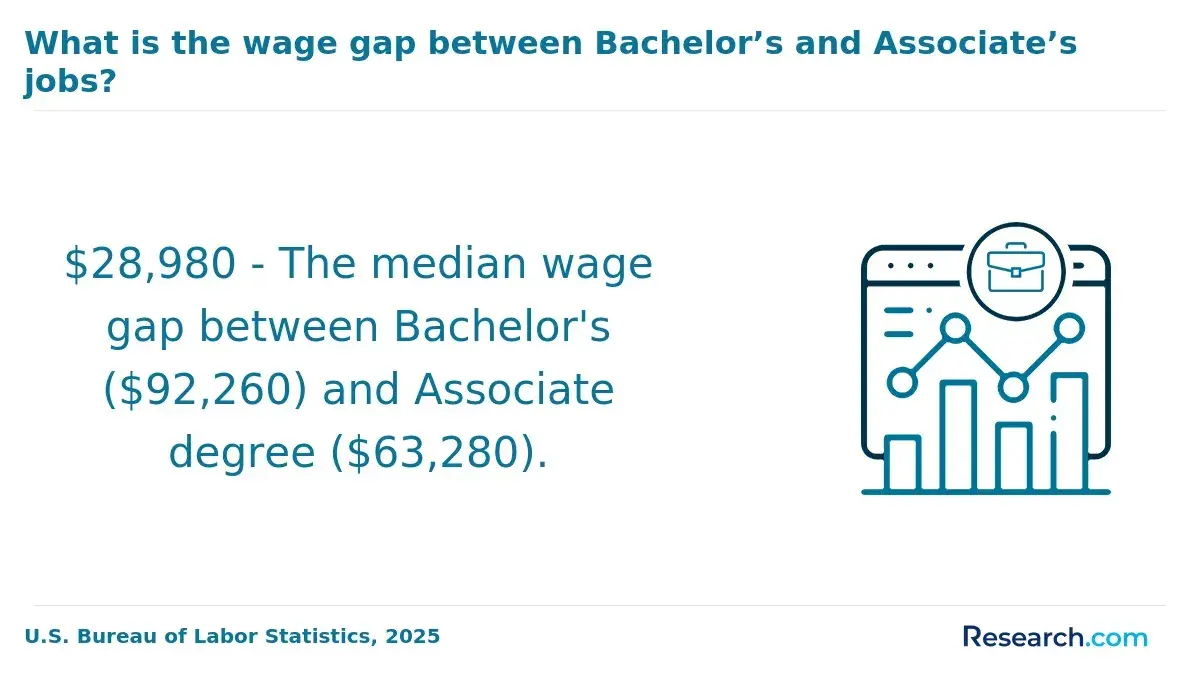
Entry into policy analysis with a bachelor's degree in political science typically leads to roles in local government or nonprofit organizations, where mid-career earnings average around $63,300 after five to nine years.
This pathway, however, often encounters earlier salary plateaus and limited access to senior positions without further education. The contrast with a master's degree is notable: advanced graduates qualify for roles in federal agencies, strategic consulting, and specialized research with starting pay that can be 20-30% higher and salary trajectories surpassing $100,000 over two decades.
Employers demanding complex quantitative skills, such as policy modeling or federal regulatory analysis, usually prefer candidates with a master's. Bachelor's holders frequently face the practical tradeoff of requiring on-the-job training to compensate for gaps in data analytics or econometrics. This dynamic reflects a critical aspect of bachelor's vs master's degree impact on policy analyst jobs where credentials determine not only job access but also pace and ceiling of growth.
Students weighing these options should factor in opportunity costs, including one to two extra years and tuition for a master's, balanced against faster promotion potential in competitive markets.
In nonprofit advocacy, a bachelor's alone often limits upward mobility, whereas master's credentials unlock senior analyst and managerial roles. Strategically, pursuing internships or dual-degree tracks during bachelor's studies or returning for a master's while employed can mitigate early career income loss.
For those focused on practical pathways, analyzing comparable labor data such as the paralegal salary associate's degree market reveals how advanced degrees influence earnings and advancement across fields linked to policy and law. This comparative lens sharpens understanding of career advancement with political science degrees in policy analysis and clarifies how educational choices operate in real-world job markets.
What policy analyst roles are available in government, nonprofits, think tanks, and industry?
Policy analyst roles for political science graduates demand distinct skills tailored to sector-specific constraints and expectations. Government positions, particularly legislative analyst roles within Congress or state legislatures, emphasize rapid evaluation aligned with political agendas under intense scrutiny.
According to Western Washington University's 2020-2021 Graduate Outcomes Report, 77% of political science graduates aiming for government and legislative staff roles secure employment within six months, illustrating the high responsiveness required in these roles.
In contrast, nonprofit analysts prioritize community engagement and grant impact assessment, often balancing qualitative and quantitative methods with less direct legislative influence. Think tanks focus on long-term research and data-driven publications to shape public debate without immediate policy enforcement, demanding advanced analytical expertise.
Industry roles require translating evolving regulations into actionable corporate strategies within legal and risk management frameworks. Across sectors, analyst candidates confront a core tradeoff: depth and precision of analysis versus the need for concise, politically feasible recommendations. Graduates must flexibly adjust communication styles to suit audiences ranging from policymakers to executives.
Operationally, this results in varied daily priorities: government analysts juggle strict legislative calendars, whereas nonprofit analysts allocate more time to stakeholder consultation. These differences influence skill development trajectories and career sustainability.
What is the typical salary range and earning potential for policy analysts?
Policy analysts with degrees in political science typically encounter wide salary variation, often shaped by sector, location, and experience. Early-career international and foreign policy analysts earn approximately $45,000 to $70,000 annually, with government and nonprofit roles skewing lower and private sector or federal consulting jobs exceeding $80,000 as expertise deepens.
Employers prioritize candidates who combine analytical rigor with practical familiarity in legislative and regulatory contexts. For instance, a policy analyst employed by a federal agency in Washington, D.C., can expect salaries near $75,000 within a few years, leveraging proximity to national policy formations. Conversely, nonprofit regional analysts may start closer to $50,000, reflecting budget constraints and local impact priorities.
Tradeoffs between public service fulfillment and private sector compensation are central considerations. Pursuing positions in think tanks or international organizations often entails salary compression but offers expanded influence and networks. Advanced degrees may raise earning ceilings over $100,000 but require weighing the cost and time investment.
To improve financial outcomes, focusing on quantitative analysis, policy modeling, and specialization in emergent domains such as cybersecurity or environmental policy is advantageous. Advancement in government roles depends heavily on internal grade and tenure, necessitating strategic career planning beyond simple salary negotiation.
- Salary range typically $45,000-$90,000, sector-dependent
- Geographic and organizational context significantly affect pay
- Advanced degrees can push income past six figures but with tradeoffs
- Quantitative and specialized skills improve marketability
What is the job outlook for policy analysts and which policy areas are growing fastest?
The outlook for policy analysts by 2026 favors specialization in healthcare and social policy, sectors driven by regulatory complexity and demographic demands. These areas require analysts who combine policy expertise with strong data and legislative knowledge, shaping a workforce expectation for domain-specific skills rather than generalized political science knowledge alone.
Entry-level positions focus on research support and report drafting, while senior roles require leadership in strategy and stakeholder engagement, typically with proven policy impact. For example, healthcare policy analysts often collaborate with regulatory agencies and health systems to implement reforms or compliance strategies, underscoring the need for sector fluency.
Prospective analysts without relevant internships or certifications in healthcare, environmental regulation, or social equity sectors risk slower progression. Employers prioritize candidates with practical experience navigating fast-evolving, complex policy environments tied to government priorities and private sector commitments.
Wages start between $45,000 and $65,000, with potential growth above $120,000 in director roles, reflecting market value for deep expertise and measurable outcomes.
How do online political science programs compare to on-campus options for aspiring policy analysts?
Choosing between online and on-campus political science programs involves critical tradeoffs tied to employer expectations and the nature of policy roles. For analysts specializing in environmental or climate policy, where the median wage stands at $139,380, interdisciplinary collaboration and communication skills-often honed through in-person interactions-are essential.
On-campus programs embed students in hands-on settings such as internships, research labs, and policy institutes, offering real-world experiences employers prioritize.
In contrast, online political science degrees can offer scheduling flexibility for working professionals but generally pose challenges in replicating immersive networking and nuanced field-specific collaboration. Students pursuing online options must proactively secure local internships to bridge this experiential gap.
Furthermore, online curricula frequently provide broader, less specialized coursework, which may limit depth in niche policy areas compared to the more elective-rich, guest-lecture-supported on-campus offerings.
Key considerations for prospective students include:
- Alignment of synchronous class schedules with their time zone
- Reliable access to comprehensive digital libraries
- Opportunities to engage in policy simulations or capstone projects that reflect real policy analysis demands
Balancing the $139,380 median wage potential against these practical and reputational differences requires clear goals for experiential learning and professional networking. Selecting programs that integrate advisory support and synchronous components can improve outcomes but cannot fully replace the embedded, hands-on pathways found on-campus.
How can you choose an accredited, reputable political science program for policy analysis careers?
Choosing a political science program geared toward policy analysis requires more than institutional reputation; it demands verifiable accreditation by recognized bodies like the Council for Higher Education Accreditation (CHEA) or the U.S. Department of Education to ensure academic rigor and eligibility for federal aid.
Without such validation, graduates risk facing barriers when entering the job market or graduate programs. Programs with clear employment outcomes are a pragmatic selection criterion; for instance, education policy analysts holding political science degrees at Western Washington University report starting salaries near $33,000 with growth to over $63,000 mid-career, implying that program connections to government and nonprofit agencies materially impact career trajectories.
Prospective students should weigh program curricula for quantitative training in economics, policy evaluation, and data literacy-skills increasingly prioritized by employers. Practical components like capstones and partnerships with policy organizations not only build applicable skills but also provide networking channels crucial in competitive markets.
Matching faculty expertise with career goals in areas such as education or healthcare policy ensures relevant mentorship and research opportunities.
Moreover, geographic alignment matters: attending institutions embedded in your target state or locality can accelerate job placement through established policy networks. Cost considerations must be evaluated against expected salary progression. For working professionals, part-time or online formats can offer flexibility without diluting program quality, a tradeoff worth considering when balancing immediate income needs against credential value.
Are certifications, fellowships, or internships important for advancing as a policy analyst?
Certifications, fellowships, and internships are often decisive factors separating competitive candidates in policy analysis roles, especially within government, nonprofit, and corporate sectors. Practical experience through internships accelerates understanding of legislative or compliance environments in ways academic learning alone cannot replicate.
Fellowships extend beyond mentorship to provide access to influential networks, facilitating advancement into specialized or leadership positions unavailable through coursework.
Key considerations for certifications include alignment with target sectors. For example, credentials in regulatory affairs, public affairs, or data analytics sharpen the ability to navigate complex legal and economic systems, adding tangible value to profiles focused on corporate government relations. However, candidates must weigh these benefits against certification costs and time demands, carefully assessing likely salary increases or role enhancements.
Data from Extern's 2026 political science career guide illustrates that analysts with a Political Science degree enhanced by a JD or master's, combined with fellowships or internships, typically earn $90,000 to $130,000+, reflecting market preference for depth plus applied experience.
In practical hiring situations, absence of internships or fellowship backgrounds limits access to mid-level roles due to weaker professional networks and a lack of demonstrated applied skills. Prioritizing internships or fellowships aligned with desired industries can significantly reduce barriers to entry and improve upward mobility.
Other Things You Should Know About Political Science
Federal policy analysts with a political science degree are commonly hired by the Department of State, Department of Education, Department of Health and Human Services, and the Government Accountability Office. Many postings require a bachelor’s degree, one year of related experience, and familiarity with data analysis or program evaluation.
Quantitative skills significantly enhance your competitiveness for policy analyst roles, especially in data-driven environments. Programs that emphasize statistics, econometrics, or data visualization produce graduates better equipped to meet employer demands for evidence-based policy recommendations.
Neglecting quantitative training limits your access to positions requiring rigorous data analysis, so prioritize coursework or certifications that build these competencies if your goal is policy-focused analytic work.
Early internships provide immediate insight into workplace dynamics, employer expectations, and policy development processes, which outweigh the benefits of advanced study without practical experience. Candidates with documented policy internships show measurable understanding of real-world constraints and operational challenges, which employers value over theoretical proficiency alone.
Therefore, gaining policy experience during or immediately after undergraduate studies is strategically more beneficial than deferring it until after graduate programs.
Think tanks demand rapid production of reports, policy briefs, and public-facing documents with a high volume of deliverables under tight deadlines. Government roles typically involve more extended analytic cycles, with detailed regulatory or legislative focus requiring patience and rigorous compliance. Candidates must assess their capacity for fast-paced synthesis and public communication versus long-term, nuanced policy development when targeting employment sectors.
References
- Public Policy Analyst Salary and Job Outlook https://teach.com/online-ed/short-courses/online-public-policy-courses/public-policy-analyst-salary-career-outlook/
- How to Become a Policy Analyst: Education & Career Guide – PublicAdministrationPolicy.org https://publicadministrationpolicy.org/career/policy-analyst/
- Policy Analyst https://www.developingexperts.com/career-builder/1505
- How to become a Policy Analyst - Skills & Job Description – SEEK https://nz.seek.com/career-advice/role/policy-analyst
- Introduction to policy careers - Emerging Technology Policy Careers https://emergingtechpolicy.org/essentials/introduction-to-policy-careers/
- Why should you choose a master's degree in political science? - ESCE https://www.esce.fr/en/faq-all-the-answers-to-your-questions/why-do-a-masters-degree-in-political-science/
- Exploring the Top Political Science Careers for Your PhD https://smceducation.com/blog/political-science-careers/
- Jobsboard - On Think Tanks https://onthinktanks.org/jobsboard/
- What Can You Do With a Political Science Degree | PathWise https://pathwise.io/what-can-you-do-with-a-political-science-degree/
- Working in the Think-Tank Sector • Resolution Foundation https://www.resolutionfoundation.org/about-us/opportunities/working-in-the-think-tank-sector/