2027 Online Political Science Degrees for Leadership Paths in Government and Policy

Co-Founder and Chief Data Scientist
Professionals aspiring to leadership roles in government and policy frequently face the challenge of balancing rigorous work demands with ongoing education. Traditional degree programs often require full-time campus attendance, limiting accessibility for mid-career individuals aiming to pivot or advance strategically. In response, 45% of U. S. higher education students now opt for online courses, according to the National Center for Education Statistics, a shift signaling increased demand for flexible yet reputable political science offerings.
This trend reflects broader workforce needs where timely credentialing and practical policymaking skills are essential for career mobility within public and nonprofit sectors. This article evaluates online political science degrees designed to meet these exact professional constraints, guiding readers to informed choices aligned with their leadership ambitions.
Key Things You Should Know
- Political science online degrees in 2026 show a 27% wage premium for graduates employed in government leadership roles, per Bureau of Labor Statistics data, but often require costly internships delaying entry-level hiring by 6+ months.
- Employers in federal policy sectors increasingly prioritize programs with quantitative methods and policy analytics training, influencing hiring decisions and limiting options for graduates from traditional theory-heavy curricula.
- Rising tuition inflation outpaces federal aid growth, making mid-career transitions via online degrees less financially viable for professionals without employer sponsorship, impacting diversity in senior government positions.
What is an online political science degree and how does it prepare you for government and policy leadership?
Filling imminent leadership gaps in government requires more than theoretical understanding; policy leadership preparation through political science degree programs emphasizes applied skills like strategic communication, policy analysis, and data-driven research methods. With nearly a third of federal employees eligible for retirement by 2028, candidates with an online political science degree for government leadership are positioned to address this workforce shift by demonstrating analytical expertise and practical policy evaluation.
Graduates are expected to navigate complex political environments by deploying research proficiency and negotiation techniques. For example, an individual working in homeland security may use quantitative risk assessment tools gained through coursework, while another in legislative roles must leverage lobbying strategies to influence policy outcomes effectively. These competencies align with employer demands for adaptability and evidence-based decision-making.
Students pursuing this pathway must often balance flexible online schedules with professional obligations, necessitating strong time-management skills and practical experience such as internships. Programs that integrate accreditation and active faculty research further strengthen employability by aligning curricula with specific career trajectories like public administration or international relations.
Those evaluating alternatives might also consider related fields; for instance, exploring a computer science degree online can complement political analysis with technical skills. Ultimately, selecting a targeted online political science degree improves advancement odds by meeting precise government workforce needs projected for 2026 and beyond.
How do online political science programs compare with on-campus options for flexibility, quality, and outcomes?
Choosing between online and on-campus political science degrees involves assessing the real-world implications of flexibility against experiential opportunities. Online programs offer unparalleled adaptability for those balancing work or family, allowing coursework to fit tighter schedules. However, this format demands heightened self-motivation and proactive engagement since fewer structured interactions can reduce networking and collaborative learning-critical elements in political science education.
Quality in online political science degree flexibility and quality comparison shows that many reputable online programs match traditional degrees in curriculum and faculty, often sharing lectures and materials to meet accreditation standards. Despite this, students may miss immersive experiences such as spontaneous debates or local policymaking internships that foster applied skills and leadership preparation.
Graduate outcomes of online versus on-campus political science programs generally align in employment rates when accounting for student background and preparation. The U.S. Bureau of Labor Statistics forecasts 7% growth for political scientists through 2032, with median salaries around $135,180, favoring candidates who combine degree credentials with hands-on experience. Thus, online students should actively seek remote internships or affiliations to strengthen their practical expertise and match the expectations employers have for political analysis and policy advisory roles.
Deciding factors often include an individual's current job demands, self-directed learning capability, and career objectives tied to public service markets. For those evaluating options, reviewing broader interdisciplinary programs, such as the best online exercise science degree pathways, may provide insight into structuring flexible study approaches while maintaining rigorous outcomes.
What types of online political science degrees are available, from associate to master's levels?
Employers often expect more specialized knowledge and networking access than associate degrees in political science provide, limiting these credentials primarily to entry-level roles such as government clerical positions or campaign support. Associate degrees deliver foundational understanding in governance and public administration but rarely translate into leadership opportunities without supplementary experience.
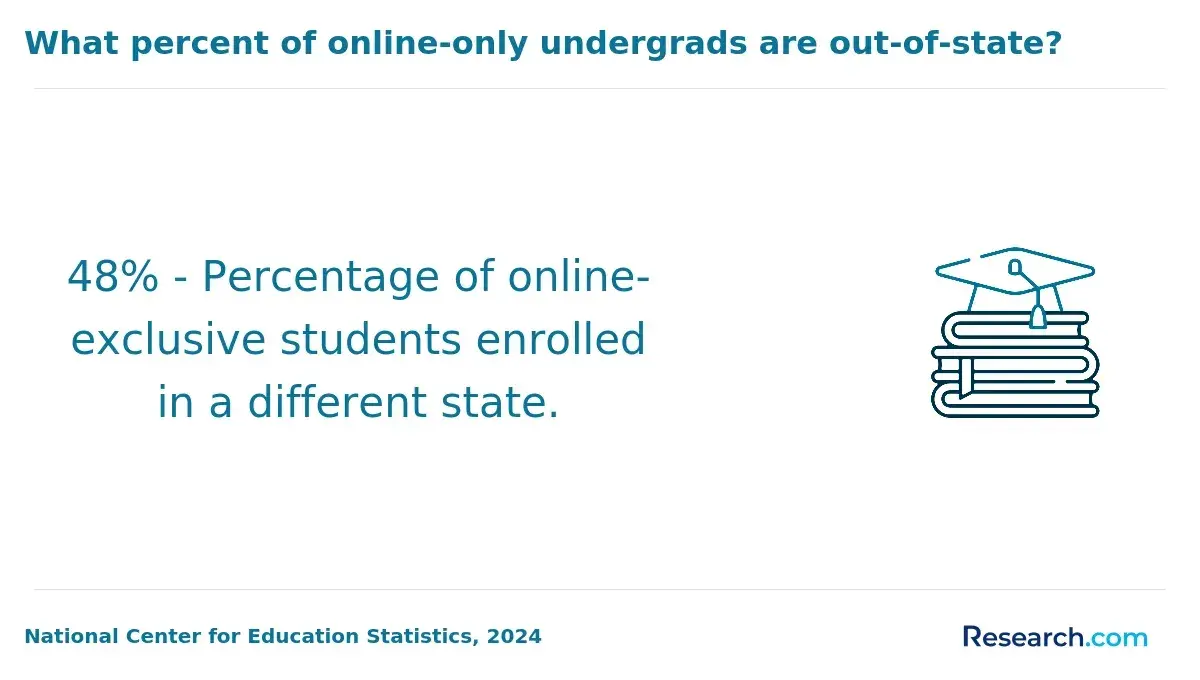
Bachelor's programs in political science leadership degree programs emphasize policy analysis, international relations, and research methods, aligning with mid-tier government or policy roles. Notably, fully online students hold a 7 percentage-point higher rate of full-time employment during studies compared to their campus counterparts, indicating a practical advantage through simultaneous workforce engagement and education.
Master's degrees sharpen expertise through tracks like security studies or legislative affairs, designed for strategic policy and leadership roles demanding rigorous analytical skills and professional connections. However, students face tradeoffs between intense curriculum demands and employment continuity, often opting for asynchronous programs that balance work with study.
For professionals shifting into government leadership, choosing between affordable bachelor's pathways plus experience versus master's level specialization hinges on career objectives, job market realities, and credential applicability. Mid-career analysts moving toward policy advising, for instance, require programs with practicum elements and policy lab access to remain relevant. Regarding practical affordability considerations in graduate education, some candidates consult resources like the cheapest online data science masters listings, reflecting cross-disciplinary budgeting strategies.
How can you verify that an online political science program is properly accredited and reputable?
Choosing accredited online political science programs in the United States demands scrutiny beyond institutional claims. Regional accreditation matters significantly, as it impacts employer and graduate school recognition. For example, a policy analyst aiming for government roles should prioritize programs with clear accreditation verified through official databases like the U.S. Department of Education's Database of Accredited Postsecondary Institutions and Programs. Without this, a degree risks limited acceptance in critical job markets.
Assessing program reputation involves analyzing outcomes data with precision. Given the 23% growth forecast for operations research analysts between 2022 and 2032 from the U.S. Bureau of Labor Statistics, political science degrees that incorporate practical policy analysis and quantitative methods tied to workforce demand enhance employability. Programs lacking transparent graduate employment statistics or employer feedback present considerable risks for career pivots.
Ignoring these steps often leads to investing in programs that fail to equip graduates with relevant, data-driven policy skills necessary for advancement in competitive public and nonprofit sectors. Those exploring educational pathways should also consider cost-efficiency; resources such as the cheapest paralegal certificate online highlight the availability of affordable credential options worth evaluating alongside political science degrees for strategic career moves.
What courses and specializations are common in online political science programs focused on leadership?
Choosing an online political science program aimed at leadership roles requires aligning coursework with specific sector demands. For example, candidates targeting state government leadership benefit from courses in administrative law and policy implementation, directly relevant to regulatory and compliance functions. Those pursuing federal agency positions should prioritize international affairs and security studies due to their operational focus. Core curricula generally include public policy analysis, political theory, international relations, and organizational leadership, with an emphasis on quantitative methods to hone evidence-based decision-making.
Employers in public and nonprofit sectors place a clear premium on practical experience over theoretical knowledge alone. Programs that incorporate internships or capstone projects tackling real-world policy issues significantly enhance a graduate's employability. However, prospective students must carefully consider the cost differential: public online four-year programs average $10,940 in-state tuition and fees, while private nonprofit equivalents cost about $41,540, affecting financial aid options and ROI for professionals balancing work and study.
Effective navigation of this path involves reconciling study schedules with the rigid hours of government work and securing access to mentorship within public leadership spheres. Prospective students should assess programs for robust alumni networks and career placement services, which can ease entry into competitive policy-driven roles.
What are the typical admission requirements for online political science degrees at different levels?
Admission standards for online political science degrees impose distinct tradeoffs between accessibility and workforce readiness across degree levels. Bachelor's programs typically expect a high school diploma with minimum GPA requirements between 2.5 and 3.0, without mandating work experience. This approach allows broader entry but often lacks direct ties to practical government or policy exposure, which can limit immediate employability.
Master's admissions emphasize a completed bachelor's with a higher GPA threshold near 3.0, often requiring GRE scores unless offset by relevant professional experience. This balance signals a rising expectation for applied expertise in governance or policy analysis, preparing candidates for leadership roles that demand both academic and real-world competencies.
Doctoral programs prioritize research capacity and prior mastery, asking for a strong academic record (3.5+ GPA), proven publications, and detailed research proposals that align with policy leadership agendas. This selective process reflects employer demand for candidates able to contribute original insights to complex socio-political challenges.
Employment data highlight the tangible returns: those holding a bachelor's in social sciences, including political science, earn a median annual wage of $72,000, notably exceeding the $48,000 median for high school graduates. This wage gap illustrates the economic impact of meeting institutional thresholds effectively and the value of educational credentials in political science careers.
How long do online political science degrees take and what do they typically cost?
Students pursuing online political science degrees face critical tradeoffs between program duration, cost, and career timing. Full-time paths typically span three to four years, with accelerated options potentially cutting completion to two years for those with relevant credits or intensive schedules. Part-time students frequently extend study to five years or more, balancing education with work and family, which can delay entry into policy or government roles.
Cost differences among institutions and residency status range from approximately $8,000 to $15,000 annually for in-state public university students, while private schools charge between $20,000 and $45,000 per year. This wide financial variance places total program investment between $24,000 and upwards of $180,000, making pacing and institutional choice vital considerations.
Employers in government and public administration prioritize analytical skills and internships alongside degree credentials. For example, political science majors constituted 18% of law school applicants in 2024, the largest group by undergraduate background, signifying a common pipeline to legal careers. Accelerated programs reduce opportunity costs but demand rigorous self-discipline, whereas traditional programs offer flexibility but may extend the timeline to higher-level policy positions. Prospective students must therefore align educational plans with practical goals, networking opportunities, and graduate requirements to optimize employment potential and financial returns.
What careers in government, policy, and public service can an online political science degree support?
An online political science degree opens access to government and nonprofit roles, but success depends heavily on practical experience and strategic networking. Graduates frequently target positions such as legislative assistants, policy analysts, or community outreach coordinators, which require more than theoretical knowledge-skills like legal research, data analysis, and public communication are essential and must be actively developed outside coursework.
Remote learners face a notable tradeoff: flexible schedules come at the cost of reduced face-to-face engagement with political actors or lobbyists, weakening informal mentorship and networking opportunities. For instance, a student aiming to become a congressional aide must pursue internships or volunteer roles to offset program isolation and build connections crucial for advancement.
Workforce data confirms 71% of U.S. employers now consider reputable online bachelor's degrees equivalent to traditional ones, yet the diploma alone rarely suffices. Candidates should verify program accreditation and employer recognition as part of their due diligence and understand the importance of background checks and clearance processes prevalent in government hiring.
Practical readiness frequently dictates employability more than degree format; applicants must demonstrate targeted skills along with hands-on exposure to policy environments. Prospective students should approach online political science programs with a clear plan to integrate internships, volunteering, and skill-building activities, mitigating online education's networking and mentorship limitations.
What salary ranges and advancement opportunities exist for political science graduates in leadership roles?
Salaries for political science graduates in leadership typically range between $65,000 and $120,000 annually, with federal roles starting closer to $70,000 and moving above $110,000 after 5 to 10 years in roles like program director or senior analyst. Advancement strongly depends on combining policy expertise with management experience, as leadership progression stalls without proven results in organizational oversight.
For instance, federal employees entering at GS-9 or GS-11 levels generally reach GS-13 to GS-15 mid-career stages, earning $90,000 to $140,000, contingent on formal qualifications and project, team, and budget management skills. Private sector government affairs or compliance roles start near $65,000 but can surpass $120,000 in nonprofit or consulting executive leadership, illustrating diverse advancement pathways.
Internships and fellowships critically accelerate career development; federal data shows 62% of hires under 30 had at least one such experiential credential. Absence of these credentials often requires alternative strategies like obtaining advanced degrees or lateral job moves to break into leadership. Students should evaluate online political science programs that include integrated internships or fellowships, as these align with federal and organizational hiring preferences and directly influence employability and salary growth.
How can prospective students choose the best-fit online political science program for their career goals?
The alignment between an online political science program's curriculum and specific government or policy roles is fundamental for meaningful workforce entry. Programs blending courses on technology's role in governance, climate policy, and globalization prepare graduates for specialized fields such as urban and regional planning-a sector expected to grow 4% from 2023 to 2033 due to increased climate resilience demands, according to the U.S. Bureau of Labor Statistics.
Working professionals face tradeoffs between program flexibility and practical engagement. Flexible pacing enables career pivots without income loss, but availability of internships or applied research tied to government agencies substantially strengthens job readiness. Evaluating faculty expertise with active policy research or advisory involvement is vital, as employer recognition often depends on such credentials.
Graduate employment data by sector and role provide clearer value indicators than generic completion rates. For example, legislative analyst or environmental policy advisor placements suggest program effectiveness more than broad, undifferentiated outcomes. Students focused on niches like climate adaptation should prioritize environmental policy and regional planning content, while those aiming for federal legislative roles require strong public administration training.
Additional certification or dual-degree options in public administration or data analysis enhance adaptability in technology-transformed policy environments. Verified employer partnerships and networks can influence hiring success, making these elements worth investigating.
Other Things You Should Know About Political Science
A political science degree provides essential theoretical and analytical skills but rarely guarantees leadership positions on its own. Employers in government and policy sectors prioritize practical experience, networking, and demonstrated decision-making ability alongside academic credentials. Graduates should plan to supplement their degree with internships, fellowships, or relevant government and nonprofit roles to build credibility and direct engagement with policy processes.
An online political science degree in 2027 prepares students for leadership roles by integrating digital communication skills and multicultural perspectives, essential for modern governance. The flexible learning environment supports the development of strategic thinking, policy analysis, and ethical leadership, aligning with current governmental and policy needs.
Employers expect political science graduates aiming for leadership to demonstrate applied critical thinking, data analysis, and evidence-based policy evaluation skills. Proficiency in statistics, research methodologies, and the ability to interpret complex data sets is increasingly central. Candidates lacking these capabilities may find advancing beyond entry-level roles difficult, so prioritizing programs with strong quantitative training enhances leadership prospects.
Choosing a program with a policy or public administration concentration often provides more direct preparation for leadership in government by focusing on practical governance, budgeting, and regulatory frameworks. General political science programs tend to emphasize theory and conceptual understanding, which can limit immediate applicability. For students with clear leadership ambitions in public service, prioritizing policy-focused curricula improves job readiness and networking opportunities.
References
- 2025 Best Online Political Science Degrees https://www.onlineu.com/degrees/political-science
- 2025's Best Online Master’s Programs in Political Science https://www.onlinemastersdegrees.org/best-programs/political-science/
- Online Political Science Degrees https://mycollegeguide.org/online-political-science-degrees/
- What can I do with a Political Science degree? https://www.coloradomesa.edu/iris/explore-majors/what-can-i-do-with-a-political-science-degree.html
- Online MPA Programs in Public Management & Organizational Leadership (General MPA Programs) https://www.onlinempaprograms.com/specializations/public-management-organizational-leadership
- Separate or embedded? Strategic choices for universities in online education — Neil Mosley Consulting https://www.neilmosley.com/blog/separate-or-embedded-strategic-choices-for-universities-in-online-education
- What Is College Accreditation? How to Check If a School Is Legit https://abound.college/finishcollege/advice/accreditation-why-is-it-so-important/
- Online Political Science Degrees: Find Your School https://www.degreesforgood.org/online-degrees/political-science-degrees/
- Online MA Political Science (Master of Arts in Political Science) https://www.lpuonline.com/ma-political-science-course-online
- What Can You Do With a Political Science Degree | PathWise https://pathwise.io/what-can-you-do-with-a-political-science-degree/