
2026 Library and Information Science Roles at the Center of AI-Assisted Information Workflows

Co-Founder and Chief Data Scientist
Information professionals now face a bottleneck in synthesizing exponentially growing digital archives while integrating AI tools that automate metadata generation and resource discovery.
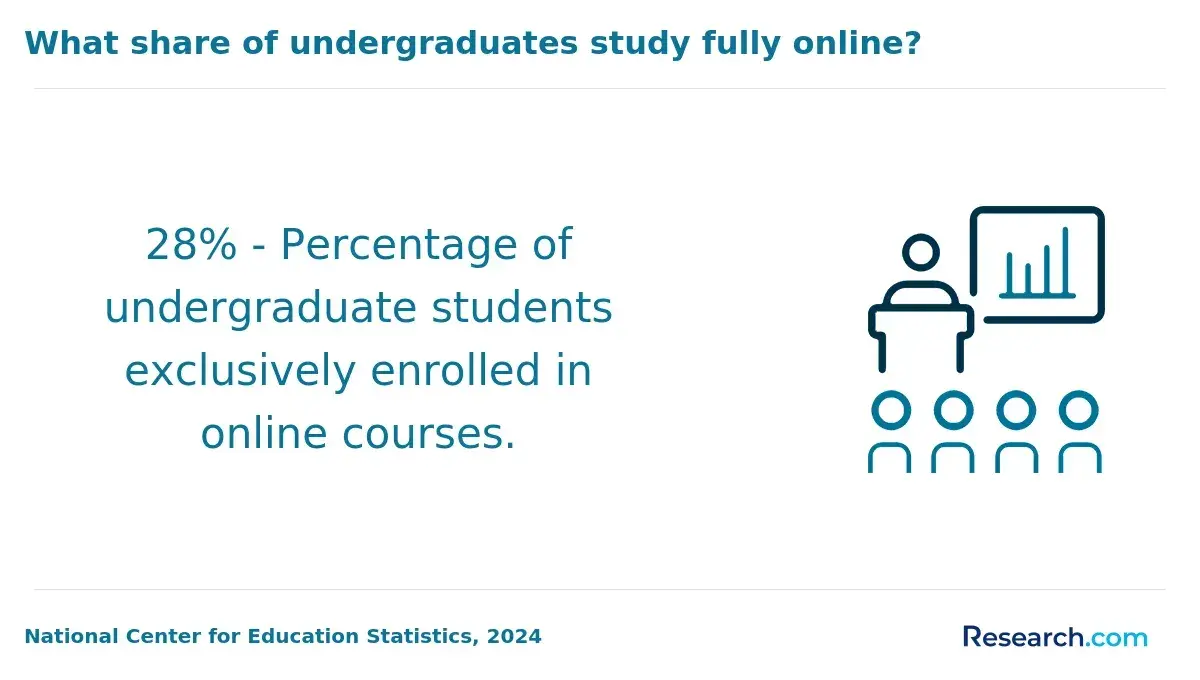
The challenge intensifies as 54% of adult learners prefer flexible, online modalities according to the National Center for Education Statistics, pressuring programs to balance rigorous training with accessibility and immediate workforce relevance. This not only alters enrollment strategies but demands upskilling aligned with evolving employer expectations for hybrid expertise in data curation and AI literacy.
This article examines the evolving roles at the intersection of library & information science and AI-driven workflows and offers strategic insights for navigating educational and career decisions within this complex, high-demand landscape.
Key Things You Should Know
- AI adoption has displaced 18% of traditional library tasks since 2023, requiring library & information science professionals to master AI system oversight, shifting demand toward hybrid skillsets but raising entry barriers for purely technical novices.
- Employers now prioritize candidates with combined expertise in metadata management and machine learning interpretation, as evidenced by 62% of LIS job postings using AI-specific criteria on O*NET data, intensifying competition for established practitioners lacking AI fluency.
- Advanced LIS programs integrating AI modules average 25% higher tuition and extend completion times by six months, posing access tradeoffs for professionals balancing upskilling costs against career advancement timelines.
How is library and information science evolving in AI-assisted information workflows?
Integrating AI into library and information science workflows reshapes professional roles but introduces significant tradeoffs, especially regarding skills development and budget constraints. For instance, many academic libraries report up to a 40% reduction in manual cataloging due to AI-powered metadata and content curation, yet 62% cite funding shortfalls as the primary barrier to deeper adoption.
This dynamic means LIS professionals must balance mastering traditional competencies with acquiring AI-related skills such as data governance and algorithmic transparency to remain relevant in evolving job markets.
The evolving roles of library and information science professionals in AI-assisted workflows demand workforce strategies that prioritize digital scholarship techniques, cross-disciplinary collaboration, and critical evaluation of AI tools.
Mid-career professionals often face a choice between investing time in AI specialization versus reinforcing foundational LIS knowledge, with institutions offering hybrid LIS-AI degree tracks showing improved placement in data stewardship roles. Realistically, continuous incremental skill development with periodic reskilling is essential.
Cost-effective integration frequently relies on phased AI adoption and staff retraining focused on interpreting AI outputs rather than full automation. Selecting open-source AI technologies can help libraries maintain service quality despite financial limits, aligning practical budget realities with workforce readiness.
Prospective students should carefully evaluate library science masters programs on the basis of outcomes linked to this nuanced balance between AI expertise and core LIS capabilities.
The integration of library and information science practices with artificial intelligence technologies requires addressing AI bias and ethical considerations often missing from traditional curricula, necessitating specialized training to manage these emerging challenges.
What library and information science roles work most closely with AI systems today?
Professionals in metadata management, digital curation, and research data services increasingly depend on AI to streamline workflows, reflecting a clear shift in library and information science roles integrating artificial intelligence systems. Catalogers and archivists, for example, use machine learning for entity recognition and automated classification, boosting output by 2-4 times without expanding staff.
This transformation necessitates AI literacy beyond foundational skills, including expertise in natural language processing and data ethics to manage quality and mitigate algorithmic bias.
Liaison librarians in academic and corporate settings leverage AI for predictive analytics to prioritize research inquiries and customize resource delivery, illustrating practical AI collaboration in library and information science workflows. However, adapting to these technologies demands ongoing upskilling and collaboration with data scientists to tailor AI models to specific taxonomies and information structures.
From a hiring perspective, candidates combining core LIS knowledge with AI competencies have a tangible advantage. Educators face the challenge of embedding technical AI familiarity into curricula without compromising theoretical foundations.
For prospective students targeting this hybrid skill set, programs that integrate hands-on AI tools with information science principles better align with employer expectations managing increasingly data-intensive environments. Those evaluating educational pathways should weigh technical preparation against workflow realities to anticipate evolving roles.
Research data librarians, for instance, use AI-driven platforms to preprocess large datasets, reducing manual tagging by 30-60%, as noted in the Clarivate 2024 Academic AI Impact Study.
For those interested in broadening expertise in allied fields, the best online nutrition degree offers an example of focused, competency-driven online education tailored for practical outcomes.
Which degrees prepare you for AI-focused library and information science careers?
Master's degrees remain essential for AI-focused library and information science careers, as undergraduate pathways rarely equip students to manage the complexities of algorithmic transparency or data governance. Programs that integrate interdisciplinary AI elements with classic LIS competencies prepare graduates not just to perform cataloging tasks—78% of which face automation risk—but to supervise and audit AI-augmented processes.
Employers increasingly expect candidates with dual fluency in metadata standards and AI literacy, especially in roles requiring oversight of mixed human-AI workflows. For example, health sciences libraries deploying AI for literature indexing demand staff who combine subject expertise with AI proficiency to maintain data accuracy and ethical standards.
Those targeting roles with high AI exposure benefit from postgraduate programs emphasizing ethical AI application, information retrieval, and systems analysis alongside practical AI-driven internships. This combination improves adaptability in a workforce projected to grow amid automation.
When evaluating library and information science programs with AI specialization, prospective students should prioritize curricula blending data curation, machine learning basics, and human-computer interaction, reducing risks linked to workflow obsolescence.
For professionals considering pivots to AI-related LIS fields, balancing core library skills with emerging AI competencies is crucial. Resources for this include programs like a HIM degree, which often integrate relevant data management frameworks.
How do online and campus-based LIS programs differ for AI-related training?
Online and campus-based library and information science AI training programs diverge notably in how they equip students for AI-integrated roles, producing graduates with very different practical competencies.
Online programs emphasize flexible and modular coursework that often incorporates emerging tools like ChatGPT and Perplexity AI through case studies and virtual simulations. This format is tailored to working professionals needing immediate skills adaptation but typically limits direct interaction with physical AI-enabled library systems.
Campus-based programs offer deeper, hands-on exploration via immersive labs and more sustained faculty mentorship, which supports in-depth engagement with AI algorithms, ethics, and architecture through research and internships.
For instance, a campus student might gain real-world experience by deploying AI chatbots in a university library's reference department—an opportunity rarely matched by online scenarios. These differences reflect broader contrasts between in-person and virtual LIS education for artificial intelligence skills.
Employers increasingly prioritize demonstrable generative AI expertise in situ rather than theoretical understanding alone. A surge in AI-focused academic library publications between 2023 and 2024 signals growing demand for graduates skilled in AI-enhanced reference workflows. Online programs respond quickly by updating curricula but often lack the project-based depth seen in campus options.
Prospective learners must weigh key tradeoffs:
- Online LIS education enables faster workforce reentry with flexible pacing but may necessitate additional hands-on training to meet employer expectations for AI fluency.
- Campus-based education offers comprehensive, contextual AI exposure aligned with roles emphasizing AI-assisted research and innovation but requires more time and financial resources, potentially delaying career pivots.
For those evaluating these paths, exploring resources on masters in data science online can offer parallel insights into balancing affordability and skill acquisition.
What coursework and technical skills are essential for AI-assisted information work?
Library & information science professionals aiming to work with AI must develop specific technical competencies beyond traditional cataloging. Core skills include programming in Python or R, natural language processing (NLP), and familiarity with conversational AI frameworks, reflecting the 27.5% prevalence of chatbots and robots in library AI applications. Practical understanding of metadata standards, ontologies, and knowledge organization systems is essential to structure AI outputs effectively.
Technical mastery also involves foundational machine learning-both supervised and unsupervised methods-to evaluate AI models used in information retrieval or automation. Expertise in database management, API development, and cloud infrastructure supports scalable AI deployment and data integration. Ethical and privacy considerations are critical, given regular handling of sensitive user data by AI systems.
A hiring scenario illustrates these demands clearly: a librarian versed only in traditional skills but lacking AI literacy struggles to optimize chatbot responses or resolve integration issues, whereas candidates with demonstrated AI project experience can operate tools independently from IT teams. This dynamic influences employability and career trajectory, with broad AI knowledge offering versatility and specialization in NLP or robotic process automation positioning candidates for advanced roles in technology-forward settings.
Students should prioritize curricula combining hands-on AI projects with robust LIS fundamentals to maintain practical relevance. A program aligning AI technical skills directly with library workflows will better prepare professionals to meet evolving workforce expectations and real-world operational challenges.
How do accreditation and institutional quality impact AI-oriented LIS programs?
Employers in library and information science increasingly prioritize graduates from accredited programs that integrate AI technologies with rigorous training in quality control and validation. Clarivate's 2024 Academic AI Impact Study reports that 70-90% of AI-generated metadata is used with minimal edits, shifting the demand toward professionals who can critically oversee automated workflows rather than merely produce outputs. This creates a practical challenge: without updated accreditation that reflects these AI competencies, graduates often encounter longer job searches or start in lower-tier roles due to employer doubts about their ability to manage AI-assisted cataloging effectively.
For example, academic libraries adopting automated cataloging systems expect LIS professionals to interpret AI confidence metrics and intervene when accuracy issues arise. Programs lacking in updated curricula, modern infrastructure, and faculty expertise fail to equip students for these real-world responsibilities.
Key workforce implications include:
- The need for institutional accreditation that confirms AI fluency combined with critical analytical skills suitable for managing metadata automation.
- Long-term employability risks for graduates from outdated or non-accredited programs, especially in sectors like higher education and digital archives.
- Practicum and technology resources as differentiators in producing job-ready professionals who understand AI limitations and interventions.
Prospective students should evaluate programs based on demonstrated outcomes in AI-integrated LIS workflows and verified accreditation aligned with evolving employer expectations to make informed decisions about career viability and advancement.
What are typical admission requirements and program length for AI-focused LIS degrees?
Candidates pursuing AI-focused library and information science degrees face an important choice: balancing program length, technical depth, and career alignment. Admission typically requires a bachelor's degree and familiarity with programming or quantitative reasoning, reflecting the technical nature of integrating AI into LIS roles. Some programs also mandate GRE scores and reflective statements addressing AI's impact on information ecosystems.
Program durations range widely. Master's degrees demand 18-24 months full-time, but part-time or online formats can extend up to five years, complicating timely workforce entry. Certificate programs offer quicker, 6-12-month completion, though they lack the comprehensive scope for strategic or ethical expertise crucial in larger institutions.
Employers seek candidates who combine AI literacy with user-centered services rather than mere automation skills. As the 2024 Pulse of the Library report shows, staff reskilling needs are substantial. Programs emphasizing theory over practical tools risk delaying job readiness, while those focusing narrowly on tools fall short on preparing graduates for governance or ethical challenges.
- Working professionals benefit from accelerated, flexible options for immediate skill upgrades.
- Longer, rigorous programs better support roles demanding data governance, AI ethics, and strategic decision-making.
- Graduates must navigate tradeoffs: immediate applicability versus depth of knowledge, program duration versus employer expectations.
Evaluating these factors critically ensures prospective students align educational choices with evolving workforce demands and realistic time commitments.
What AI-centered job titles, settings, and career paths can LIS graduates pursue?
Positions like AI Data Curator and Digital Knowledge Manager illustrate how library & information science (LIS) graduates are increasingly expected to integrate AI expertise with traditional information management. This shift requires mastering AI-driven workflows and programming skills such as Python or R, moving beyond metadata cataloging to training machine learning models and ethical AI applications.
Industries vary significantly: academic libraries employ AI for semantic tagging and research retrieval; corporate knowledge centers optimize automated content systems; government archives use AI for digitizing records; and health informatics boosts information accessibility. These diverse settings demand hybrid skill sets, blending LIS fundamentals, data analytics, and AI ethics.
Workforce trends show a marked 13-point increase in AI automation risk for librarians from 2023 to 2025, reflecting how core LIS tasks are reshaped by AI. Graduates without AI-specific capabilities face diminishing prospects as routine processes become automated.
Employer expectations emphasize direct collaboration with data scientists and AI professionals, requiring continuous upskilling rather than traditional LIS credentials alone.
Students should weigh certification and formal AI coursework against hands-on experience, recognizing that practical AI skills carry greater value in real-world roles. Preparation must focus on actionable competence to remain agile within evolving AI-augmented information environments rather than symbolic credentialing.
What salary ranges and job outlook can AI-skilled LIS professionals expect?
AI proficiency significantly reshapes salary structures and job expectations in library & information science (LIS) by 2026. Entry roles in public or academic libraries integrating AI workflows start between $55,000 and $70,000, while mid-career specialists in AI-driven metadata or digital archives see $75,000 to $95,000.
In more advanced corporate or research applications—such as automated content discovery—salaries can surpass $100,000. This reflects employer demands for professionals who blend LIS fundamentals with applied AI competencies, including natural language processing and machine learning.
For instance, academic libraries employing AI-optimized reading list workflows see immediate student access to 50-60% of course materials post-processing, an efficiency impossible with conventional methods. Employers therefore prioritize candidates who can manage these systems while ensuring ethical AI use and mitigating algorithmic bias.
However, the transition to AI-centric roles involves more than basic cataloging skills. It requires strategic upskilling in data analytics and programming. Without this, professionals risk limited upward mobility amid evolving sector needs.
As the U.S. Bureau of Labor Statistics forecasts an 8% employment growth for information professionals through 2032, those lacking practical AI experience may find stagnant opportunities. Choosing educational pathways that balance LIS theory with hands-on AI tools is critical for sustaining relevance and responding to nuanced employer expectations.
How can prospective students evaluate and choose reputable AI-ready LIS programs?
Selecting LIS programs requires prioritizing those that embed AI technologies deeply in both curriculum and practical training, reflecting the industry's rapid operational shift. With 33% of libraries already deploying AI and 67% exploring it, graduates lacking hands-on experience with AI tools and data analytics face diminished employability.
Programs should be assessed for faculty with current AI expertise and for real-world partnerships enabling internships or project assignments, as these experiences carry more weight with recruiters than theoretical study alone.
For instance, a student targeting public library digital resource management benefits from a program linked to municipal systems using AI for cataloging or patron services. Conversely, those seeking roles in corporate information management must find programs that emphasize AI-supported knowledge organization and content curation workflows. This strategic alignment directly affects postgraduation employment outcomes.
Evaluate outcomes such as graduate placement in AI-relevant positions, salary data, and employer feedback from authoritative sources to mitigate the risk of choosing programs with superficial AI integration. Consider program delivery modes, duration, and cost in relation to targeted career returns, especially for working professionals.
Other Things You Should Know About Library & Information Science
Many LIS programs struggle to integrate advanced AI-related technical skills without sacrificing core competencies like cataloging, reference services, and information ethics. Students must prioritize programs that maintain strong foundational instruction while offering targeted AI coursework, or risk being technically proficient but weak in essential professional judgment. Employers in libraries and archives still value broad LIS expertise alongside AI fluency, so a narrow technical focus may limit career adaptability.
LIS professionals engaged in AI-assisted workflows often face increased interdisciplinary demands, including data management, algorithm oversight, and continuous upskilling. This results in heavier workloads and less predictable task boundaries compared to traditional roles focused on service and collection management. Prospective candidates should weigh these tradeoffs, as AI roles require commitment to ongoing learning and adaptation, which may impact work-life balance.
Choosing between domain-specific AI applications within LIS and broader information science credentials depends on career goals. Prioritizing targeted AI training can yield faster entry into specialized roles but may reduce flexibility if technology or market conditions shift. Conversely, general information science credentials provide a wider foundation but require supplemental technical skill development before AI roles become attainable. Students must assess their risk tolerance and local job market dynamics when deciding.
Employers expect recent graduates to demonstrate applied knowledge of AI tools relevant to information workflows but do not assume deep expertise in data science or software engineering. Practical experience through internships, project work, or collaborations that show an ability to integrate AI responsibly into library services is highly valued. Graduates should focus on gaining hands-on experience with AI applications specific to curated collections, metadata enhancement, or user interaction rather than abstract algorithm development.
References
- ABOUT https://eifl.net/programme/ai-and-os/libraries-and-ai
- Meet Sophia, the all-knowing AI Student Advisor https://studyportals.com/meet-ai-student-advisor/
- Sorting Out AI Job Titles, Skills, and Career Paths | TDWI https://tdwi.org/articles/2020/08/11/adv-all-sorting-out-ai-job-titles-skills-career-paths.aspx
- AI Search Is Already Changing How Students Choose Colleges https://www.manaferra.com/ai-search-in-college-search-process/
- Prerequisites and Application Tips for MLS Programs https://www.librariancertification.com/prerequisites-and-application-tips-for-mls-programs/
- AI Skills | Why AI Skills Are Essential for Career Growth https://www.oxfordhomestudy.com/OHSC-Blog/ai-skills
- Top In Demand AI Skills (2025) https://www.skillsoft.com/blog/essential-ai-skills-everyone-should-have
- AI Skills for Life and Work: Labour market and skills projections https://www.gov.uk/government/publications/ai-skills-for-life-and-work-labour-market-and-skills-projections/ai-skills-for-life-and-work-labour-market-and-skills-projections
- AI Employment Outlook: Salary Trends and Future Projections · AI Time Journal https://aitimejournal.com/ai-employment-outlook-salary-trends-and-future-projections